
Last updated October 30, 2026
 Water damage drying
 Fire & smoke cleanup
 Mold remediation
 Storm response
 Sewage cleanup
 Reconstruction
Free visual inspection and a written scope of work before any mitigation begins - photos, moisture readings, and drying logs go in your claim file
The scope we write is the scope we bill. Anything new gets shown to you, in writing, before we touch it.
Get your free estimateWater Damage Restoration Maintenance Checklist for Fullerton Homeowners
Fullerton sits on expansive clay soil that shifts seasonally, and that movement is responsible for more slow-leak plumbing failures than any weather event, yet zero standard maintenance checklists mention it. Most water damage in Fullerton homes doesn’t start with a dramatic burst pipe during a storm, it starts with a hairline crack in a supply line that’s been flexing for years as the ground beneath it swells and contracts. This guide gives you a maintenance checklist built for Fullerton’s actual conditions, so you catch those slow failures before they turn into Water Damage Restoration services. You’ll learn which inspections matter most, when to do them, and how to spot the warning signs that most homeowners in Fullerton miss until it’s too late.
Restoration work we handle
Quick Answer
The water damage prevention checklist for Fullerton homeowners must account for expansive clay soil, Santa Ana wind cycles, and aging copper supply lines, not just gutters and hoses. A working maintenance plan includes seasonal foundation and supply-line inspections, post-Santa Ana roof checks, water heater pressure testing every six months, and an annual professional moisture baseline reading of your slab and walls. Homeowners who follow a clay-soil-aware checklist in Fullerton catch most water intrusion sources five to seven years before they become visible damage.
Table of Contents
- Fullerton Clay Soil: The Maintenance Factor Every Checklist Misses
- Post-Santa Ana Wind Checklist: Roof, Vents, and Membrane
- Water Heater Pressure Relief Valve and Expansion Tank Testing
- Professional Moisture Baseline Readings: Why You Need One Annually
- Seasonal Timing for Fullerton Homeowners
- Indoor Maintenance Checklist: What to Inspect Every Month
- Outdoor Maintenance Checklist: Fullerton-Specific Drainage and Irrigation
- Common Mistakes to Avoid
- When to Call a Professional
- Frequently Asked Questions
- The Bottom Line
Fullerton Clay Soil: The Maintenance Factor Every Checklist Misses
Fullerton’s soil is predominantly expansive clay, the kind that swells when wet and shrinks when dry. That seasonal movement is not subtle. Over the course of a wet winter followed by a dry summer, the ground under a typical Fullerton slab foundation can shift enough to stress every rigid connection in your plumbing system. We see the results in homes across Fullerton: copper supply lines that have been flexed so many times they develop pinhole leaks, PVC drain lines that separate at joints, and slab foundations with hairline cracks that widen into moisture pathways.
The standard national checklist tells you to check hoses and clean gutters. It never mentions that the real threat in Fullerton is the ground itself moving under your house. Here is the clay-soil inspection you should do twice a year, in April and October, when the transition between wet and dry seasons is most pronounced.
- Walk the exterior perimeter and look for foundation cracks. Any crack wider than 1/16 inch is worth tracking. Mark it with a pencil line and date. If it widens between inspections, water is finding its way in. In Fullerton, cracks on the north and east sides of homes tend to open first because those sides experience the most dramatic moisture swings.
- Check where the main water line enters the slab. Look for efflorescence (a white chalky residue) or dark staining on the concrete around the entry point. This indicates groundwater wicking or a slow leak where the line passes through unstable soil.
- Inspect exposed copper lines under sinks and behind toilets for green oxidation spots. In Fullerton’s clay soil environment, copper lines that run through or under slabs are under constant flex stress. Oxidation at joints is the earliest visible sign a pinhole leak is forming.
- Examine slab joints and expansion joints inside the garage. Many Fullerton homes built before 1980 have exposed slab joints in the garage. Separation at these joints means the slab is moving more than it should, which means pressure on every rigid line embedded in the concrete.
- Check for doors that stick or cracks in drywall above doorways. These are not cosmetic. They are evidence your slab is shifting, and where slab moves, plumbing follows.
Clay soil damage develops slowly, which is why it’s so dangerous. By the time you see water staining on a baseboard, a supply line leak may have been active for months. The fix is not to ignore it or hope the soil stabilizes. The fix is to know your home’s baseline and inspect against it consistently. If you find a supply line leak, call a Water Damage Restoration in Fullerton specialist before the moisture spreads into walls and flooring.
Post-Santa Ana Wind Checklist: Roof, Vents, and Membrane
Santa Ana winds are part of living in Fullerton. They arrive in the fall, sometimes in the spring, and they hit with enough force to lift shingles, stress roof membranes, and push attic vents out of alignment. What most Fullerton homeowners don’t realize is that the damage Santa Ana winds cause doesn’t show up as a roof leak the next day. It shows up weeks or months later, when a rainstorm arrives and water finds the gaps those winds created.
After any significant Santa Ana event, meaning sustained winds over 30 mph, do this inspection:
- Check roof edges and ridge lines for lifted or curled shingles. Wind gets under the edge and breaks the seal. Once a shingle is lifted, it will not reseal properly, and the next rain event becomes a leak event in Fullerton.
- Inspect attic vent screens and gable vents. Santa Ana winds can dislodge vent covers or push screens inward. An open attic vent is an open invitation for wind-driven rain, and in Fullerton, the first rain after a Santa Ana event is often heavy enough to find every gap.
- Look for granule loss on asphalt shingles. After a wind storm, check your gutters and downspout outlets for shingle granules. Granule loss weakens the shingle and shortens its life, and in Fullerton’s dry climate, UV exposure does the rest.
- Examine roof flashing around vents, chimneys, and skylights. Wind flexes flashing and breaks the sealant bond. Even a 1/8-inch gap allows enough moisture intrusion overnight to wet insulation and eventually stain ceilings.
- Check for cracked or displaced tiles on tile roofs. Fullerton has a high percentage of Spanish-style tile roofs. Tiles are brittle after years under the California sun, and Santa Ana winds are strong enough to crack them or knock them out of position entirely.
If you find any of these conditions, address them immediately. Tarps are a temporary fix. The real solution is replacement of the damaged membrane or flashing. This is also the right moment to document everything with photos. If damage later becomes a water intrusion event, your insurance documentation is stronger, and a restoration team like Mahogany Water Damage home can start with a complete record of the wind event and the conditions that followed.
Water Heater Pressure Relief Valve and Expansion Tank Testing
Every water heater has a pressure relief valve designed to open and release water if pressure inside the tank gets too high. Most Fullerton homeowners have never tested theirs. That is a problem because in Fullerton’s hard water environment, mineral buildup can seize the valve closed, which means the next pressure event becomes a tank rupture instead of a controlled discharge. A ruptured water heater releases 40 to 80 gallons of water into your garage or closet in minutes, and in a Fullerton home on a slab, that water has nowhere to go but into walls, flooring, and adjacent rooms.
Here is the testing procedure you should follow every six months. It takes ten minutes and requires no tools.
- Locate the pressure relief valve. It’s on the side or top of the tank, usually with a brass or copper discharge pipe running down toward the floor.
- Place a bucket under the discharge pipe. The pipe should extend to within 6 inches of the floor. If it doesn’t, that’s a code issue you should address.
- Lift the valve’s test lever. You should hear a rush of air or see water flow out. If nothing comes out, or if the valve is stuck, the valve has seized and needs replacement.
- Release the lever and confirm it snaps back and stops flowing. If it continues to drip after closing, sediment is preventing a full seal, which is a sign the valve must be replaced.
- Check your expansion tank if you have one. Tap it gently. It should sound hollow on top and solid on the bottom. If it sounds solid throughout, it’s waterlogged and no longer absorbing pressure. In Fullerton, where supply line pressure can spike during peak summer demand, a dead expansion tank is a ticking clock on your water heater.
Replacement intervals are specific. Pressure relief valves should be replaced every 5 years in Fullerton’s hard water conditions, even if they appear functional. Expansion tanks typically last 5 to 7 years. If your water heater is older than 10 years, replace both the valve and the expansion tank now, and consider the condition of the tank itself. Water heater failures are one of the leading causes of residential water damage claims in Orange County, and the cost of a new valve is about $30 compared to the cost of restoration, which starts in the thousands and climbs fast. For Water Damage Restoration Troubleshooting: Common Problems and How to Fix Them, see our dedicated guide.
Professional Moisture Baseline Readings: Why You Need One Annually
Here is a truth most Fullerton homeowners don’t learn until after a water damage event: by the time you can see moisture damage, the water has been present for weeks or months. Drywall doesn’t stain overnight. Baseboards don’t warp in a day. Mold doesn’t bloom in a week. The water that caused the damage you can see usually arrived long before, through a slow leak that no visual inspection would have caught.
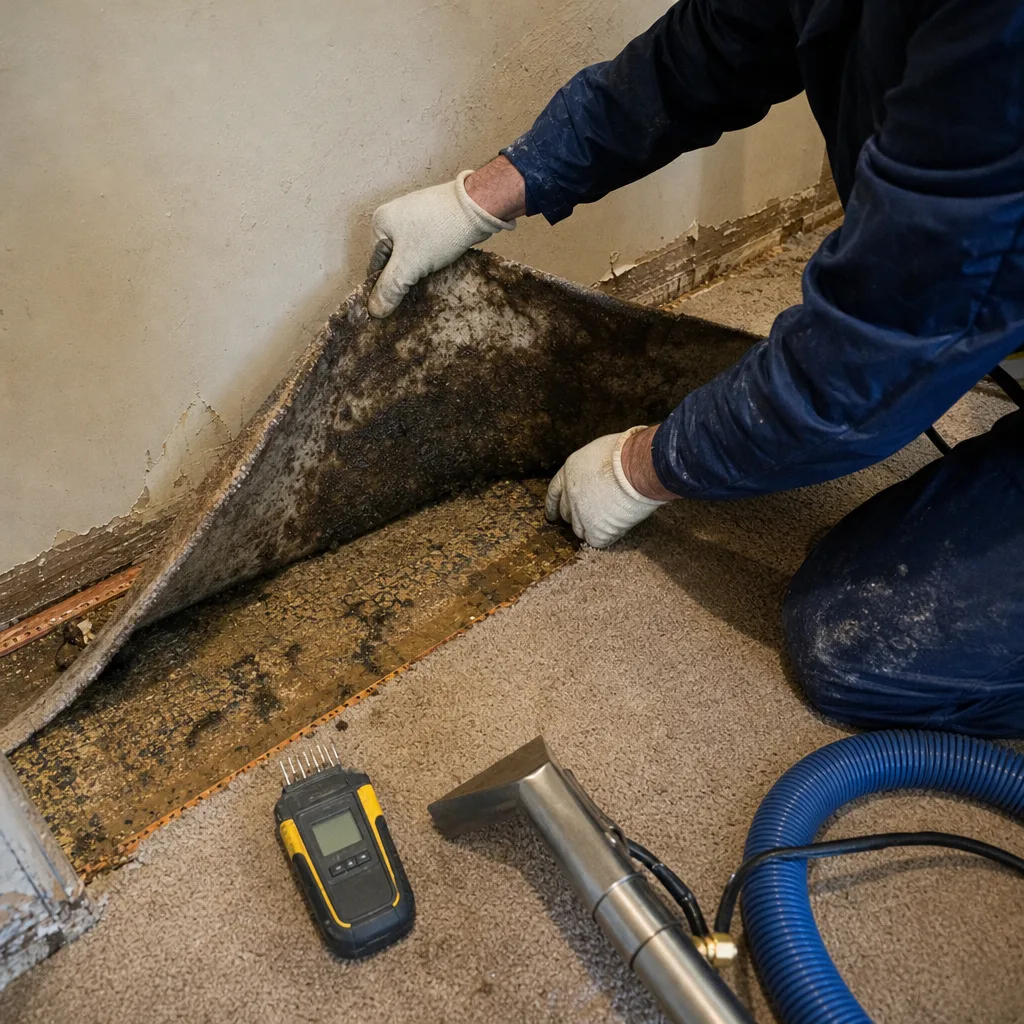
That is why a professional moisture baseline reading matters. A baseline reading uses calibrated moisture meters to measure the moisture content of your walls, floors, and slab at dozens of points throughout the home. The readings are documented, and a year later, the same points are measured again. The comparison reveals changes that no visual inspection can detect.
What does a normal reading look like? In Fullerton’s typically dry climate, interior wall moisture content should be between 6% and 10%. Concrete slab readings in a dry state should be below 4%. If a wall measures 15% in April and 22% in October, that is not seasonal variation, that is a slow leak somewhere behind the wall. With baseline data, you catch it before it becomes visible damage, before it becomes a Mold Remediation in Fullerton situation, and before your insurance company asks why you waited.
We recommend an annual moisture baseline reading for every Fullerton home, but especially for homes over 30 years old, homes with copper supply lines, and homes on expansive clay soil. The cost is modest. The alternative, discovering a slow leak through visible damage, is not.
Seasonal Timing for Fullerton Homeowners
Fullerton’s Mediterranean climate means wet winters and dry summers, and the maintenance calendar should follow that rhythm. A checklist that tells you to “inspect in spring and fall” without explaining why is not useful. Here is the Fullerton-specific timing that matters.
October to November, before the first significant rain: This is your primary preparation window in Fullerton. Clean gutters and downspouts after the late summer Santa Ana winds have deposited leaves and debris. Inspect roof flashing and vent screens. Test your water heater pressure relief valve. Check the exterior grading around your foundation, because the first winter rains on clay soil that has been dry all summer creates the maximum swelling pressure, and that pressure will find every weak point in your plumbing.
December to March, during the rainy season: After each significant rain event, walk the interior perimeter of your home at the slab edge and look for any darkening, bubbling, or peeling paint. In Fullerton, winter rains on expansive clay can cause slab movement that is measurable within weeks, not years. Check your crawlspace if you have one, or your garage slab if you don’t, for standing water or damp spots.
April to May, after the rains: This is the transition period when Fullerton’s clay soil begins drying out and contracting. Inspect foundation cracks and mark any new movement. Check all supply lines under sinks for signs of stress. This is also the best time for your annual moisture baseline reading, before the summer heat bakes everything dry.
June to September, the dry season: The risk of water damage from rain is low, but the risk from appliance failure is highest. Water heaters work hardest in the summer in Fullerton, with incoming water temperatures warm and demand high. Test the pressure relief valve again in July. Check washing machine hoses and refrigerator ice maker lines, which degrade faster in heat and are a leading cause of sudden, catastrophic water damage in Fullerton homes every summer.
Indoor Maintenance Checklist: What to Inspect Every Month
Some maintenance tasks need to happen seasonally. Others need to happen every month because the signs of failure appear quickly and the cost of missing them is high. Here is the monthly indoor checklist for Fullerton homeowners.
- Inspect all visible supply lines and shutoff valves. Under every sink, behind every toilet, and at the water heater. Look for corrosion, green oxidation, mineral deposits, or moisture at the joints. In Fullerton’s hard water conditions, valve packing can fail and drip slowly for months before anyone notices.
- Check ceilings below bathrooms and kitchens for any discoloration. A subtle shadow or a slight yellowing that wasn’t there last month is a signal that water is moving through the space above. Catch it then, and the repair is a plumbing fix. Miss it, and the repair is a restoration project.
- Run your hands along baseboards on exterior walls. Feel for softness, swelling, or paint that is beginning to separate. In Fullerton homes on slab foundations, baseboard damage is the first visible sign of a slab leak, and slab leaks in expansive clay soil are a known failure mode for copper supply lines.
- Test your water pressure. Use a simple pressure gauge on an outdoor spigot. Pressure should be between 40 and 80 PSI. Fullerton homes above 80 PSI experience accelerated wear on every valve, fitting, and supply line in the house. If your pressure is high, install a pressure-reducing valve at the main line and re-test.
- Inspect your water heater area for rust, moisture, or unusual sounds. A water heater that pops and rumbles is building sediment, and in Fullerton’s mineral-heavy water, that sediment insulates the tank bottom and causes overheating, which accelerates tank failure. If you hear popping, flush the tank or call a plumber who will.
These monthly inspections take less than 15 minutes. They will not catch everything, but they will catch the vast majority of water damage sources in Fullerton homes before those sources become emergencies.
Outdoor Maintenance Checklist: Fullerton-Specific Drainage and Irrigation
Outdoor water management in Fullerton is different from other parts of the country because of two factors: clay soil with poor drainage and a dry climate that encourages irrigation systems. The combination creates a situation where water applied outside the home can become water inside the home faster than you would expect.
- Grade the soil away from your foundation. The ground should slope away from the house at a rate of at least 6 inches over the first 10 feet. In Fullerton, where clay soil drains slowly, a flat or negative grade means water pools against the foundation, and that water finds its way into any crack or joint in the slab.
- Inspect irrigation lines and sprinkler heads quarterly. A sprinkler head that has shifted and now sprays directly at the foundation is a slow water damage event in progress. In Fullerton’s dry climate, irrigation runs frequently enough that even a small misdirected spray can saturate the soil and wick moisture into the slab over time.
- Clean and inspect gutters and downspouts before and after Santa Ana season. Fullerton’s eucalyptus and pepper trees drop leaves year-round, and Santa Ana winds deposit them in gutters in hours. A clogged gutter overflows and sends water down the exterior wall, where it runs behind siding and into wall cavities.
- Direct downspout outlets at least 6 feet from the foundation. Use downspout extensions or splash blocks. In Fullerton’s clay soil, a downspout that dumps water at the foundation line is effectively pouring water into a bowl that holds it against your slab, and that is a recipe for foundation movement and water intrusion.
- Check outdoor hose bibs for leaks and freeze damage. Fullerton rarely freezes, but when it does, hose bibs that were not drained or insulated are the first to crack. A cracked hose bib leaks inside the wall cavity every time the hose is turned on, and the damage accumulates in the wall before it ever shows on the outside.
Common Mistakes to Avoid
- Ignoring foundation cracks because “the house has always had them.” In Fullerton’s expansive clay soil, cracks that have been stable for years can open suddenly after a wet winter. A crack that was hairline in November may be a moisture pathway by March. Mark, measure, and monitor every crack, every season.
- Testing the water heater pressure relief valve by ignoring it until the water heater fails. Most Fullerton homeowners only discover a seized valve when the tank ruptures and floods the garage. A seized valve is a $30 part. A ruptured water heater is a restoration project that starts at several thousand dollars and disrupts your life for weeks.
- Assuming Santa Ana wind damage will be obvious. The damage from Fullerton’s fall winds is usually invisible from the ground: lifted membranes, broken flashing seals, and displaced vent covers. The water damage that follows the first winter rain is not invisible, but by then, the damage is done.
- Waiting until you see water to address a suspected leak. In Fullerton homes on slab foundations, water travels through the slab and under flooring long before it becomes visible on a wall or ceiling. If you suspect a leak, the time to call is the moment you suspect it, not the moment you can see it.
- Replacing a water heater without replacing the expansion tank and pressure relief valve. This is common in Fullerton, where homeowners replace the tank but keep the old components because “they still work.” The old valve and the old expansion tank are the parts most likely to fail next, and their failure takes the new tank with them.
- Using a national maintenance checklist without adjusting for Fullerton’s clay soil. National checklists are written for the average American home, which is not a home on expansive clay in Orange County. The soil under your house is the biggest variable in your maintenance equation, and ignoring it means inspecting for the wrong things entirely.
When to Call a Professional
Some conditions require professional equipment and trained eyes, not a checklist. If you find water staining that reappears after cleaning, a musty odor that persists after ventilation, or a foundation crack that widens between inspections, call a professional immediately. If you have evidence of a slab leak, which in Fullerton typically shows up as warm spots on the floor, unexplained increases in your water bill, or the sound of running water when no fixtures are on, do not wait. Slab leaks in expansive clay soil worsen quickly as the soil saturates and expands, and the pressure on your entire plumbing system multiplies. Mahogany Water Damage offers free estimates in Fullerton, call (855) 356-4970 to schedule an assessment before a slow leak becomes a restoration project. For help selecting a provider, read Choosing the Right Damage Restoration Brand: A Buyer’s Guide for Fullerton.
Frequently Asked Questions
Fullerton homeowners should do a monthly indoor inspection of supply lines, baseboards, and ceilings, plus a seasonal inspection tied to the clay soil cycles in October and April. The combination of monthly and seasonal checks catches both sudden failures and slow-developing leaks. A professional moisture baseline once a year adds a documented reference point that visual inspections cannot provide.
In our experience, the most common cause of water damage in Fullerton homes is slow plumbing leaks from copper supply lines that have been stressed by expansive clay soil movement over many years. These leaks develop in walls, under slabs, and behind cabinets, and they cause damage for weeks or months before they become visible. Water heater failures are a close second, followed by Santa Ana wind damage to roofing that allows water intrusion during the first winter rains.
Yes, and you should every six months. The testing process is simple: place a bucket under the discharge pipe, lift the test lever, confirm water flows, and confirm it stops when the lever is released. If the valve does not open or continues dripping after closing, replace it. In Fullerton’s hard water, valves should be replaced every 5 years regardless of apparent function.
A professional moisture baseline reading should include measurements from exterior walls, interior walls, concrete slab edges, and any crawlspace or attic areas. Readings are taken at consistent, documented points so that annual comparisons reveal trends. In Fullerton, expect normal interior wall moisture between 6% and 10%, and normal concrete slab readings below 4% during the dry season.
Most homeowners insurance policies cover sudden and accidental water damage, but many exclude or limit coverage for damage from slow leaks that occurred over time. That is why documentation matters: records of your seasonal inspections, photos of any changes, and professional moisture baseline reports can help establish when a leak began and demonstrate that you acted responsibly as a homeowner. If you need help with insurance documentation after a water damage event, call (855) 356-4970 for guidance.
Fullerton’s expansive clay soil swells when wet and shrinks when dry, and that movement stresses every rigid connection in your plumbing system. Copper supply lines under slabs flex with the soil and develop pinhole leaks over time. PVC drain lines separate at joints. Foundation cracks open and allow groundwater intrusion. The effect is cumulative, and homes over 30 years old in Fullerton are at the highest risk of clay-soil-related plumbing failure.
If you suspect water damage behind a wall, stop using water in that area if possible and call a restoration professional for a moisture assessment. Continuing to run water through a leaking line feeds the problem and spreads moisture further into wall cavities, insulation, and flooring. A professional assessment with calibrated moisture meters can locate the source and map the extent of the intrusion without unnecessary demolition. For Fire Damage Restoration in Fullerton or water damage, the same principle applies: act before the damage spreads.
The Bottom Line
Water damage prevention in Fullerton is not about following a generic national checklist. It’s about understanding what your home is built on, how the local climate stresses it, and where failure is most likely to occur. Expansive clay soil is the variable most homeowners overlook, and it is the variable responsible for more slow-leak damage than any storm. Santa Ana winds create damage that shows up months later in the rain. Water heaters fail most often in summer. The checklist in this guide covers all of it with specific timing, specific inspection points, and specific replacement intervals, because that is what prevents a maintenance issue from becoming a restoration project. Explore more guides & resources for year-round home protection. For professional moisture assessments, slab leak investigations, or any water damage concern in Fullerton, call (855) 356-4970 for a free estimate.
Written by the team at Mahogany Water Damage, serving Fullerton since 2011.
See the difference
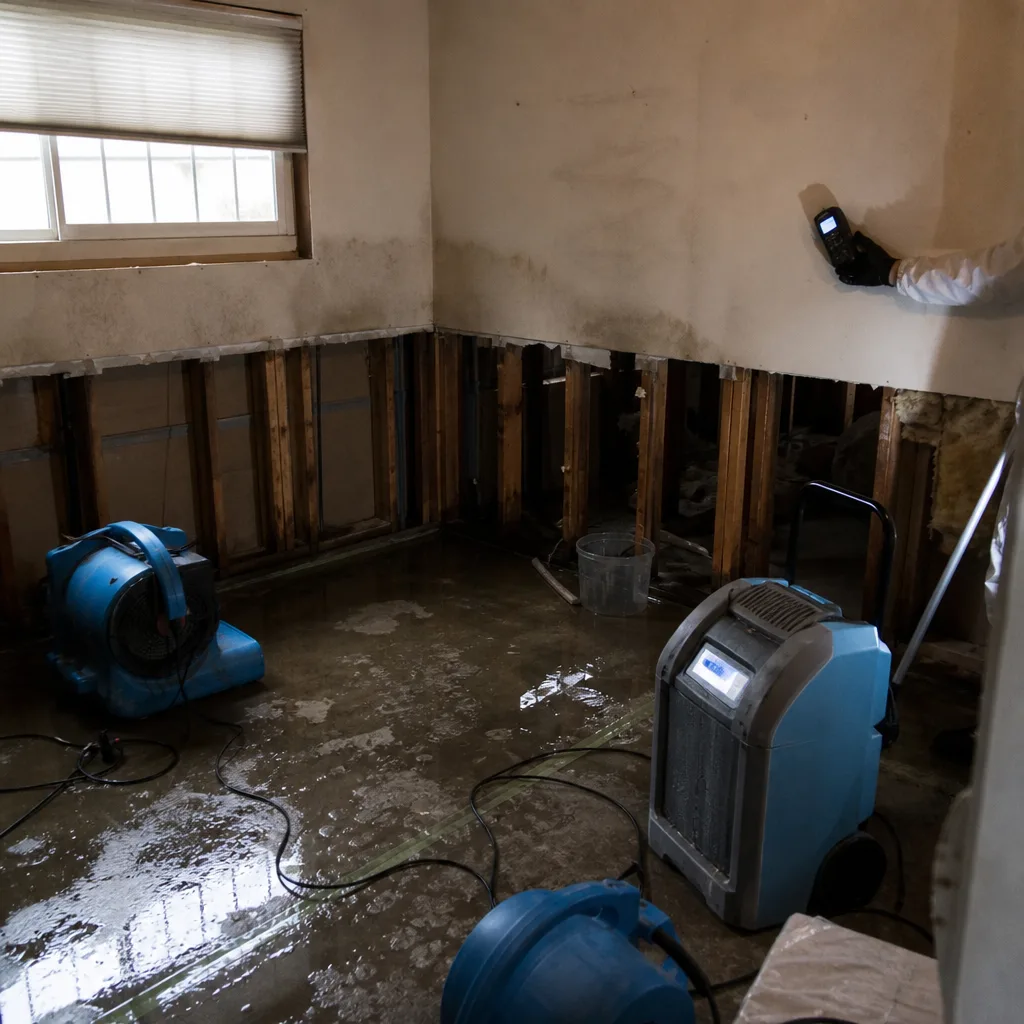 Before
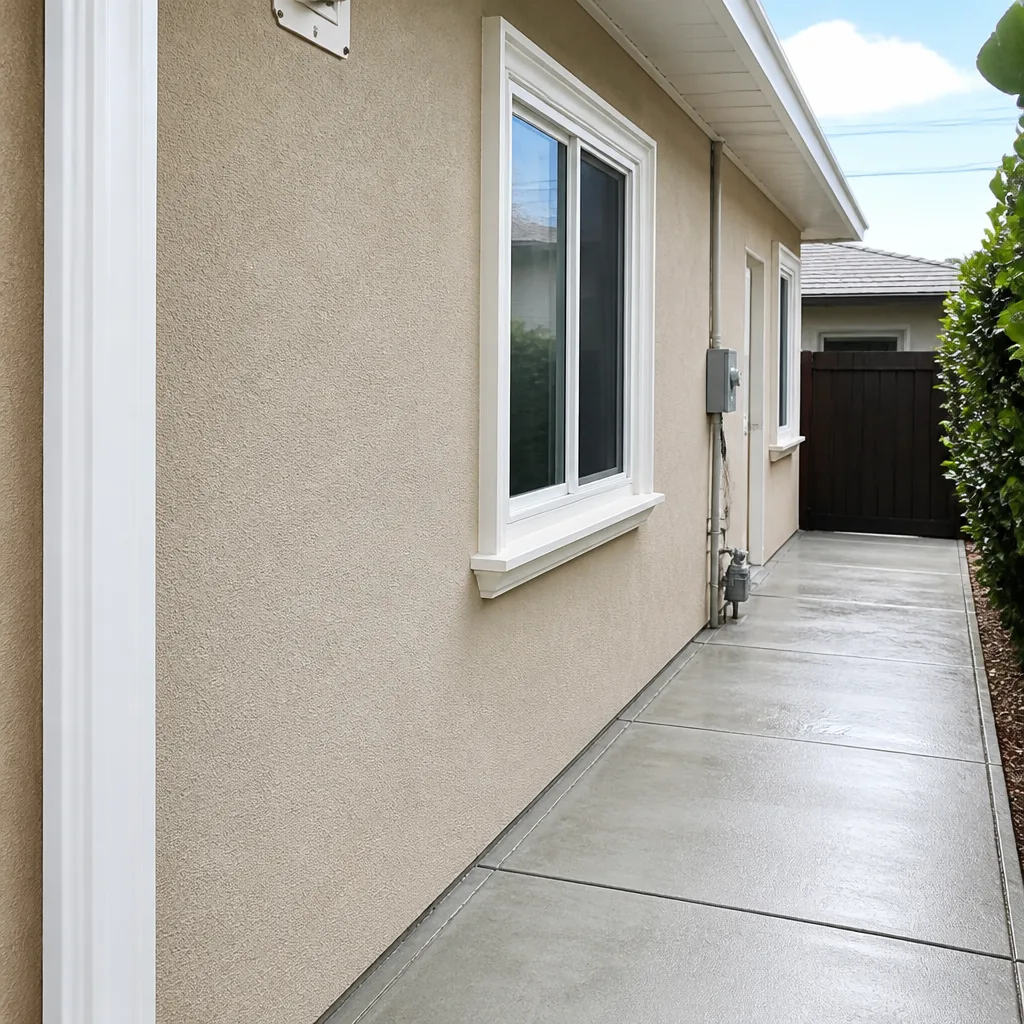 After
 Before
 After
 Before
 After