

Last updated October 30, 2026
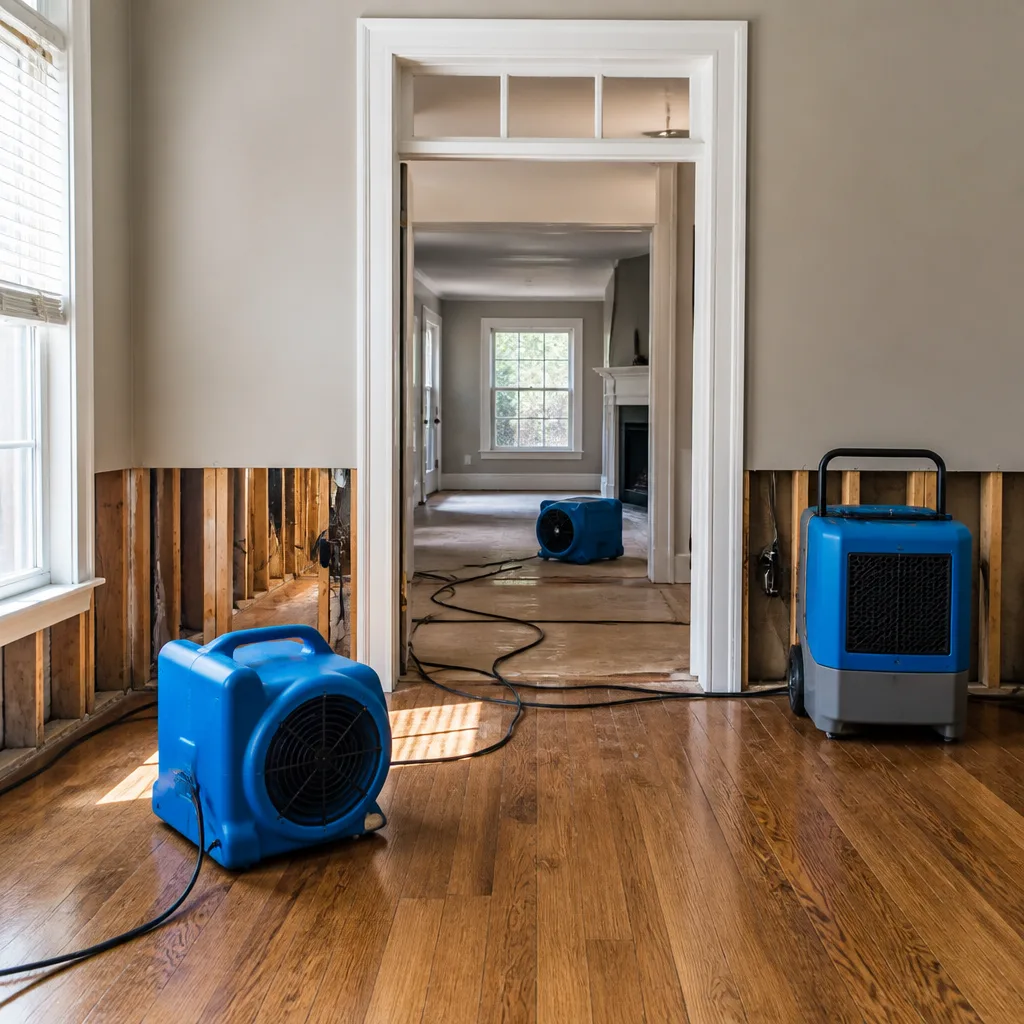 Water damage drying
 Fire & smoke cleanup
 Mold remediation
 Storm response
 Sewage cleanup
 Reconstruction
Free visual inspection and a written scope of work before any mitigation begins - photos, moisture readings, and drying logs go in your claim file
The scope we write is the scope we bill. Anything new gets shown to you, in writing, before we touch it.
Get your free estimateThe Complete Guide to Damage Restoration in Fullerton
Most Fullerton homeowners treat water, mold, and fire damage as three separate emergencies requiring three separate phone calls. That instinct is expensive. A homeowner who calls a water extractor but skips structural drying will often spend three to five times more on mold remediation within 90 days, because the moisture left inside wall cavities and under flooring never actually left the house. This guide explains the restoration sequence as a single, connected system, why the order of operations matters more than the equipment itself, and how Fullerton’s older housing stock creates moisture problems that The Complete Water Damage Restoration Guide for Fullerton Homeowners addresses in depth.
Restoration work we handle
Quick Answer
Damage restoration in Fullerton follows a four-phase sequence: mitigation, structural drying, remediation, and reconstruction. Each phase depends on the one before it, and skipping or rushing any phase compounds costs downstream. A single IICRC-certified contractor managing the full sequence, using commercial-grade drying equipment rather than rental units, is the most reliable way to return a Fullerton home to a documented, pre-loss condition without paying for avoidable demolition or mold growth later.
Table of Contents
- The Restoration Sequence: Why Order Determines Cost
- Why Fullerton’s Housing Stock Traps Moisture Differently
- What Industrial-Grade Equipment Actually Does at Each Phase
- One Contractor vs. Multiple Crews: The Coordination Tax
- How to Read a Restoration Scope of Work
- Insurance and Documentation: What Gets Paid, What Gets Denied
- Prevention and Early Warning for Fullerton Homes
- Common Mistakes to Avoid
- When to Call a Professional
- Frequently Asked Questions
- The Bottom Line
The Restoration Sequence: Why Order Determines Cost
Restoration is not a menu of services you choose from. It’s a chain. Break one link and every link after it gets weaker, more expensive, or both. The sequence runs like this: mitigation stops the active damage, drying removes the moisture you can’t see, remediation eliminates the biological and chemical hazards that moisture left behind, and reconstruction returns the structure to its pre-loss condition. In our experience, nearly every horror story about restoration costs traces back to a phase that was skipped, rushed, or handed off to a different crew that didn’t know what the last crew did.
- Mitigation (hours 0 – 24): Stop the source. Extract standing water, board up openings, tarp damaged roofs, shut off affected utilities. The goal is containment, not restoration. A proper mitigation crew documents everything with photos and moisture readings before touching a single wall.
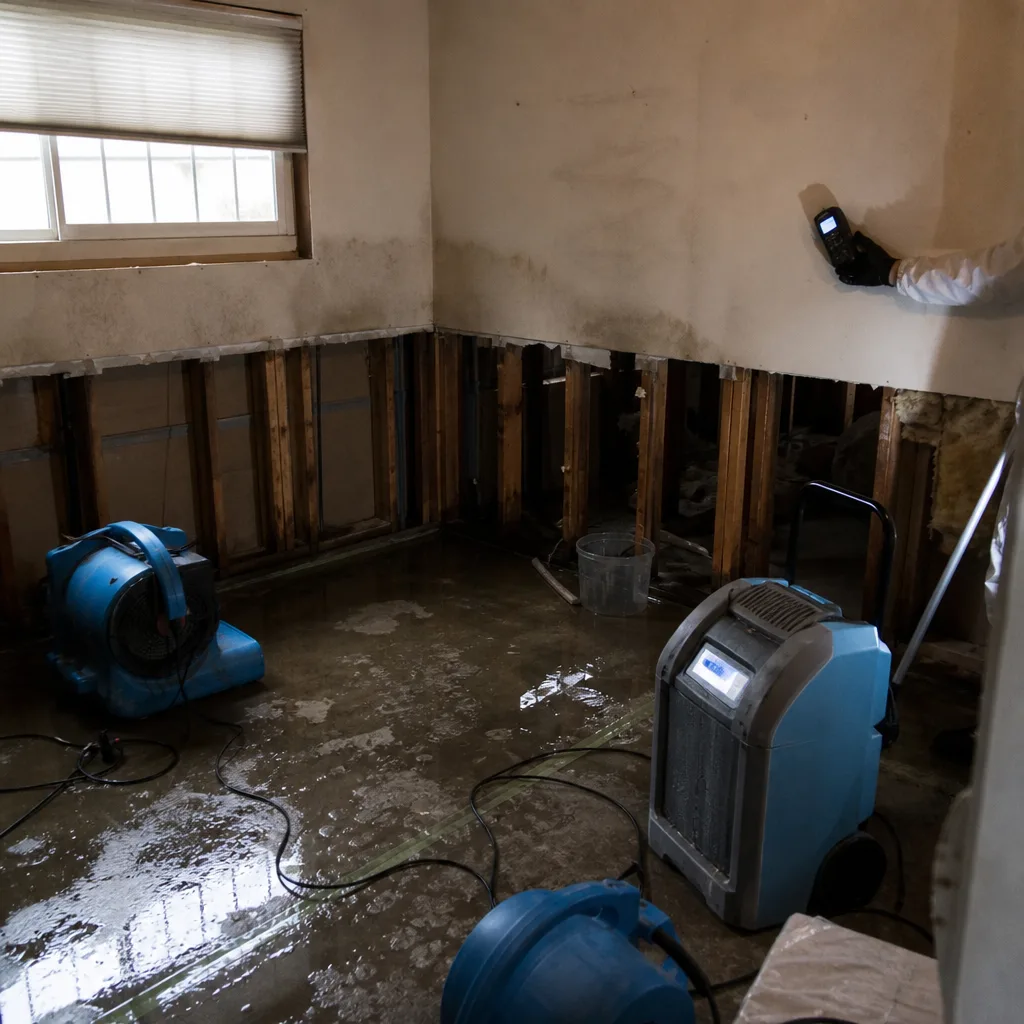
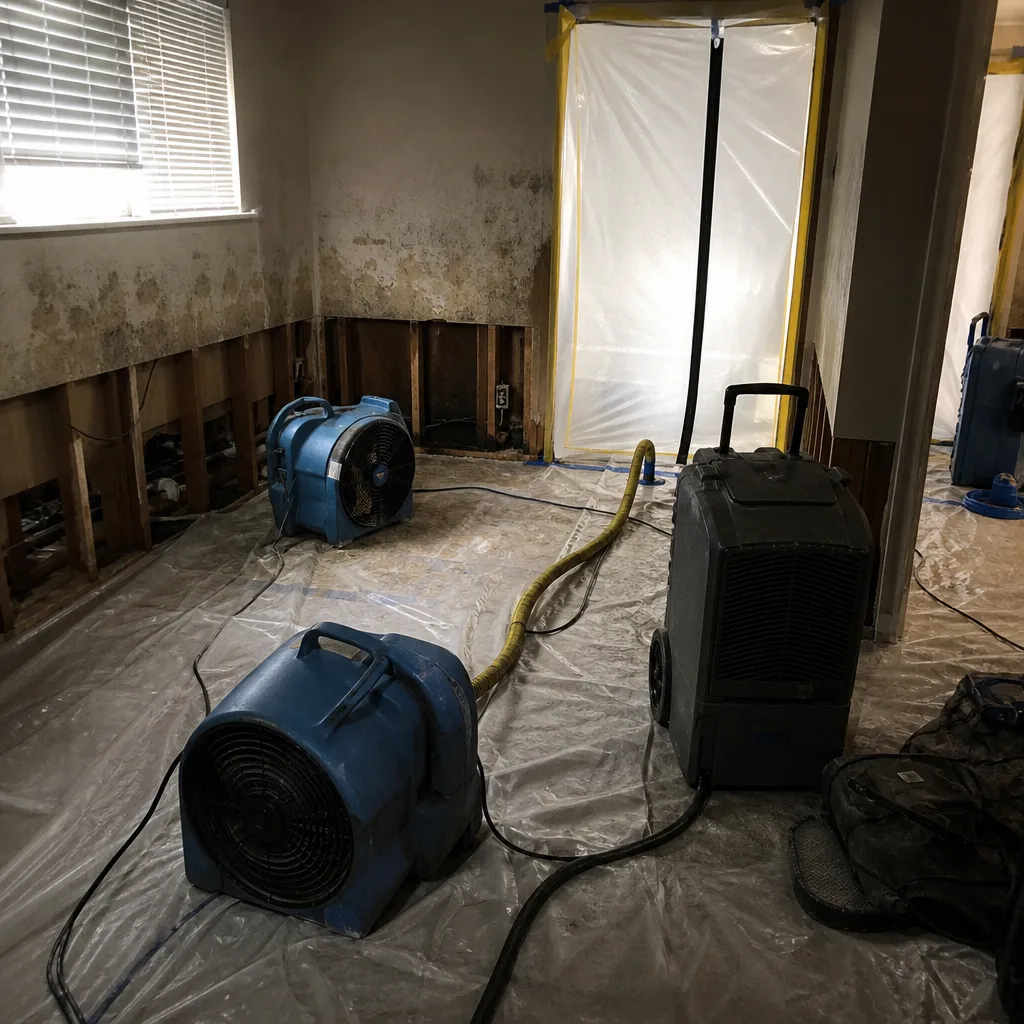
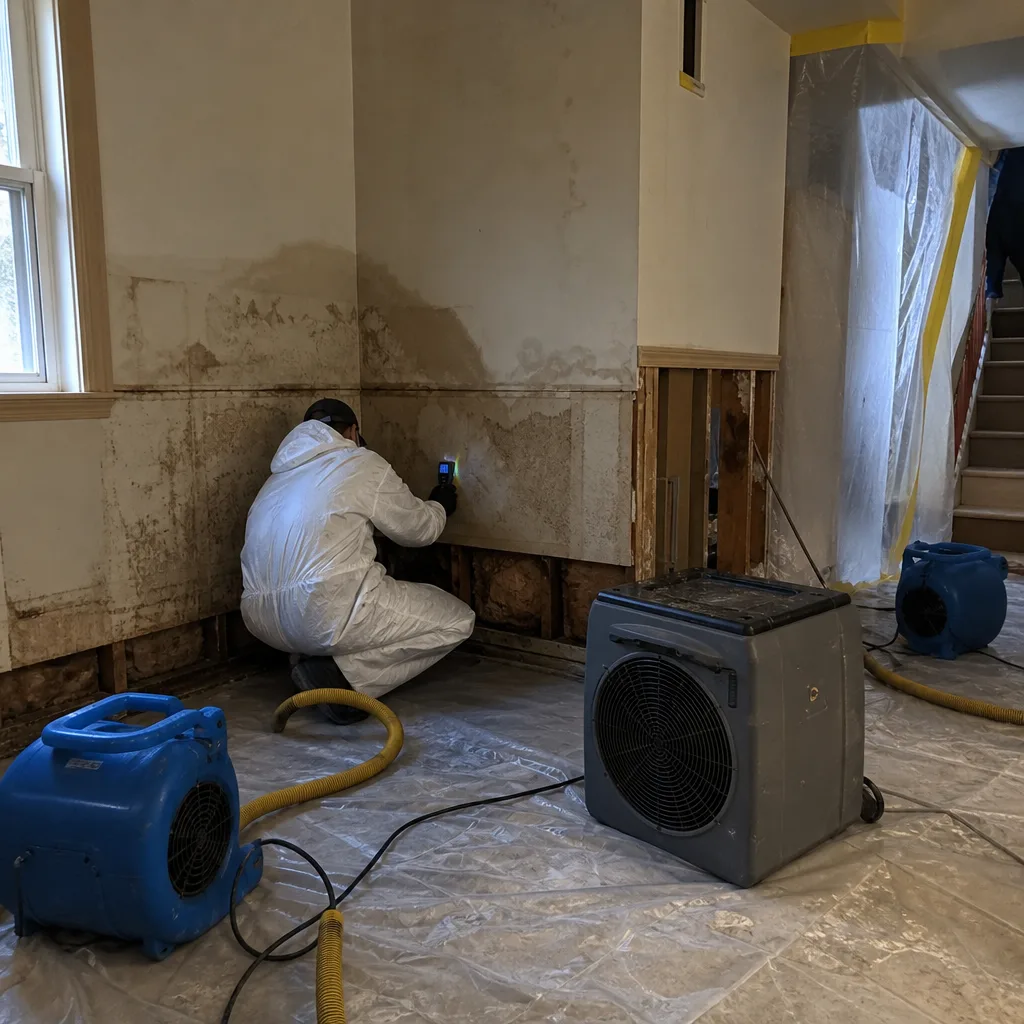
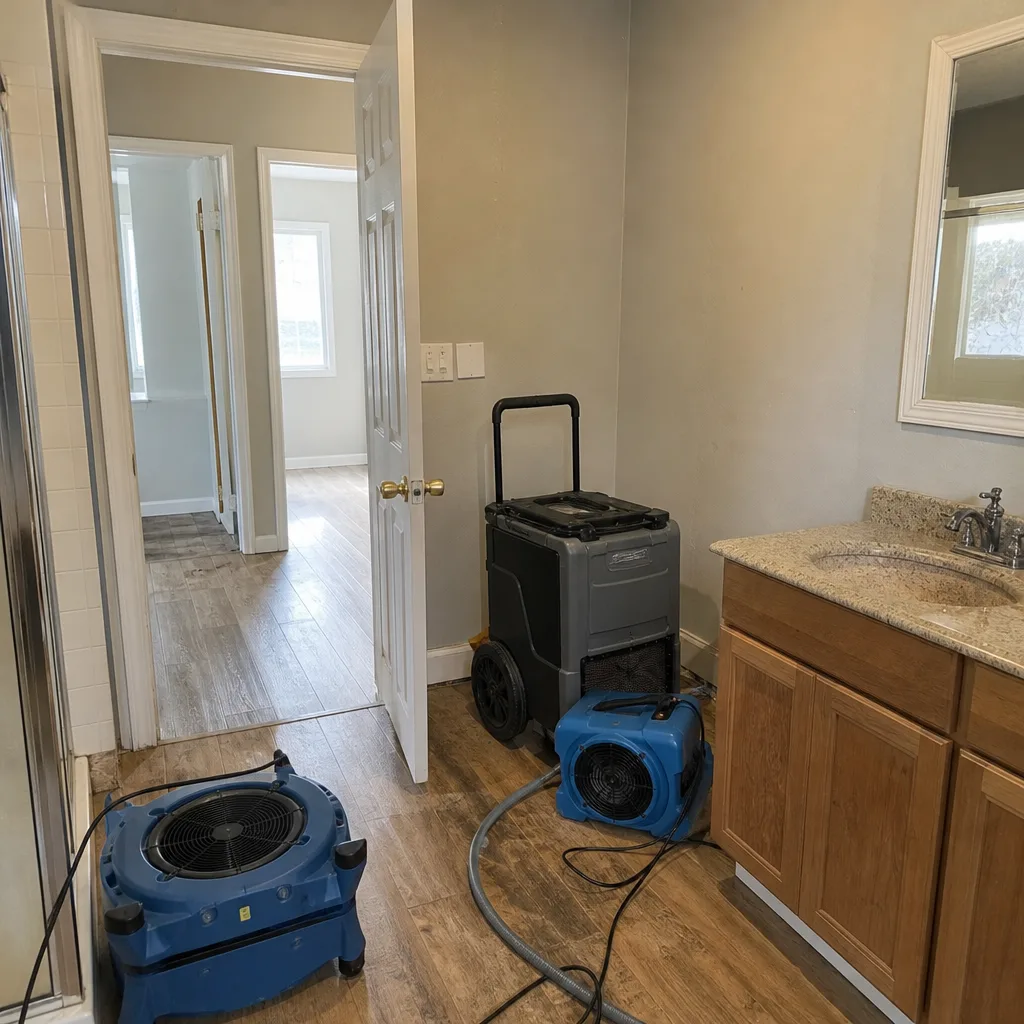
- Structural drying (days 1 – 5): Remove moisture trapped in materials. This is the phase most often skipped by “water extraction” companies that own a wet vac and a box fan. Real drying requires commercial dehumidifiers, air movers, and often injection drying for cavities. The drying phase ends when moisture meters and thermal imaging confirm materials have returned to acceptable moisture content, not when surfaces feel dry.
- Remediation (days 3 – 10, overlapping with drying): Address what the moisture activated: mold growth, bacteria, sewage contamination, or smoke residue. Remediation includes controlled demolition of unsalvageable materials, antimicrobial application, HEPA air scrubbing, and containment to prevent cross-contamination.
- Reconstruction (weeks 1 – 8, after all moisture and contamination are resolved): Rebuild drywall, flooring, cabinetry, paint, and finish work. Reconstruction should never begin until remediation is verified complete. Drywall installed over a damp stud cavity is a mold farm waiting for the next warm week.
Here’s the part most guides skip: phases two and three overlap, and the decision about what gets dried versus what gets demolished happens during that overlap. An Injectidry system can dry inside a wall cavity through a small access hole, saving the drywall and the labor of replacing it. A contractor who doesn’t own that equipment only has one option at that decision point: tear it out. The sequence stays the same. The cost does not.
Why Fullerton’s Housing Stock Traps Moisture Differently
Fullerton is not a new-construction city. Walk through neighborhoods like the area north of Chapman Avenue or the streets around Downtown Fullerton and you’ll see stucco exteriors, wood-frame construction, and homes built between the 1940s and 1970s. Those houses were built before modern moisture barriers and vapor retarders became standard. Stucco is porous. Wood framing wicks water. When a supply line lets go inside a wall, that wall doesn’t just get wet on the surface, it becomes a sponge from the inside out.
Older Fullerton homes also tend to have settled foundations and aging plumbing. Cast iron drain lines corrode from the inside. Galvanized supply pipes narrow with mineral buildup until a pinhole leak becomes a full rupture. The water that escapes doesn’t pool on the slab where you can see it. It follows gravity into the framing, under the flooring, and into the crawlspace. By the time a homeowner notices a bubbling baseboard or a musty smell in the hallway, the moisture has often been present for weeks.
Fullerton’s Mediterranean climate adds another layer. Warm, dry summers and mild, occasionally wet winters create a cycle where homes dry slowly on their own during the wet season but bake during heat waves. Mold that goes dormant in dry air reactivates the moment humidity rises. A crawlspace that got wet in January and never received proper structural drying will grow mold in March when temperatures climb and trapped moisture condenses on cool surfaces. We’ve seen this pattern repeatedly in Fullerton homes where the original water damage was “handled” by a handyman with a shop vac.
The practical takeaway: if your Fullerton home was built before 1980, assume that any water intrusion carries higher hidden-moisture risk than a newer build. That assumption should change how you evaluate contractors, not just what you expect them to do. A contractor who treats a 1965 stucco home the same way they treat a 2015 tract house is making a category error that will cost you later.
What Industrial-Grade Equipment Actually Does at Each Phase
There’s a reason water damage restoration in Fullerton requires equipment you can’t rent at a big-box store. Consumer-grade fans and rental dehumidifiers move air and pull some moisture. Commercial restoration equipment does something different: it creates the precise environmental conditions required to force moisture out of materials that are not exposed to moving air. The difference is measurable, and it shows up as either a dried structure or a future mold problem.
Here’s what the equipment actually does, phase by phase:
- Extraction (mitigation): Truck-mounted or portable extraction units remove standing water before it migrates. A truck-mounted unit pulls water at several times the speed and pressure of a rental carpet extractor. The faster water leaves, the less it spreads into walls, subflooring, and cabinetry.
- LGR dehumidifiers (drying): Low-grain refrigerant (LGR) dehumidifiers remove moisture from the air at levels consumer units can’t reach. Dri-Eaz and Phoenix units, the two most common commercial lines in restoration fleets, pull air down to the low grain-per-pound levels that force water out of wood and drywall through vapor pressure differential. This is the actual mechanism of structural drying. A rental dehumidifier from a home improvement store typically stalls at humidity levels that leave wood too wet to close up.
- Air movers (drying): Commercial air movers create surface turbulence that breaks the boundary layer of saturated air against wet materials, accelerating evaporation. Placement geometry matters. One air mover aimed wrong does less than half the work of one aimed correctly at a 45-degree angle to the surface.
- Injectidry (drying, specialty): This system forces dry air directly into sealed wall and floor cavities through small injection ports. It’s the difference between drying a wall in place and demolishing it. A contractor with Injectidry on hand can save tile floors, hardwood, and plaster walls that a crew without injection drying has no choice but to remove and replace.
- Thermal imaging and moisture meters (verification): These don’t dry anything. They prove the drying worked. An infrared camera shows temperature differentials that indicate hidden moisture. Pin and pinless moisture meters quantify moisture content in wood, drywall, and concrete. The drying phase is not complete until these readings show materials have returned to their dry standard, and that data should appear in your documentation.
- HEPA air scrubbers and ATP testing (remediation): HEPA filtration removes airborne mold spores, dust, and particulates during remediation. ATP testing measures biological contamination on surfaces after cleaning by detecting adenosine triphosphate, the energy molecule present in all living cells. A passing ATP reading is an objective, measurable “clean” standard, not a visual judgment call.
One distinction worth making clearly: a restoration company that owns this equipment makes different decisions than one that rents it per job. When equipment costs money every day it sits on-site, there’s a financial incentive to wrap up drying quickly and hope for the best. When the equipment is owned, the company can dry for as long as the readings require. That’s not marketing language. It’s arithmetic.
One Contractor vs. Multiple Crews: The Coordination Tax
Here’s a scenario we see too often in Fullerton. A pipe bursts on a Tuesday. The homeowner calls a water mitigation company from an internet search. That company extracts the water and sets up a couple of fans, then leaves. Three weeks later, the homeowner smells mold and calls a separate mold remediation company. That company opens the wall, finds severe framing damage, and tells the homeowner they need a third company for reconstruction. Each handoff resets the clock, reopens insurance questions, and creates a new opportunity for miscommunication about what was done, what was documented, and what still needs to happen.
The alternative: one restoration contractor, IICRC-certified in water, mold, and fire damage restoration, manages the entire sequence from first extraction to final coat of paint. The same crew that set up the drying equipment knows where the moisture readings were elevated. The same project manager who documented the initial damage for your insurer is the one coordinating the reconstruction schedule. When the scope shifts mid-project because hidden damage is discovered, the change flows through a single chain of communication instead of three separate companies arguing about who’s responsible for what.
This matters for insurance too. Adjusters work faster when documentation is consistent. If three contractors submit three different styles of estimates, three different photo sets, and three different moisture maps, the adjuster has to reconcile everything. Delays stack up. A single point of accountability with a single documentation standard moves claims through faster and reduces the chance that a legitimate cost gets challenged because the paperwork was inconsistent.
The handoff gap is where costs multiply. Every time one contractor walks away and another walks in, something gets lost. Sometimes it’s a moisture reading. Sometimes it’s a photo of a crack that later becomes a dispute. Sometimes it’s an entire phase of work that the next contractor assumes was already done. Fullerton homeowners who choose one qualified firm for the entire Mahogany Water Damage home sequence avoid paying the coordination tax entirely.
How to Read a Restoration Scope of Work
A scope of work is a written document that lists exactly what a contractor will do, what materials they’ll use, what they’ll remove, and what they’ll replace. Reading one carefully is the single best defense against paying for work that wasn’t done or missing work that should have been included. Most homeowners sign scopes without understanding them because the documents look dense and technical. Here’s how to break one down.
- Look for the drying plan. If the scope mentions only “set up drying equipment” without specifying the types of equipment, the number of units, and the drying goals, that’s a red flag. A real drying plan names the equipment (LGR dehumidifiers, air movers, injection drying if applicable) and states the target moisture content or dry standard that marks the end of the drying phase. If you can’t tell from the scope how the contractor will know the structure is dry, they probably can’t tell you either.
- Check the demolition list. What is being removed, and why? A scope should say “remove and replace drywall in hallway, north and west walls, up to 3 feet” rather than “remove damaged materials.” Specificity is your protection. If the scope is vague and the contractor later removes more than you expected, you’ll have a hard time arguing the bill. If the scope uses injection drying to avoid removing walls that a less-equipped contractor would demolish, you’ll see the savings on paper before work begins.
- Verify the remediation protocol. For mold or sewage, the scope should name the containment approach, the cleaning agents, the HEPA air scrubbing plan, and the post-remediation testing method. ATP testing is the industry standard for verifying cleanliness. If the scope says “clean affected areas” without a testing step, that’s a softer standard.
- Confirm the endpoint. Reconstruction scopes should specify materials (grade of drywall, type of flooring, paint finish) and a final condition: “return to pre-loss condition” is the industry term. If the scope meets that standard in writing and the contractor holds the certifications to back it up, you have a defensible agreement.
One more practical note: a scope of work should be created before work starts, not after. Any contractor who begins demolition or drying without a written scope is asking you to trust them with an open-ended budget. Our advice is to refuse that arrangement. Get the scope in writing, ask about anything you don’t understand, and only then sign. A legitimate restoration company will have no problem with this. A contractor who pushes back is telling you something about how they handle accountability.
Mold Remediation in Fullerton: The Phase Most Often Underestimated
Mold is the ghost that haunts incomplete water damage restoration. You can’t always see it. You can’t always smell it in the early stages. It grows inside wall cavities, under flooring, behind baseboards, and inside HVAC ductwork. By the time mold becomes visible on a surface, the colony behind the surface is often much larger. This is why mold remediation in Fullerton requires a different skill set and equipment profile than water extraction.
Fullerton’s climate creates a specific mold pattern. The city’s summer heat dries the air, but coastal moisture lingers in the early mornings and during marine-layer days. A wall cavity that contains damp wood from a past leak will maintain internal humidity even when the ambient air is dry, because the water is trapped inside a semi-sealed space. Mold can grow in that cavity for months without producing any visible signs on the painted surface. The first sign is often a persistent musty smell that seems to come from nowhere, or allergy symptoms that worsen in one particular room.
Proper mold remediation is a contained, controlled process. The affected area gets sealed with plastic sheeting and negative air pressure so that disturbed spores can’t spread into the rest of the house. HEPA air scrubbers run continuously. Contaminated materials that can’t be cleaned are removed, bagged, and disposed of properly. Remaining surfaces are cleaned with antimicrobial agents and verified with ATP testing. Only then does reconstruction begin.
A common question from Fullerton homeowners is whether they can handle “a little mold” themselves. The honest answer depends on the size and location. Surface mold on a bathroom tile from condensation is a cleaning problem. Any mold covering more than about 10 square feet, or mold that appears after water damage, is a remediation problem. Behind walls, under floors, inside ductwork: those are professional jobs. Attempting DIY mold removal in an enclosed space without proper containment typically spreads more spores than it removes, and the problem comes back worse.
Fire Damage Restoration in Fullerton: The Triple Threat
Fire damage is really three types of damage layered together. There’s the burn damage: charred framing, destroyed drywall, melted materials. There’s smoke damage: soot deposited on every surface, penetrating into porous materials, riding air currents into rooms far from the fire’s origin. And there’s water damage from the firefighting effort, which introduces moisture into exactly the same building materials that smoke has contaminated. Fire damage restoration in Fullerton requires addressing all three simultaneously, in the right sequence.
Soot is not dirt. It’s a complex chemical residue that continues to corrode and stain surfaces long after the fire is out. Different materials require different cleaning methods: dry soot on porous surfaces gets cleaned differently than oily soot from a grease fire or protein residue from a kitchen fire. Soot that remains in wall cavities continues to off-gas odor for months. That’s why fire restoration includes cleaning inside walls, not just surfaces.
Smoke odor is one of the hardest problems in restoration to fully resolve. Smoke molecules are tiny, they penetrate deeply, and they linger. Standard cleaning removes surface soot, but odor removal requires techniques like thermal fogging, ozone treatment, or hydroxyl generation, followed by sealing of affected structural materials. If the odor remains after cleaning, it means smoke residue is still present somewhere: in insulation, behind drywall, in the HVAC system. A fire restoration scope that doesn’t address the HVAC system is incomplete.
The water used to extinguish a fire creates the same moisture problems described throughout this guide, compounded by the fact that fire damage often opens the structure to outside air. Fullerton’s dry summers can actually mask the moisture problem temporarily, because surfaces dry quickly in low-humidity air. But the moisture driven into framing and subflooring behaves exactly like any other hidden water: it becomes mold if not properly dried. Fire damage restoration must include structural drying for the firefighting water, or the project trades ash damage for mold damage.
Insurance and Documentation: What Gets Paid, What Gets Denied
Most Fullerton homeowners navigating restoration for the first time are also navigating an insurance claim for the first time. The two processes are intertwined, and the quality of your restoration documentation directly affects what your insurer pays. Three things matter most: time, detail, and consistency.
Insurance policies require prompt reporting and mitigation. If water sits unaddressed for days or weeks, insurers can argue that the resulting mold or rot is “neglect” rather than a covered loss. A restoration contractor who documents the initial condition, the mitigation steps, and the drying progress with photos and moisture readings creates a record that supports your claim. That record should show the condition at first arrival, the work performed, and the final verified condition. Generic before-and-after photos don’t do that. Time-stamped photo logs and moisture maps do.
Direct insurance billing is another practical advantage. A restoration contractor who works with insurers regularly can submit estimates in the format adjusters expect, using the line-item standards (Xactimate is the industry standard software) that most carriers recognize. This speeds up the approval process and reduces back-and-forth. It also reduces the chance that legitimate costs get challenged because they were submitted in an unfamiliar format.
One piece of advice we give every Fullerton homeowner: never let anyone start restoration work before you’ve documented the damage yourself, even if it’s just phone photos. If the contractor’s documentation conflicts with what you saw, your own record becomes the tiebreaker. And get every agreement in writing. Verbal promises about what insurance will cover, what work will cost, or what materials will be used are worth the paper they’re printed on, which is to say, nothing.
Prevention and Early Warning for Fullerton Homes
The best restoration is the one you never need. For Fullerton homeowners, prevention breaks into two categories: structural maintenance and early warning. Our Damage Restoration Emergency Preparedness Guide for Fullerton Homes covers additional steps.
Structural maintenance targets the systems most likely to fail in older homes. Replace aging supply lines before they burst. The rubber hoses on washing machines are the most common source of sudden interior flooding we see, and they cost less than twenty dollars to replace with braided steel lines. Clean gutters and downspouts so water flows away from the foundation, not into it. Check the water heater annually: a rust-colored drip at the base is a precursor to a full tank failure. If your home has a crawlspace, inspect it after heavy rains for standing water or condensation. Fullerton doesn’t get much rain, but the storms that do arrive can reveal drainage problems that have been developing for years.
Early warning systems are cheap insurance. Leak detectors placed under sinks, behind washing machines, and near water heaters cost under fifty dollars and alert you to the problem before it becomes a disaster. Home water monitoring systems shut off the supply automatically when they detect unusual flow patterns, which helps in scenarios where no one is home for days. For Fullerton homeowners who travel or leave properties vacant for extended periods, these systems are not a luxury. A leak that runs for three days inside a vacant 1960s stucco home is a six-figure restoration project. The same leak caught in hour three is an inconvenience.
Fire prevention follows the same logic. Test smoke detectors monthly and replace batteries annually. If your Fullerton home still has original aluminum wiring from the 1960s or 1970s, have a licensed electrician inspect it: aluminum wiring connections loosen over time and are a known fire hazard. Dryer vents should be cleaned at least annually; lint buildup is one of the most common causes of preventable residential fires in Orange County.
Common Mistakes to Avoid
- Waiting to call. Water damage compounds hourly. What could have been extracted and dried in three days becomes a mold remediation project in three weeks. In Fullerton’s mild climate, mold can begin growing within 48 hours of a water event. The clock starts at the moment of damage, not the moment you notice it.
- Hiring a water extractor instead of a restoration contractor. A company that only extracts water but doesn’t perform structural drying is handing you an incomplete job. Ask any contractor you’re considering: “What equipment do you use to verify the structure is dry before you close up the walls?” If they can’t answer specifically, keep looking.
- Treating mold as a cosmetic problem. Painting over mold doesn’t kill it. Bleaching visible surface mold doesn’t address the colony inside the wall cavity. Mold remediation is a containment and removal process, not a cleaning task.
- Assuming insurance will cover everything. Policies have exclusions, limits, and deductibles. Gradual leaks, pre-existing mold, and maintenance failures are frequently excluded. Know what your policy says before you need it.
- Rushing reconstruction. Drywall installed over a still-damp cavity looks perfect for a month, then develops staining, odor, and mold as trapped moisture migrates outward. If your contractor wants to close up walls before moisture readings confirm acceptable levels, you’re about to pay for the same work twice.
- Choosing the lowest bid without reading the scope. Two “restoration” estimates can differ by thousands of dollars because one includes proper drying, verification, and documentation while the other includes extraction and a fan. Compare scopes side by side. The lower bid often reflects the missing phases, not a better deal.
- Skipping post-remediation testing. “Looks clean” is not a standard. ATP testing gives you a numerical verification that biological contamination has been removed. A contractor who doesn’t offer post-remediation verification is asking you to trust their judgment instead of a measurement.
When to Call a Professional
Call a restoration professional for any water event that goes beyond a small spill contained to a hard surface, any visible mold growth larger than a minor surface patch, or any fire damage beyond a stovetop mishap. More specifically: flooded rooms, water from a plumbing failure, sewage backup, water that has penetrated walls or flooring, musty odors you can’t source, visible mold on walls or ceilings, and any smoke or soot event. These situations require equipment and verification that homeowner tools can’t provide. Fullerton homeowners can reach a team with the right equipment and certifications by calling (855) 356-4970. Estimates are free, and the call itself might save you from a much larger project later. For more guides & resources, visit our blog.
Frequently Asked Questions
Water damage restoration in Fullerton typically ranges from $2,500 to $7,500 for moderate water events when structural drying is included, while mold remediation runs $1,500 to $6,000 depending on the affected area size, and fire damage restoration typically starts around $5,000 and climbs based on square footage and smoke penetration depth. These ranges reflect Fullerton’s mix of older stucco and wood-frame homes, which often require more drying time than newer construction. For a detailed breakdown, see our Damage Restoration Cost Breakdown: The Fullerton Homeowner’s Reference for 2026. Every job is different, and the only way to get an accurate number is a written scope after an on-site assessment. Call (855) 356-4970 for a free estimate.
A restoration company serving Fullerton should arrive within hours of an emergency call, not days. The first 24 hours determine how much water migrates into walls and flooring, and every hour of delay expands the affected area. If you have active water flowing or standing water you can’t extract yourself, call immediately. The phone call costs nothing, and dispatch should happen the same day, often within one to two hours.
Insurance typically covers sudden and accidental water damage from events like burst pipes, appliance failures, or storm intrusion, but it may not cover gradual leaks, pre-existing mold, or maintenance issues that accumulated over time. The best way to protect your claim is to document everything, report the damage promptly, and work with a contractor who provides the formal documentation adjusters expect. A restoration contractor with direct insurance billing experience can help you understand what your policy covers before work begins.
You need full-scale drying if water has penetrated anything beyond a hard surface. Fans dry surface moisture. Commercial LGR dehumidifiers and air movers drive moisture out of wood framing, drywall, subflooring, and insulation. Consumer equipment simply cannot achieve the low humidity levels required to dry trapped moisture inside building materials. A wall that feels dry to the touch can still be wet inside, and that’s exactly where mold starts.
Mold remediation in a Fullerton home typically takes three to seven days for a contained area like a bathroom or closet, and one to two weeks for larger affected areas or multiple rooms. The timeline depends on the extent of the mold, whether structural drying is still required, and whether reconstruction follows remediation. Post-remediation ATP testing adds a day but provides the verification that the space is actually clean, not just visually acceptable.
It depends on the scope. Water extraction and drying usually allow you to stay, though you’ll live with noise from air movers and dehumidifiers for several days. Mold remediation requires containment barriers and negative air pressure, and staying in the home is generally safe for unaffected areas, but bedrooms within or adjacent to the containment zone should be vacated. Fire damage restoration often requires temporary relocation because smoke residue and cleaning chemicals affect air quality. Your contractor should give you a clear occupancy recommendation in the written scope.
The Bottom Line
Damage restoration in Fullerton is a sequence, not a menu. Mitigation stops the loss, drying removes the hidden moisture, remediation eliminates the contamination, and reconstruction returns the home to standard. When any phase is skipped or rushed, the next phase costs more, and the final result falls short. Fullerton’s older housing stock demands more careful drying than generic advice assumes, and a contractor with commercial-grade owned equipment, injection drying capability, and IICRC-certified processes is positioned to dry smarter and demolish less. Whether you’re dealing with a burst pipe, a musty smell that won’t go away, or the aftermath of a fire, the smartest move is the same: call a professional who handles the entire sequence under one roof. Mahogany Water Damage offers free estimates in Fullerton at (855) 356-4970.
Written by the team at Mahogany Water Damage, serving Fullerton since 2011.
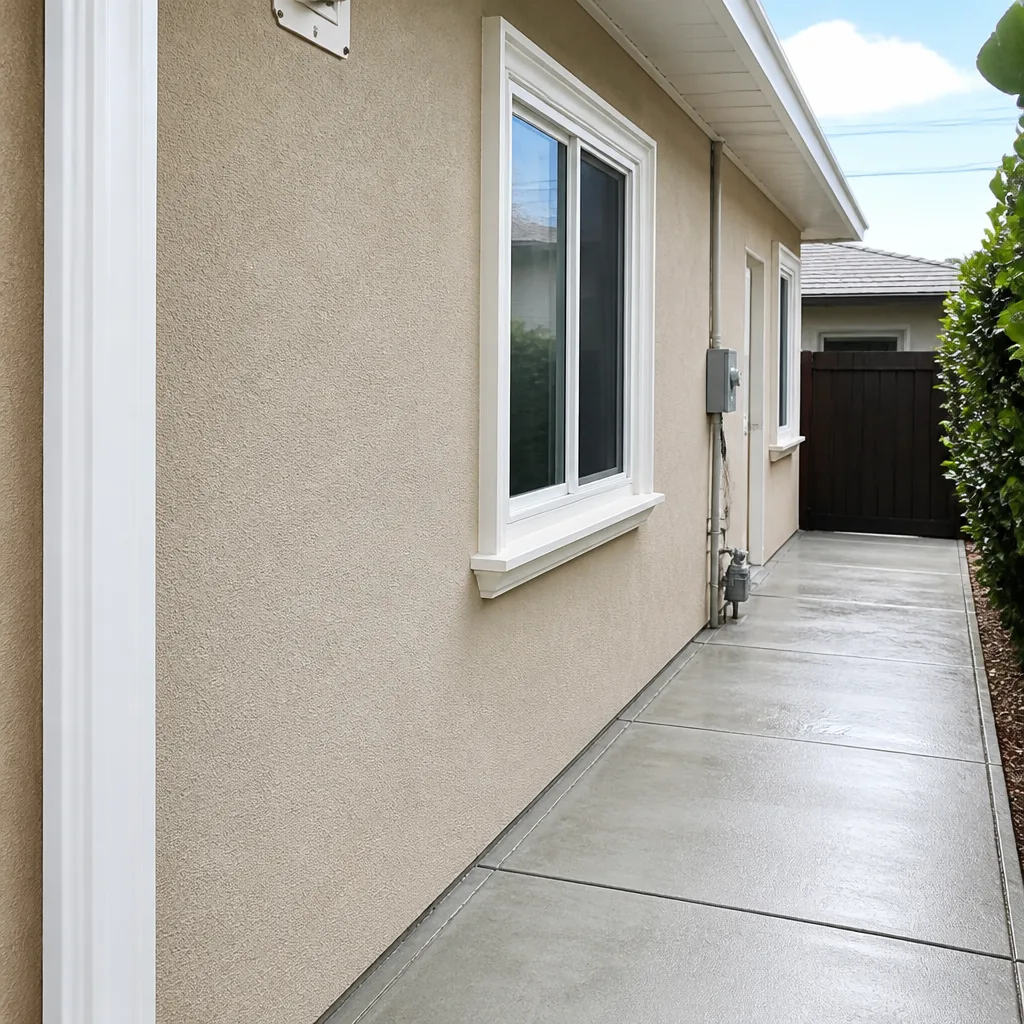
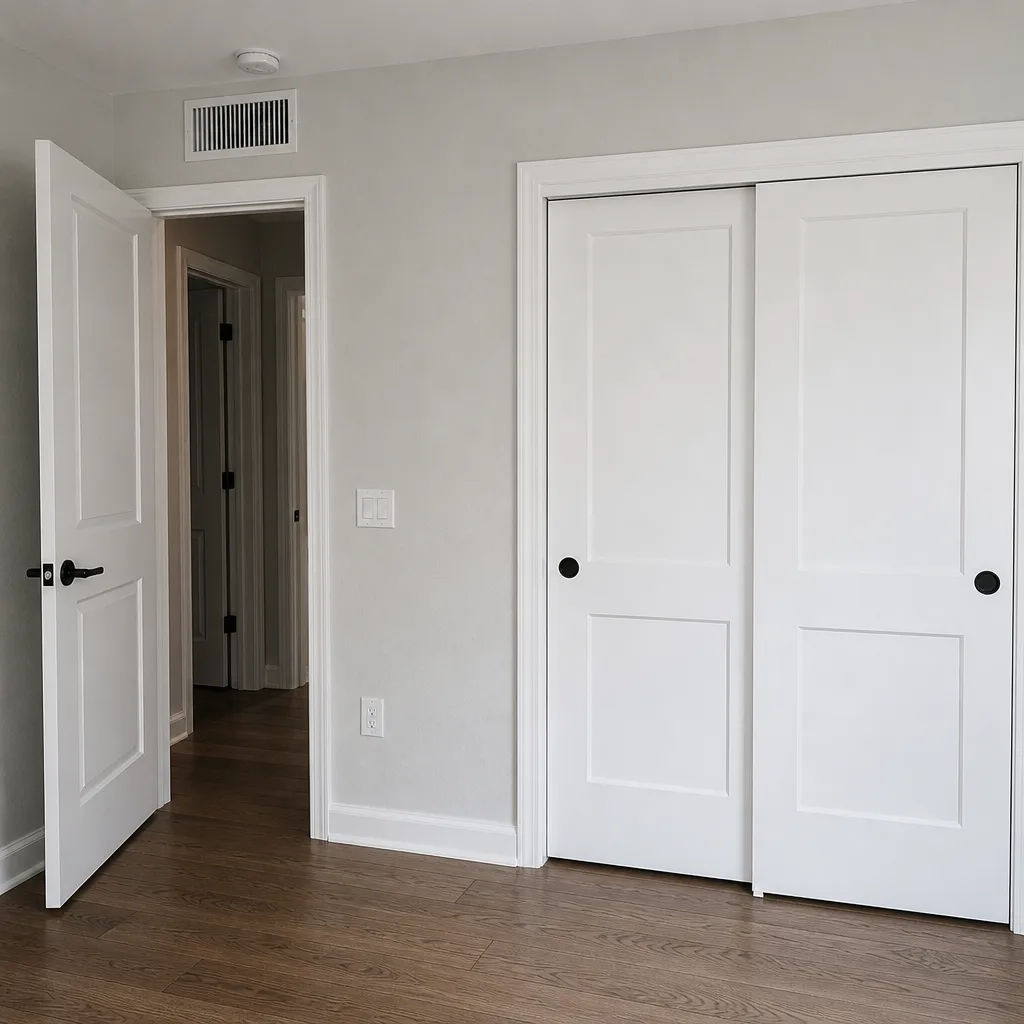
See the difference
 Before
 After
 Before
 After
 Before
 After