

Last updated October 30, 2026
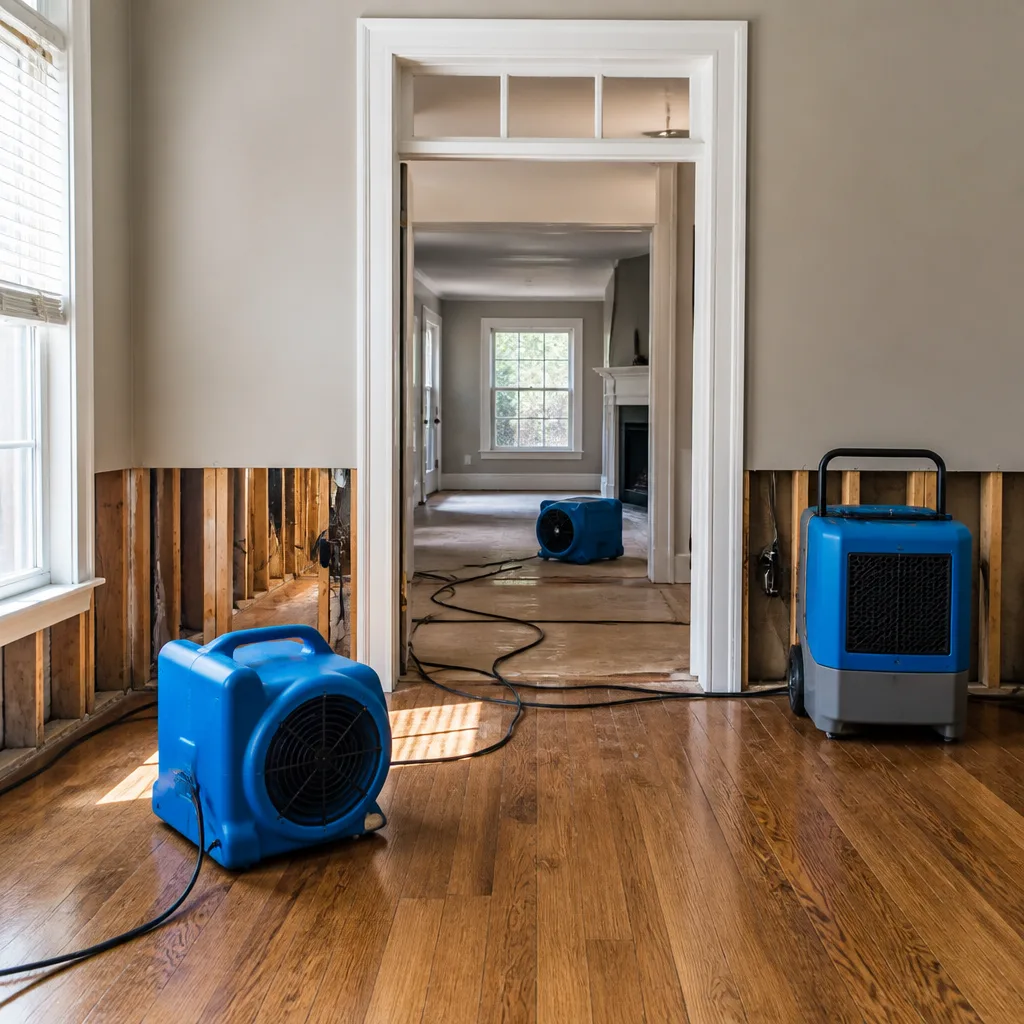 Water damage drying
 Fire & smoke cleanup
 Mold remediation
 Storm response
 Sewage cleanup
 Reconstruction
Free visual inspection and a written scope of work before any mitigation begins - photos, moisture readings, and drying logs go in your claim file
The scope we write is the scope we bill. Anything new gets shown to you, in writing, before we touch it.
Get your free estimateSeasonal Damage Restoration Care for Fullerton: Year-Round Homeowner’s Guide
The highest water damage call volume in Fullerton doesn’t come during rain. It comes in the first 72 hours after the first significant rain following a five-month dry season, when dried-out seals and cracked caulk fail simultaneously. This guide walks through the four distinct vulnerability windows Fullerton homeowners face each year, what actually fails during each one, and the specific inspection actions that catch problems before they become restoration projects requiring our Water Damage Restoration Maintenance Checklist for Fullerton Homeowners.
Quick Answer
Fullerton’s mild climate creates four seasonal damage risk windows: pre-rain seal failures (October), Santa Ana wind stress (October through March), post-rain subsurface moisture in stucco cavities (November through April), and summer HVAC condensate overflow (June through September). Each window requires specific inspection actions, and most can be completed in under 30 minutes per season. The full month-by-month calendar below breaks down exactly what to check, when, and why it matters in Fullerton specifically.
Restoration work we handle
Table of Contents
- Window One: The Pre-Rain Seal and Flashing Inspection (October)
- Window Two: Santa Ana Wind Season Stress (October through March)
- Window Three: Post-Rain Subsurface Moisture in Stucco (November through April)
- Window Four: Summer HVAC Condensate Management (June through September)
- The Month-by-Month Fullerton Maintenance Calendar
- Common Mistakes to Avoid
- When to Call a Professional
- Frequently Asked Questions
Window One: The Pre-Rain Seal and Flashing Inspection (October)
Fullerton averages less than 14 inches of rain per year, and almost all of it falls between November and March. That means your home’s exterior seals sit through five to six months of zero precipitation, intense sun, and repeated heating-cooling cycles every single year. By October, the caulk around windows, doors, and exterior penetrations has dried, cracked, or pulled away from the surfaces it was meant to protect. When the first real storm arrives, water finds those gaps immediately.
In our experience, the first rain of the season reveals every failed seal on a house at once. Homeowners in neighborhoods like Sunny Hills and Raymond Hills, where many homes date from the 1960s and 1970s, deal with original window flashing and door thresholds that have been through fifty-plus dry-wet cycles. The degradation isn’t dramatic. It happens in millimeter increments. But by the time October arrives, the cumulative damage is real.
Here is the pre-rain inspection protocol, in order of priority:
- Check all exterior caulk joints. Walk the perimeter of the house and look at every window frame, door frame, corner joint, and penetration point. If you can see a gap wider than a credit card edge, or if the caulk has become brittle and chalky to the touch, it needs replacement before the first storm.
- Inspect roof flashing around chimneys, vent pipes, and skylights. Flashing in Fullerton endures more UV exposure than flashing in coastal communities because of our clearer sky profile. Look for lifted edges, rust, or separated seams. A lifted flashing edge can direct water under shingles rather than over them.
- Clear roof valleys and scuppers. Eucalyptus and pepper tree debris from Fullerton’s dry season accumulates in these drainage paths. Once wet, that organic mass acts like a dam and forces water sideways into underlayment gaps.
- Test every downspout and leader. Disconnected leaders are a top cause of foundation-adjacent saturation in Fullerton. Water that should be carried six feet away from the slab instead pools at the perimeter and wicks under the sill plate.
- Inspect exterior wall penetrations. Hose bibs, conduit runs, dryer vents, and HVAC line sets all pass through the building envelope. Each one is a potential water entry point if the sealant ring has failed.
This inspection takes about 45 minutes. A tube of exterior-grade sealant and a caulk gun solve most of what you’ll find. But if you discover stucco cracks wider than 1/8 inch, or if you see evidence that water has already been getting behind the envelope, that’s a different conversation. Stucco is porous. Water that gets behind it doesn’t dry quickly, and Fullerton’s clay-heavy soils hold moisture against foundations for weeks after a rain event. What starts as a caulk gap in October can become a water damage restoration in Fullerton project by December if water gets into wall cavities.
Window Two: Santa Ana Wind Season Stress (October through March)
Santa Ana winds are a defining feature of Fullerton’s autumn and winter. These northeast-to-southwest flows can sustain 40 to 60 mph gusts for days at a time, and they arrive with single-digit relative humidity. The combination of mechanical wind force and rapid atmospheric moisture stripping creates a stress profile that is unique to this region and poorly understood by most maintenance checklists written for other climates, which is why we also recommend our Water Damage Restoration Troubleshooting: Common Problems and How to Fix Them for deeper context.
The damage is rarely obvious. Santa Ana winds don’t knock over healthy trees or rip shingles off intact roofs the way hurricane-force winds do. What they do is subtler and more insidious. They shift attic insulation. They exploit small gaps in vent seals. They accelerate the drying of any exposed wood, which increases the gap size at connection points. And they drive airborne debris into every external opening on the house.
Here is what to check during Santa Ana season, one task per wind event:
- Attic insulation displacement. Strong sustained winds create negative pressure zones in attic spaces, especially in gable-end attics common to Fullerton’s older housing stock. If insulation gets blown away from the eaves, heat escapes and cold spots form. Those cold spots become condensation points when the next rain system arrives, and condensation in an attic is a slow, silent moisture source that feeds mold.
- Vent seals and screens. Ridge vents, gable vents, and soffit vents all have sealing edges and screen components. Santa Ana winds pressurize these differently than normal winds. A vent that has worked fine for ten years can become a water entry point because the wind has deformed the seal just enough for the next rain to exploit.
- Wood-frame connection stress. This is a long-term observation point rather than a single-season fix. Rapid humidity swings, from 80 percent relative humidity down to under 10 percent in a matter of hours, cause wood to shrink at rates that exceed normal seasonal movement. Fullerton’s older roof decks and wall framing experience this cycling dozens of times per year. Over time, nail pops and loosened connections become entry points for rainwater.
- Debris accumulation on the roof and in gutters. A single Santa Ana event can deposit as much leaf and twig debris as three normal months of shedding. After each major wind event, do a quick visual check of valleys, gutters, and around any rooftop equipment.
In Fullerton neighborhoods with significant tree canopy, including the areas around Hillcrest Park and the Fullerton Arboretum, Santa Ana debris load is heavier because the dry season produces more shed material that sits on roofs until wind moves it. If you’re seeing a consistent pattern of debris accumulation after every wind event, consider having your gutters evaluated for capacity. Undersized gutters in Fullerton are common on homes built before current code standards, and they overflow predictably when debris reduces their effective volume by even 30 percent.
Window Three: Post-Rain Subsurface Moisture in Stucco (November through April)
Here is a scenario we see repeated every winter in Fullerton: a homeowner notices no staining, no visible water, no active leak during a rainstorm, and concludes that the house performed well. Months later, they discover mold growth behind a baseboard, bubbling paint on an interior wall, or a musty odor that won’t resolve. What happened?
Stucco is the answer. Fullerton has a high concentration of stucco-clad homes, most of them built between 1950 and 1980. Stucco is a cementitious material that is naturally porous. It absorbs water during extended rain events, especially when driven by wind. That water migrates through the stucco matrix and saturates the building paper or house wrap layer behind it. If the stucco lacks proper drainage plane detailing, or if the weep screed at the bottom of the wall is blocked or missing, that water has nowhere to go but inward, into wall cavities, insulation, and framing.
The visible indicators of this condition don’t appear immediately. They appear weeks or months after the rain stops, when the trapped moisture has had time to support fungal growth and cause material degradation. By the time you see the stain on the interior, the damage behind it has been progressing for a while.
Here is how to check for subsurface stucco moisture after rain:
- Inspect the weep screed. The weep screed is the metal flashing at the bottom edge of stucco walls, typically just above the foundation. It should be visible and unobstructed. If dirt, mulch, or concrete has been placed over it, the drainage path is blocked and water is being forced to find another exit route, which often means inward.
- Look for efflorescence. A white, chalky deposit on the surface of stucco is mineral salts left behind by water migrating through the material. It indicates that the stucco is absorbing and releasing water more than it should. Efflorescence below window openings and at wall-to-roof intersections is particularly meaningful.
- Check interior walls near the floor on exterior-facing facades. Use a moisture meter if you have one. If not, look for subtle signs: paint that looks slightly different in sheen, baseboards that have pulled slightly away from the wall, or a faint musty odor in specific rooms. These are all early indicators of moisture in wall cavities.
- Monitor after significant rain events. If you can access the stud bay through an outlet or switch plate (with power off), a visual inspection of the wall cavity can reveal damp insulation or darkened framing. This is a simple check that catches problems before they become full mold remediation in Fullerton situations.
This is where equipment matters. In our work, we use moisture mapping tools that detect elevated moisture levels inside wall cavities without destructive investigation. The goal is to identify the extent of the water before it becomes a visible problem, because visible problems are always more expensive to fix. Targeted drying systems from the right damage restoration brand can dry wall and floor cavities without demolishing framing and finishes. That’s the difference between a five-day drying project and a three-week reconstruction project.
Window Four: Summer HVAC Condensate Management (June through September)
Fullerton’s dry season is not dry in every sense. Our summers run hot, and that means air conditioning runs hard from June through September. A properly functioning AC system produces condensate, which is water extracted from the air as it passes over the evaporator coil. That water needs to go somewhere, and in most homes, it goes into a condensate drain line that runs to a floor drain, a utility sink, or outside.
The problem in Fullerton is that our summer temperatures push these systems to run longer and harder than in more moderate inland or coastal areas. Higher runtime means more condensate. And more condensate means more opportunity for drain line clogs, overflow, and the secondary moisture problems that follow.
Here is what happens when a condensate drain line clogs:
- Biological growth clogs the line. Condensate drain lines are dark, damp, and full of organic material. Algae and mold grow inside them naturally over time. In Fullerton’s warm summers, this growth accelerates. A line that flowed freely in May can be fully clogged by August.
- The primary drain pan overflows. When the line clogs, water backs up. If the unit has a secondary drain pan with a float switch, the system shuts off. If it doesn’t, or if the float switch has failed, the water overflows the pan and soaks whatever is below or adjacent to the unit. In many Fullerton homes, the HVAC unit is in a closet inside the living space, which means overflow water goes directly onto drywall, baseboards, and flooring.
- Slow leaks go unnoticed. Not every clog causes a dramatic overflow. A partially blocked line can cause slow seepage that keeps the area around the drain connection damp for weeks. That’s enough time for mold to establish and for drywall to wick moisture upward from the floor.
The prevention protocol is simple and should be done every month during the cooling season:
- Pour one cup of white vinegar down the condensate drain line once per month. This helps prevent biological growth without damaging the PVC line. Do not use bleach, which can damage PVC over time and creates fumes in the living space.
- Check the area around the air handler monthly. Look for dampness, water stains, or a musty odor. Any of these indicates a problem that needs immediate attention.
- Replace the air filter on schedule. A dirty filter causes the evaporator coil to run colder than designed, which increases condensate production. In Fullerton’s dusty summer conditions, filters load faster than the manufacturer’s nominal rating suggests.
- Have the system serviced before the cooling season starts. A professional inspection in May catches drain pan corrosion, float switch failure, and line restriction before the first triple-digit day arrives.
If you do experience a condensate overflow, act quickly. Shut the system off immediately to stop additional water production, contain the water with towels or a wet vacuum if you have one, and get the affected area dried. Water from an HVAC overflow is relatively clean compared to floodwater, but it doesn’t matter. Wet drywall in a warm Fullerton summer will grow mold within 48 to 72 hours. Our team handles water damage restoration in Fullerton from condensate overflows throughout the summer, and the jobs are always smaller and less expensive when the homeowner acts on day one instead of waiting.
The Month-by-Month Fullerton Maintenance Calendar
This calendar is designed to be bookmarked and actually used, and you can find more guides & resources on our blog. Each task includes a time estimate. The total annual commitment is roughly six hours, which is less than the minimum cost of the smallest possible water damage claim.
January
- Post-rain inspection of stucco exterior (30 minutes). Walk the perimeter after the next significant rain. Look for efflorescence, damp patches that persist more than 48 hours after rain stops, and any new cracking. This is prime window-three time, when slow stucco intrusion from winter storms is actively presenting itself.
- Check attic after any Santa Ana event (15 minutes). Look for shifted insulation, especially at the eaves. If you see exposed drywall or bare framing at the edges, the insulation has been moved and cold spots are forming.
February
- Check all window sills and interior drywall at window corners (20 minutes). Winter is when failed flashing reveals itself. Feeling for dampness or looking for paint bubbling at the corners of windows, especially south-facing windows that get the brunt of storm winds, catches substrate saturation early.
- Inspect the water heater and any adjacent walls (15 minutes). Water heaters often fail in winter when cold intake water stresses the tank. Look for rust, pooling, or discoloration at the base.
March
- Full gutter and downspout assessment (45 minutes). By March, most of the season’s rain has fallen, and gutter performance over the winter tells you a lot. Look for signs of overflow staining on fascia boards, pooling at the foundation, and disconnected or separated leaders.
- Inspect all exterior grade slopes (20 minutes). Walk the perimeter and verify that soil slopes away from the foundation. Winter rains can erode soil and create or worsen negative slope, which directs water toward the slab instead of away from it.
April
- Clean gutters and downspouts completely (1 hour). The rains are mostly done. Debris from the winter is in the gutters. Removing it now prevents the material from baking in place through the dry season and creating a hardened blockage by the time October arrives.
- Schedule HVAC service (15 minutes to book). Get on the schedule before the summer rush. Fullerton HVAC companies get backed up by June, and you want the system inspected and the drain line cleared before the first heat wave.
May
- Inspect all exterior caulk and sealant (30 minutes). This is the start of the dry season, and it’s the best time to replace failing caulk. Surfaces are dry, temperatures are moderate, and sealant cures properly in these conditions. Address every gap you find now so that October doesn’t bring a surprise.
- Check exterior irrigation lines and valves near the foundation (20 minutes). As irrigation ramps up for summer, leaks in the system can saturate soil at the foundation line. This is a major and often overlooked source of slab-on-grade moisture problems in Fullerton.
June
- First monthly condensate drain treatment (10 minutes). Pour white vinegar down the line and verify that it drains freely. If it backs up, you have a partial clog that needs professional clearing before the peak cooling months.
- Inspect the area around the air handler (10 minutes). Look for any moisture, staining, or odor. This is your baseline check before the system starts running hard.
July
- Monthly condensate drain treatment (10 minutes). Repeat the vinegar flush. Check the area around the air handler again.
- Check the roof for debris accumulation (15 minutes from ground level with binoculars if needed). Summer heat can cause roofing materials to expand and shift. Look for lifted shingles, cracks in flat roof areas, or debris build-up in valleys.
August
- Monthly condensate drain treatment (10 minutes). This is the highest-risk month for clogs. Temps are peaking, systems are running constantly, and biological growth is at its fastest.
- Interior wall check on west-facing rooms (15 minutes). West-facing walls absorb afternoon heat and experience maximum thermal expansion. Any cracks that opened during this period may be entry points for next winter’s rain.
September
- Start the pre-rain inspection sequence (45 minutes). Do the full walk-through described in Window One: caulk joints, flashing, gutters, drainage paths, and exterior penetrations. Make repairs this month.
- Trim back any vegetation touching the house (30 minutes). Branches and vines against stucco or siding create pathways for pests and hold moisture against the wall. Cutting them back now gives the wall surface time to dry completely before the first rains.
October
- Final pre-rain verification (30 minutes). Re-check the items from September. Make sure every repair is complete and nothing has degraded further. This is your hard deadline. The first significant rain typically arrives between late October and mid November in Fullerton.
- Clear all gutters and downspouts one more time (45 minutes). Anything that accumulated in September needs to be removed. Blocked gutters during the first winter storm are the single most preventable cause of water intrusion in Fullerton homes.
November
- First post-rain full exterior check (30 minutes). After the first rain of substance, walk the entire perimeter and look for any evidence of water that got where it shouldn’t be. This is the moment when the open question from October’s inspections gets answered.
- Check the attic (15 minutes). Look for any sign of roof leakage: water staining on the underside of the decking, damp insulation, or mineral deposits on framing.
December
- Post-storm inspection as needed (30 minutes each). After any storm that drops more than half an inch of rain, do a targeted check of problem areas you have identified on the property, plus a quick look at the attic and the window corners.
- Annual review of this calendar (15 minutes). Note what you found this year, adjust next year’s schedule based on what has changed about the house, and file the notes where you’ll actually find them.
Common Mistakes to Avoid
- Waiting until you see water to act. By the time water is visible on the interior of a wall, the damage behind it has been progressing for weeks or months. Fullerton’s mild climate means homeowners often miss the early indicators because they aren’t expecting problems. The inspection calendar above is designed to catch issues before they become visible.
- Assuming stucco is waterproof. Stucco is water-resistant, not waterproof. It absorbs and releases moisture by design. The failure point is the drainage plane behind it, not the stucco itself. If water can’t drain out through the weep screed, it migrates inward. This is the most misunderstood aspect of Fullerton’s housing stock.
- Ignoring small caulk gaps as cosmetic issues. A gap in exterior caulk is an open water pathway. During a wind-driven rain, that small gap can channel gallons of water into the wall cavity. The fix costs a few dollars. The consequence of ignoring it can cost thousands.
- Treating the HVAC condensate line as a set-it-and-forget-it system. Fullerton’s summer heat drives condensate production higher than most homeowners realize. A monthly drain treatment takes ten minutes. A clogged line overflow can destroy flooring, drywall, and cabinetry in a single afternoon.
- Cleaning gutters once a year in the spring and skipping the October clear. The most important gutter cleaning of the year happens in October, right before the first rains. Anything that accumulated through summer and early fall needs to be out before water hits it. Wet debris compacts and blocks drainage far more effectively than dry debris.
- Calling a general contractor instead of a restoration specialist when water damage is discovered. General contractors are not trained or certified in water damage remediation, and they don’t carry the equipment needed to dry structures in place. What they can do is demo and rebuild, which means you pay for removal and replacement of materials that a restoration company could have saved. If you have water damage in Fullerton, you need a company with IICRC-certified processes and professional-grade drying equipment, not a handyman with a shop vac.
When to Call a Professional
Some situations are clearly beyond what a homeowner should handle without specialized equipment and training. Call a restoration professional if you discover active water intrusion inside a wall or ceiling, if you find mold growth larger than about ten square feet, if you experience a fire or smoke event that affected structural materials, or if you see water pooling at the foundation that persists for more than 48 hours after rain stops. Also call sooner than later if you suspect subsurface moisture in stucco walls, since proper drying of these cavities requires moisture mapping and targeted drying systems that the typical homeowner doesn’t own.
Mahogany Water Damage offers free estimates in Fullerton. Call (855) 356-4970 and we’ll send a technician to assess the situation and give you a written scope of what needs to happen, whether that’s a quick drying job or a full-scale fire damage restoration in Fullerton.
Frequently Asked Questions
You should do a visual perimeter check monthly during the rainy season (November through April) and follow the month-by-month calendar in this guide, which totals about six hours of inspection time per year. The most critical checks happen in October before the first rains, after each Santa Ana wind event, and after any storm that drops more than half an inch of rain.
The biggest Fullerton-specific risk is subsurface moisture in stucco wall cavities on homes built between 1950 and 1980. Stucco absorbs water during winter rains, and when the drainage plane or weep screed is compromised, that water migrates into framing and insulation where it causes hidden damage that doesn’t show visible signs for weeks or months.
You can reduce the risk of mold growth by drying affected materials within 48 to 72 hours using fans, dehumidification, and removing wet materials that can’t be dried effectively. However, mold that has already established, or moisture inside enclosed wall or floor cavities, requires professional equipment and IICRC-certified processes to resolve correctly.
Shut the AC system off immediately to stop additional water production, contain and remove the standing water as thoroughly as you can, and call a professional. Wet drywall in a warm Fullerton summer will grow mold within 48 to 72 hours. If the overflow was substantial, you need professional drying equipment to prevent long-term damage.
Fullerton’s rainy season typically runs from November through March, with the first significant storm usually arriving between late October and mid November and the last one usually falling in March or early April. The dry season runs from April through October, and it’s this long dry period that causes the seal and flashing failures that reveal themselves in the first winter rains.
Most homeowners insurance policies cover sudden and accidental water damage, such as from a burst pipe, a storm-related roof leak, or an AC condensate overflow, but not damage from long-term neglect or lack of maintenance. If you discover water damage, document everything with photos, mitigate the spread of water where safe to do so, and call your insurance company as well as a restoration professional. We work directly with insurance adjusters and provide photo-documented assessments that make the claims process smoother.
The Bottom Line
Fullerton’s mild climate doesn’t eliminate seasonal damage risk. It concentrates that risk into four specific windows: the pre-rain seal failure window in October, the wind stress window during Santa Ana season, the post-rain stucco moisture window through the winter, and the summer HVAC condensate window from June through September. Each window has a specific set of inspection actions and a specific set of failure indicators. If you follow the monthly calendar in this guide, you’ll spend about six hours a year on prevention and catch most problems before they become restoration projects. For the situations where professional equipment is needed, Mahogany Water Damage home is available at (855) 356-4970 for a free estimate, with IICRC-certified processes and professional-grade drying systems on every job.
Written by the team at Mahogany Water Damage, serving Fullerton since 2011.
See the difference
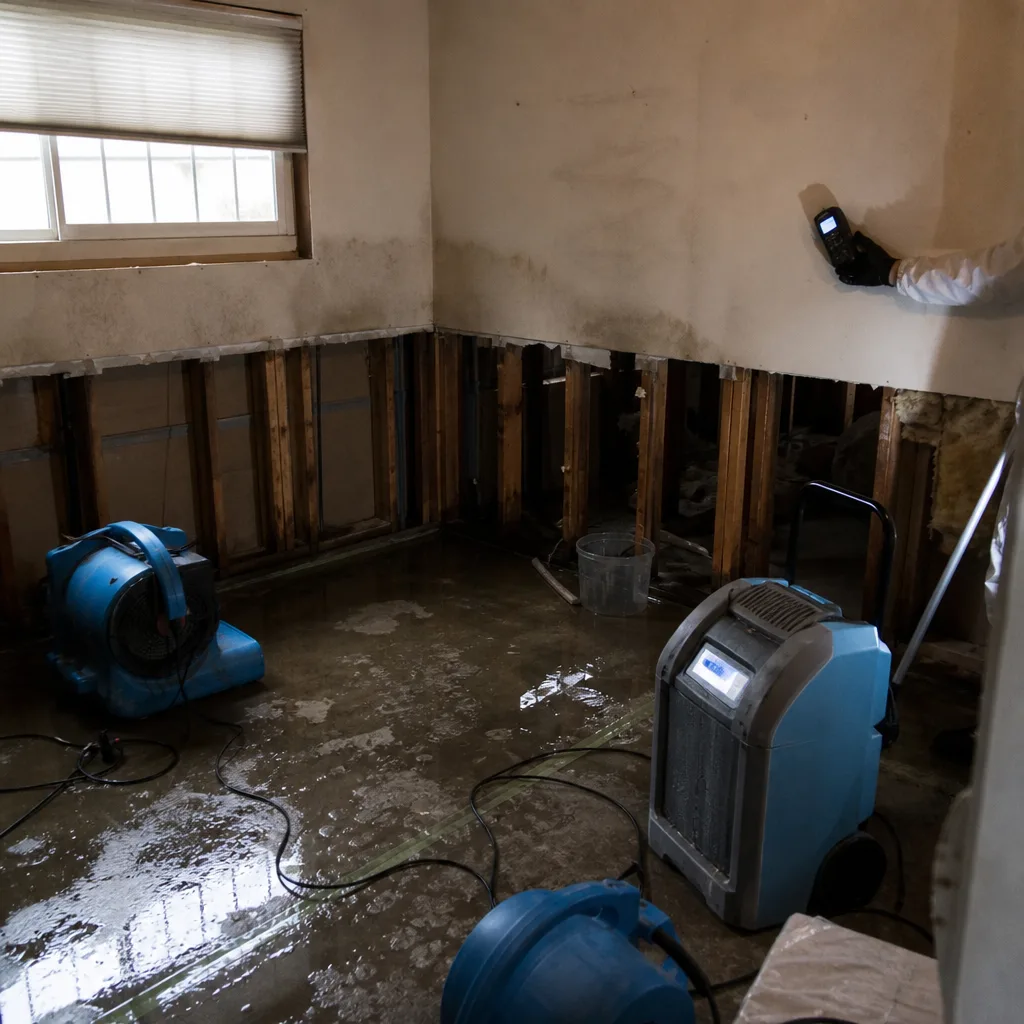 Before
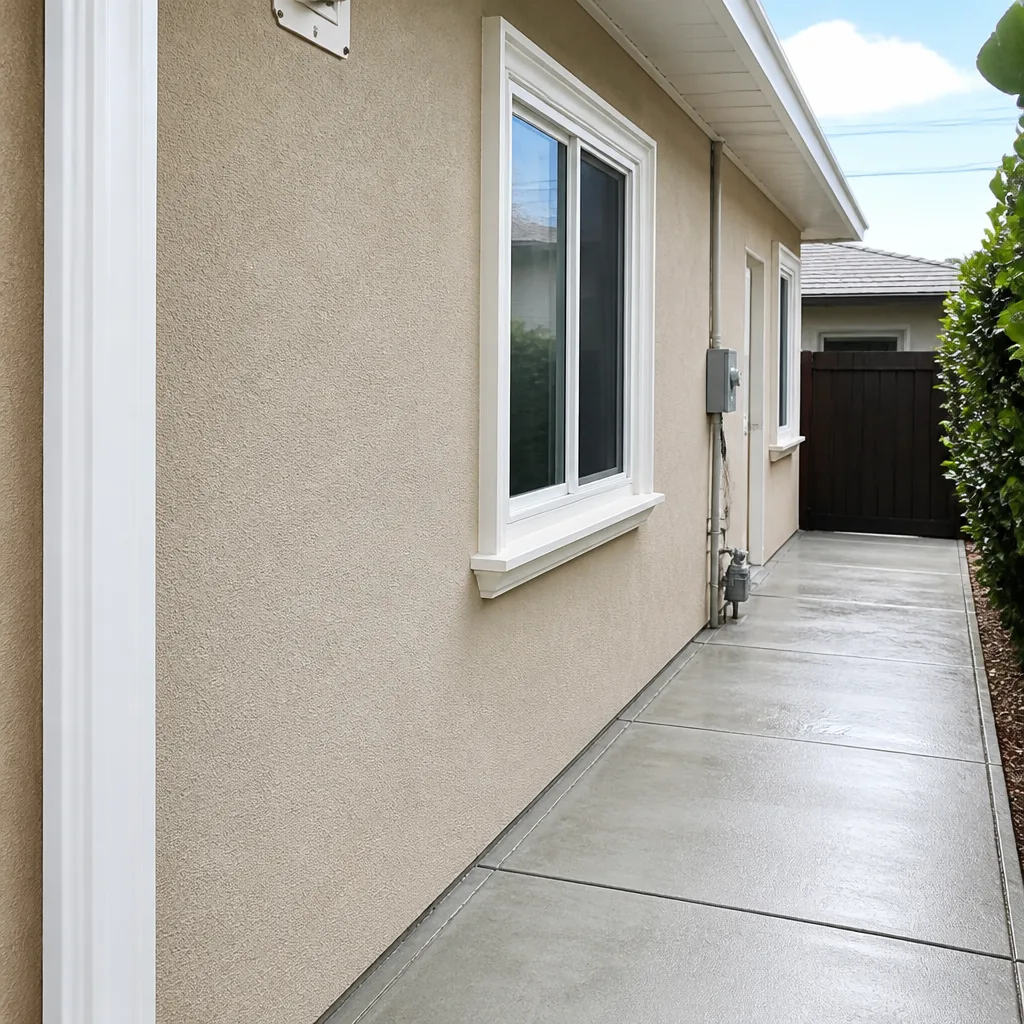 After
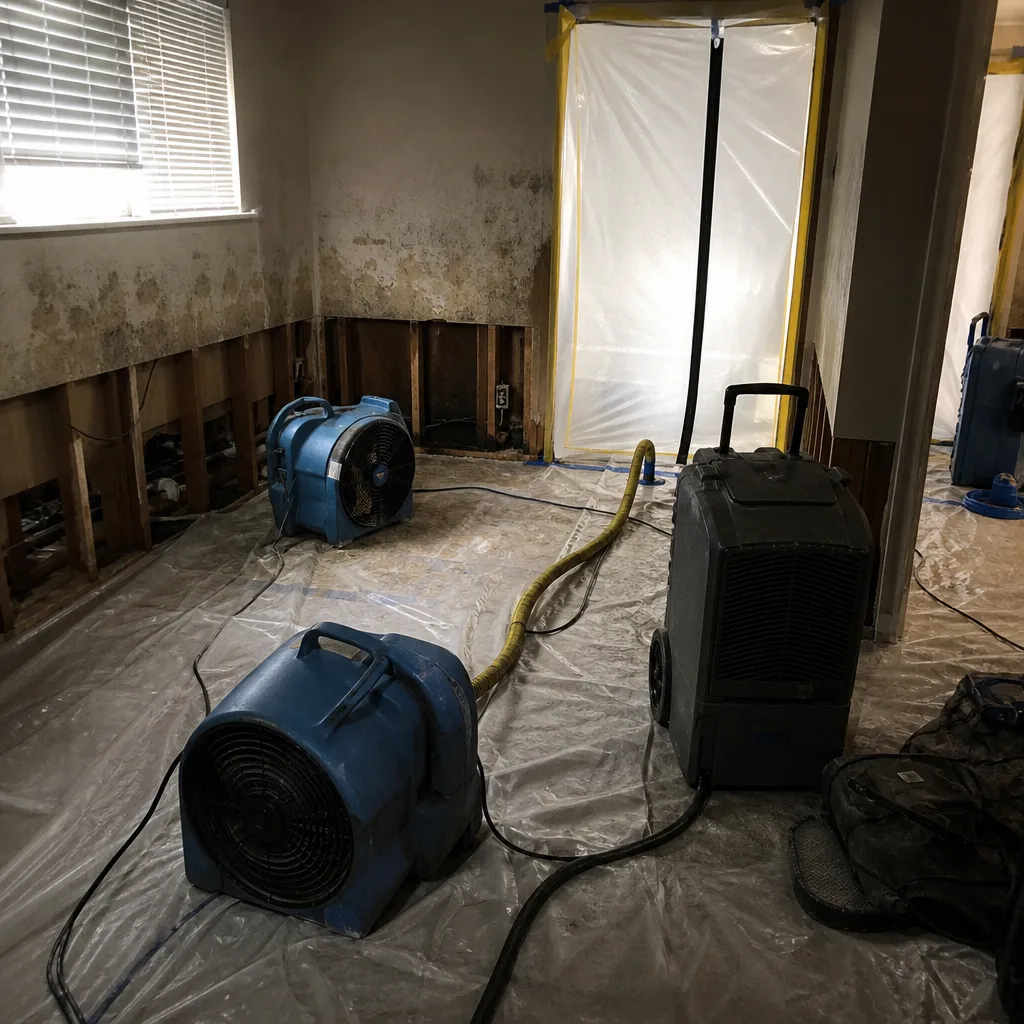 Before
 After
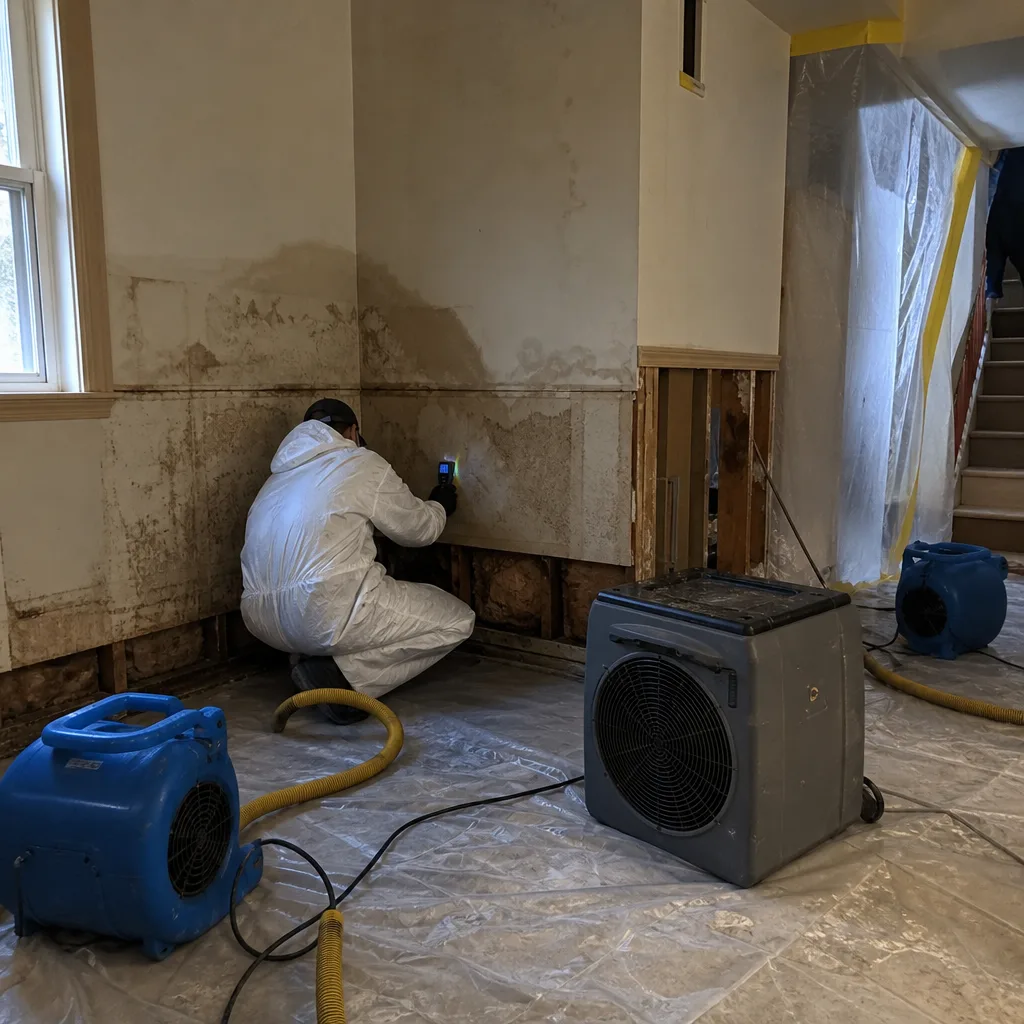 Before
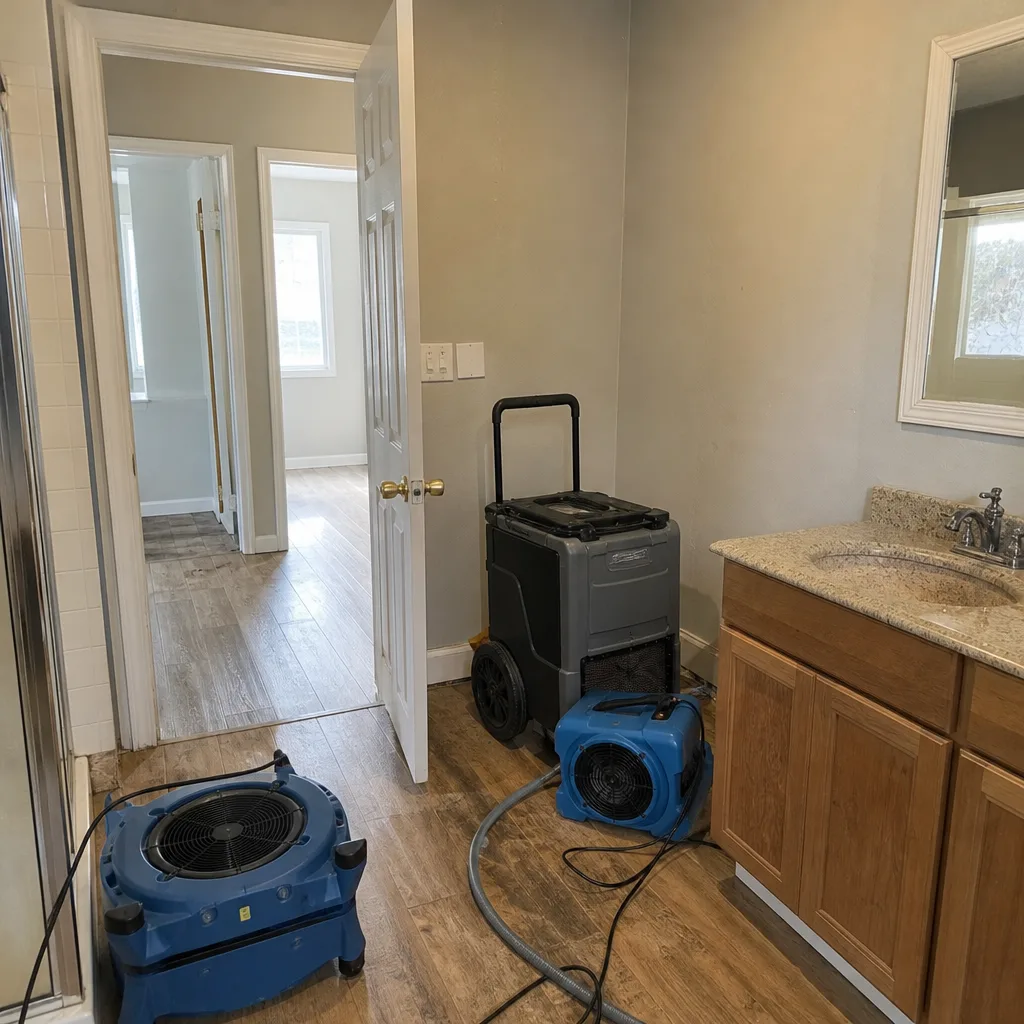 After