
Last updated October 30, 2026
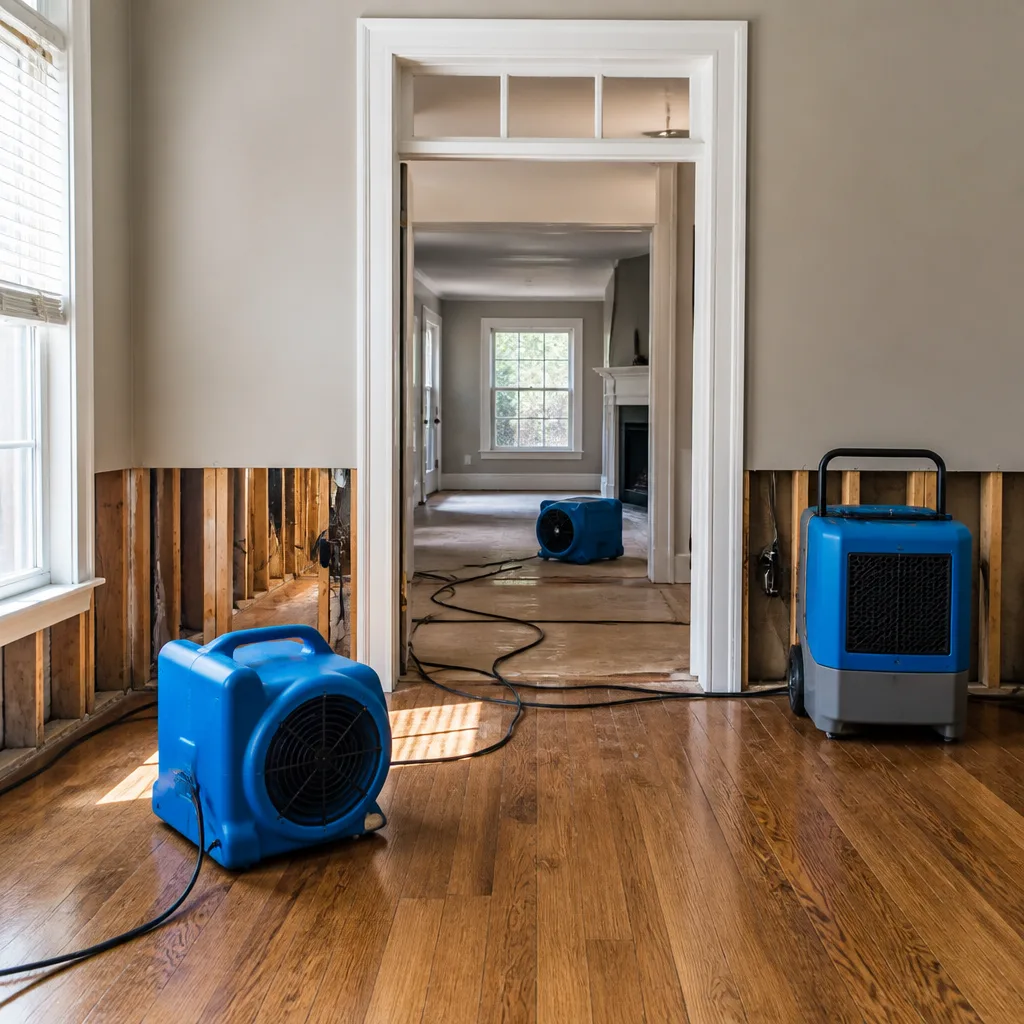 Water damage drying
 Fire & smoke cleanup
 Mold remediation
 Storm response
 Sewage cleanup
 Reconstruction
Free visual inspection and a written scope of work before any mitigation begins - photos, moisture readings, and drying logs go in your claim file
The scope we write is the scope we bill. Anything new gets shown to you, in writing, before we touch it.
Get your free estimateHow to Hire a Damage Restoration Contractor in Fullerton: A Step-by-Step Guide
A contractor with a $500 shop dehumidifier will certify your floor as dry in three days; a contractor with industrial LGR units will show you the actual grain readings, and only one of them prevents mold in week two. That gap between equipment quality is the single biggest predictor of whether a Fullerton homeowner ends up with a permanent fix or a recurring nightmare. This guide walks you through exactly how to evaluate a damage restoration contractor in Fullerton before you sign anything, from equipment questions that expose generalists to certification checks that verify actual training.
Restoration work we handle
Quick Answer
To hire a damage restoration contractor in Fullerton, verify IICRC certifications (specifically WRT, ASD, and AMRT) on the IICRC registry, ask equipment-specific questions during the estimate that reveal whether the crew owns professional-grade drying systems, demand a written drying plan with psychrometric goals and monitoring intervals, and review the contract carefully for liability-shifting clauses. Avoid choosing based on price or an adjuster’s referral alone; instead, prioritize certification, equipment ownership, and a documented restoration process.
Table of Contents
- Why Equipment Matters More Than Reviews in Fullerton
- The Certifications You Must Demand
- Equipment Questions That Expose a Generalist
- How to Evaluate a Written Drying Plan
- Contract Red Flags That Shift Liability to You
- A Word About Insurance Adjuster Referrals
- Step-by-Step Hiring Process
- Common Mistakes to Avoid
- When to Call a Professional
- Frequently Asked Questions
- The Bottom Line
Why Equipment Matters More Than Reviews in Fullerton
Fullerton has a specific risk profile when it comes to water damage. The city’s older housing stock, much of it built between the 1950s and 1970s, often sits on slab foundations with stucco exterior walls that trap moisture in wall cavities. Add Fullerton’s winter rain season and summer humidity swings, and you get a recipe for hidden damage that cheap equipment cannot address. A five-star review tells you the crew was polite. It does not tell you whether they pulled water from inside your walls or just dried the visible carpet and moved on.
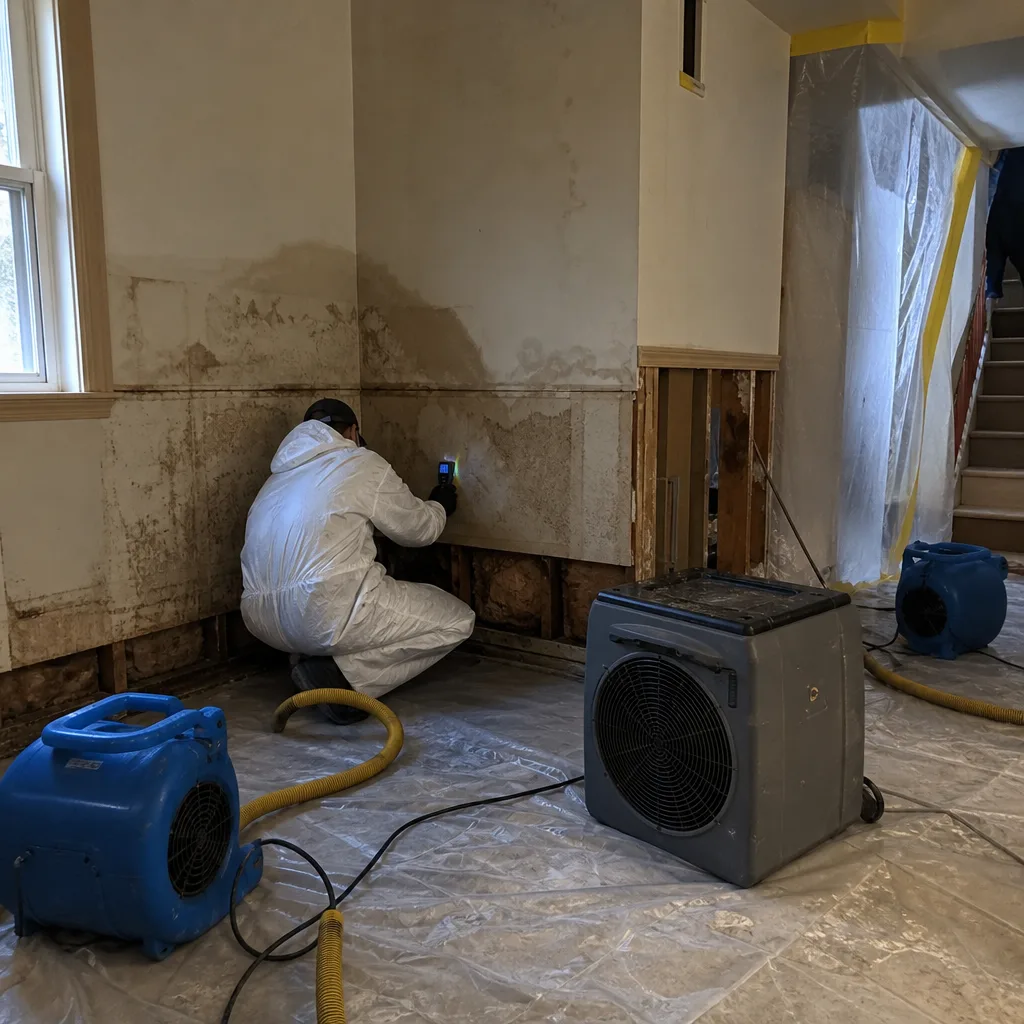
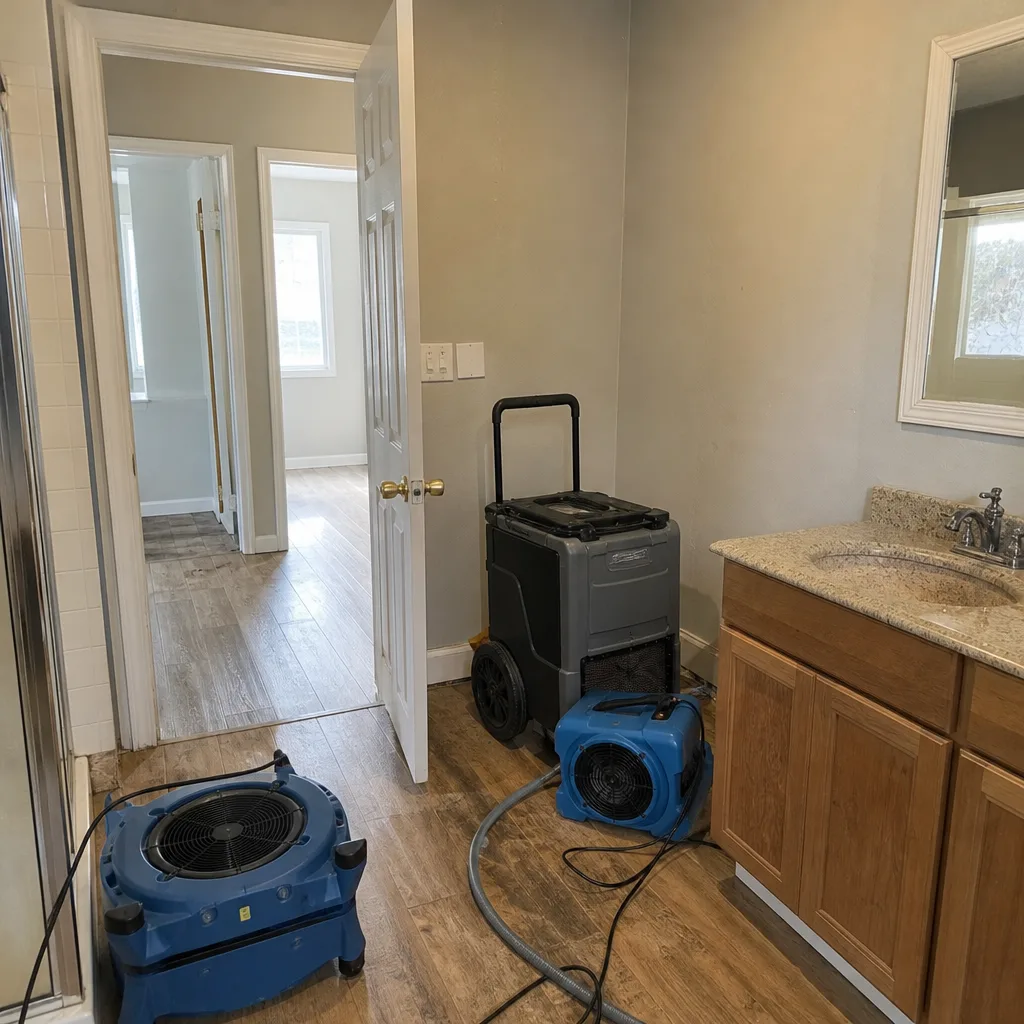
Restoration is a science-driven process, not a cleanup task. The difference between a contractor using rental-grade floor fans and a specialist running Dri-Eaz or Phoenix LGR dehumidifiers is measurable. Low-grain refrigerant (LGR) dehumidifiers pull moisture down to a specific grains-per-pound reading that prevents secondary mold. Standard dehumidifiers leave the air at a higher relative humidity, which means materials look dry on the surface while retaining enough moisture for mold to colonize within 72 hours. In our experience working in Fullerton, homes that received equipment-underpowered drying are the ones we later return to for mold remediation in Fullerton that could have been prevented.
The equipment question matters because restoration has no visual component that tells the truth. A wall can feel dry to the touch and still hold 20% moisture content in the sill plate. The only way to know is with moisture meters and hygrometers placed correctly. Contractors who own calibrated monitoring equipment check readings daily. Contractors who do not own that equipment guess. In Fullerton, guessing leads to callbacks, and callbacks lead to expensive tear-outs.
When you hire, ask whether the contractor owns the equipment or rents it. Ownership signals investment in the trade. It also means the equipment is calibrated, maintained, and available immediately, not after a rental counter opens on Monday. This is the difference between a restoration specialist and a general contractor dabbling in remediation. The Mahogany Water Damage home page explains our equipment-first approach in more depth.
The Certifications You Must Demand
Three IICRC certifications matter most for damage restoration work, and you should ask for all three: Water Damage Restoration Technician (WRT), Applied Structural Drying (ASD), and Applied Microbial Remediation Technician (AMRT). WRT covers extraction and basic drying. ASD covers advanced psychrometry, the science of drying buildings efficiently. AMRT covers mold remediation standards, including containment and removal protocols. A contractor holding all three has demonstrated competency in the full cycle of water intrusion: dryout, structural drying, and microbial management.
Do not accept a contractor’s website claim at face value. The IICRC maintains a public registry where you can verify any certification by the individual’s name or company. Go to the IICRC’s “Locate a Certified Professional” tool and search. If the contractor hesitates to provide the certification number, that is your answer. In Fullerton, we have seen estimates from uncertified crews promising the same results at lower prices. They cannot deliver the same results because they lack the training to recognize when a drying job is failing.
Certification matters beyond the badge. IICRC-certified technicians follow the S500 Standard for water damage restoration, which defines proper dry-out procedures, and the S520 Standard for mold remediation. These are not internal checklists. They are consensus-based standards published by the industry’s independent body. When a contractor says they are certified, ask which standard they follow for the specific type of damage you have. A knowledgeable answer confirms the certification is active and understood.
Beyond IICRC, check for professional association memberships. Membership in the Restoration Industry Association (RIA) signals ongoing professional accountability and access to current best practices, not a static skillset. IFA-affiliated companies demonstrate structured business practices and franchise-level operational discipline. Neither replaces IICRC certification, but both indicate a company that invests in staying current rather than learning on your job. Ask to see current membership documents, not just logos.
Equipment Questions That Expose a Generalist
The estimate visit is your best opportunity to separate restoration specialists from generalists. Ask specific questions and listen for specific answers. A general contractor who “does water damage too” will give you vague responses about “fans and dehumidifiers.” A restoration specialist will talk about equipment classes, placement calculations, and drying goals. Here are the questions to ask, in order:
- What class of water damage is this? The IICRC defines four classes based on evaporation potential and affected materials. A specialist can tell you the class and explain why it matters for how many air movers are needed. A generalist will not know what you are asking.
- What type of dehumidifier are you bringing, and how many? Listen for the terms “LGR” or “desiccant.” LGR units from Dri-Eaz or Phoenix pull down to dry air. Standard refrigerants are for basements, not structural drying emergencies. The number matters too: a 12×12 room with saturated drywall may need two to four air movers and one LGR. If the contractor says “a couple units should do it,” keep looking.
- Do you have an Injectidry system or equivalent? This question alone exposes 90% of generalists. Injectidry is a targeted-injection drying system that forces dry air into wall cavities, under hardwood floors, and behind cabinets without demolition. Most generalists have never heard of it. The ones who have will explain how it saves walls that competitors tear out. This is what “dry smarter, demolish less” actually means in practice.
- What moisture meter do you use, and can I see the readings? A professional uses a wood moisture meter and a drywall scale meter. They log readings at initial assessment and every 24 hours until dry. A contractor who says “we’ll check it when we’re done” is not monitoring, which means they are not managing the process.
- Can you show me the psychrometric readings? Psychrometrics is the science of air moisture. A specialist will set a drying goal, such as a specific grains-per-pound reading, and track daily progress toward it. A generalist will not know what a psychrometric chart is. That is not an elitist distinction; it is the difference between someone who can prove your walls are dry and someone who hopes they are.
One more thing: ask whether the equipment belongs to the company. Rental equipment is a red flag for three reasons. First, rental availability can delay your job. Second, rental units are not always calibrated. Third, a company that owns its fleet has committed to the trade. The water damage restoration team in Fullerton we recommend all use company-owned LGRs and monitoring equipment.
How to Evaluate a Written Drying Plan
A professional restoration contractor provides a written drying plan before starting work. Not a verbal description. Not a one-line estimate item. A written scope with measurable goals. This document is your primary safeguard against a guy with fans and a prayer. Here is what a professional drying plan must include:
- Initial moisture readings for every affected material: floors, walls, framing, subfloor, and content. These should be logged per room, with the type of material noted (hardwood, drywall, plaster, engineered wood).
- A psychrometric baseline: temperature, relative humidity, and grains per pound before drying begins. This is the starting point for measuring progress. Without it, any “dry” claim is unverifiable.
- A drying goal: the target moisture content for each material. Hardwood flooring, for example, typically needs to return to 8-12% moisture content depending on the species and Fullerton’s ambient conditions. Drywall should not exceed 12%. The plan should specify what “dry” means for your specific materials.
- Equipment layout: the number of air movers, dehumidifier capacity, and placement rationale. The plan should state the cubic footage of the affected area and match equipment totals to that calculation.
- Monitoring schedule: how often readings will be taken, typically daily, and who is responsible. The plan should commit to daily visits or remote monitoring with logged data.
- Estimated drying duration: a range, not a promise. Three to five days is common for moderate water damage. Seven to ten days for saturated structures or hardwood. Any contractor promising a one-day full dry-out is lying to you.
A written plan also protects you in the insurance process. Adjusters can review a documented scope and see that drying was performed to standard. Without documentation, you are arguing about an outcome with no evidence of the process. The same principle applies to fire damage restoration in Fullerton, where detailed scope-of-work documents are essential for claim approvals and rebuild decisions.
In Fullerton specifically, older stucco homes create a unique drying challenge. Stucco walls with penetrating water damage often require targeted drying behind the plaster, not just surface treatment. If your contractor’s plan does not mention cavity drying or Injection methods for wall assemblies, ask why. Most tear-and-replace estimates in Fullerton are unnecessary if the right equipment is brought in during the first 48 hours.
Contract Red Flags That Shift Liability to You
Read the contract before signing. Restoration emergencies feel urgent, but signing a bad contract locks you into liability that could cost $20,000 or more in secondary damages. The worst contracts contain clauses that shift responsibility for mold, odor, and structural failure back to the homeowner. Here are the specific red flags to look for:
- Waiver of consequential damages: Some contracts contain language that limits the contractor’s liability to the cost of the original work. If mold develops because drying was incomplete, that mold remediation is a consequential damage. A waiver means you pay for it. Do not sign a contract with this clause.
- Exclusions for secondary damage: Watch for phrases like “not responsible for mold or odor that develops after work is complete.” A certified contractor who dries to standard should not need this exclusion. Its presence suggests the contractor expects failures.
- No drying goal specified: If the contract mentions “drying” but does not define what dry means, you are signing a blank check. A legitimate contract references the IICRC S500 standard or includes specific moisture content targets.
- Open-ended change orders: Restoration often involves some discovery after work begins, but the contract should establish a rate sheet for additional work and require written approval before scope changes. “Contractor may perform additional work as needed” without limits is a liability trap.
- Assignment of insurance benefits without documentation: If the contract assigns your insurance benefits to the contractor, it must include a detailed scope and cost breakdown that the contractor submits to your insurer. You should always retain the right to approve any submission in your name.
- Payment in full before verification: Any contractor demanding full payment before showing you final moisture readings or before you have confirmed the work completed to your satisfaction is a risk. Legitimate companies invoice after documented completion or through insurance-approved draws.
In our experience in Fullerton, the most common long-term issue is not the initial water damage, it is the mold that appears eight weeks later because a contractor cut corners during drying. A contract that does not hold the contractor accountable for that outcome is a contract you should not sign. Ask the contractor to explain any clause you do not understand. If the explanation is evasive, walk.
A Word About Insurance Adjuster Referrals
Insurance adjusters refer contractors for one reason: to close your claim quickly. That is not a conspiracy; it is their job function. An adjuster-referred contractor may be excellent, but the referral itself is not a quality signal. In Fullerton, adjusters maintain lists of restoration companies that accept insurance-approved rates and move claims efficiently. That efficiency sometimes translates to smaller scopes, faster dry-outs declared prematurely, and less thorough documentation of hidden damage.
Here is the dynamic: your insurance company pays the adjuster. The adjuster wants to close the file. The restoration contractor wants repeat referrals from the adjuster. Your interest is a complete restoration, not a closed file. These interests align sometimes and conflict other times. An adjuster-referred contractor is not automatically working against you, but you should vet them the same way as any contractor found independently: certifications, equipment, drying plan, contract review.
One thing in your favor is documentation. Photo documentation, daily moisture logs, and a written scope protect you in disputes with your insurer. The best restoration contractors document everything independent of what the adjuster requests. We recommend hiring a contractor who treats insurance documentation as part of the restoration process, not an administrative burden. If the contractor seems reluctant to document or eager to align their scope exactly with the adjuster’s initial approval, that is a signal they prioritize the adjuster relationship over your outcome.
For a fuller picture of how water damage restoration works in Fullerton, review our service page, which explains the full process from emergency extraction through structural drying and documentation.
Step-by-Step Hiring Process
Use this sequence when you need to hire a damage restoration contractor in Fullerton. It walks you through the process from first call to contract signature, in order.
- Stop the source and document thoroughly. Before calling anyone, stop the water source if you can do so safely. Take photos of every affected area, including cabinet bases, under sinks, baseboards, and any visible standing water. These photos matter for insurance.
- Call your insurance carrier. Report the damage and ask about your coverage, your deductible, and whether they require you to use a preferred contractor. You are not required to use their referral, but knowing your coverage helps you evaluate contractor pricing.
- Build a contractor shortlist. Gather three names: one from insurance referral, one from a trusted local source, and one from the IICRC registry search for Fullerton. This gives you comparison points without analysis paralysis.
- Verify certifications before the estimate. Search each contractor on the IICRC registry using the technician’s name or the company name. Confirm WRT, ASD, and AMRT certifications. If any certification is missing or expired, ask why. For mold work specifically, AMRT is non-negotiable.
- Conduct the estimate interview. Ask the equipment questions from the section above. Take notes. A contractor who explains terminology and answers directly is demonstrating knowledge. A contractor who dismisses your questions as “technical details” is hiding something.
- Request a written drying plan. Before signing anything, ask for the plan with moisture readings, drying goals, equipment layout, and monitoring schedule. If the contractor says “we’ll figure that out as we go,” keep looking.
- Review the contract line by line. Look for the red flags covered earlier. Strike or clarify any liability waivers, secondary damage exclusions, or open-ended change orders. Send the contract to your insurance adjuster for review before you sign if the scope is large.
- Sign and monitor. Once you sign, monitor the drying process. Ask for daily moisture readings. A restoration professional will share them without hesitation. If the contractor misses the monitoring schedule, hold them to the written plan you agreed to.
This process takes about half a day of focused effort. That effort, applied in Fullerton’s urgent restoration timeline, is the difference between a documented restoration and an expensive lesson in contractor vetting.
Common Mistakes to Avoid
- Hiring the lowest bid during emergency panic. Water damage creates urgency, but price shopping under emergency stress leads to underpowered crews. The cheapest Fullerton contractor is often the one with the weakest equipment and no certifications, and you pay for it later in mold remediation.
- Accepting “looks dry” as a drying standard. Visual dryness is not a measurement. Without moisture meter readings, you cannot confirm that framing, subfloor, and wall cavities have returned to acceptable moisture content. Insist on numbers.
- Skipping the IICRC registry check. A logo on a website is not verification. Some contractors display certification logos that belong to a former employee or that lapsed years ago. Check the registry every time.
- Signing a contract that excludes secondary damage liability. Imagine signing an auto repair contract that says the mechanic is not responsible if the car fails a week later. You would never sign that. Do not sign the restoration equivalent for your home.
- Using a general contractor for restoration work. General contractors are excellent for remodeling. Restoration requires psychrometric knowledge, specialized equipment, and contamination protocols that generalists do not carry. The wrong tool for the job creates the secondary damage we are hired to fix later.
- Waiting to report to insurance. Most policies require prompt notification. Delaying can reduce your claim payment. Document immediately and call your carrier the same day you discover the damage.
- Ignoring the written plan requirement. A verbal estimate is not a commitment. If the contractor will not put the drying scope in writing, you have no recourse when the job fails. Demand written documentation before work begins.
When to Call a Professional
Call a professional restoration contractor immediately if water has penetrated walls, floors, or ceilings beyond surface level, if there is standing water that has been present for more than a few hours, if you smell musty odors indicating microbial growth, if you see visible mold larger than a few square feet, or if you have had a fire that left soot on structural surfaces. These conditions require equipment and training that homeowners do not have access to. A wet vacuum and box fans work for a spilled glass of water, not a supply line rupture that soaked your Fullerton living room subfloor. Mahogany Water Damage offers free estimates in Fullerton. Call (855) 356-4970 to schedule an assessment, and please have photos ready when you call.
Frequently Asked Questions
Water damage restoration in Fullerton typically ranges from $2,500 to $8,000 for moderate, contained damage, while larger or structural-level damages can reach $15,000 or more depending on the affected area, material type, and drying complexity. Exact pricing depends on the square footage affected, class of water, whether demolition is required, and whether mold is present. Call (855) 356-4970 for a free estimate tailored to your specific situation.
You can attempt surface drying, but residential fans and standard dehumidifiers cannot penetrate wall cavities, under flooring, or behind baseboards where structural moisture hides. In Fullerton’s stucco homes, trapped moisture in wall assemblies almost always requires professional-grade LGR dehumidifiers and air movement calculations to reach drying goals. The cost of renting or buying premium equipment is rarely lower than hiring a credentialed team, and your homeowners insurance may not cover secondary mold if it resulted from inadequate self-drying.
Most homeowners policies cover sudden and accidental water damage, such as a burst supply line or appliance overflow, but they typically exclude gradual leaks, floods from external sources, and pre-existing conditions. The best way to know is to call your insurance carrier immediately and describe the cause of the damage. A restoration contractor who documents everything with photos and moisture readings gives your adjuster the evidence needed for a fair claim decision. Call (855) 356-4970 and our team will help coordinate the documentation while you work with your adjuster.
A professional restoration contractor can typically be on-site within hours of your call, and same-day response is standard for water damage emergencies because the 24 to 48 hour window is critical for preventing mold. If you call after hours or on a weekend, a restoration company with real dispatch coverage will still answer and schedule same-day or next-morning arrival. If a company tells you it will be three days before they can even assess, keep calling other contractors.
Water damage restoration focuses on removing water, drying materials, and preventing mold from developing, while mold remediation in Fullerton addresses mold that has already colonized and requires containment, removal, and sanitization under IICRC S520 protocols. Restoration handles the first 72 hours; remediation handles what happens if that window is missed or if water damage remained hidden. The two services often overlap, and a contractor with both WRT and AMRT certifications can handle the full sequence without handoffs.
If water has moved beyond the surface into building materials, visible cleanup is not enough, and hidden moisture will cause mold, odor, and structural degradation within days to weeks. The only way to know whether full restoration is needed is a professional assessment with moisture meters and thermal imaging. In our experience in Fullerton, many homeowners who initially chose “just cleanup” called us weeks later for mold remediation that would have been prevented by proper structural drying from the start. Call (855) 356-4970 for an honest assessment before you decide.
The Bottom Line
Hiring a damage restoration contractor in Fullerton comes down to three verifiable things: active IICRC certifications checked against the registry, company-owned professional equipment rather than rental units, and a written drying plan with measurable goals that the contractor commits to in writing. Everything else, including reviews and referrals, is secondary. The contractors who meet these three standards are the ones who prevent the week-two mold surprise that cheap drying guarantees. If you are facing water, mold, or fire damage in Fullerton, start with the certification check and the equipment questions. If you want a team that meets every standard in this guide, call Mahogany Water Damage at (855) 356-4970 for a free estimate and a written scope before work begins.
Written by the team at Mahogany Water Damage, serving Fullerton since 2011.
See the difference
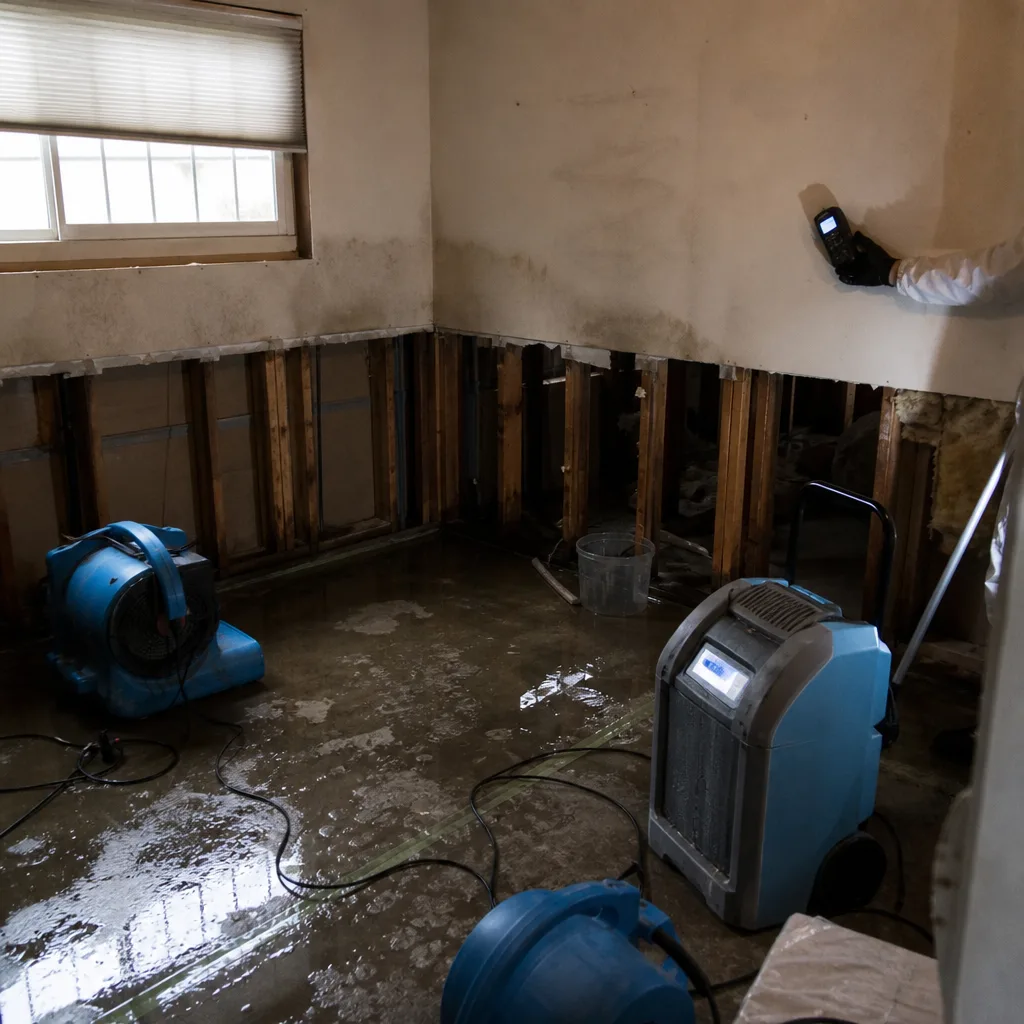 Before
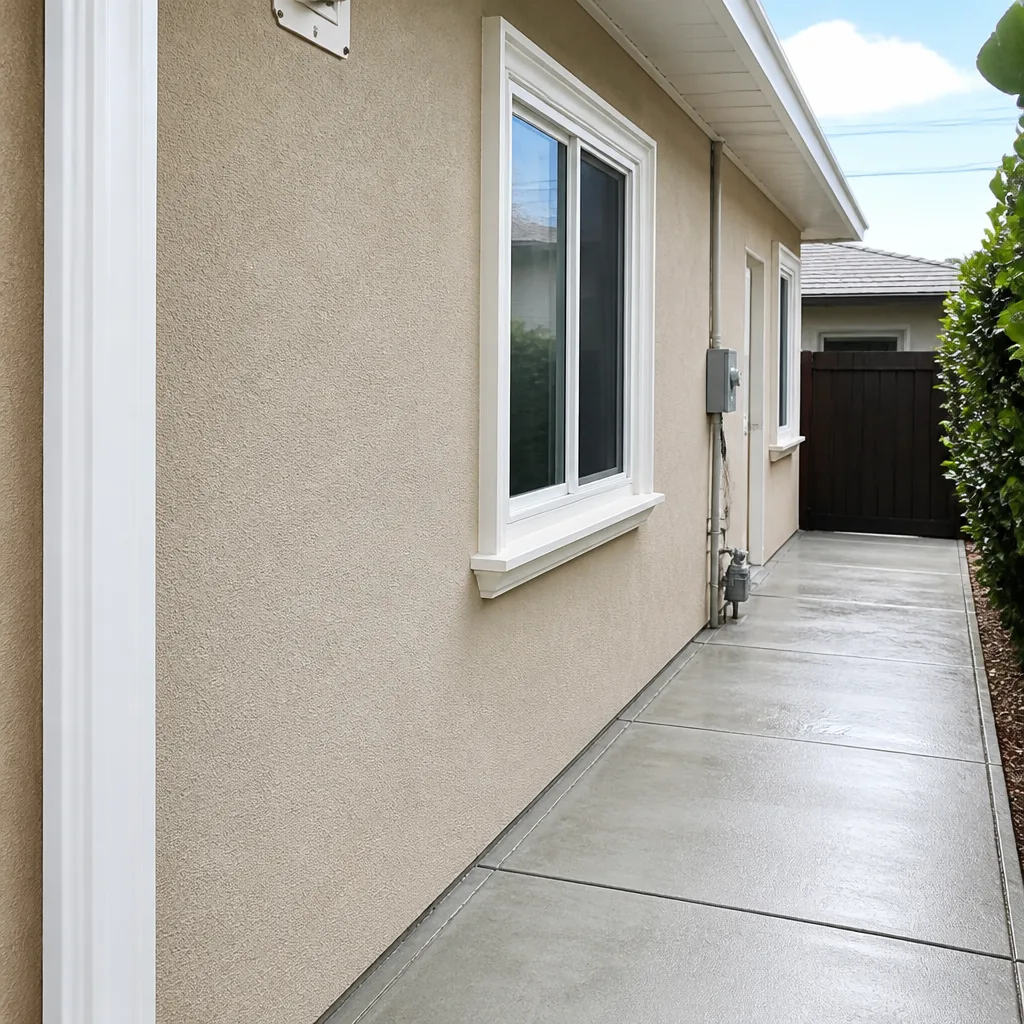 After
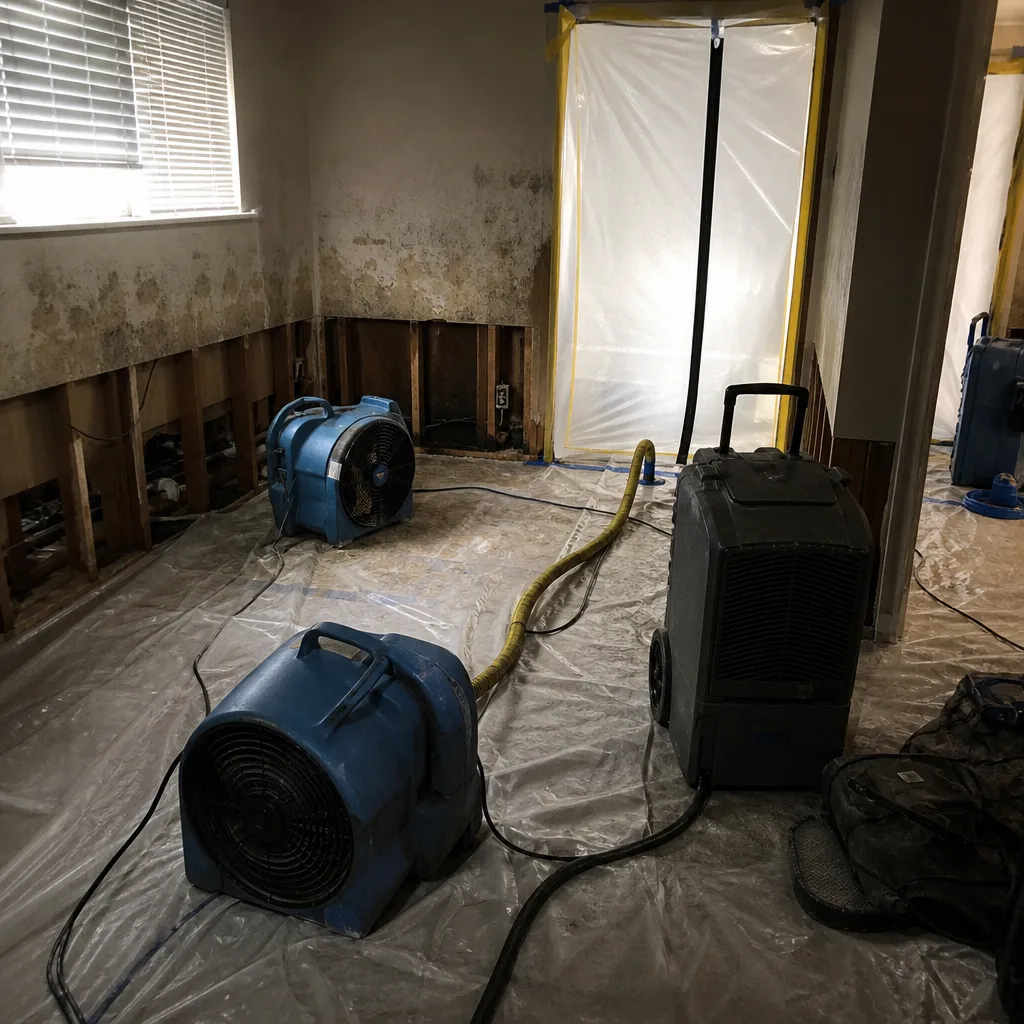 Before
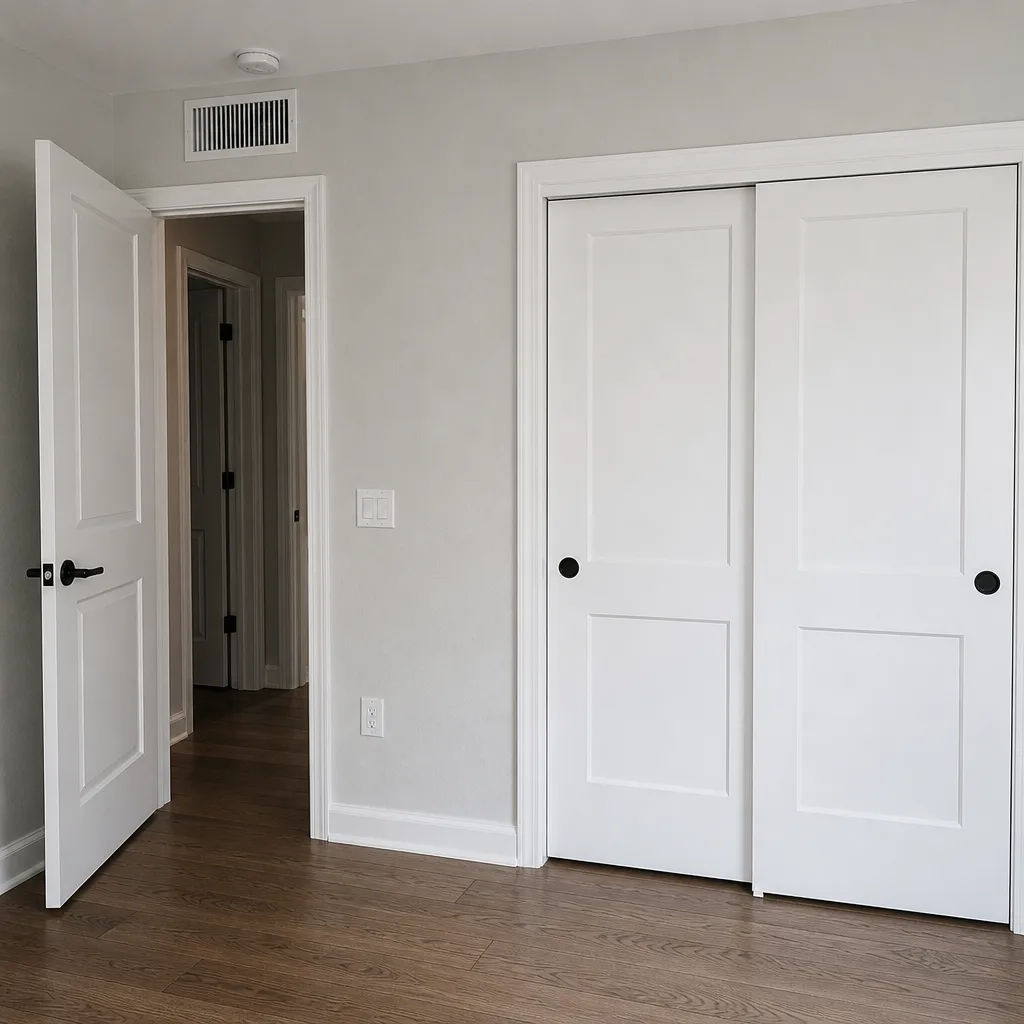 After
 Before
 After