

Last updated October 30, 2026
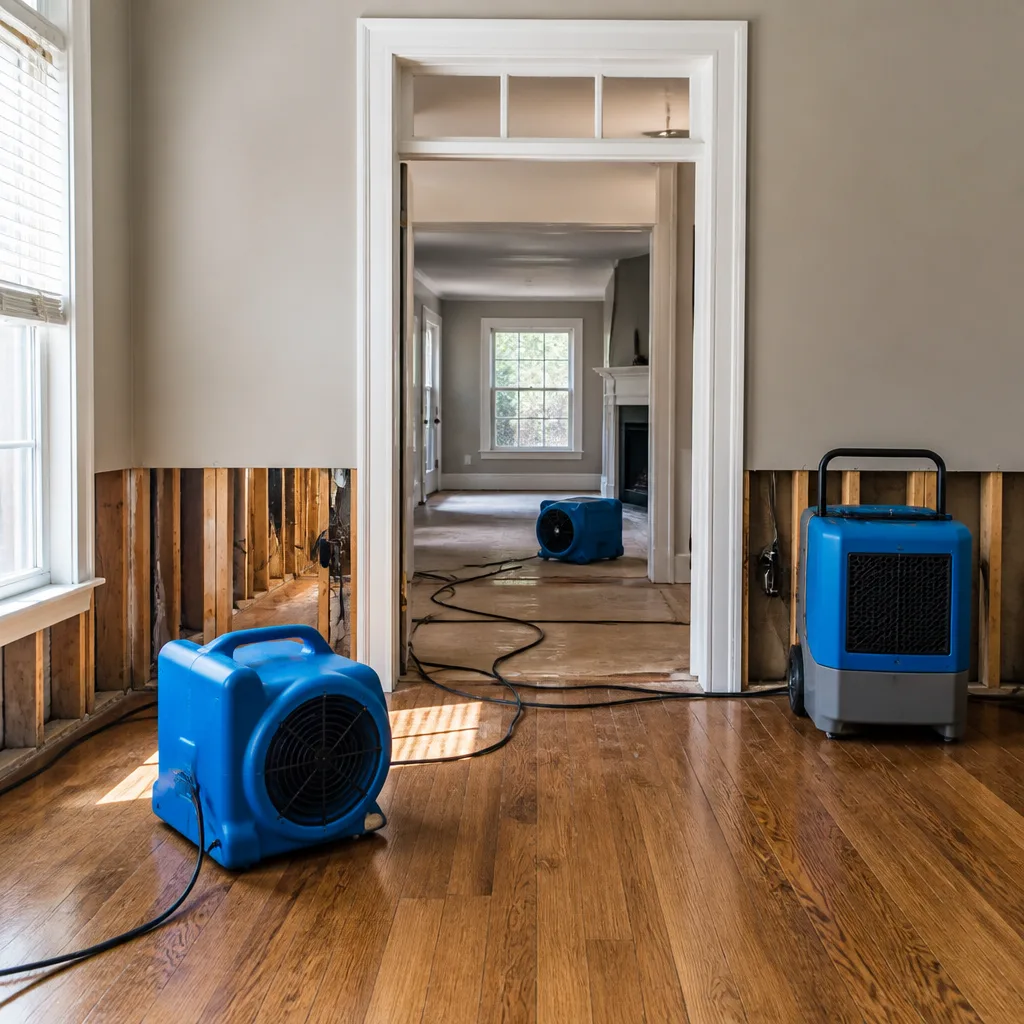 Water damage drying
 Fire & smoke cleanup
 Mold remediation
 Storm response
 Sewage cleanup
 Reconstruction
Free visual inspection and a written scope of work before any mitigation begins - photos, moisture readings, and drying logs go in your claim file
The scope we write is the scope we bill. Anything new gets shown to you, in writing, before we touch it.
Get your free estimateDamage Restoration Emergency Preparedness Guide for Fullerton Homes
The homeowners who spend the least on damage restoration in Fullerton are not the ones who react fastest after a pipe bursts or a water heater fails. They are the ones who made three unglamorous decisions months earlier: they labeled their main shutoff valve so anyone in the house can find it at 2 a.m., they cleared the path to every floor drain, and they stored their insurance policy and a vetted contractor’s number somewhere other than a water-soaked filing cabinet. This guide and our more guides & resources lay out the pre-event configuration that turns a five-figure restoration into a four-figure repair. By the time you finish reading, you will know exactly what to do this weekend, what to audit on your policy, and how to build the contractor relationship that makes emergencies boring instead of catastrophic.
Restoration work we handle
Quick Answer
Damage Restoration Warning Signs: A Fullerton Homeowner’s Reference Guide starts with this principle: emergency preparedness means configuring your plumbing, documentation, and contractor relationships before anything fails. The three highest-leverage moves are labeling and testing your main water shutoff, completing a pre-event insurance audit for slab leak and mold coverage gaps, and establishing a working relationship with an IICRC-certified restoration company before you need one. Homes with these three items in place typically see damage contained within minutes instead of hours, which directly controls the final restoration cost.
Table of Contents
- Pre-Event Home Configuration: The Three Decisions That Contain Damage Automatically
- How to Build a Damage Restoration Emergency Contact File
- The 72-Hour Action Window: Why It Is a Hard Deadline
- Insurance Policy Pre-Event Audit: The Gaps Fullerton Homeowners Discover Too Late
- Establishing a Non-Emergency Professional Relationship Before You Need One
- A Fullerton-Specific Risk Map: What Fails in Our Homes and When
- Your Off-Site Documentation System: What to Store Where
- Common Mistakes to Avoid
- When to Call a Professional
- Frequently Asked Questions
- The Bottom Line
Pre-Event Home Configuration: The Three Decisions That Contain Damage Automatically
Most Fullerton homes built before 1990 run on copper supply lines that have been quietly corroding for three decades. Failures rarely announce themselves. A pinhole leak behind a kitchen wall can release two to three gallons per hour for a week before you notice the baseboard swelling. The difference between a $2,800 dry-out and a $28,000 rebuild is whether the water kept flowing while you slept.
The three physical configurations that contain damage automatically are simple, cheap, and almost universally overlooked. They address the most common failure points in Fullerton’s housing stock, from 1950s ranch homes near downtown to 1990s tract developments in the hills.
1. Locate, Label, and Test Your Main Water Shutoff
Walk to your main shutoff right now. Not the angle stops under the sink. Not the irrigation valve near the street. The main line that feeds your entire house. In Fullerton, depending on your neighborhood and the era of your home, it may be at the front hose bib, in a ground-level meter box near the curb, or on an exterior wall near the garage.
Once you find it, label it. A red waterproof tag that says “MAIN WATER SHUTOFF” costs four dollars and saves twenty minutes of fumbling during an active leak. More importantly, test it. Turn the valve fully closed, then open a faucet to confirm water stops. Many valves in Fullerton homes have not been operated in years and have seized. Discovering a seized shutoff during a pipe failure is a very specific kind of frustration: the tool you need most does not work.
If your valve is stiff or requires a wrench, replace it with a quarter-turn ball valve. A ball valve closes in a half-second and never seizes the way gate valves do. This is a one-hour plumber job that pays for itself the first time you need it.
2. Clear and Verify Floor Drain Function
Every Fullerton home with a slab foundation, which is most of them, relies on floor drains in garages, laundry rooms, and sometimes kitchens to carry water away during a leak or flood. The drain only works if water can reach it and if the trap is not clogged with years of lint and sediment.
Walk your property and identify every floor drain. Move anything stored on the floor that blocks the path to the drain. Storage bins, boxes of tile, old paint cans stored in the garage: all of these create a dam that turns a contained leak into a house-wide flood. Then pour a gallon of water down each drain and watch it. Slow draining means the trap or line has a restriction. Clear it now, not after a water heater has already dumped forty gallons into the garage.
3. Install Leak Detection at the Most Vulnerable Points
Passive leak detectors are small, battery-powered pucks that sit on the floor and emit a piercing alarm when moisture touches their contacts. Place them behind the water heater, under the kitchen sink, beneath the dishwasher, by the clothes washer, and near any toilet with a history of running. In Fullerton, where slab leaks and aging copper are common, you can also install a whole-home flow sensor that monitors water usage patterns and shuts the supply automatically when it detects a burst. It is not a gimmick. It is the closest thing to a pre-event automatic response that exists for residential plumbing.
These three configurations are not exciting. They will not impress your neighbors. They are the reason some Fullerton homeowners spend a weekend and a few hundred dollars while their neighbors spend a month displaced and arguing with an adjuster. For what it looks like when these measures fail and water does get in, see our Water Damage Restoration in Fullerton page for a plain-language walkthrough of what a proper dry-out actually involves.
How to Build a Damage Restoration Emergency Contact File
Under stress, your memory does not work the way you think it does. You will not remember whether your deductible is $1,000 or $2,500. You will not remember which filing cabinet drawer holds the policy. You will not remember the name of the plumber you used three years ago. The homeowners who navigate emergencies well are not smarter or calmer; they built the file beforehand.
What Goes in the File
- Insurance policy declarations page: policy number, deductible amount, claim reporting phone number, and email address.
- Your agent’s direct line: not the 800 number, the local agent who actually answers.
- Your preferred restoration contractor’s number: saved in your phone and written in the file.
- Plumber’s number: separate from the restoration contractor, because stopping the source and drying the damage are two different jobs.
- Utility emergency numbers: gas company, water department, electric utility. A gas-adjacent water heater failure can require utility response before anyone touches the appliance.
- Photos of your home’s current condition: a simple video walkthrough stored in the cloud establishes pre-loss condition for adjusters.
Where the File Lives
The file must live somewhere you can access from outside your home. If the emergency is a fire, everything inside is gone. If the emergency is a flood, paper documents are mush. Store the file in at least two places: a cloud drive and a physical copy in a fireproof, waterproof safe that is not in the basement. Email yourself the file. Send it to a family member across the country. Redundancy is the point.
The file should take thirty minutes to assemble. It will be the most productive thirty minutes you spend on home preparedness this year. In our experience, the first thirty minutes after a Fullerton homeowner discovers damage are spent trying to remember exactly this information, and every minute of delay is a minute the water keeps moving through walls and the mold keeps finding food.
The 72-Hour Action Window: Why It Is a Hard Deadline
Mold colonization has a biological clock. The specific species that dominate water damage restoration, Stachybotrys chartarum and various Aspergillus and Penicillium species, need three things to establish: moisture, organic food, and time. Wet drywall, wet carpet pad, and wet wood framing provide the moisture and the food. The time is the one variable you can control.
The 72-hour window is the period during which professional drying equipment can usually bring moisture levels down before mold establishes a reproductive colony. Within that window, the work is about evaporation and dehumidification: water is removed, materials are dried, and remediation is often limited to cleaning and sanitizing. After that window, the job changes. Materials may need removal. Cavities may need containment and treatment. The scope expands, the cost multiplies, and the disruption lengthens.
This is not a smooth curve. It is a step function. A water loss discovered and mitigated at hour 20 is a drying project. The same loss discovered at hour 90 is likely a mold project with a different contractor scope, different containment requirements, and a different price. The difference between those two scenarios is not how fast you called after you noticed; it is whether you noticed at all.
Professional drying within the window is not a matter of pointing fans at a wet spot. It involves measuring the moisture content of materials with penetrating moisture meters, calculating the cubic footage of the affected space, and matching dehumidifier capacity to the evaporation load. Commercial-grade drying systems from brands like Dri-Eaz and Injectidry are engineered to control psychrometrics, the relationship between temperature, humidity, and evaporation rate, in a way that rental units and box fans are not. When we say the equipment matters, we mean that a properly sized system can dry a wet wall cavity in three days that a couple of rental air movers would leave damp for two weeks.
The 72-hour deadline is also why your emergency contact file matters. The clock starts when the water releases, not when you discover it. A slow slab leak that has been saturating a wall cavity for a weekend has already consumed much of its window before you ever saw the stain.
Insurance Policy Pre-Event Audit: The Gaps Fullerton Homeowners Discover Too Late
The most expensive sentence in the restoration industry is: “I assumed my policy covered that.” By the time you hear it from an adjuster, the damage has already happened and the coverage decision has already been made. Auditing your policy before an event is the only way to change that outcome.
Fullerton homeowners face several recurring coverage gaps that differ from what you see in newer markets or colder climates. These are not edge cases. We see them constantly.
Slab Leaks
Fullerton’s housing stock, particularly the 1950s and 1960s ranch homes that dominate neighborhoods west of Harbor Boulevard, sits on concrete slab foundations with copper supply lines running through or under the slab. When those lines corrode and leak, the water migrates up through the floor and into walls. The repair often requires breaking through concrete to access the line. Many policies cover the water damage but exclude the cost of accessing and repairing the pipe itself, which can be a five-figure excavation. A service line endorsement can close this gap for a modest annual premium increase.
Mold Sublimits
Most homeowners policies in California include a mold limitation, often a sublimit of $5,000 to $10,000, regardless of the overall policy limits. Mold remediation that requires full containment, air scrubbing, and removal of affected materials can exceed that sublimit quickly. You can often buy a higher sublimit or an endorsement. Read your policy’s mold section specifically and ask your agent what it would cost to increase the sublimit.
Service Line Endorsements
This is a relatively newer endorsement that covers the buried pipes and lines between your house and the street or main connections. Sewer lines, water service lines, and sometimes gas lines fall outside standard dwelling coverage. In Fullerton, where mature trees send roots through aging clay sewer laterals, a collapsed line can be a $15,000 problem that standard policies simply do not cover. The endorsement costs a little and covers a lot.
Your Audit Checklist
- Pull your policy declarations page and read the dwelling limit and deductible.
- Find the mold sublimit and write it down.
- Ask your agent whether slab leak access and repair is covered under your specific policy.
- Ask whether a service line endorsement is available and what it would add to your premium.
- Ask how water damage from a dishwasher supply line failure is classified, because appliance-related failures are a leading cause of residential water losses in Fullerton.
- Get every answer in writing. An email from your agent is a record. A phone call is not.
For a deeper look at what a claim involves after damage occurs, our Mold Remediation in Fullerton page details the containment and clearance process. Understanding that process before you file a claim changes the questions you ask your adjuster.
Establishing a Non-Emergency Professional Relationship Before You Need One
Here is a truth about emergency response that no one tells you: restoration companies prioritize existing relationships. When a major weather event or a city-wide plumbing failure hits Fullerton, the companies with commercial drying equipment, the ones with multiple Dri-Eaz and B-Air systems and trained crews, get more calls than they can handle. The homeowners who call for the first time on the day of the emergency are competing for attention with property managers who send a dozen jobs a month and insurance agents who route claims to preferred vendors.
A pre-established relationship does not require you to sign a contract or pay a retainer. It means you have spoken with the company, inspected their credentials, and saved their number. It means they have your address in their system and know what your home is. It means that when you call at 8 p.m. on a Tuesday, the person answering knows more than your name.
How to Vet a Restoration Contractor Before You Need Them
- Ask for IICRC certification. The Institute of Inspection, Cleaning and Restoration Certification is the restoration industry’s most recognized independent standard. A company that invests in IICRC-certified technicians has made a professional commitment, not a marketing one. Certification is tied to the actual work process: moisture mapping, drying chamber design, containment protocols.
- Ask what equipment they own. This separates restoration specialists from generalist handymen. Companies that own commercial-grade drying systems from Dri-Eaz, Phoenix, or B-Air can deploy them immediately. Companies that need to rent equipment at Home Depot are adding a delay and a skill gap.
- Ask about their drying philosophy. Specifically, ask whether they use targeted injection drying for wall cavities and under flooring. Injectidry systems push dry air directly into enclosed spaces, salvaging walls and floors that a tear-out-and-replace contractor would demolish. The phrase “dry smarter, demolish less” is not a slogan; it is a measurable cost difference between a company that owns the technology and one that does not.
- Ask about RIA membership. The Restoration Industry Association is a professional trade body. Membership signals ongoing accountability and access to current best practices, not a static skillset.
- Meet them on a non-emergency day. A company that will not spend twenty minutes on a phone call when there is no emergency will not communicate better when there is one.
The response time gap has a dollar value. The difference between a crew arriving in two hours and a crew arriving in sixteen hours is significant. In two hours, the source is usually stopped and extraction has begun. In sixteen hours, water has migrated through flooring, up walls, and into baseboards. The drying scope has expanded by hundreds of square feet. A pre-vetted contractor that answers your call from a saved contact is the difference between a contained loss and a full-scale restoration.
At Mahogany Water Damage, we maintain RIA membership and IICRC-certified restoration processes specifically because this work has an industry standard, and the standard is not “looks good.” It is a measurable moisture content. It is a documented drying plan. It is a restored-to-standard endpoint that an adjuster or a future home inspector can verify.
A Fullerton-Specific Risk Map: What Fails in Our Homes and When
Damage patterns in Fullerton vary by neighborhood, housing era, and season. Understanding your specific exposure profile lets you prioritize your preparedness work.
The Older Slab Foundations: West Fullerton and the Downtown Core
Homes built before 1970 in Fullerton’s older neighborhoods, the tree-lined streets south of Commonwealth and the historic districts near downtown, carry the highest slab leak risk. Copper lines in direct contact with concrete, combined with the mineral content of Fullerton’s water, create corrosion over decades. If you own a home in this profile, your slab leak exposure is not hypothetical. It is a timeline. Schedule a plumbing inspection that includes pressure testing of your supply lines.
The Hillside and Canyon Homes: The 1980s-2000s Expansion
Fullerton’s northern and eastern hillside developments, the newer subdivisions in the Coyote Hills area, face a different profile: drainage and elevation. When a water heater fails in a hillside home, water does not pool in the garage. It runs downhill through the structure, following the slope through ceiling cavities, wall plates, and flooring. The damage travels further than it would on a flat slab. Homes in these areas need leak detection at multiple elevations and floor drains verified at the lowest points.
Seasonal Patterns
Fullerton’s climate is moderate, but the heat matters. Summer heat accelerates evaporation, which sounds helpful until you understand that it drives moisture deeper into materials before extraction begins. Winter brings the Santa Ana wind patterns, which dry out structural soils and can cause minor foundation movement that stresses aging plumbing connections. The most common pattern we see: a slow leak that began during a heat wave becomes a discovered disaster weeks later, already deep into the 72-hour window before detection.
For a walkthrough of what water damage restoration actually involves in Fullerton homes, see our Mahogany Water Damage home page. It links to our detailed service pages for water, mold, and fire work.
Your Off-Site Documentation System: What to Store Where
Photographs are your most powerful insurance tool, and most homeowners do not have them. When an adjuster evaluates a claim, they are working from two sources: the current damaged condition and whatever evidence of pre-loss condition you can provide. Without the latter, the adjuster’s default assumption is that the damage is pre-existing, and you bear the burden of proving otherwise.
The Pre-Loss Video Walkthrough
Take out your phone and walk your entire house. Every room. Every wall. Every ceiling. Open the cabinet under every sink and film the pipes. Film the water heater. Film the garage. Narrate what you see: “January 2025, kitchen, no water stains on the ceiling, no warping on the baseboards.” Upload the video to a cloud drive and do not delete it. Do this once a year. The seven minutes it takes replaces hours of claim negotiation later.
The Receipt File
Major appliance receipts establish age and condition for water heater failures, dishwasher supply line ruptures, and washing machine hose bursts. If your ten-year-old water heater floods your garage and your claim hinges on whether the failure was sudden or the result of deferred maintenance, a receipt showing a six-year-old unit purchased from a licensed installer changes the adjuster’s analysis.
The Contractor File
Every plumber, electrician, and restoration professional who has worked on your home goes in the file. What they did, when they did it, and what they charged. This is not about warranties. It is about establishing that your home was maintained to a professional standard, which matters when an adjuster reviews a claim. A home with a paper trail of documented maintenance presents a different risk profile than one without.
Store all of this in two cloud locations. Your email account and a dedicated photo drive. Do not rely on a single device. If your only copy of your home’s condition lives on a phone that is destroyed in the fire, it never existed.
Common Mistakes to Avoid
- Assuming your shutoff valve works without testing it. A valve that has not moved in twenty years is not a valve. It is a future emergency. Test it this weekend and replace it with a ball valve if it fights you.
- Storing your insurance policy in the home. Fire destroys it. Flood ruins it. If your only copy lives in the damaged structure, you are rebuilding your claim file while water is still dripping.
- Calling a generalist handyman for a restoration-scale water loss. A handyman with a wet-vac and rental fans cannot calculate a drying chamber. You need commercial-grade equipment and the training to run it. The first call sets the course for the entire claim.
- Waiting to see if the wet area will dry on its own. It will not. What it will do is support mold colonization. The 72-hour window does not pause while you decide whether it is serious.
- Believing your standard policy covers slab leak access. It frequently does not. Confirm this in writing before you have a slab leak, because by the time the water is moving through your walls, it is too late to change the coverage.
- Ignoring your floor drains until you need them. A blocked floor drain in a Fullerton slab home turns a contained garage leak into a house-wide flood. Clear the path and test the drain annually.
- Choosing a restoration contractor on price alone. The cheapest bid on a water loss is usually the bid from a company that does not own drying equipment, cannot document moisture levels, and will not be around when the claim needs professional documentation. Equipment and certifications cost money, and the work product shows it.
When to Call a Professional
Some situations are self-manageable, as covered in DIY vs Professional Damage Restoration: The Fullerton Homeowner’s Decision Guide: a small supply line leak caught immediately, a minor spill on a tile floor. Others require professional equipment and training on the first call. You need a restoration professional when water has contacted drywall, insulation, or flooring, because those materials wick moisture far beyond the visible wet patch. You need one when the water source is a sewage line or a category 3 contamination event, because the safety risks are not surface-level. You need one when your home smells musty or you see visible mold growth, because visible mold is usually the tip of a larger colony. And you need one when a fire has occurred, because smoke damage penetrates materials in ways that are invisible to the untrained eye and the restoration process requires specialized equipment and chemistry. In all of these cases, the professional response preserves materials, protects health, and produces the documentation an insurance claim requires.
Mahogany Water Damage offers free estimates in Fullerton. Call (855) 356-4970 and we will assess the situation, explain the options in plain language, and provide a written scope before any work begins. If you are dealing with smoke or fire damage, our Fire Damage Restoration in Fullerton page explains the soot and odor removal process step by step.
Frequently Asked Questions
Water damage restoration in Fullerton typically ranges from $2,500 to $8,000 for a contained clean-water loss like a supply line failure or water heater leak, while larger losses involving multiple rooms, slab leaks, or category 3 water can exceed $15,000. The single biggest cost variable is time: losses addressed within the first 72 hours are usually drying projects, while losses that sit are usually mold or rebuild projects. Call (855) 356-4970 for an exact quote, estimates are free.
Most Fullerton homeowners policies cover sudden and accidental water damage from sources like burst pipes or appliance failures, but commonly exclude or sublimit coverage for slab leak access, mold remediation, and service line failures. The time to learn your specific coverage is before a loss occurs, not during the claim. Read the mold sublimit on your declarations page and ask your agent about service line and slab leak endorsements in writing.
Response time depends on whether you have an existing relationship with a restoration company. Pre-vetted contractors with your address in their system can often dispatch a crew within hours, while new callers during a surge may wait days. That gap has a dollar value because water migration and mold colonization start immediately. Building the relationship before the emergency is the only way to control it. Call (855) 356-4970 to establish contact before you need it.
Visible mold on non-porous surfaces like tile can sometimes be cleaned with appropriate products, but mold on drywall, carpet, or wood framing requires professional assessment because the visible colony usually extends behind and beneath the visible surface. IICRC-certified mold assessment uses moisture mapping and air sampling to determine whether the problem is surface-level or structural. Guessing wrong means the colony returns in weeks. Our Mold Remediation in Fullerton page details the difference between cleaning and remediation.
Stop the water at the source or the main shutoff, move valuables out of the water’s path, document the damage with photos, and call your restoration contractor before you call your insurance company. The restoration contractor can begin mitigation immediately, while the insurance claim process takes time to get moving. Mitigation reduces the claim amount, which makes the adjuster’s job easier and your premium safer. Call (855) 356-4970 and we can walk you through the immediate steps on the phone.
Owned equipment means immediate deployment. Companies that operate professional-grade drying systems from Dri-Eaz, Phoenix, B-Air, and similar brands have the machines on their trucks, not on order from a rental yard. It also means the equipment is calibrated and maintained, and the technicians running it have used it on hundreds of jobs. Rental equipment adds delay and introduces variability at exactly the moment you need consistency. This is one of the clearest differences between a restoration specialist and a general handyman crew.
The Bottom Line
Damage restoration preparedness is not a document you file away. It is a configuration of your home’s physical systems and your professional relationships that determines what an emergency costs. A labeled and tested shutoff valve. A cleared and verified floor drain. An insurance audit that closes the slab leak and mold sublimit gaps before they open. A pre-vetted IICRC-certified contractor with your number saved and your home on file. None of these items is expensive. All of them are boring. Together, they are the difference between a $4,000 drying project and a $40,000 rebuild. The work takes one weekend. The payoff arrives the day you do not need it.
Written by the team at Mahogany Water Damage, serving Fullerton since 2011.
See the difference
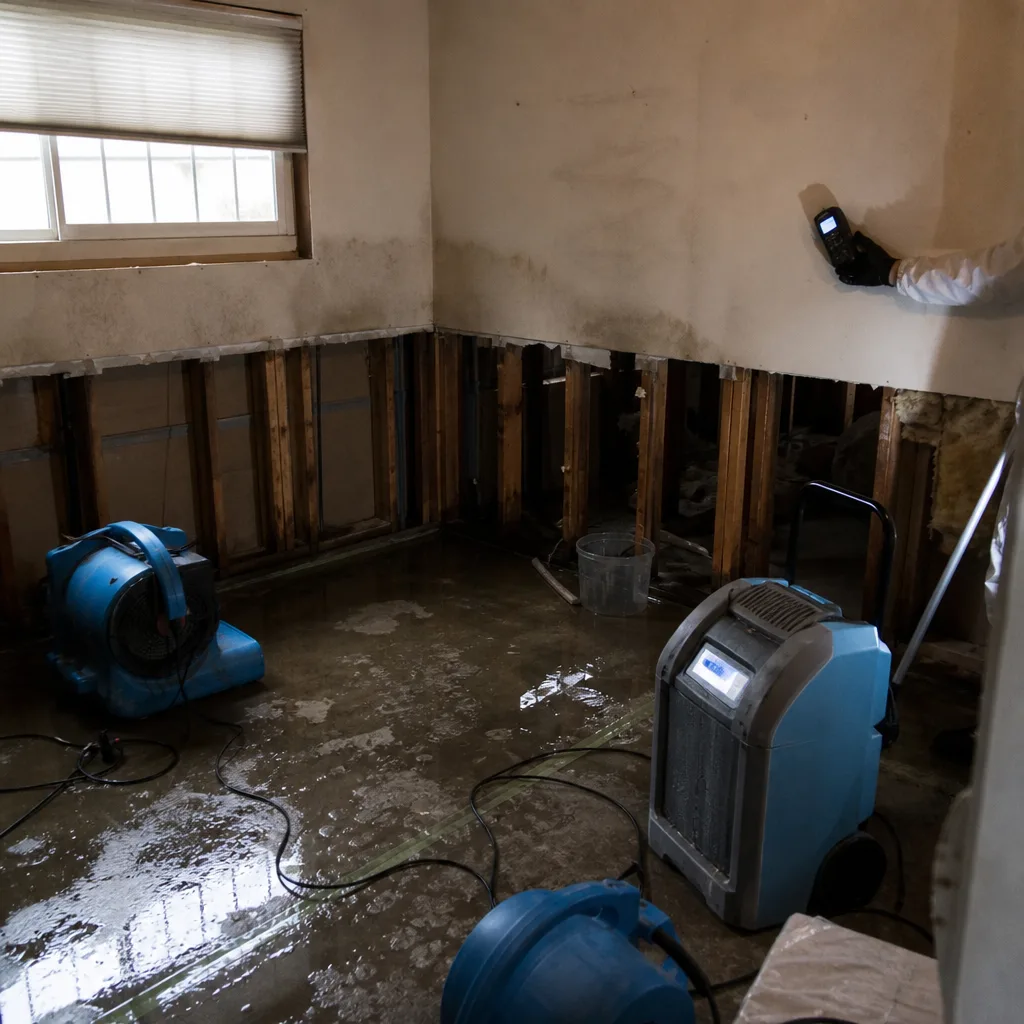 Before
 After
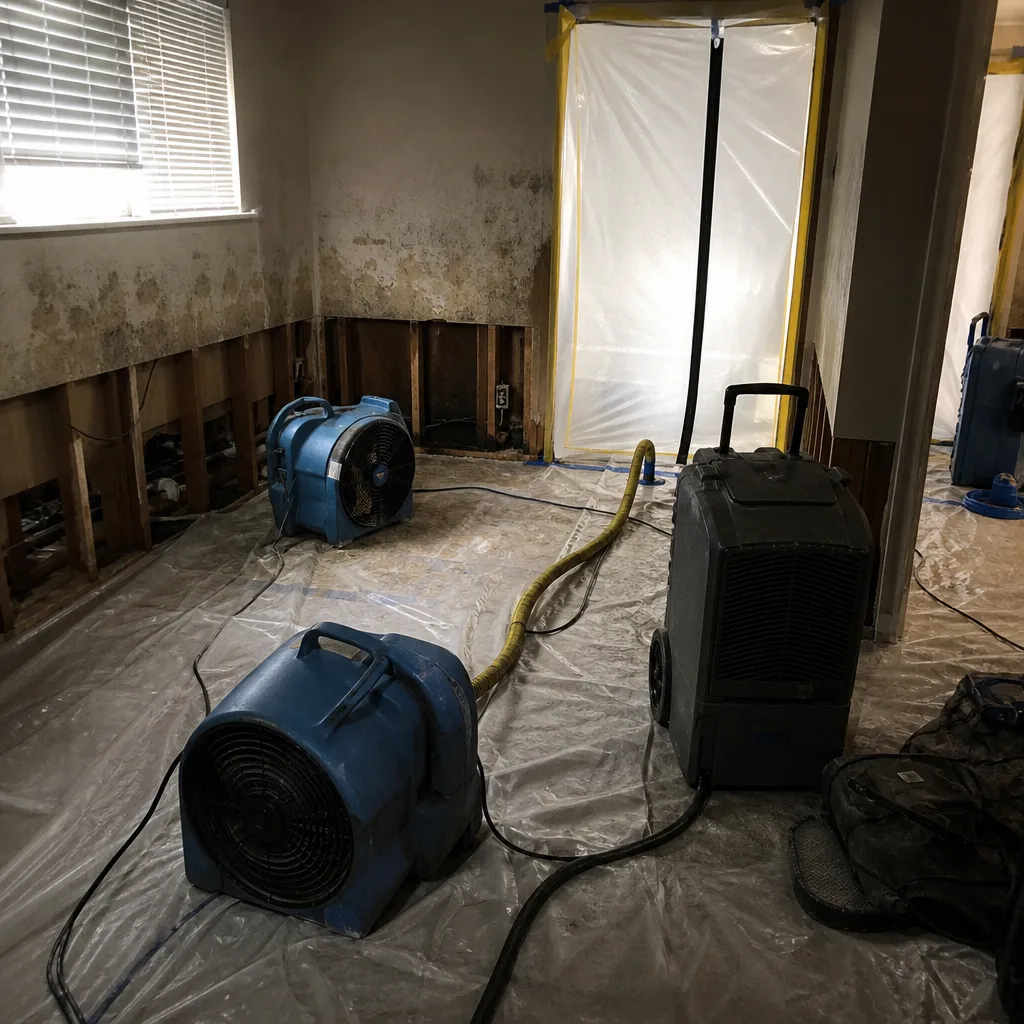 Before
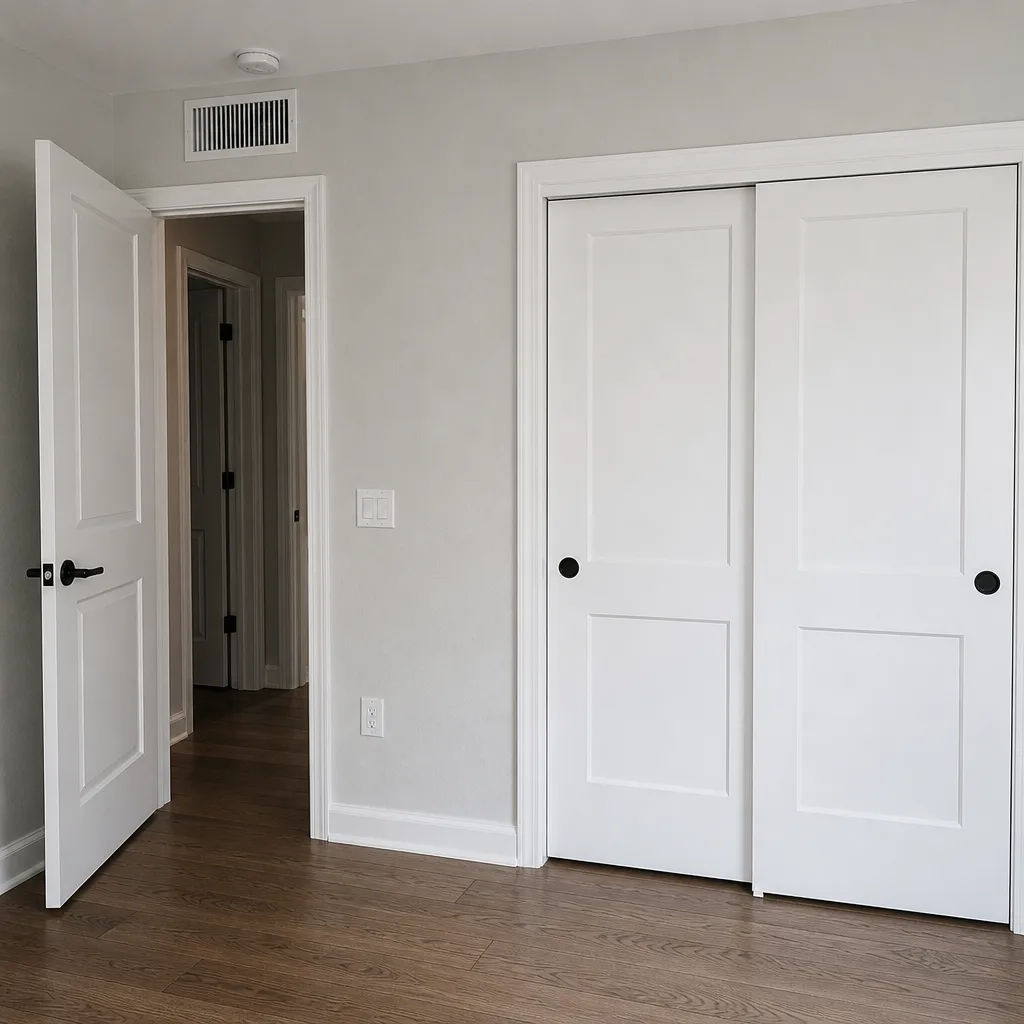 After
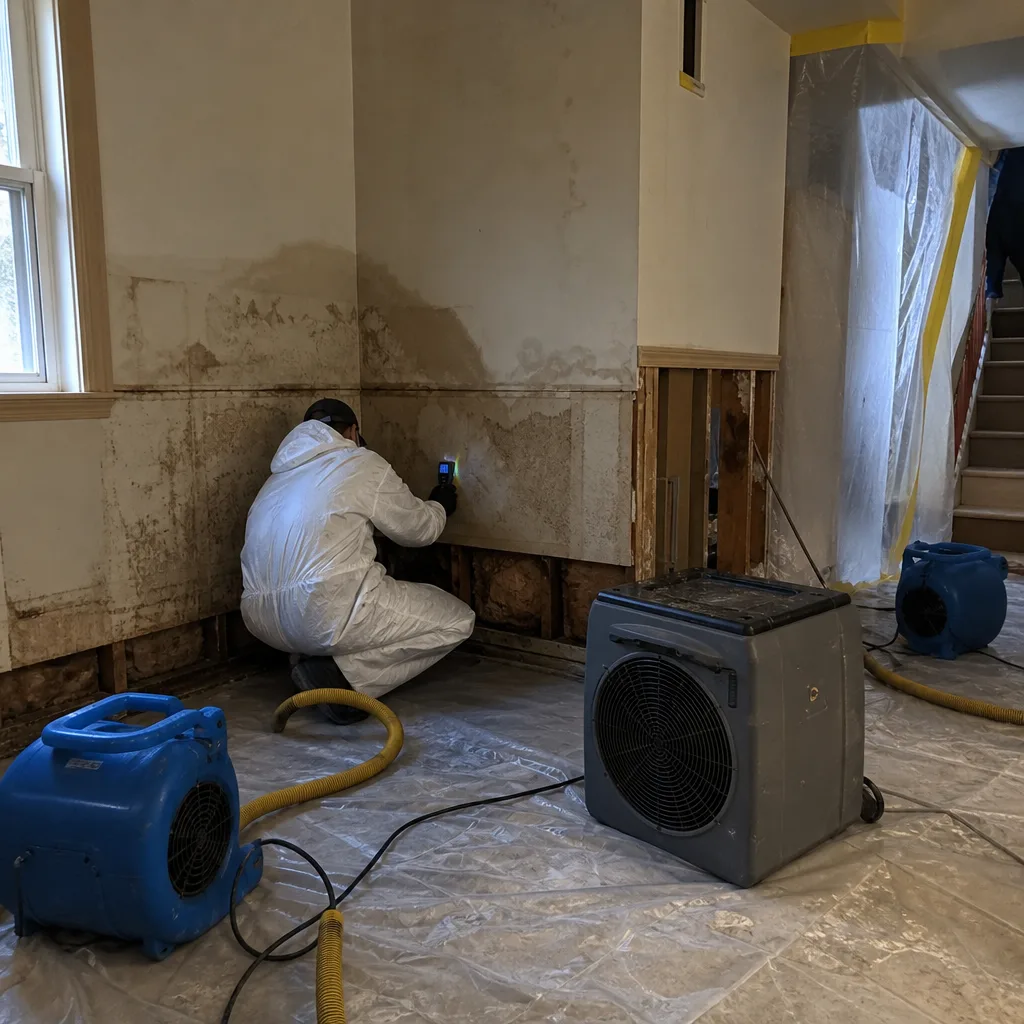 Before
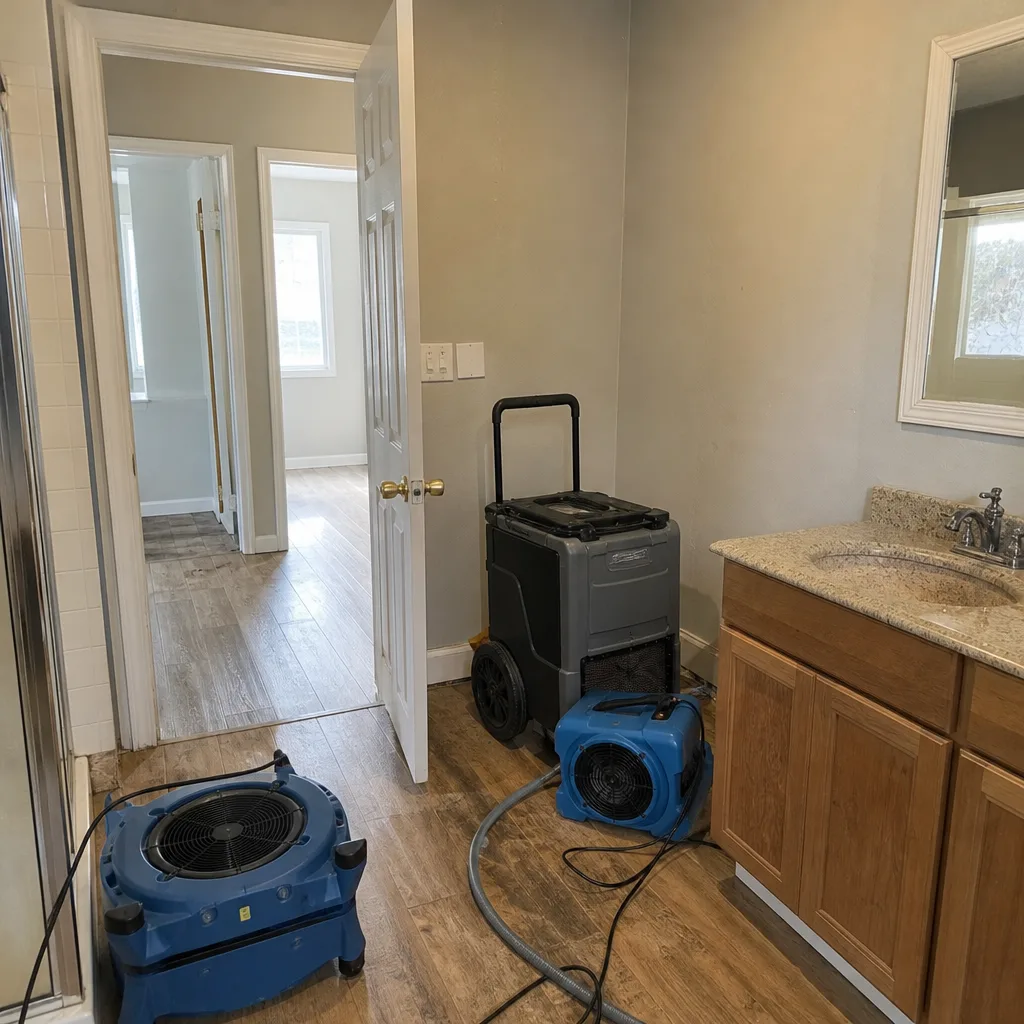 After