
Last updated October 30, 2026
 Water damage drying
 Fire & smoke cleanup
 Mold remediation
 Storm response
 Sewage cleanup
 Reconstruction
Free visual inspection and a written scope of work before any mitigation begins - photos, moisture readings, and drying logs go in your claim file
The scope we write is the scope we bill. Anything new gets shown to you, in writing, before we touch it.
Get your free estimateDamage Restoration Warning Signs: A Fullerton Homeowner’s Reference Guide
A musty smell in a Fullerton home isn’t a warning sign. It’s confirmation. By the time that odor reaches your nose, mold colonization has already been underway for weeks. The real warning signs appear two to four weeks earlier, and most homeowners walk past them every single day without a second glance. This guide covers what those pre-visible indicators are, how to read them, and when a professional assessment in Fullerton becomes the difference between a targeted repair and a full remediation. For more guides & resources, see our blog.
Restoration work we handle
Quick Answer
The most reliable early warning signs of concealed water damage in a Fullerton home are paint bubbling or peeling in isolated patches, baseboard separation from the wall, doors and windows that suddenly bind or stick, unexplained spikes in your water bill, and moisture meter readings above 15% on interior drywall. Any of these justify a professional moisture assessment, because visible mold and standing water are late-stage symptoms, not first warnings.
Table of Contents
- Pre-Visible Moisture Indicators: What Your Walls Are Telling You
- Using a Consumer Moisture Meter: Numbers That Matter
- Fullerton-Specific Structural Warning Signs
- Mold Odor vs. Mildew Odor vs. Sewage Gas: Three Very Different Problems
- HVAC and Plumbing Symptoms That Reveal Concealed Leaks
- Crawlspace and Subfloor Indicators Most Homeowners Never See
- How Warning Signs Affect Your Insurance Timeline
- Common Mistakes to Avoid
- When to Call a Professional
- Frequently Asked Questions
- The Bottom Line
Pre-Visible Moisture Indicators: What Your Walls Are Telling You
Walls don’t fail silently. They telegraph trouble through a handful of specific behaviors that most people dismiss as normal house settling. In our experience across Fullerton homes, these indicators appear consistently before any visible staining or mold growth.
Paint bubbling and blistering patterns. A single small paint bubble near a bathroom ceiling or under a window is easy to ignore. But paint blisters form when moisture vapor pushes through drywall and gets trapped under the paint film. The pattern matters. Bubbles that cluster in a line along a wall cavity suggest a slow leak inside that cavity. Bubbles that spread in a diffuse patch point to condensation or high ambient humidity. In Fullerton’s coastal-influenced climate, we see the diffuse pattern most often in north-facing rooms that never get direct sun. The linear pattern is the one that should worry you.
Baseboard separation. When drywall absorbs moisture, it swells. When it dries, it doesn’t always return to its original dimensions. The first visual cue is often a hairline gap opening between the baseboard and the wall, or between the baseboard and the floor. You’ll notice it as a dark shadow line where the caulk has pulled away. This is not a caulking problem. It’s a moisture-expansion problem. In Fullerton homes built before 1980, we frequently see this paired with plaster walls that retain moisture longer than modern drywall.
Door and window binding. Wood is hygroscopic. It absorbs moisture from the air and from direct contact with damp framing. A door that suddenly sticks against the jamb in July, or a double-hung window that won’t slide without force, often means the surrounding framing has swollen from a concealed moisture source. The key diagnostic detail is timing. Seasonal humidity changes can cause minor binding. But a door that binds continuously, in dry weather and wet, suggests something more persistent than ambient moisture. Track how long the binding has been present and whether it worsens after rain.
What to document before calling anyone
- Take photos of the indicator with a ruler or coin for scale.
- Note exactly when you first noticed it and whether it changes with weather.
- Check the same wall on the other side of the house. Symmetrical issues suggest ventilation; asymmetrical issues suggest a leak.
- Run your hand along the wall surface. Compare temperature and texture to a known dry area. Cooler or slightly tacky surfaces indicate elevated moisture.
These four steps take ten minutes. They also give a restoration team a much better starting point than a phone description of “something looks weird.” If you want a deeper look at how these indicators connect to full-scale damage, our Water Damage Restoration in Fullerton page walks through the assessment process we use.
Using a Consumer Moisture Meter: Numbers That Matter
A $30 pinless moisture meter from a hardware store is the single most useful tool a Fullerton homeowner can own for early damage detection. We use professional-grade meters from Dri-Eaz on every job, but the consumer models are accurate enough to tell you whether a professional call is warranted.
Here’s how to use one correctly. Pinless meters read moisture through electromagnetic sensing. You press the flat sensor pad against a surface and the meter returns a percentage reading. For drywall, a normal reading is between 5% and 12%. A reading of 13% to 15% is elevated and worth monitoring. A reading above 15% indicates active moisture intrusion and warrants a professional assessment. For wood framing and subfloor, normal is 6% to 12%. Above 16%, wood is at risk for fungal growth.
Step-by-step: checking a wall you suspect is damp
- Calibrate or zero the meter according to the manufacturer’s instructions.
- Take a baseline reading on a wall you know is dry, ideally on an interior partition far from plumbing.
- Move to the suspect area. Take readings in a grid pattern every 12 inches, both horizontally and vertically.
- Record the highest reading and its location. A single high spot is more diagnostic than a uniformly elevated area.
- Repeat the check on the opposite side of the same wall if accessible, and on the floor adjacent to the wall.
- If any reading exceeds 15% on drywall or 16% on wood, call a professional. Don’t wait for visible staining.
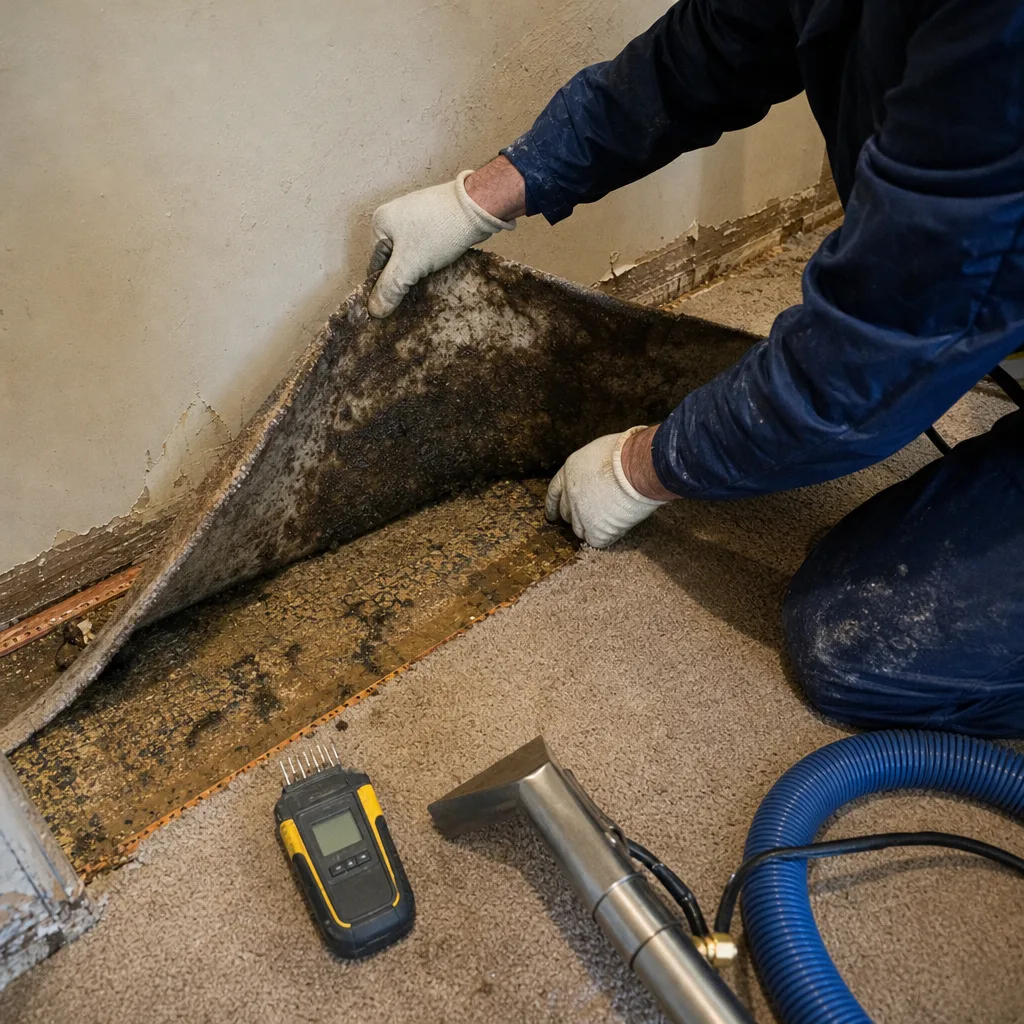
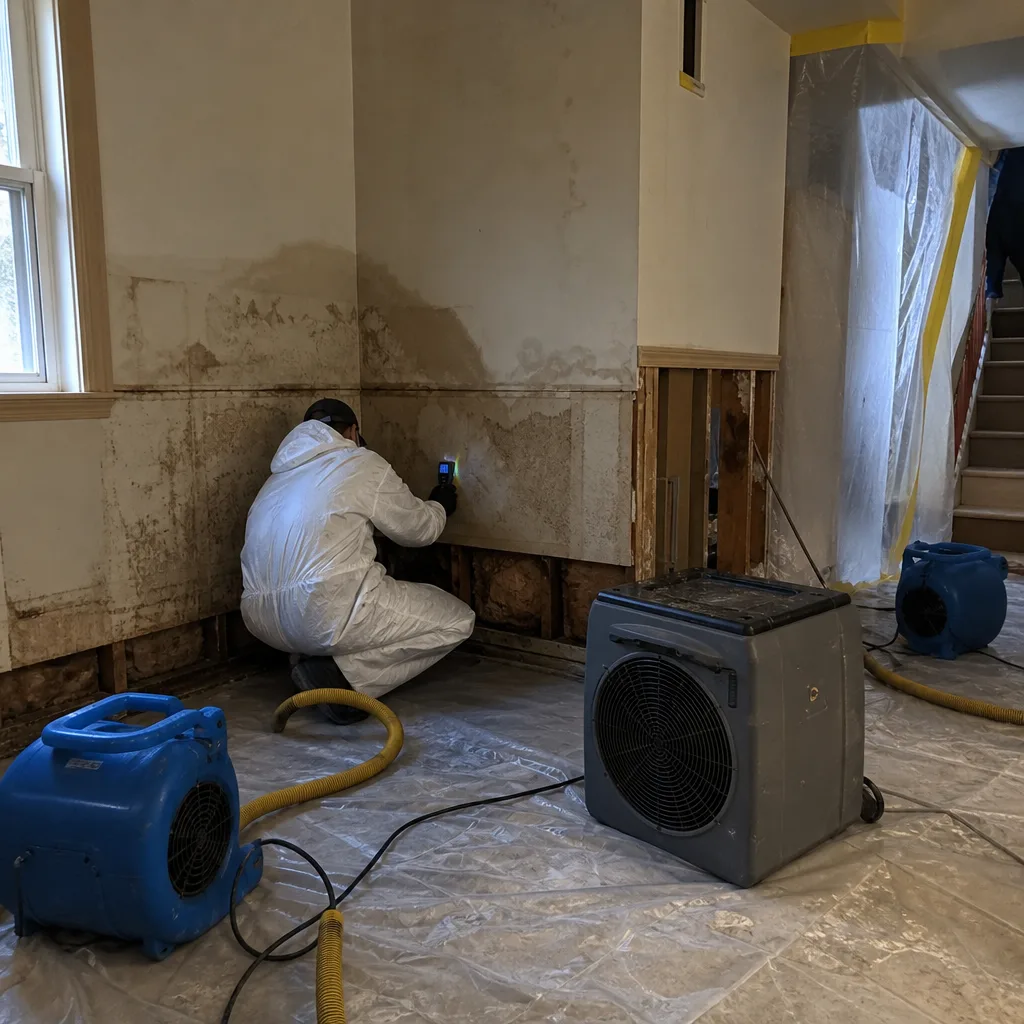
One critical misconception. Consumer meters read surface moisture, not deep-cavity moisture. A wall can read 11% on the surface while the cavity behind it is saturated. That’s why professional assessments in Fullerton include thermal imaging and penetrating probes. The consumer meter is a triage tool, not a final diagnosis. But it gives you data instead of guesswork, and data is what determines whether a small repair stays small.
We’ve repeatedly found elevated readings behind walls that looked flawless from the outside. The homeowner called because a meter they borrowed from a neighbor flagged 18% on a hallway wall. The source was a pinhole leak in a copper supply line inside the wall cavity. Two weeks later, that would have been a mold containment project. Instead, it was a targeted dry-in and cavity drying job, handled with our Injectidry system and closed in four days.
Fullerton-Specific Structural Warning Signs
Fullerton’s building stock has specific characteristics that produce specific warning signs. The city’s housing spans from 1920s Spanish Revival bungalows near downtown to 1970s tract homes in the Sunny Hills area, and each era behaves differently under moisture stress. Three indicators show up more often in Fullerton than in the surrounding Orange County cities.
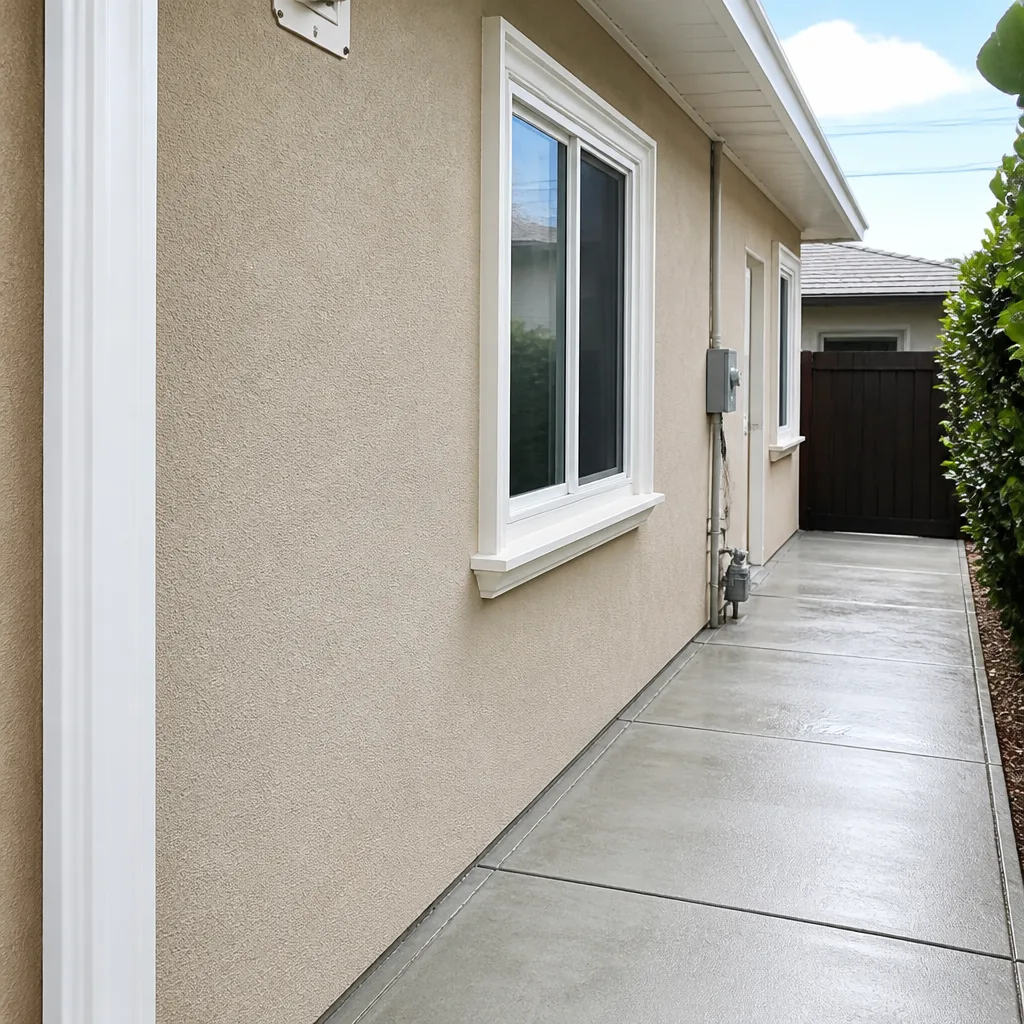
Stucco efflorescence. Efflorescence is the white, chalky mineral deposit that appears on stucco surfaces when water migrates through the material and evaporates, leaving dissolved salts behind. On a Fullerton stucco home, a small patch of efflorescence near the base of a wall or under a window is not cosmetic. It means water is moving through the stucco matrix. The stucco itself may look intact, but the substrate behind it is being wetted. Left unaddressed, this progresses to stucco delamination, where the stucco separates from the lath and begins to sound hollow when tapped. We’ve seen entire wall sections require removal because a quarter-sized efflorescence patch was ignored for two years.
Slab cold-joint seepage patterns. Fullerton sits on varied geology, and homes on slab foundations, especially those built in the 1960s and 1970s, sometimes show moisture wicking at the cold joint where the slab meets the stem wall. The tell is a persistent darkening of the concrete at the base of an exterior wall, often on the side of the house that catches groundwater flow after rain. Inside, this corresponds to elevated moisture readings on the bottom plate of that same wall. The warning sign is subtle: a concrete edge that never fully dries out, even in Fullerton’s warm dry summers. If that’s present, the wall cavity above it deserves a professional check.
Crawlspace vapor barrier failure indicators. Many Fullerton homes have raised foundations with crawlspaces. The vapor barrier, typically 6-mil polyethylene laid over the soil, is the primary defense against ground moisture migrating into the structure. The warning signs of failure are visible from the crawlspace entry: condensation beading on the underside of floor joists, a musty smell when you open the access door after rain, visible tears or gaps in the plastic sheeting, and standing water in low spots. Inside the house, the corresponding indicator is cupping hardwood floors or persistent high humidity readings on the first floor despite running the AC. A failed vapor barrier doesn’t ruin your house overnight. It degrades it slowly for years, and it creates the exact conditions mold needs to establish in the floor system.
Mold Odor vs. Mildew Odor vs. Sewage Gas: Three Very Different Problems
Odor is the most commonly reported warning sign in damage restoration, and it’s also the most commonly misdiagnosed. Three distinct smells get lumped together as “that musty smell,” but each points to a different problem and requires a different response.
Mold-confirming odor. The smell people describe as earthy, damp, or like wet socks is the odor of active mold colonies releasing microbial volatile organic compounds, or MVOCs. This smell is not a warning sign. It’s confirmation that mold has already established and is growing. The source is almost always concealed: inside a wall cavity, under flooring, behind a cabinet, or in a crawlspace. In Fullerton homes, the most common locations we find active colonies are behind dishwasher supply lines, under bathroom vanities, and inside wall cavities below windows that leak during winter rains. A mold-confirming odor means the clock has already started on Mold Remediation in Fullerton, and the scope is larger than it would have been two weeks earlier.
Mildew odor. Mildew is a surface-level fungal growth that develops on organic material in high-humidity, low-airflow conditions. The smell is sharper and less earthy than mold, and it’s often localized to a shower curtain, a window track, or a pile of damp laundry. Mildew odor is a ventilation and housekeeping issue more than a structural one. It responds to cleaning and dehumidification. The important distinction: mildew grows on the surface. Mold grows into materials. Mildew can be wiped away. Mold requires removal of the affected material or professional remediation. If you smell mildew in a bathroom with a functioning exhaust fan, you’re probably dealing with a surface issue. If the same odor persists after cleaning and improving airflow, it’s time to look deeper.
Sewage gas odor. This smell is unmistakable once you know it: a rotten-egg or sulfur odor that comes and goes, often stronger near floor drains, laundry connections, or under sinks. It’s hydrogen sulfide from decomposing organic waste in a drain system. The usual cause is a dry P-trap, which is a maintenance issue, or a broken or improperly vented drain line, which is a plumbing issue. Sewage gas is not a restoration issue by itself. But if a sewage backup or drain line break has occurred, the contaminated water it releases is a Category 3 water loss, which is a restoration issue requiring full decontamination. The distinction matters because the response is different. Mold calls for drying and remediation. Sewage calls for decontamination and disposal of porous materials. Treating one like the other makes the problem worse.
HVAC and Plumbing Symptoms That Reveal Concealed Leaks
Some of the earliest warning signs of water damage never show up on a wall or floor. They show up on your utility bill, in your water pressure, and in the temperature of your floors.
Unexplained water bill spikes. This is the most objective early indicator available to a homeowner. Compare your current bill to the same month last year. A 20% or greater increase with no change in household usage patterns suggests a leak somewhere in the system. A continuously running toilet can account for some of it. A pinhole leak in a copper line inside a wall accounts for the rest, and that’s the one that causes structural damage. The leak doesn’t have to be large. A pinhole leak losing half a gallon per hour adds up to 360 gallons a month, which is enough to saturate a wall cavity and start the clock on mold.
Inconsistent water pressure. A sudden drop in pressure at a single fixture, while other fixtures run normally, points to a restriction in that branch line. A drop across the entire house points to a supply-side issue. Pressure that fluctuates while no fixtures are running can indicate a leak that’s intermittently releasing pressure. The diagnostic move is to turn off all fixtures and watch the water meter. If the dial moves while everything is off, you have a leak. From there, the question is where.
Warm floor patches. This is a slab leak indicator specific to homes with hot water lines running through the slab. A warm patch on a concrete or tile floor, often in a hallway or near a kitchen, indicates a hot water line has developed a slow leak under the slab. The heated water spreads through the concrete and radiates upward. This is a serious condition because the leak is constantly wetting the slab and, in many cases, the wall bottom plates adjacent to the leak. In Fullerton homes built in the 1970s and 1980s with original copper slab lines, this is a common failure mode. The floor patch is the warning sign. The structural damage follows.
Each of these symptoms, on its own, can have a benign explanation. Together, or in combination with any of the visual indicators covered earlier, they paint a picture that justifies a professional assessment. The Mahogany Water Damage home page covers how we approach these assessments and what a standard inspection includes.
Crawlspace and Subfloor Indicators Most Homeowners Never See
The crawlspace is the most neglected part of a Fullerton home, and it’s where the earliest damage indicators live. Most homeowners visit their crawlspace once every few years, if that. Here’s what you should look for when you do check it.
Condensation on floor joists. Joists that bead with moisture after rain, or that feel damp to the touch in the morning, indicate that ground moisture is evaporating into the crawlspace faster than ventilation can remove it. This is a vapor barrier failure or a ventilation failure. The fix is often as simple as repairing the barrier and adding passive vents. The cost of ignoring it is fungal growth on the structural framing, which is a much larger project.
Discoloration or staining on subfloor. Dark streaks or water rings on the underside of the subfloor show exactly where a leak above has been dripping. The size of the stain tells you how long it’s been active. A small, dark, localized stain is a recent leak. A broad, faded stain with a chalky edge is an older leak that has been wetting and drying repeatedly. Both deserve investigation, but the older one suggests the leak may have been active for months or years.
Insulation that’s hanging or compressed. Fiberglass batt insulation that sags away from the subfloor has likely absorbed moisture at some point. Wet insulation loses its R-value and holds moisture against framing, which accelerates fungal growth. Look for insulation that’s darker at the edges, which indicates it wicked water at some point. This is a condition that’s easy to spot with a flashlight and easy to overlook if you don’t know what you’re looking at.
Wood debris or frass. Piles of fine sawdust near foundation vents or on top of the vapor barrier can indicate pest activity. Pests are attracted to damp wood. Their presence is a secondary indicator that moisture conditions exist in the structure. It doesn’t tell you where the water is, but it tells you that conditions are favorable for damage.
How Warning Signs Affect Your Insurance Timeline
Insurance doesn’t reward early detection with better coverage. It defines coverage by the cause of loss and the policy language. But the timing of your discovery does matter in one important way: documentation.
When you call a restoration company at the first indication of a problem, like a moisture meter reading of 16% or a water bill spike, the assessment produces a written record. That record includes moisture readings, thermal imaging, and photo documentation of the affected area. When your insurer asks when the damage occurred and whether it was sudden or long-term, that record supports your claim.
When you wait until visible mold appears, the record shows a different story. The insurer may classify the loss as long-term seepage or a maintenance issue rather than a sudden event. That distinction can be the difference between a covered claim and a denied one. We’ve worked with homeowners in Fullerton who caught a supply line leak early enough that the entire claim was processed as a sudden event. We’ve also worked with homeowners who waited, and the claim was denied on the grounds of gradual damage. The restoration work was the same. The insurance outcome was not.
Photo documentation matters regardless of when you call. Take pictures of everything. Take pictures of the water bill. Take pictures of the bubbling paint. Take pictures of the moisture meter reading. The more you document before a professional arrives, the stronger your claim file becomes. When you work with us, we document everything with the same level of rigor, because we’re preparing a file that may be reviewed by an adjuster you’ll never meet.
Common Mistakes to Avoid
- Waiting for visible mold before calling anyone. By the time mold is visible on a wall surface, the colony behind that surface is already established and spreading. Early intervention is always cheaper and less invasive. A moisture meter reading above 15% deserves a call, not a wait-and-see.
- Painting over water stains or bubbling paint. This hides the symptom but does nothing to the cause. The moisture source continues to wet the wall, and the new paint simply traps the moisture, accelerating deterioration. Within months, the stain reappears, usually larger.
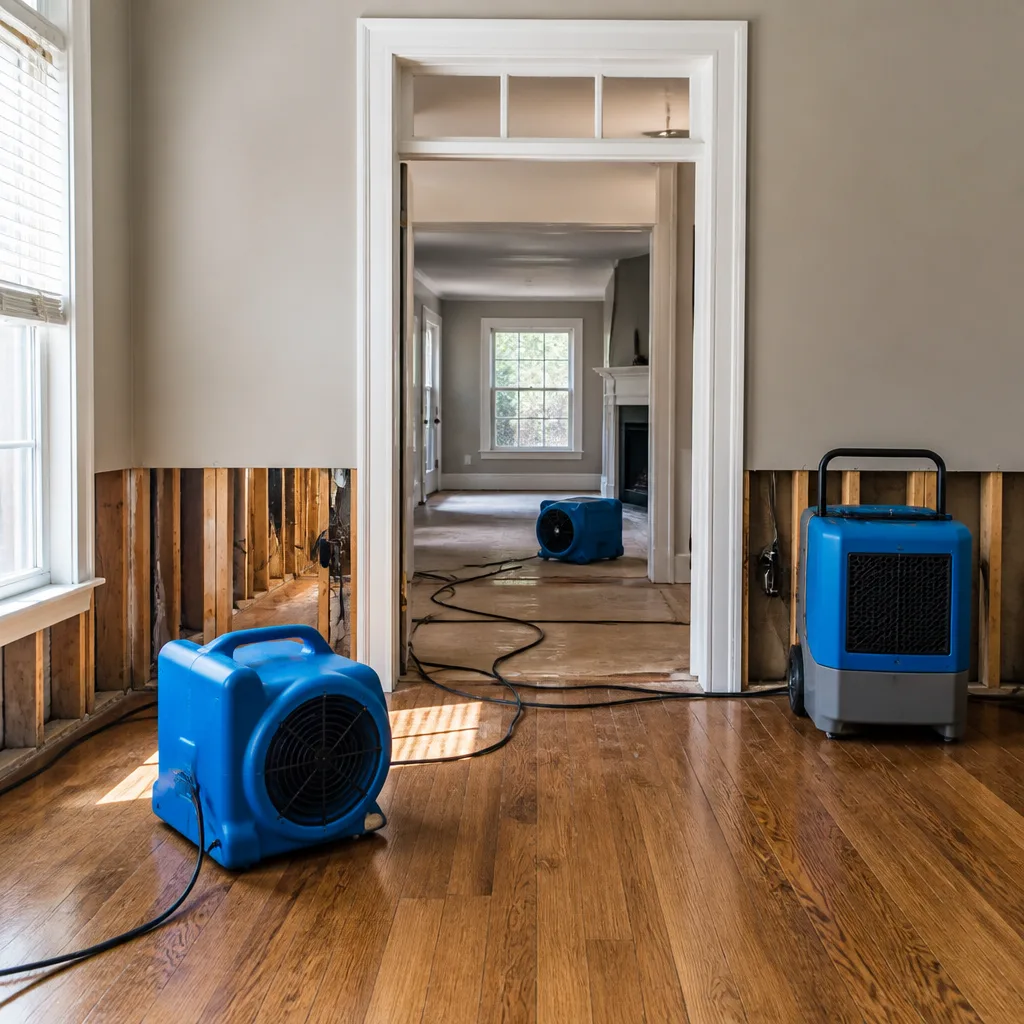
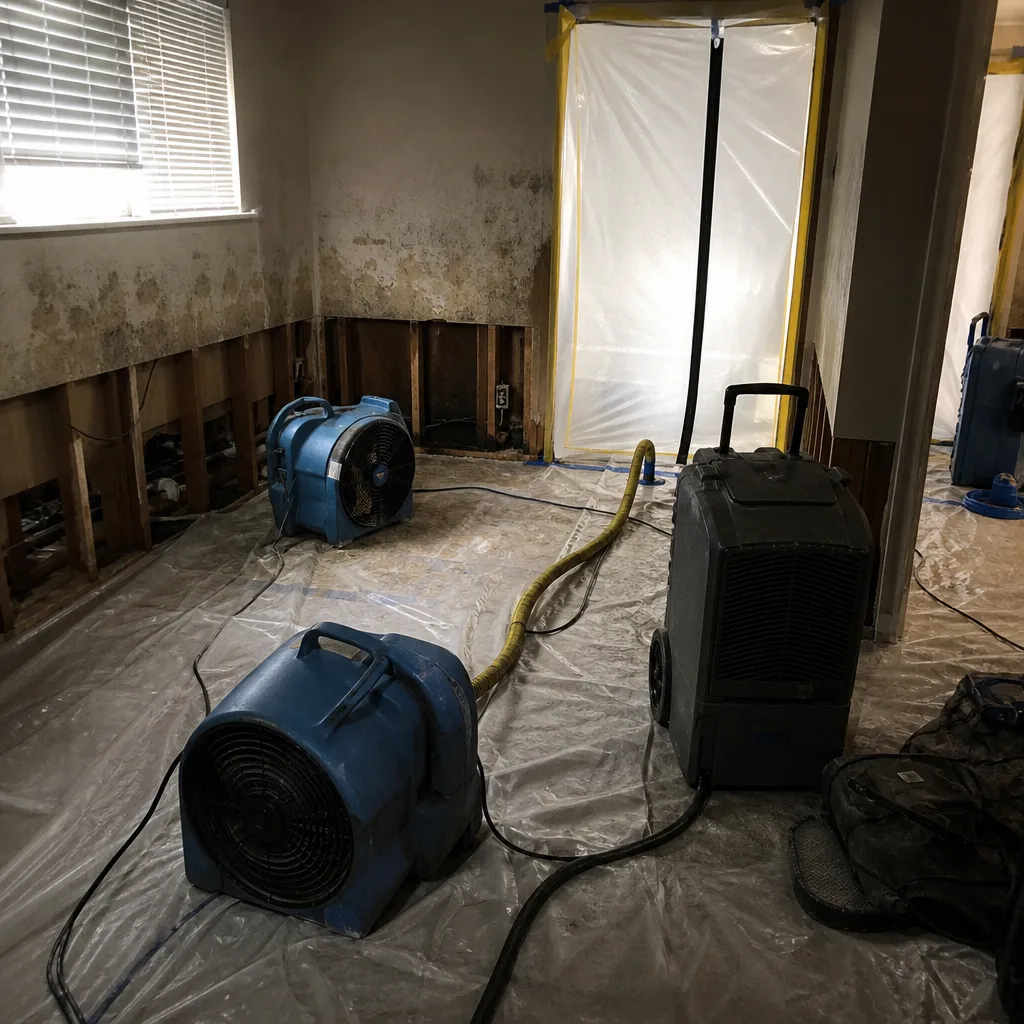
- Running a box fan on a wet area and calling it dried. Surface drying is not structural drying. A fan moves air across the surface. It does not remove moisture from inside wall cavities, under flooring, or within framing. Professional drying uses calibrated equipment to remove moisture from every layer, not just the visible one.
- Assuming a small stain means a small problem. A quarter-sized water stain on a ceiling can indicate a leak that has been wicking through insulation for weeks. The stain size reflects how much water has reached the surface, not how much is trapped behind it. We’ve opened ceilings for a small stain and found a 20-square-foot wet area above.
- Using bleach on visible mold. Bleach is a surface disinfectant. It does not kill mold roots inside porous materials like drywall or wood. Applying bleach to mold on drywall wets the material further and creates better conditions for regrowth. Professional mold remediation removes the affected material and treats the surrounding area with appropriate antimicrobial products.
- Accepting a contractor’s verbal estimate without a written scope. In damage restoration, a verbal estimate is worth the paper it’s printed on. A written scope defines exactly what will be removed, what will be dried, what will be treated, and what the finished condition will be. Without it, you have no basis for comparison or enforcement. Every professional restoration company should provide a written scope before starting work.
- Ignoring a water bill spike because “it’s probably nothing.” A water bill spike is data, and data doesn’t lie. Investigate it the month you see it, not after the next billing cycle. The cost of a leak detection visit or a professional assessment is a fraction of the cost of full remediation.
When to Call a Professional
Some situations clearly justify immediate professional attention. A moisture meter reading above 15% on interior drywall. A water bill spike of 20% or more with no household explanation. A persistent musty odor that doesn’t resolve with cleaning and ventilation. A warm patch on a slab floor indicating a hot water line leak. A crawlspace with condensation beading on joists and a torn vapor barrier. Paint bubbling in a linear pattern along a wall cavity. Or any combination of these indicators appearing together.
These aren’t DIY fixes, and they aren’t handyman territory. They require moisture mapping, thermal imaging, and equipment-matched drying, and that’s what we do. Mahogany Water Damage offers free estimates in Fullerton. Call (855) 356-4970 and we’ll assess the situation, document what we find, and give you a written scope before any work begins.
You can also learn more about our approach to the full damage spectrum. We handle water, mold, and fire under one roof, which means you’re never juggling three contractors and three invoices. Our Fire Damage Restoration in Fullerton page covers how we manage that side of the work.
Frequently Asked Questions
Water damage in its early stages often has no odor at all. When an odor does develop, it usually starts as a faint damp or earthy smell that comes and goes, particularly in enclosed spaces like closets or cabinets. A persistent musty smell that doesn’t resolve with cleaning is a sign that mold has already established, which means the damage has progressed beyond the early warning stage. Call (855) 356-4970 for a professional assessment if the odor persists.
Look for paint that’s bubbling or peeling in isolated patches, baseboards pulling away from the wall, and a wall surface that feels cooler or slightly tacky compared to surrounding areas. Use a moisture meter to check the suspect area. A reading above 15% on drywall indicates active moisture intrusion and warrants a professional call.
Water damage itself doesn’t cause health problems, but the mold that follows can. Mold exposure affects people differently. Those with asthma, allergies, or compromised immune systems are most at risk. The best approach is to address moisture before mold establishes, which means acting on early warning signs rather than waiting for visible growth.
A musty smell is often mold, but not always. It can also be mildew, which is a surface-level issue, or it can be sewage gas from a dry P-trap or broken drain line. The distinction matters because each requires a different response. Mold requires professional remediation. Mildew responds to cleaning and improved ventilation. Sewage gas requires plumbing repair, and any sewage water release requires decontamination.
How fast can water damage spread in a Fullerton home?
In Fullerton’s climate, water damage can progress from a small leak to established mold growth in 24 to 48 hours under the right conditions. Warm temperatures and enclosed spaces accelerate fungal growth. This is why early detection matters so much. The difference between a targete
See the difference
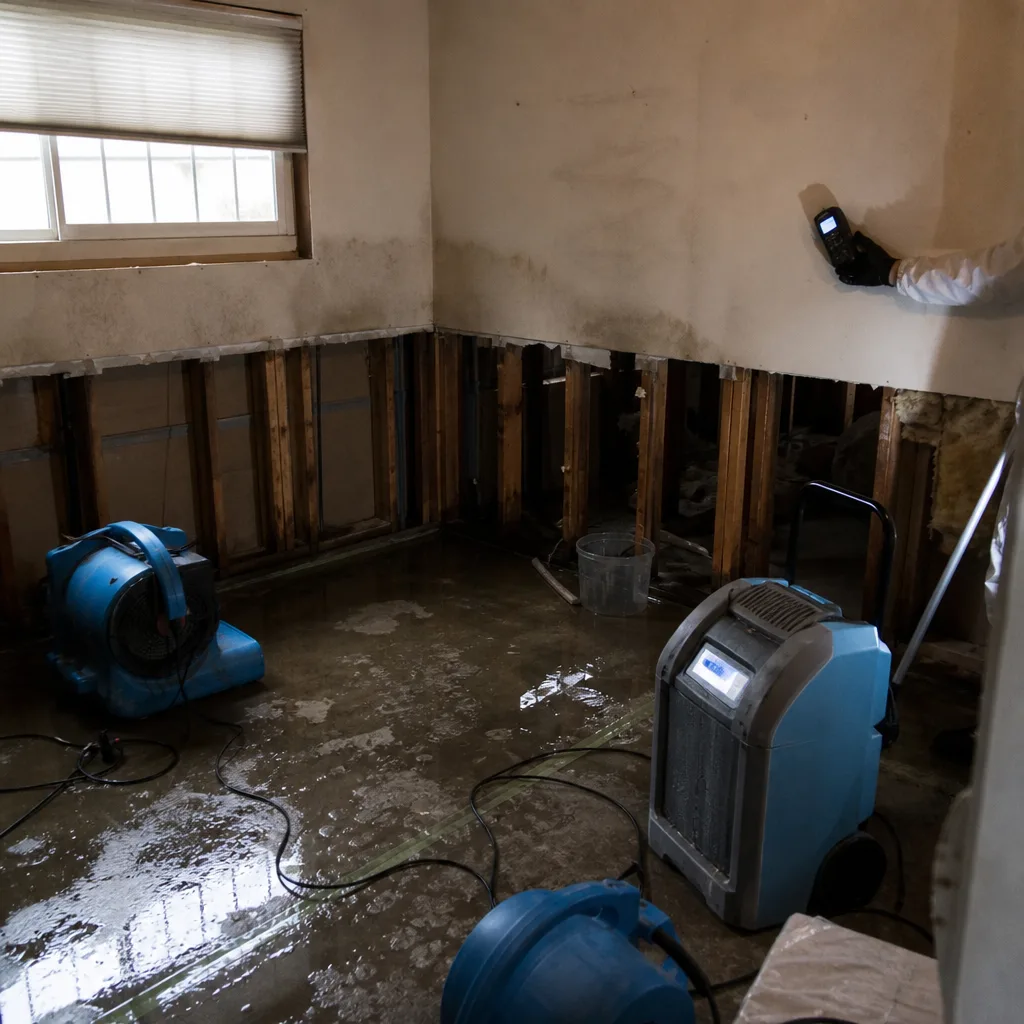 Before
 After
 Before
 After
 Before
 After