
 Water damage drying
 Fire & smoke cleanup
 Mold remediation
 Storm response
 Sewage cleanup
 Reconstruction
Free visual inspection and a written scope of work before any mitigation begins - photos, moisture readings, and drying logs go in your claim file
The scope we write is the scope we bill. Anything new gets shown to you, in writing, before we touch it.
Get your free estimateFast, Reliable Water Damage Restoration Across Fullerton
Water damage restoration in Fullerton typically costs between $2,400 and $7,800 depending on the extent of the intrusion and how long the water has been sitting. Most jobs in Fullerton can be scoped within 90 minutes of arrival and mitigation started the same day. We know the difference between a wind-driven leak that’s been hiding in a lath-and-plaster wall for months and a burst supply line that flooded a kitchen 20 minutes ago. That distinction matters more in Fullerton than almost anywhere else in North Orange County. If you’re looking at a wet ceiling, a buckling floor, or a musty wall right now, call (855) 356-4970 and we’ll walk you through what to do in the next hour while a crew heads your way.
Is There Water Damage Restoration in Fullerton That Actually Shows Up?
We’re not the crew that answers the phone from a call center in another state. Our Water Damage Restoration team is dispatched locally and we’re familiar with Fullerton’s streets, its housing stock, and the specific ways water moves through the homes here. A 1920s Craftsman bungalow off West Wilshire Avenue behaves nothing like a 1960s ranch tract home south of Orangethorpe. We carry moisture meters, thermal imaging cameras, and drying equipment calibrated for both. That local knowledge saves time on every single job because we’re not figuring out your house on the fly. We already know what’s behind the plaster, what’s under the slab, and which walls in a Fullerton home are most likely to hide water after a Santa Ana wind event.
Restoration work we handle
Why Mahogany Water Damage Is Fullerton’s Preferred Water Damage Restoration Company
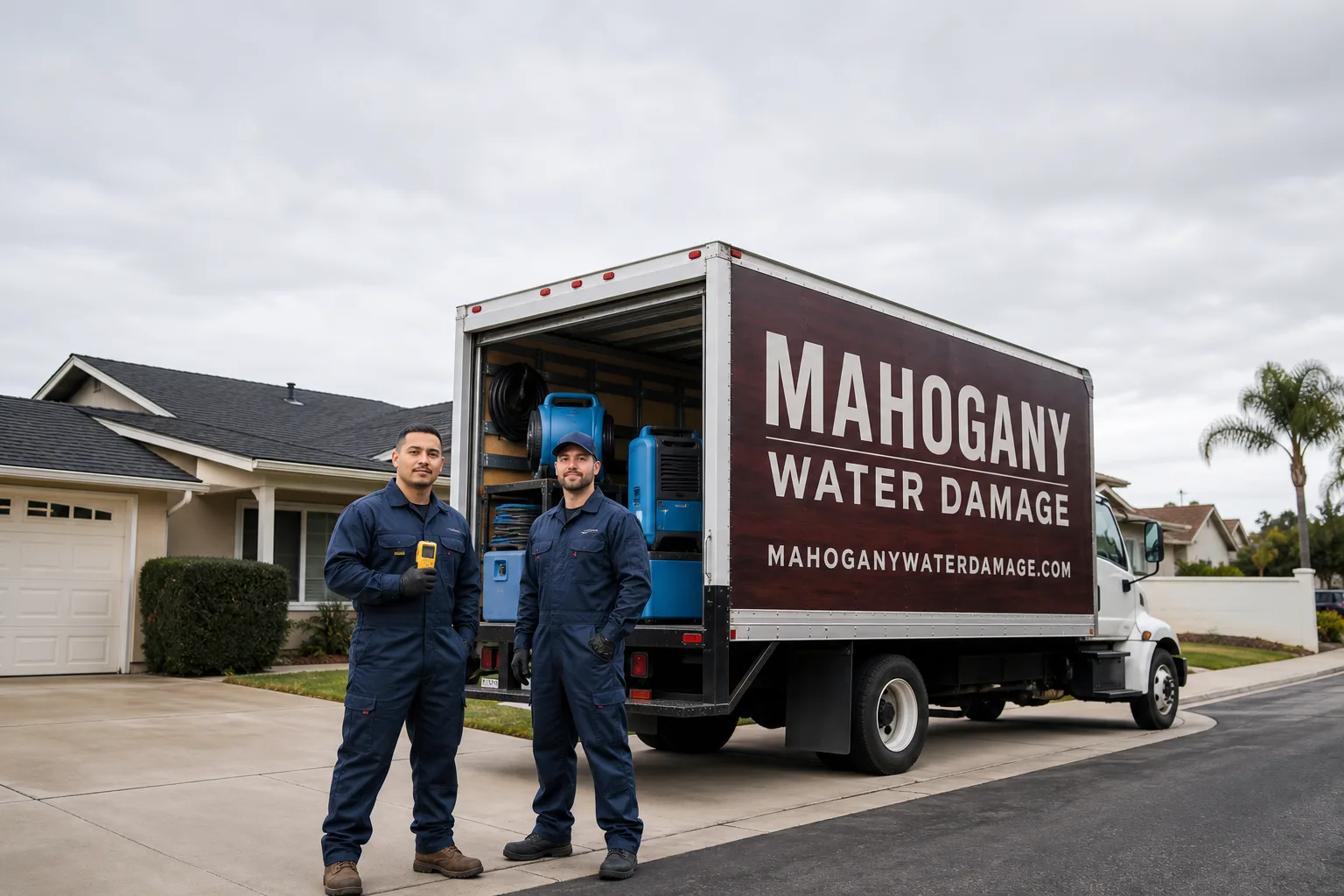
Fullerton homeowners call us because we show up with commercial-grade drying systems from Dri-Eaz and Phoenix, not a trailer full of rental units. The difference is measurable: owned, calibrated equipment matched to the actual square footage and materials of your home. Noel Carrasco leads our restoration work with an IICRC-certified process, and he’s built the team around one principle: dry smarter, demolish less. That’s not a slogan. It’s the operating difference between cutting out every wet wall and using Injectidry to dry wall cavities and floors in place. For a Fullerton homeowner in a 1930s Spanish Revival, that means original lath-and-plaster stays put instead of going to a dumpster.
We also handle water, mold, and fire under one roof, which matters when a water event in a Fullerton attic sat long enough to start a mold problem. No handoff to a third party, no second crew, no relay of information through four voicemails. One team, start to finish, with documentation built for adjusters and claims. Our memberships with RIA and the IFA mean our processes are independently held to standards, not our own internal checklist.
Flooded Basement in Fullerton
A flooded basement in Fullerton is a different animal than the same event in a city with true below-grade basements. Many of the homes in Fullerton’s south and west neighborhoods, built in the 1950s and 1960s, are slab-on-grade ranch houses. When water pools around the foundation or a laundry line lets go, that water doesn’t sit in a defined basement pit. It runs across the slab, under vinyl plank, under tile, and into wall cavities. By the time you see it at the baseboard, it has already traveled. A typical flooded basement response in Fullerton, meaning standing water on a slab floor or in a below-grade utility room, runs $1,800 to $4,200 for extraction, containment, drying, and moisture verification. If the water came from a sewer backup, add containment and sanitation and expect the upper end of that range or slightly beyond.
Slab-On-Grade Water Removal
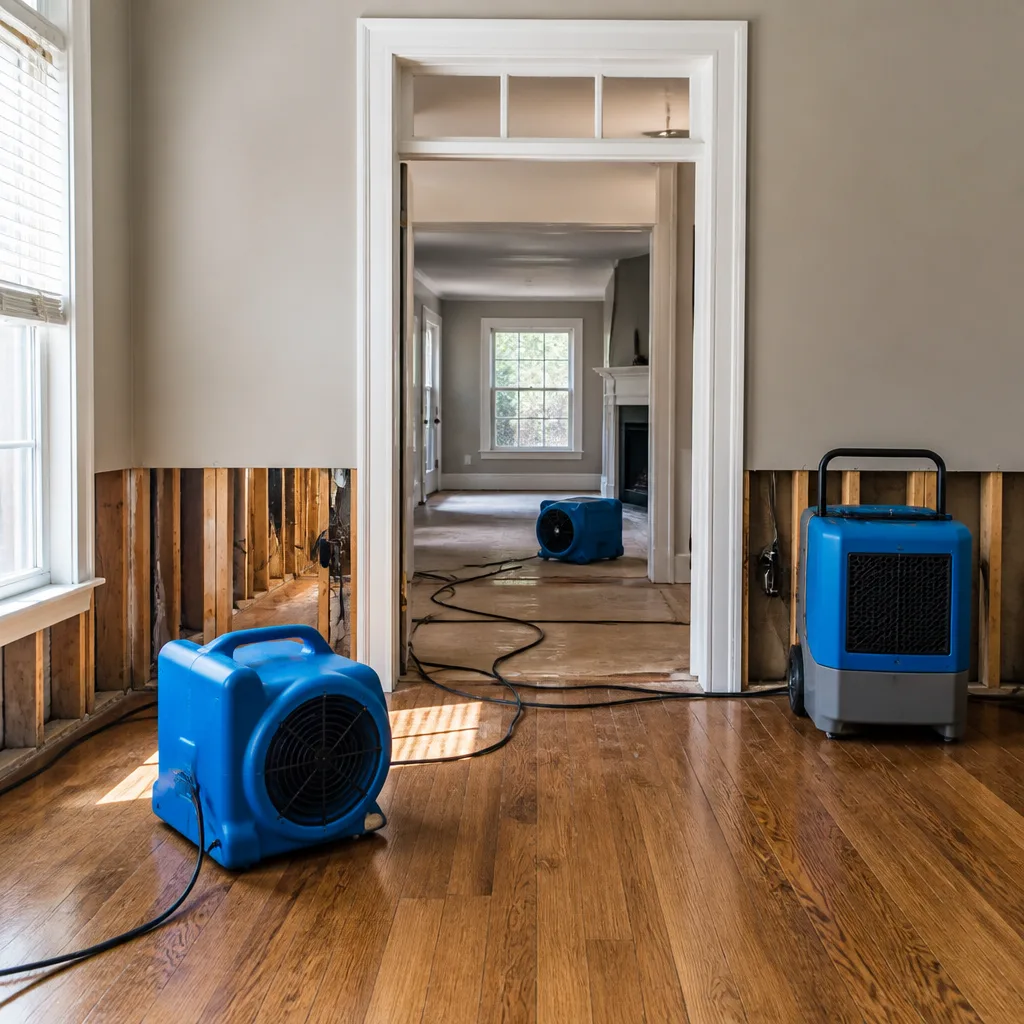
We pull standing water with truck-mounted extraction and then map the moisture across the slab with thermal imaging and penetrating meters. The water you can see is maybe 30 percent of what’s actually there. In a Fullerton ranch, the rest has moved under the flooring or into the bottom six inches of drywall. We make the call on whether the floor comes up or gets dried in place, and we explain that call in writing before work starts.
Utility Room and Water Heater Floods
A failed water heater in a Fullerton garage or utility closet is one of the most common calls we take. These are almost always on the slab, often against a shared wall with living space. We extract, set containment if the wall is saturated, and run drying logs until the moisture content meets dry standard. Restored to standard, not “looks dry.”
Water Extraction in Fullerton
Water extraction in Fullerton needs to happen fast, but fast doesn’t mean sloppy. The goal in the first visit is to remove every gallon that can be physically pulled out, then build a drying plan for what’s left in the materials. We run commercial extraction units, not rental-grade shop equipment, because the difference shows up three weeks later when a half-extracted floor starts to cup or a wall starts to smell. A typical emergency water extraction in Fullerton runs $800 to $2,600, depending on the affected square footage, the flooring type, and how far the water has migrated. That price includes extraction, initial moisture mapping, and setting up the drying chamber.
After-Hours Response for Fullerton Homes
Water doesn’t wait for business hours, so our dispatch runs around the clock. When a supply line bursts at 11 p.m. in a Fullerton condo, the immediate concern is stopping the water and pulling it out before it moves into adjacent units. Our response time to most Fullerton neighborhoods is under an hour for emergency extraction, and the first thing the tech does is locate and stop the source, not just start pumping. That distinction keeps a bad night from becoming a two-week restoration.
Hardwood and Tile Water Removal
Fullerton’s older homes often have original oak hardwood over a crawlspace, while the mid-century tract homes sit on slab with tile or vinyl. The extraction approach changes completely. Hardwood over a crawlspace can often be saved with rapid extraction and targeted under-floor drying. Tile on a slab looks dry on top while water sits trapped underneath. We check both, and we report moisture readings at the start and the end.
Fullerton’s Wind-Driven Leak Problem Is Not Like Other Cities
Fullerton sits on the northern edge of the Santa Ana wind corridor, and that geographic fact shapes more of our water damage calls than any other single factor. After a strong Santa Ana event, the first substantial rain reveals wind-driven roof and fascia damage that has compromised the envelope. Water doesn’t pour through an obvious hole. It works its way in at the roof-wall junction, around chimney flashing, and behind cracked fascia boards, then moves through the wall cavity for weeks or months before anyone notices. A homeowner sees a faint stain on a ceiling in January and assumes it’s a new leak. In reality, the intrusion likely started in November when a eucalyptus limb clipped the flashing during a wind night. This delayed-discovery pattern is the defining Fullerton water damage scenario, and it is fundamentally different from the flood-driven damage of neighboring cities like Buena Park or Anaheim.
After a Santa Ana wind night, we responded to a call on North Richman Avenue where a eucalyptus limb had cracked the fascia and flashing around a chimney on a 1950s ranch home. Our techs used moisture mapping and thermal imaging to trace wind-driven rain intrusion at the roof-wall junction, then set up containment and structural drying with Dri-Eaz air movers and Phoenix dehumidifiers. The homeowners were relieved we handled the mitigation and drying logs in one trip, avoiding a second crew visit for a separate pack-out.
How Fullerton’s Housing Stock Changes the Restoration Process
Fullerton’s housing stock spans three distinct eras, and each one fails differently. The 1910s and 1920s Craftsman and Spanish Revival bungalows near downtown and the college edge are built with lath-and-plaster walls over wood framing. When water gets into those walls, the plaster holds moisture against the wood and the only clue for months might be a musty smell. By the time a stain appears on the surface, the studs behind the plaster have been wet long enough to support mold. Homeowners often write off that smell as “old house smell.” It’s not. It’s water, and it’s been there too long. The mid-century ranch homes across the south and west of Fullerton, including many on slab foundations, present the opposite problem: no crawlspace to inspect, no basement to show standing water. Water migrates invisibly under vinyl plank and tile, and the first visible sign is often flooring lifting at the seams. Newer multifamily and infill construction brings shared-wall water migration, where a leak in one unit travels into the neighbor’s ceiling before anyone in the source unit knows anything happened. Each of these requires a different moisture mapping strategy, and we’ve built our process around all three.
See the difference
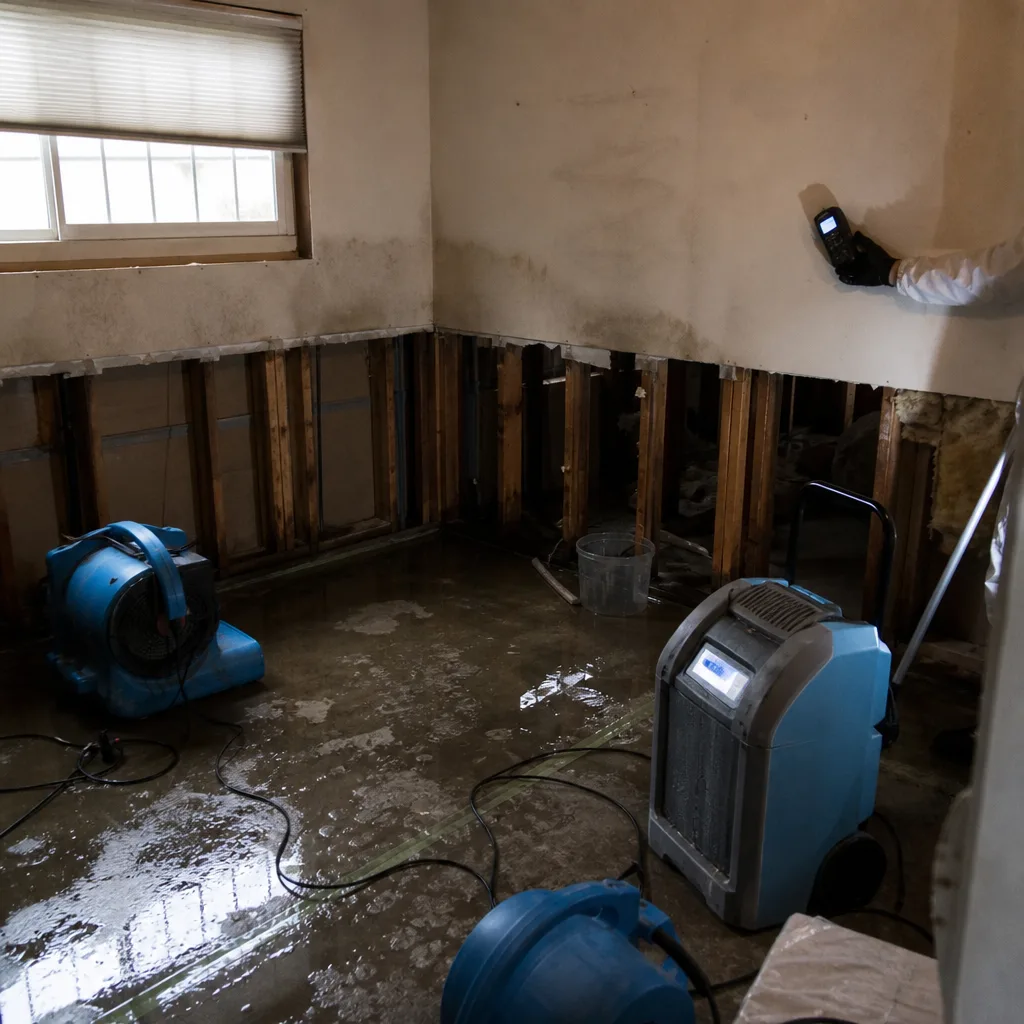 Before
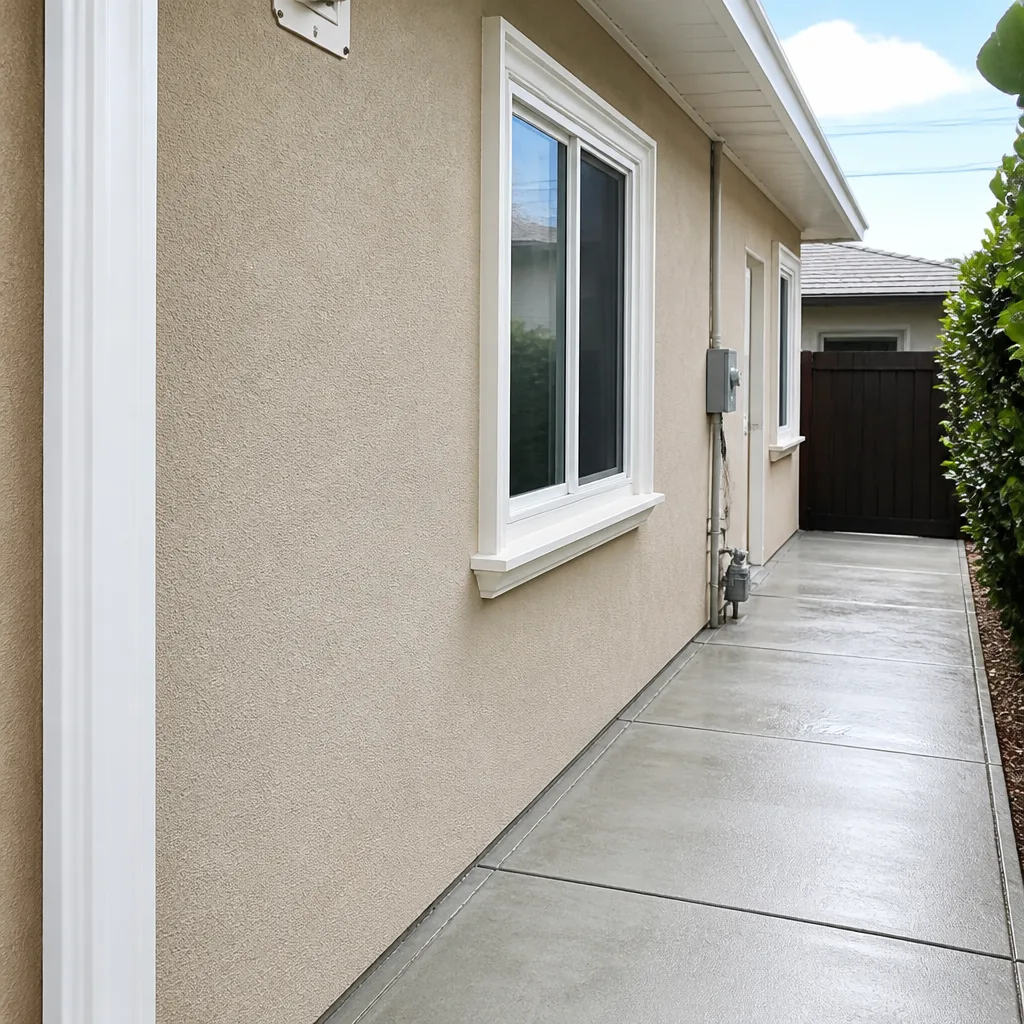 After
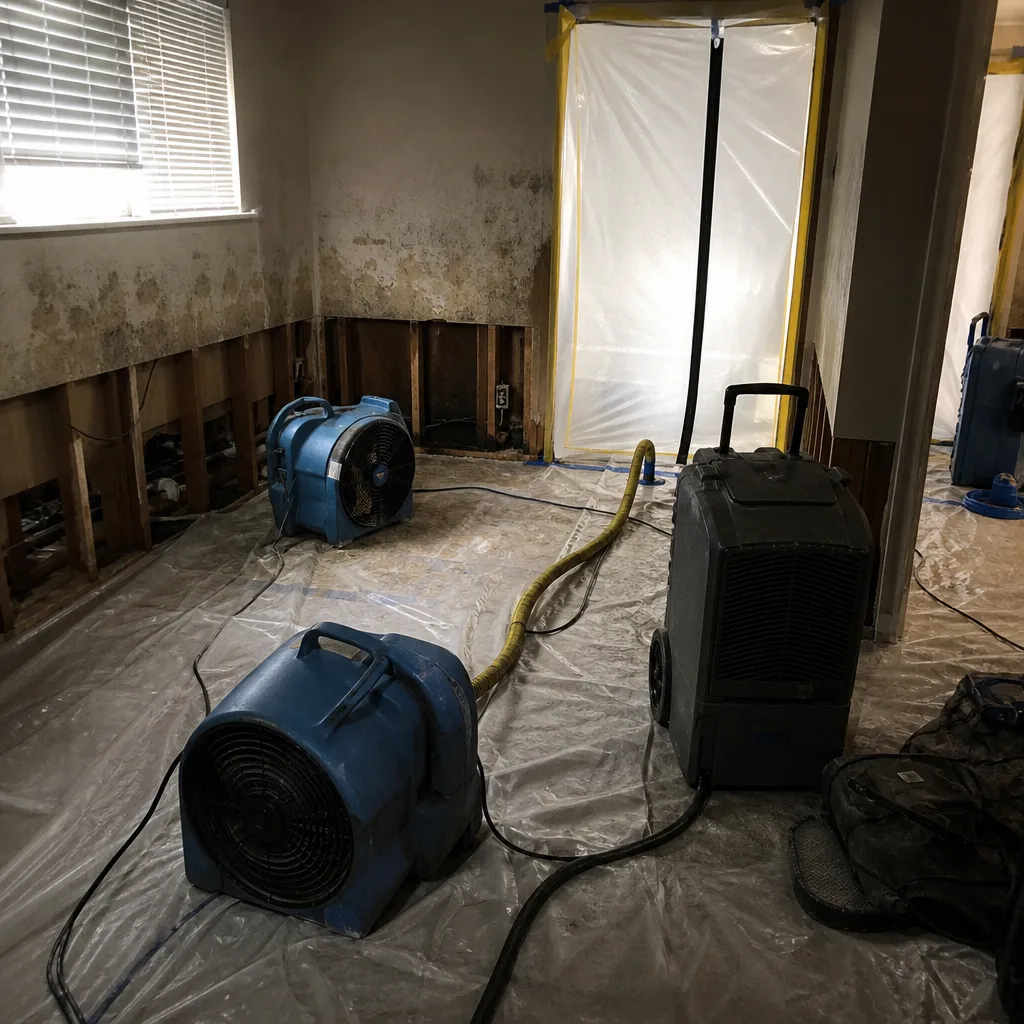 Before
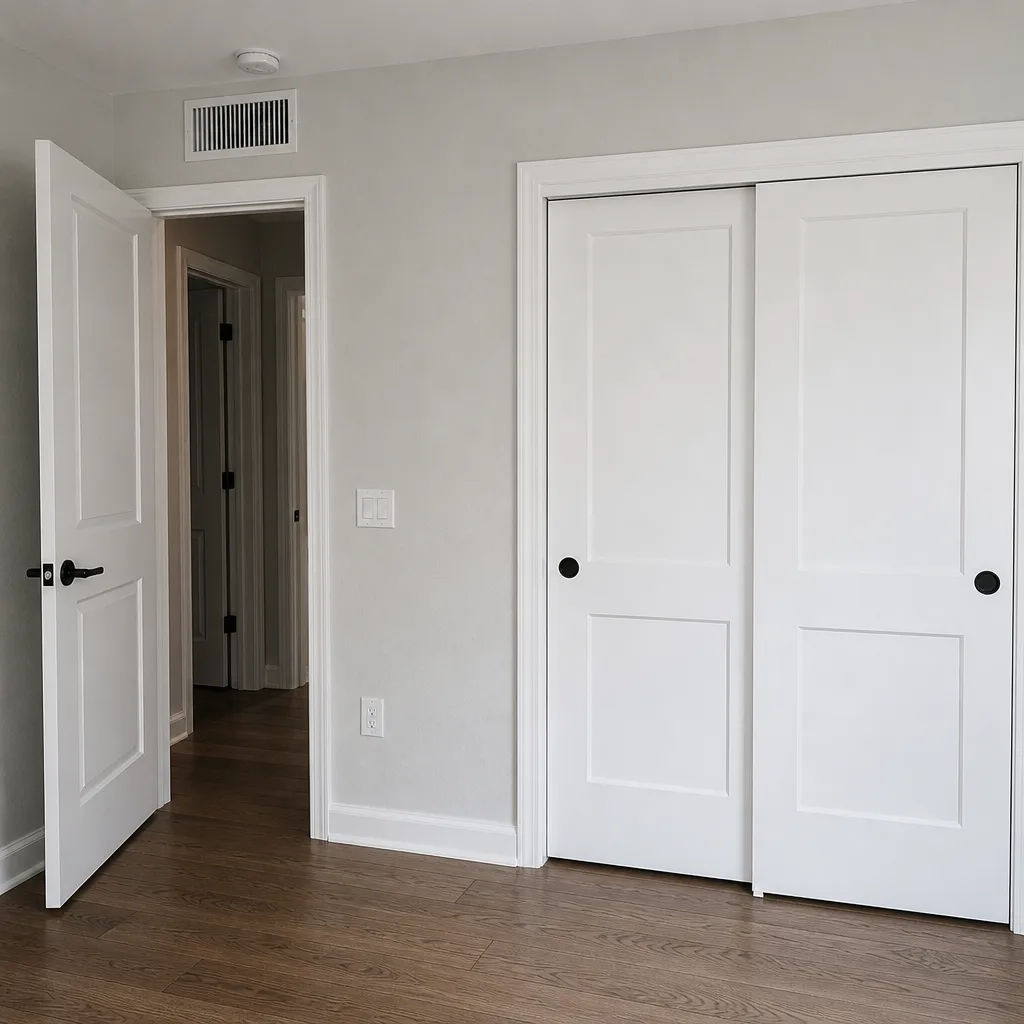 After
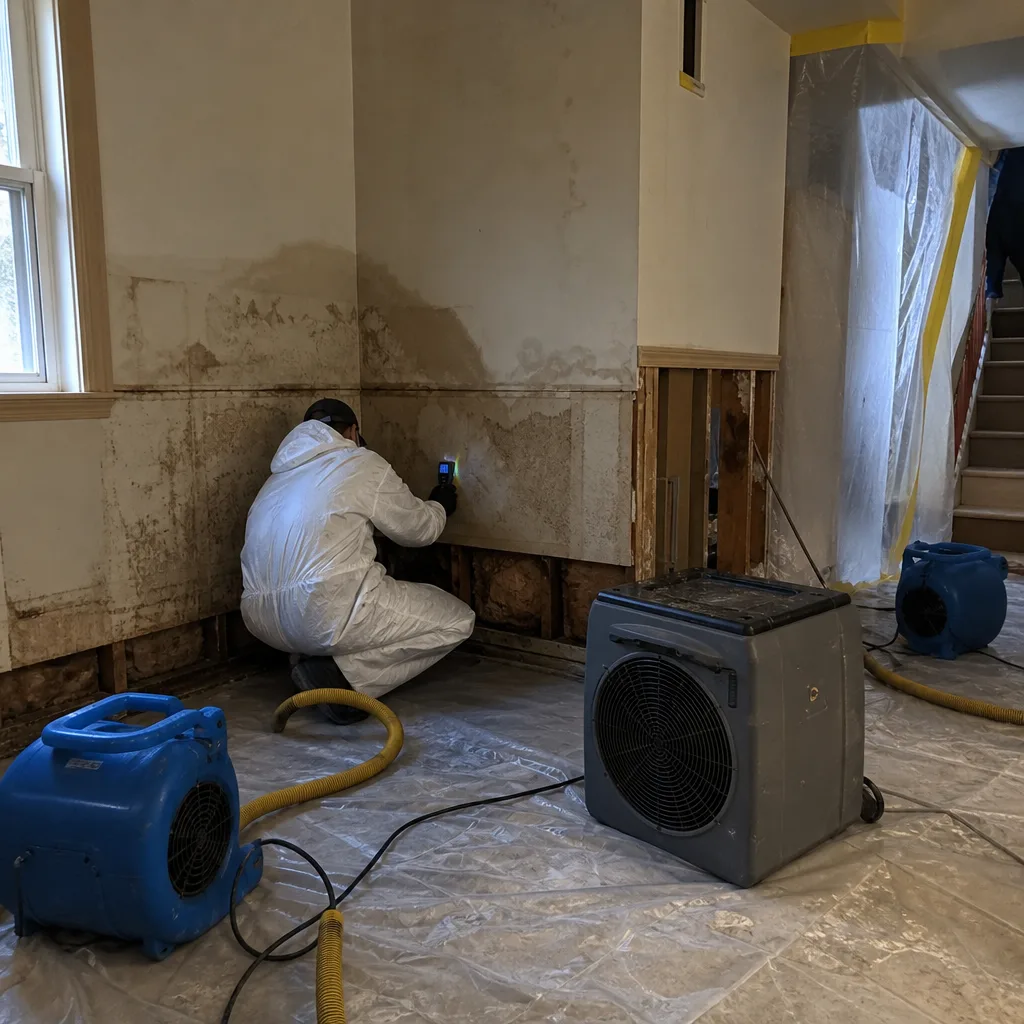 Before
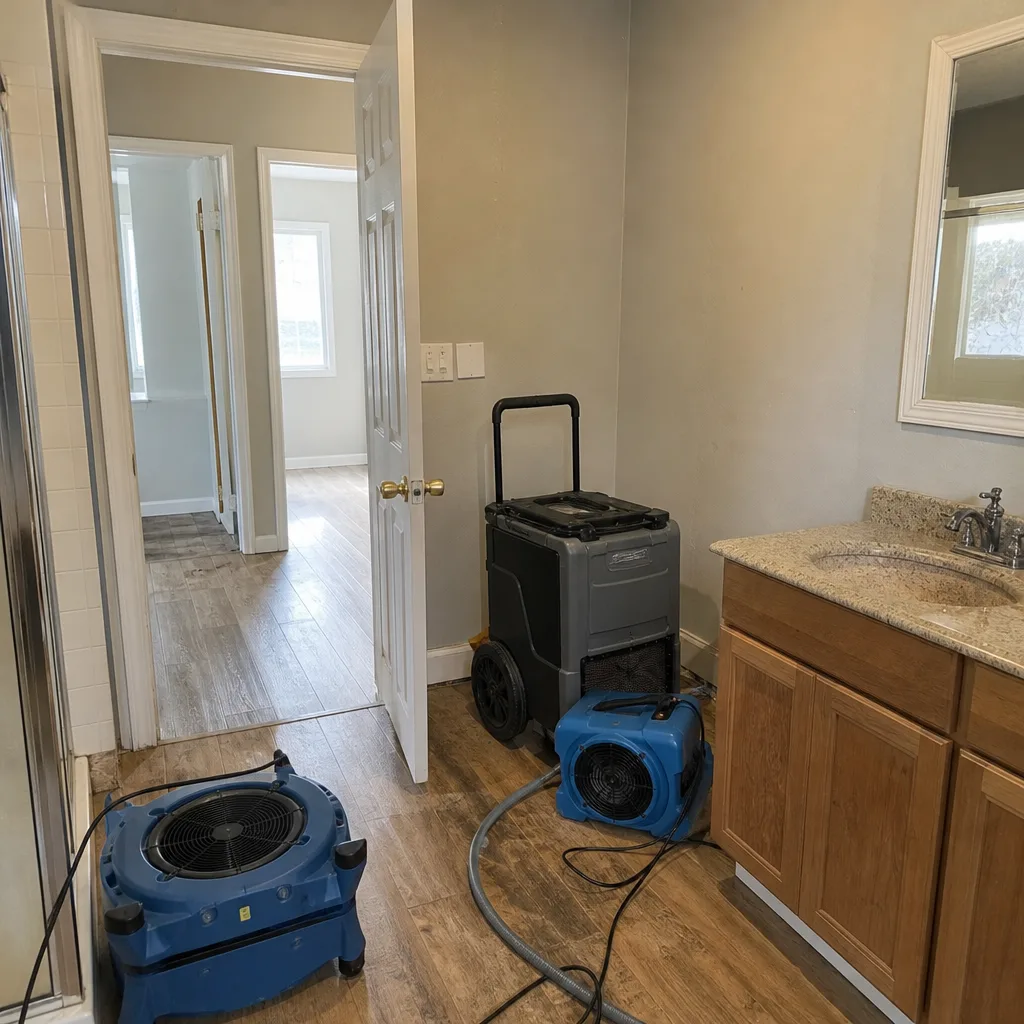 After
Common Water Damage Restoration Problems We See in Fullerton Homes
- Wind-driven roof-wall junction leaks in older bungalows: Moisture enters around flashing and fascia after a Santa Ana event, then hides in lath-and-plaster for months. By the time the stain appears, the cavity is often fully saturated and mold has already started.
- Slab-on-grade water migration in ranch homes: Water from a burst supply line or failed water heater travels under vinyl, tile, and laminate with no visible signs on the surface. We’ve found water 12 feet from the source with zero visible pathway between the two points.
- Jacaranda and eucalyptus limb damage to roofs and gutters: Mature trees characteristic of Fullerton’s older neighborhoods drop limbs during wind events, cracking fascia and compromising flashing. The damage isn’t an obvious hole; it’s a subtle opening that lets wind-driven rain into the envelope.
- Delayed-discovery mold behind original plaster: In Fullerton’s downtown bungalows, the combination of a long dry season, wind-driven intrusion, and original lath-and-plaster means water sits undetected inside walls. The first clue is often a persistent musty odor attributed to age rather than active water damage.
Pricing for Water Damage Restoration in Fullerton, CA
Here’s the honest math for Fullerton. Emergency water extraction runs $800 to $2,600. A flooded basement or slab response, including extraction, containment, drying, and moisture verification, runs $1,800 to $4,200. A full structural drying project after a wind-driven roof-wall leak, with containment, Injectidry drying of wall cavities, and dehumidification over three to five days, runs $2,800 to $6,400. Full restoration with drywall, paint, and trim replacement starts around $4,500 and can exceed $12,000 for large affected areas or original plaster repair. The biggest cost factor in Fullerton is how long the water has been present before the call comes in, which is directly tied to the wind-driven delayed-discovery pattern we described. If you call early, you pay for mitigation. If you wait, you pay for reconstruction. Estimates are free. Call (855) 356-4970 and we’ll give you a written scope before any work begins.
Trusted Brands We Service in Fullerton
We stock parts and maintain drying equipment for the systems Fullerton homeowners actually have. Our fleet includes Dri-Eaz air movers and Phoenix dehumidifiers, the same professional-grade equipment used by large commercial restoration firms, applied to residential jobs of any size. We also run XPOWER and B-Air units for smaller containment chambers and localized drying. For Fullerton’s older homes with plaster walls, we use Injectidry targeted-injection drying to pull moisture out of wall and floor cavities without tearing out original materials. The equipment is owned, calibrated, and matched to your house, not picked up from a rental counter on the way to your driveway.
We Also Serve Cities Near Fullerton
Our Water Damage Restoration in Fullerton coverage extends to the surrounding North Orange County communities. We regularly respond to calls in Anaheim, La Habra, Placentia, and Brea. If you’re in a neighboring city and dealing with a water event, the same IICRC-certified process and equipment applies. Call the same dispatch number and we’ll route a crew to you.
Serving Fullerton, CA — Our Local Coverage Area
We’re based in the Fullerton area and know this community well. Use the map below to see our service coverage — if you’re nearby, we can almost certainly help.
FAQs About Water Damage Restoration in Fullerton
Fullerton’s Santa Ana wind season creates delayed-discovery water damage because wind-driven rain finds its way through compromised flashing and fascia before the first substantial storm, then sits inside wall cavities undetected for weeks or months. That means by the time a Fullerton homeowner notices the problem, the affected area is often larger and mold growth is already active. This pattern requires thermal imaging and penetrating moisture meters to find water that isn’t visible from the surface. Call (855) 356-4970 if you suspect wind-driven intrusion at your roof-wall junction.
The typical scenario is a musty odor in a lath-and-plaster wall that the homeowner attributes to “old house smell,” while water from a wind-damaged flashing has been feeding mold behind the plaster for months. We find this in Craftsman and Spanish Revival bungalows throughout the downtown and college-edge neighborhoods. The fix involves containment, targeted drying of the plaster and framing, and then mold remediation if growth is confirmed. The earlier the call, the more plaster stays intact.
Yes, and this is one of the most common jobs we do in Fullerton’s south and west neighborhoods. In slab-on-grade ranch homes, water from a burst pipe or failed water heater spreads across the slab and under flooring rather than pooling in a defined basin. We extract what’s accessible, then use moisture mapping to find the water that’s migrated under vinyl, tile, or laminate. Drying typically takes three to five days with commercial dehumidification.
Mold can begin growing within 24 to 48 hours of water intrusion when materials stay wet, and Fullerton’s warm dry climate means the interior wall cavities in older homes hold moisture longer than the dry exterior air would suggest. That’s why After a Santa Ana wind event, we recommend a moisture assessment of any suspected intrusion within a day or two, not weeks. If you smell must in your Fullerton home, don’t wait for a visible stain to confirm it.
We use professional-grade drying systems from Dri-Eaz and Phoenix on every Fullerton job, supported by XPOWER and B-Air units where the containment chamber is smaller or the affected area is localized. For Fullerton’s older plaster homes and slab-on-grade ranches, we use Injectidry to dry wall and floor cavities in place, reducing unnecessary demolition. The equipment is owned, maintained, and calibrated, not rented per job.
Call Mahogany Water Damage for Water Damage Restoration in Fullerton
If you’re standing in water or staring at a fresh stain on your Fullerton ceiling, the next step is a phone call. We’ll talk you through what to do right now, then get a crew dispatched to your address. Every job starts with a written scope and a clear explanation of what we found, what we recommend, and what it costs before any work begins. That’s how we protect your home and your claim. Call (855) 356-4970 for a free estimate. Noel Carrasco and our IICRC-certified team serve Fullerton, Anaheim, La Habra, Placentia, and Brea with real equipment and a straight answer.
Written by Noel Carrasco, Owner at Mahogany Water Damage, serving Fullerton and North Orange County.