 Water damage drying
 Fire & smoke cleanup
 Mold remediation
 Storm response
 Sewage cleanup
 Reconstruction
Free visual inspection and a written scope of work before any mitigation begins - photos, moisture readings, and drying logs go in your claim file
The scope we write is the scope we bill. Anything new gets shown to you, in writing, before we touch it.
Get your free estimateFast, Reliable Water Damage Restoration Across La Habra
Water damage in La Habra rarely announces itself politely. After an atmospheric-river storm pounds the Puente Hills, homeowners along the north side of town discover muddy water pushed through garage doors and rear sliders, not through the roof. When that happens, our crews are already staging in Fullerton, which puts us roughly 20 to 30 minutes from most La Habra neighborhoods. Call (855) 356-4970 and we’ll have extraction equipment running the same day, because every hour that water sits against drywall and slab, the damage compounds.
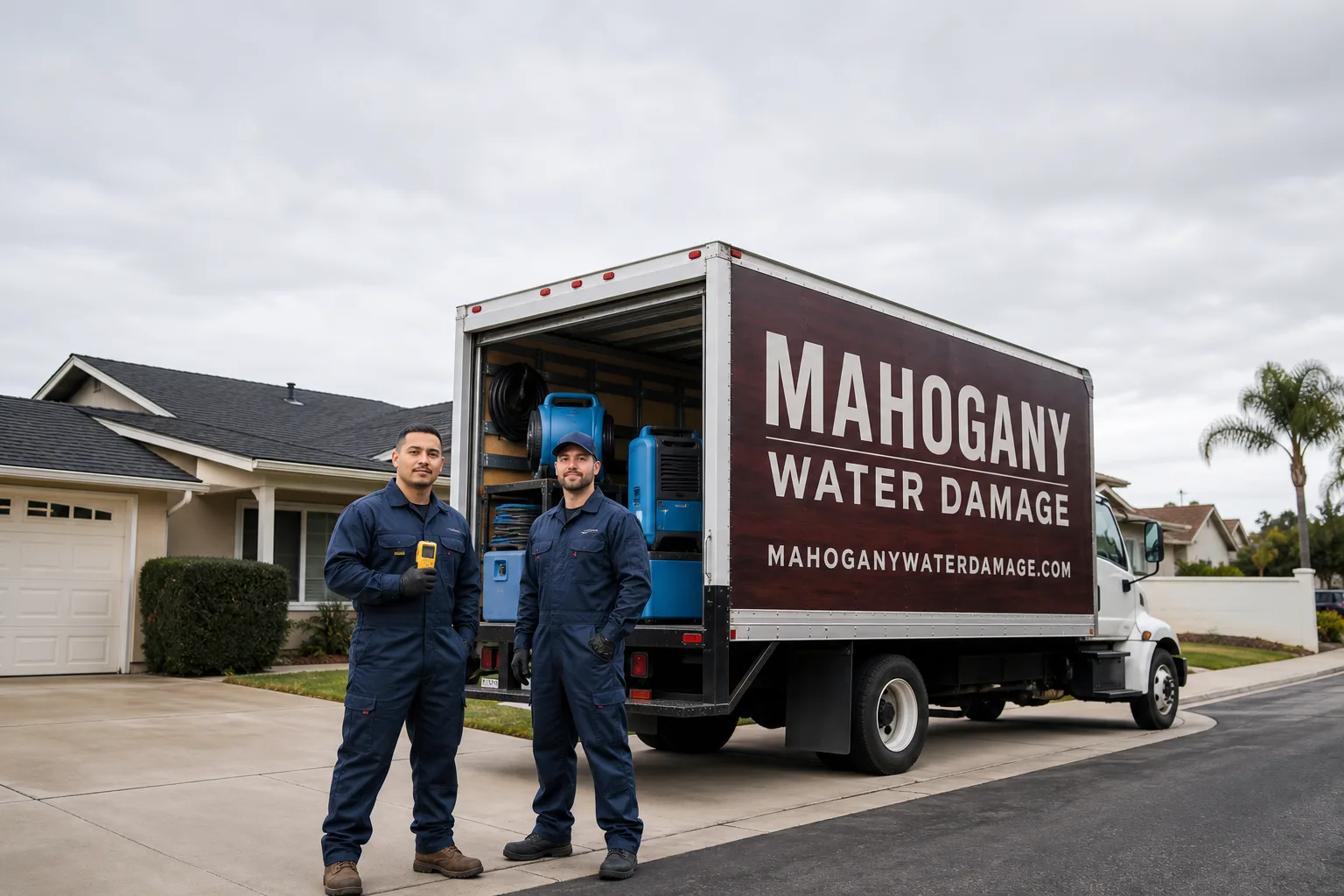
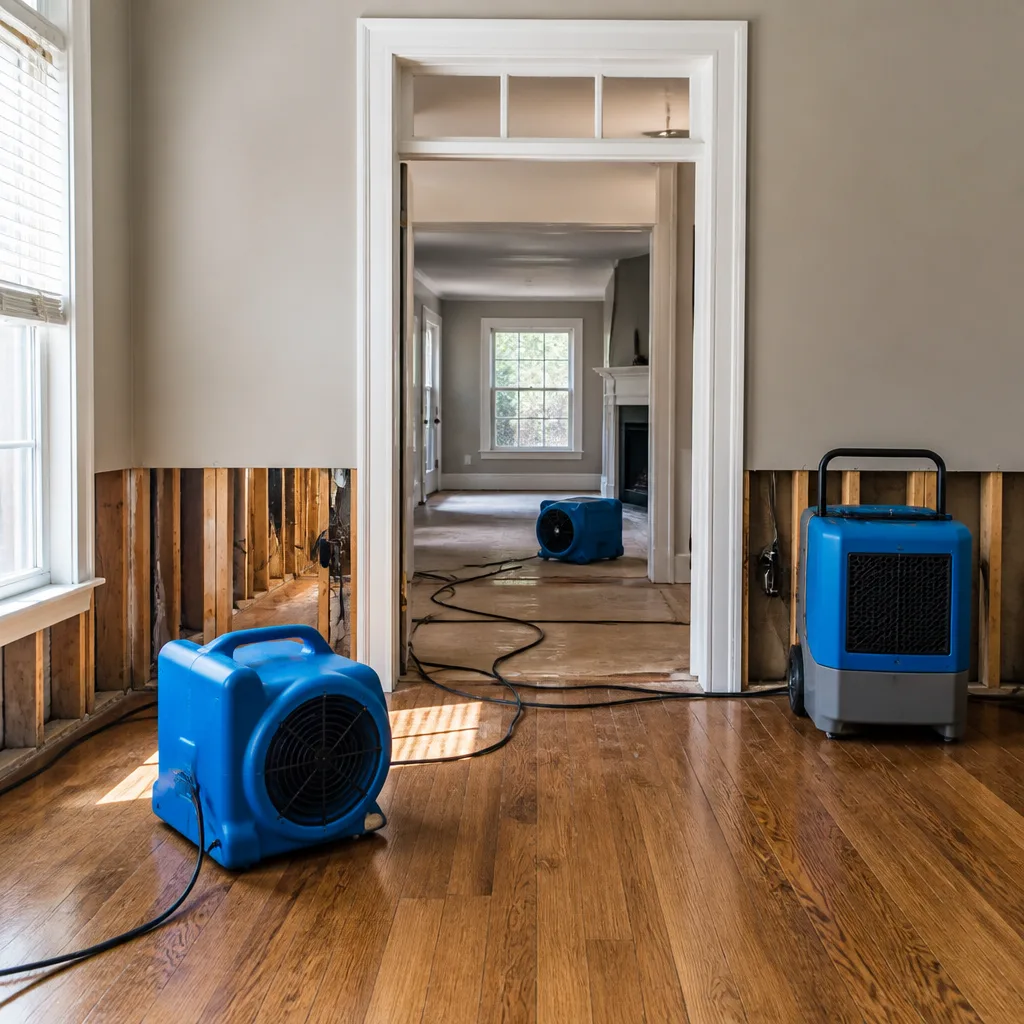
Mahogany Water Damage handles water damage restoration in La Habra with commercial-grade Dri-Eaz and Phoenix drying systems, not rental units from a box store. Noel Carrasco built our process around one principle: dry smarter, demolish less. That matters in a city where half the housing stock sits on slab foundations with original 1960s plumbing still in the walls.
Why Mahogany Water Damage Is La Habra’s Preferred Water Damage Restoration Company
Our team knows La Habra’s rhythm. February brings mud and sheet-flow intrusion through garages and rear sliders. August and September bring smoke and ash residue from foothill wildfires. A restoration company that treats this city like any other Orange County suburb misses both patterns. We don’t.
The IICRC-certified process we run means every drying plan gets documented with moisture readings, drying logs, and photo evidence your adjuster can actually use. We’re RIA and IFA members, which means our protocols get audited against industry standards, not our own internal checklist. That’s the difference between “looks dry” and restored to standard.
We serve all three La Habra ZIP codes: 90631, 90632, and 90633. Our trucks run north on Harbor Boulevard and Euclid Street to reach the older tracts near Lambert Road just as fast as the newer hillside subdivisions up toward the foothills. When a homeowner near West Coyote Hills calls with a flooded garage at 7 p.m., we’re not calling a dispatcher in another state. We’re loading dehumidifiers and heading your way.
Restoration work we handle
Flooded Basement in La Habra
A flooded basement in La Habra usually isn’t a true below-grade basement. It’s a converted garage, a sunken living room, or a slab-on-grade space in a 1950s or 60s tract home where water found the low point after a foothill storm or a burst supply line. We treat these spaces with the same extraction and drying rigor we’d apply to a commercial sub-level.
Slab Foundation Drying
The older tract homes around the downtown core and along Lambert Road sit on concrete slabs. When water floods these spaces, it doesn’t just sit on the surface. Moisture wicks into the slab and migrates under flooring, sometimes traveling 15 to 20 feet from the original intrusion point. If a crew skips slab moisture readings, you get dry-looking floors and mold growing underneath six weeks later. We take readings at the slab before we ever declare the job done.
Silt and Mud Removal First
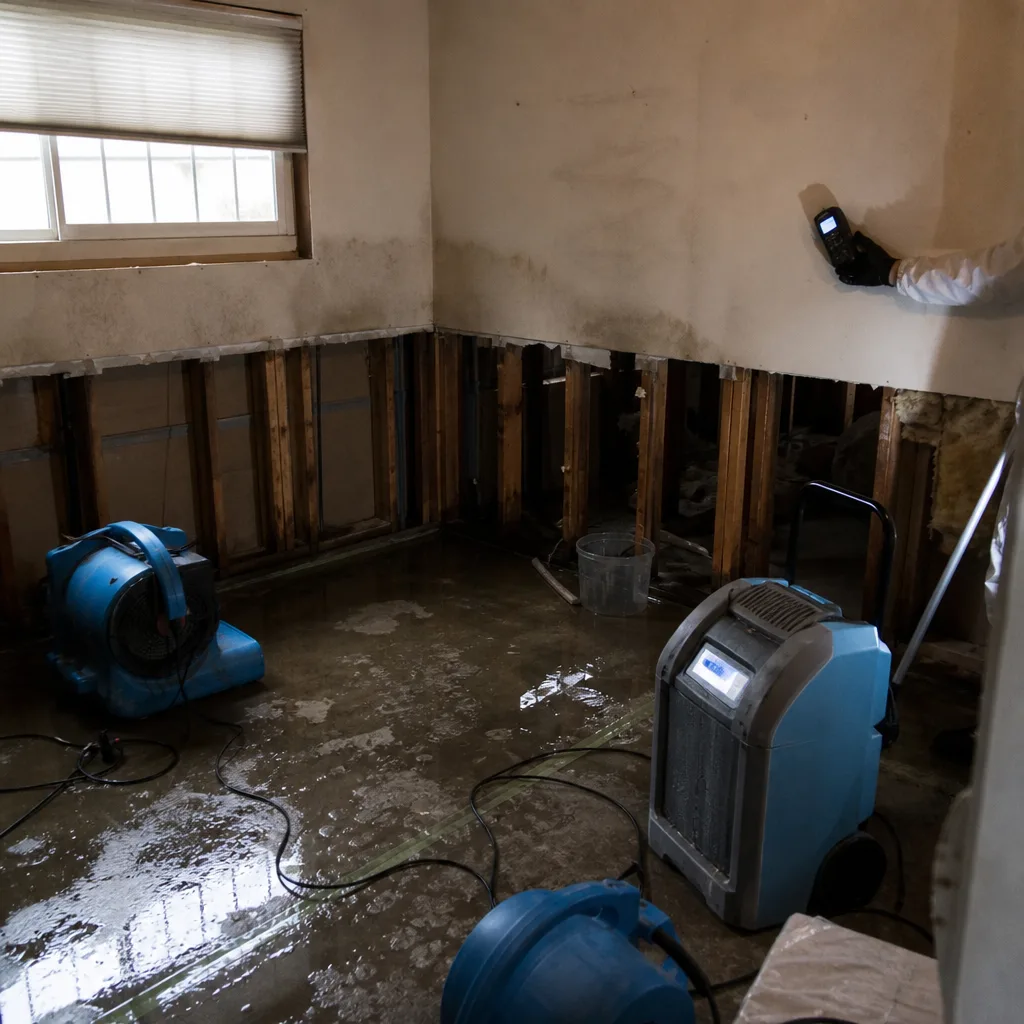
After a hillside storm, the water coming through your garage door isn’t clean. It carries silt, decomposed granite from the foothills, and whatever else the runoff picked up along the way. We extract the standing water first, then remove the silt layer before drying starts. Drying through mud doesn’t work. The mud has to go.
Water Extraction in La Habra
Water extraction in La Habra means pulling standing water out of garages, living rooms, and the spaces behind rear sliders within hours of the intrusion. The goal is simple: remove as much liquid water as possible before it migrates into drywall, baseboards, and slab.
Garage Door and Rear Slider Intrusions
This is the La Habra signature. When sheet-flow from saturated hillsides pushes toward your home, it doesn’t come through the roof. It enters at grade level, through garage door seals and rear slider tracks. Our extraction crews start there because that’s where the water actually is. We pull saturated garage drywall, remove the mud, and set up containment before the moisture spreads into the conditioned part of the house.
What Extraction Costs Here
A typical water extraction call in La Habra runs $800 to $1,400 for a single room or garage. A whole-home event involving multiple rooms plus garage runs $2,500 to $5,000 before drying equipment setup. The range shifts based on how much drywall we remove, how much silt we haul out, and how far the water traveled across the slab. Estimates are free, and we put the scope in writing before any work starts.
Trusted Brands We Service in La Habra
Homeowners in La Habra call us for restoration after the damage is already happening. But they also call us because we own our equipment, and it’s equipment they recognize. We run Dri-Eaz and Phoenix drying systems, the same brands commercial restoration firms use on hospitals and office towers. We keep XPOWER air movers on the trucks for tight spaces and stairwells. Because our fleet is owned, not rented, we don’t quote a job and then wait for a rental counter to open. We show up with the tools matched to your specific water event, calibrated and ready.
See the difference
 Before
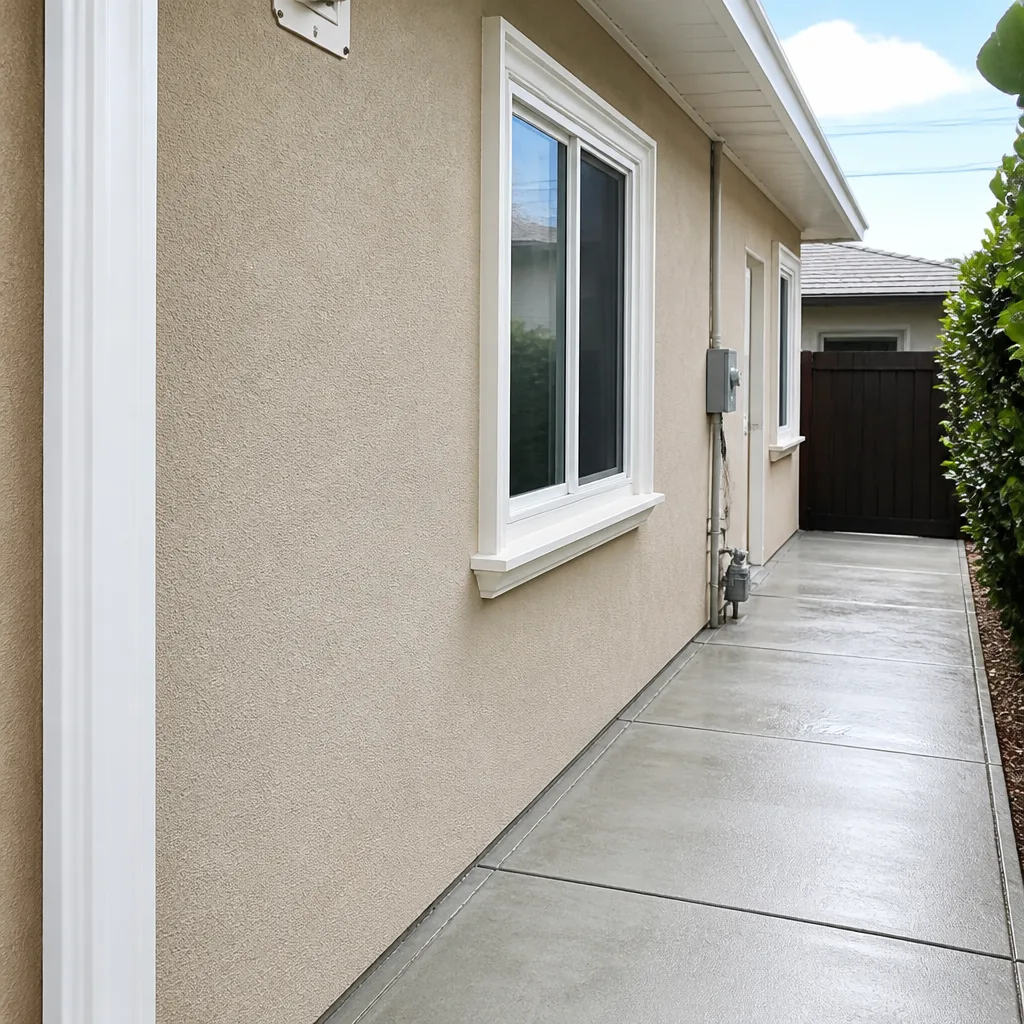 After
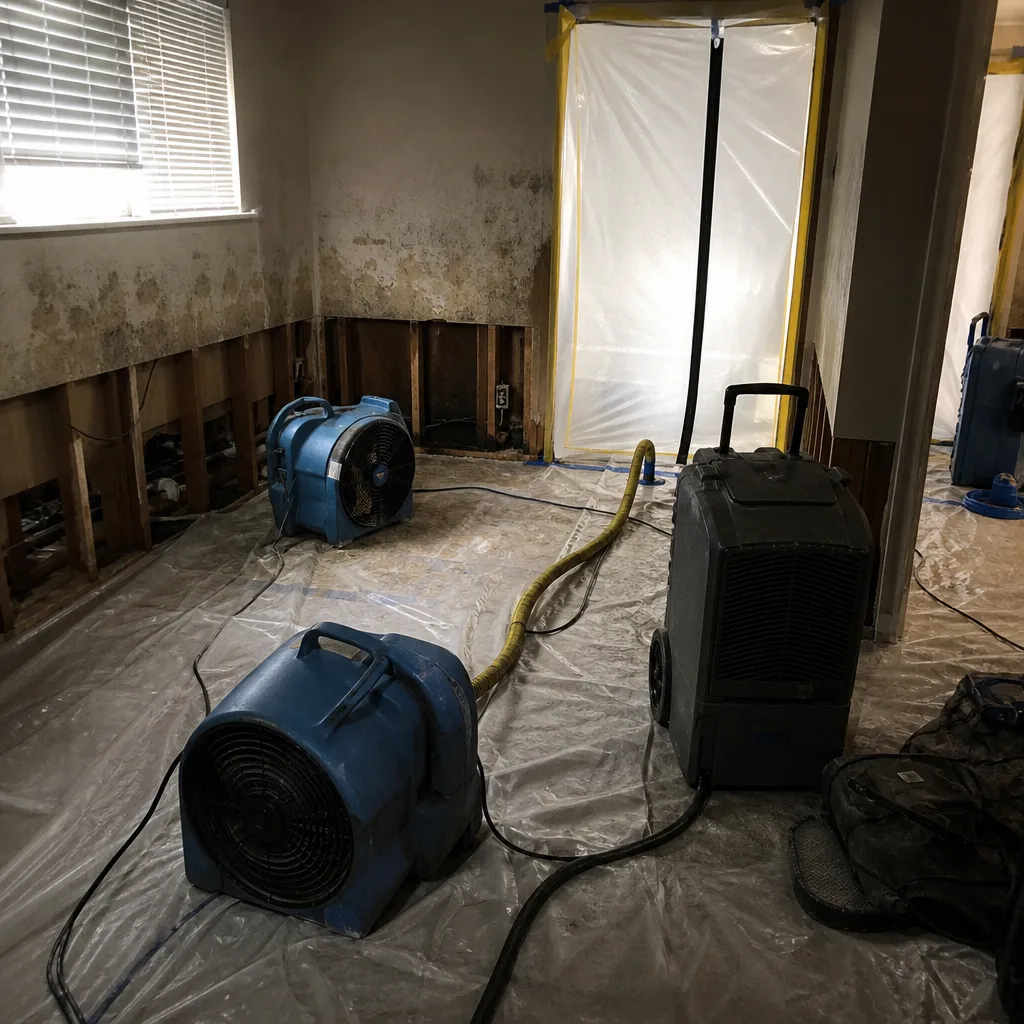 Before
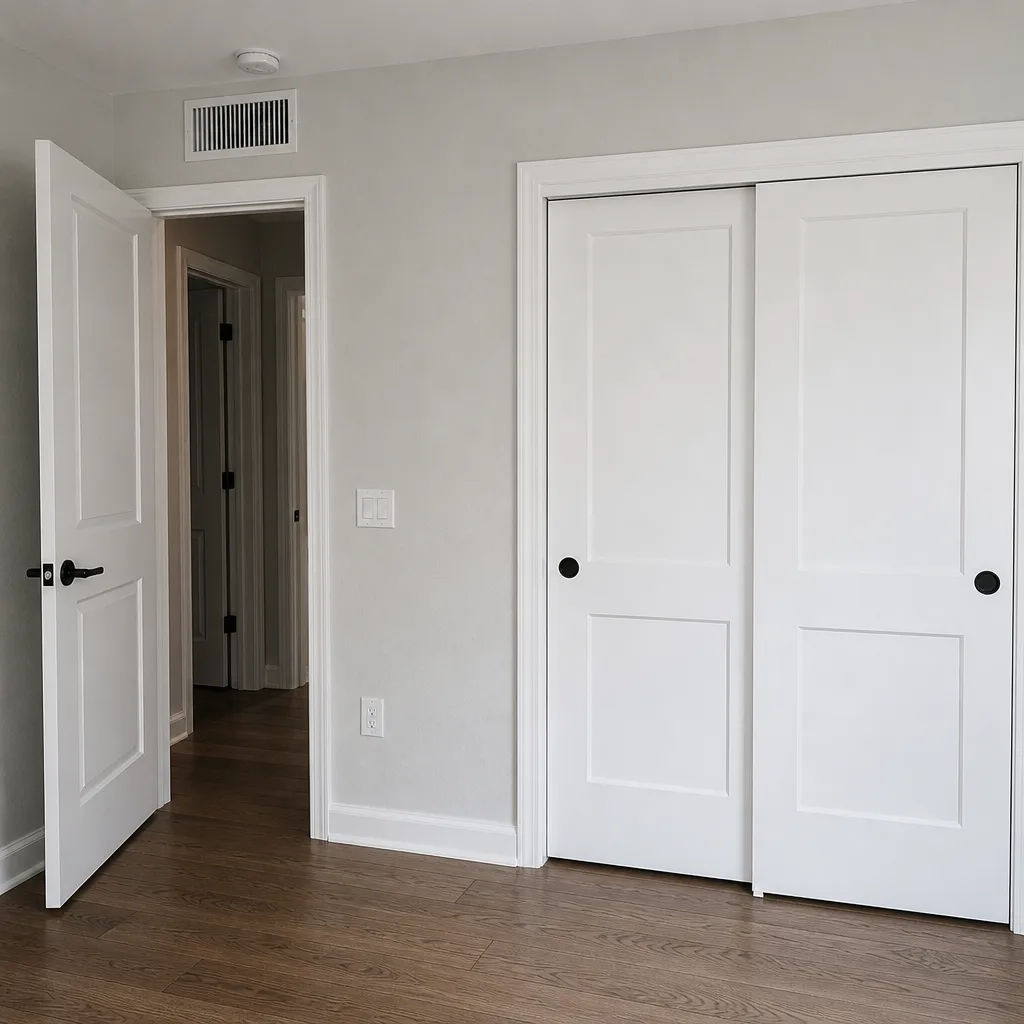 After
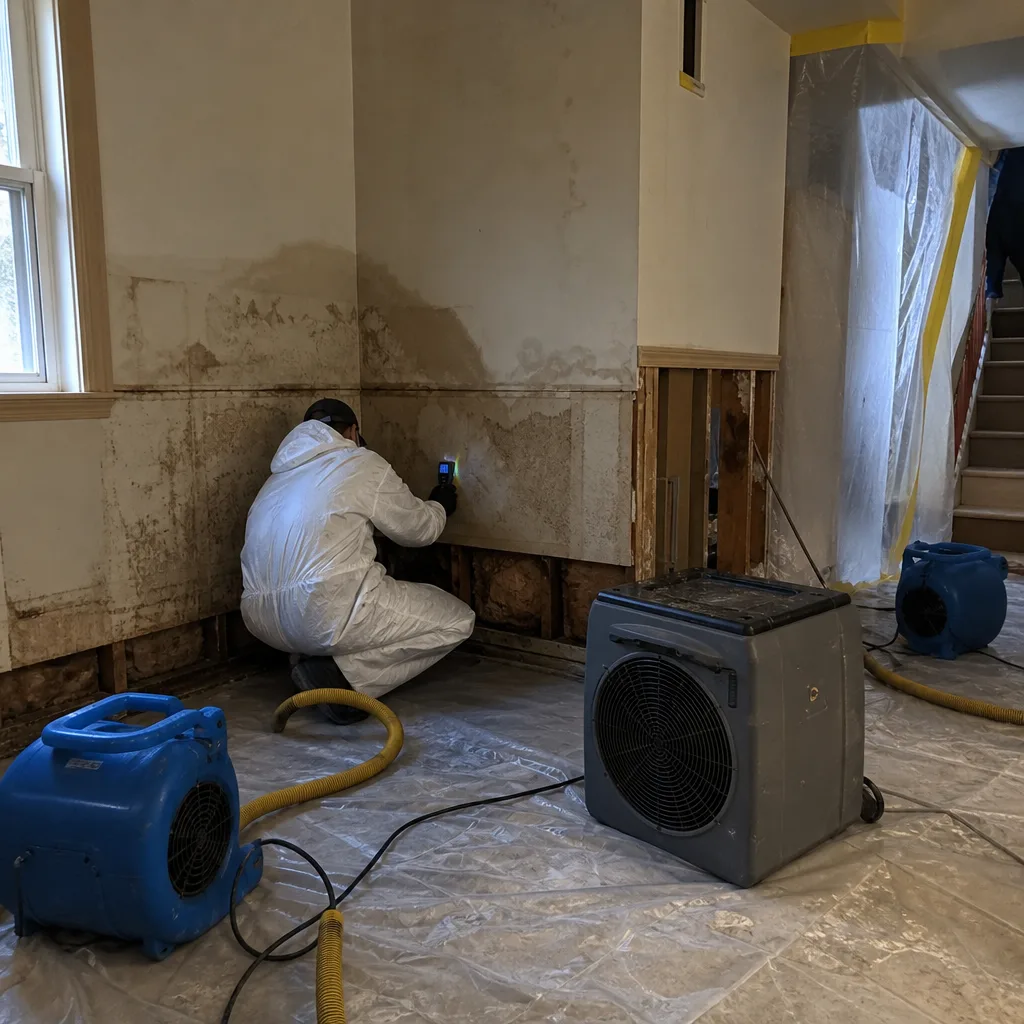 Before
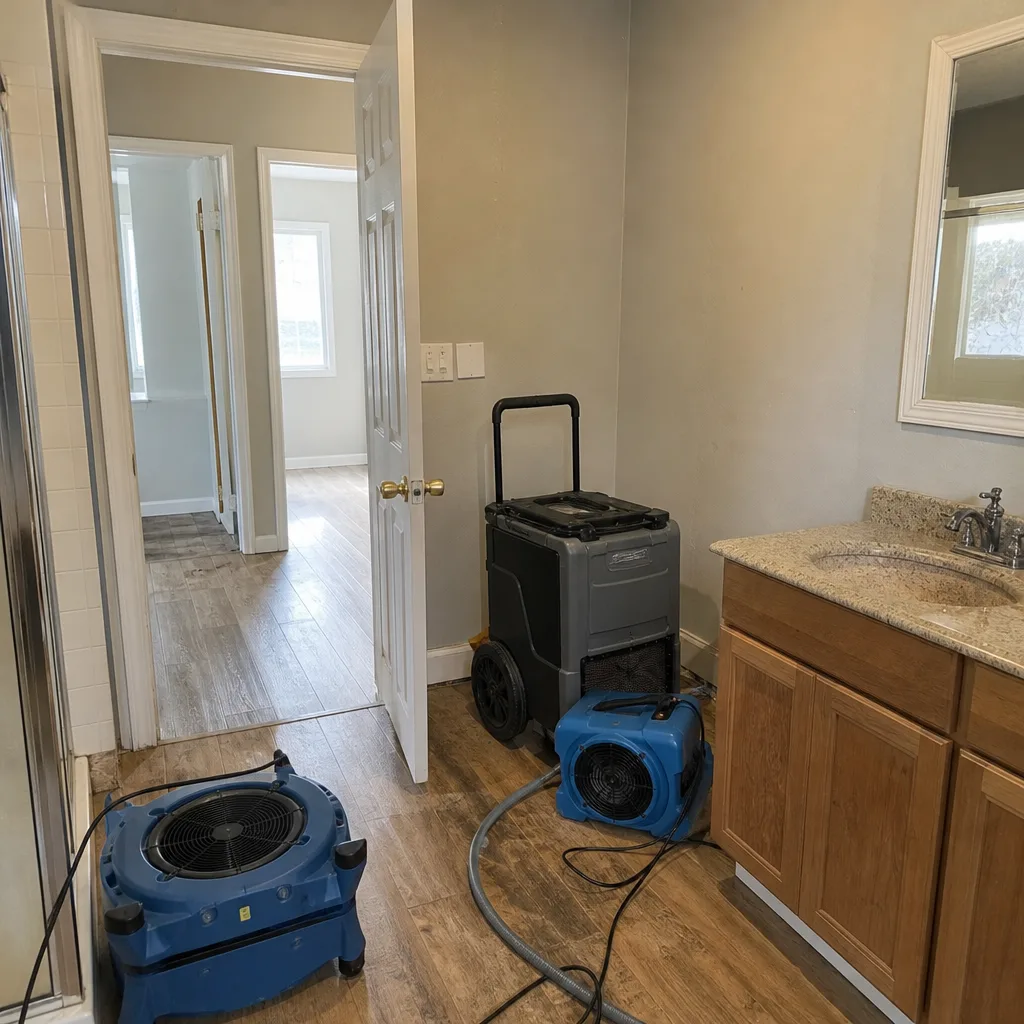 After
Common Water Damage Restoration Problems We See in La Habra Homes
- Slab moisture migration: In 1950s and 60s tract homes with original slab foundations, water travels under flooring and behind baseboards before you ever see it. Moisture readings at the slab tell us how far it went. Skipping that step is how mold shows up three months later.
- Garage drywall saturation from sheet-flow: After a foothill storm, wind-driven rain usually isn’t the problem here. Sheet-flow through garage doors soaks the bottom 24 inches of garage drywall and the sill plates behind it. That’s our starting point.
- Original cast-iron and galvanized plumbing failures: Older La Habra homes near the downtown core still carry 60-year-old supply and drain lines. When a cast-iron drain cracks under a slab, the water shows up as a damp spot in the hallway, not as a visible leak. We find it with moisture mapping and thermal imaging.
- Two-season residue damage: February mud-and-water intrusion and August-September smoke and ash residue both damage interior surfaces, but they need different initial treatments. A team that treats ash like mud, or mud like clean water, leaves contamination behind.
Pricing for Water Damage Restoration in La Habra, CA
We Also Serve Cities Near La Habra
Mahogany Water Damage runs the same equipment and certified crews throughout La Habra and the surrounding cities. If you’re in Fullerton, Brea, Buena Park, or Placentia, we’re still your local team. Our Water Damage Restoration service covers the whole North Orange County corridor, from Whittier Boulevard down to the 91.
Serving La Habra, CA — Our Local Coverage Area
We’re based in the La Habra area and know this community well. Use the map below to see our service coverage — if you’re nearby, we can almost certainly help.
FAQs About Water Damage Restoration in La Habra
After a foothill storm, why did water come through my garage door and rear slider instead of the roof?
Because your home sits below the Puente Hills slope line, not under a tree canopy. When atmospheric-river storms saturate the foothill soil, the water has nowhere to go but down, and it travels as sheet-flow across hard-packed ground, picking up mud and silt before it reaches your garage door and rear slider. This is what local crews call the ‘La Habra flood line.’ Your roof may be fine. The intrusion is at grade level, which means we start by pulling saturated garage drywall and removing silt, then dry the slab before it wicks moisture into your living space. If this sounds like your situation, call (855) 356-4970 and we’ll dispatch a crew to La Habra today.
How quickly does mold grow in La Habra homes after a water leak?
Mold can begin colonizing on wet drywall and organic material within 48 to 72 hours, and La Habra’s dry Mediterranean climate doesn’t slow that down indoors. Once water saturates wall cavities or underlayment, the microclimate inside your walls stays humid even when the outside air is dry. That’s why our structural drying protocol in La Habra targets 72-hour dryness from extraction to stable moisture readings. If we can’t dry a material back to standard in that window, we remove it. If you’ve had a leak for more than two days, call us before it becomes a mold remediation job.
What’s the difference between Category 1, 2, and 3 water, and why does it matter for my La Habra home?
Category 1 is clean water from a supply line or a broken pipe. Category 2 contains significant contamination, like dishwasher overflow or sump pump failure. Category 3 is grossly contaminated, carrying sewage, bacteria, or in La Habra’s foothill storm scenario, silt and organic runoff that picked up whatever was in the path. The category determines what we dry and what we remove. A Category 3 flood through your garage door means saturated drywall and insulation go, no exceptions, because they carry biological material that drying won’t fix. We classify the water before we build the drying plan, and that classification goes in your insurance documentation.
Can you dry out my flooded basement in a 1950s La Habra tract home without damaging the slab foundation?
Yes, and that’s exactly what our Injectidry system is for. Slab foundations in 1950s tract homes are concrete, and concrete doesn’t warp or rot when it gets wet. The risk is moisture wicking through the slab and saturating flooring and wall plates. We take moisture readings at multiple slab points, then use targeted drying to pull moisture from cavities and under flooring without jackhammering your foundation. In most La Habra slab homes, we save the slab and the flooring that’s still sound. We remove what’s saturated and dry what isn’t.
Do you handle both winter water intrusion and summer smoke/ash damage in La Habra?
Yes. We’re a full damage restoration company, not just a water crew. In February we’re pulling mud out of garages along the Puente Hills edge. In August and September we’re cleaning smoke and ash residue from the same foothill-adjacent homes. Same team, same equipment, one point of accountability. If you’ve had water damage and you’re worried about what the next fire season will bring, call (855) 356-4970 and we’ll assess the whole property, not just the current emergency.
Written by Noel Carrasco, Owner at Mahogany Water Damage, serving La Habra and North Orange County with IICRC-certified restoration services.