
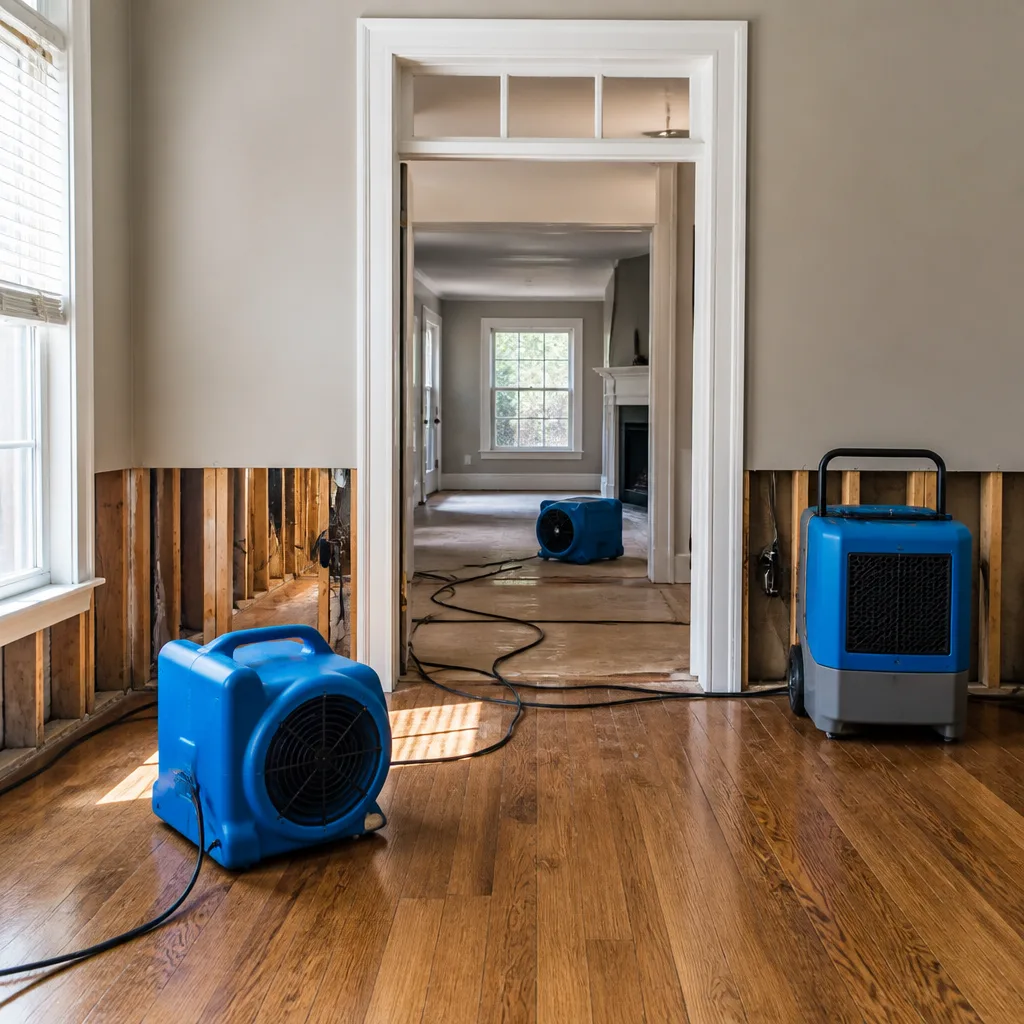
 Water damage drying
 Fire & smoke cleanup
 Mold remediation
 Storm response
 Sewage cleanup
 Reconstruction
Free visual inspection and a written scope of work before any mitigation begins - photos, moisture readings, and drying logs go in your claim file
The scope we write is the scope we bill. Anything new gets shown to you, in writing, before we touch it.
Get your free estimateFast, Reliable Water Damage Restoration Across Brea
Water damage restoration in Brea typically costs $2,200 to $7,800 depending on the water category, affected square footage, and whether structural cavities need drying. Most Brea homes can be assessed within 90 minutes of your call, with extraction starting the same day. We know Brea’s housing stock from the 1950s ranch homes off Brea Boulevard to the newer hillside builds in 92823, and we bring commercial-grade drying equipment to every job. Call (855) 356-4970 for immediate dispatch to Brea.
Brea sits where the Puente Hills meet the coastal plain, and that geography creates a specific damage profile. Santa Ana winds push fine ash into attic spaces during fire season. Winter rains then turn that ash into a wet, corrosive paste that traps moisture against framing and insulation. Homes here fail differently than they do in Fullerton or Placentia, and the repair approach has to account for it. Our Water Damage Restoration crews are trained for exactly this.
We serve all three Brea ZIP codes: 92821, 92822, and 92823. That includes downtown Brea, the neighborhoods off Lambert Road and State College Boulevard, and the Carbon Canyon hillside communities.
Why Mahogany Water Damage Is Brea’s Preferred Water Damage Restoration Company
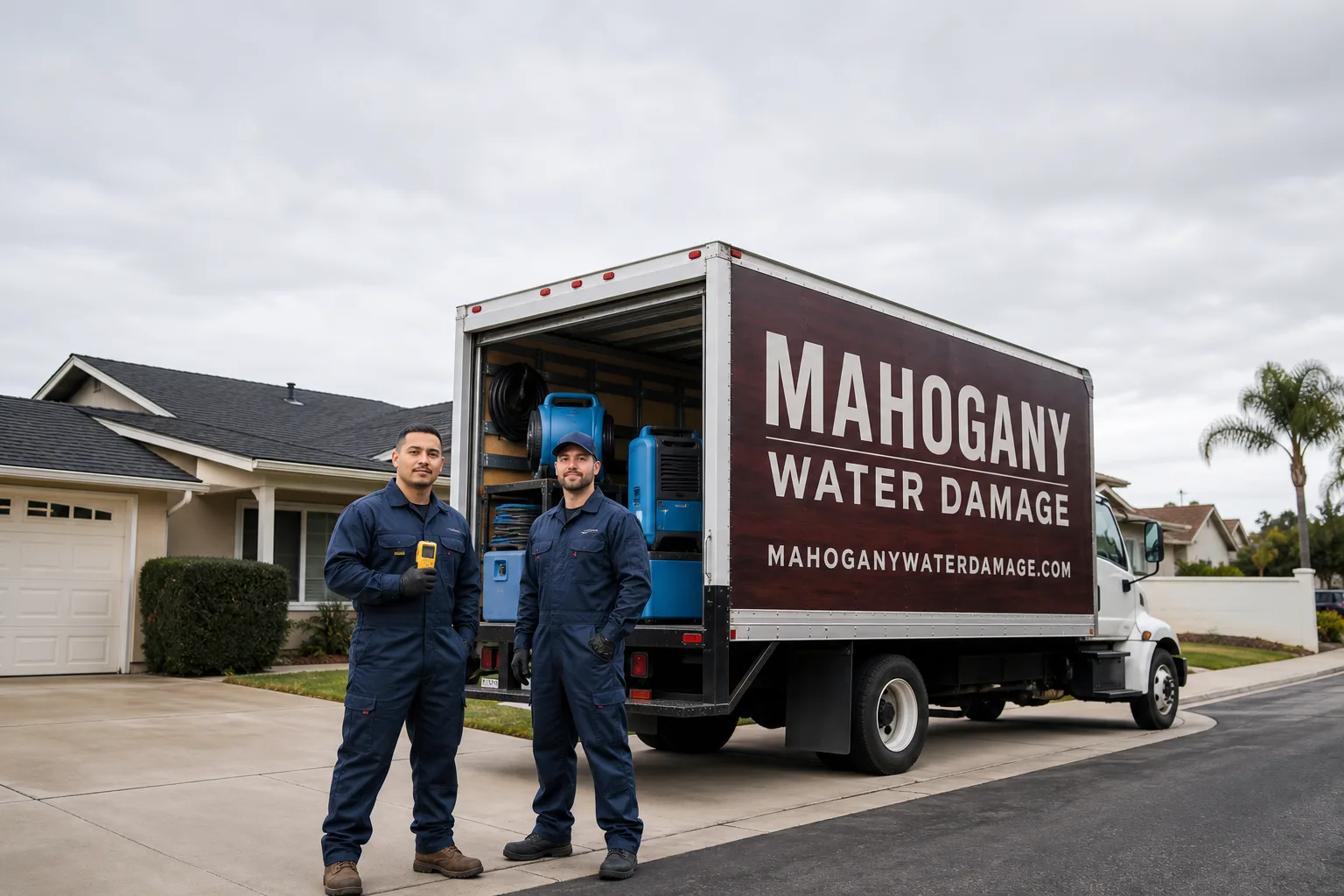
Brea homeowners keep our number because we treat water damage as a structural problem, not a cleanup job. Noel Carrasco built this company around commercial-grade drying systems from Dri-Eaz and Phoenix, the same equipment large restoration firms run on commercial losses. When we pull up to a Brea home, we’re not carrying rental units from the hardware store. Our equipment is owned, calibrated, and matched to the specific moisture load in your walls and floors.
Our IICRC-certified process means every water extraction, drying protocol, and antimicrobial application follows the restoration industry’s independently verified standards. We’re also active members of the RIA and IFA, which keeps us accountable to current best practices rather than outdated checklists. For Brea’s hillside homes with stucco-and-wood-frame construction, that certification difference shows up fast: we find moisture behind walls that less-equipped crews miss entirely.
Response time to Brea runs 60 to 90 minutes for emergency water calls, depending on where in Brea you are. We stage our equipment in Fullerton, so reaching the Carbon Canyon area or the neighborhoods around the Brea Mall is straightforward even during Orange County traffic. That matters when a supply line has burst and water is running through your kitchen ceiling.
Restoration work we handle
Water Mitigation in Brea
Water mitigation in Brea is the process of stopping active water spread, extracting standing water, and stabilizing the structure so secondary damage never gets a chance to start. Mitigation comes before any repair or rebuild, and in Brea’s semi-arid climate, the window is shorter than homeowners expect. Dry air sounds like it would help. It doesn’t. What it does is mask surface moisture while hidden cavities behind stucco stay wet, feeding mold growth you won’t see for two weeks.
Hidden Moisture in Stucco Walls
Brea’s 1950s and 1960s ranch homes are almost universally stucco over wood frame, and that assembly hides water exceptionally well. A pin meter on the surface will read dry while the cavity behind is soaked with category 2 water. Our mitigation protocol includes thermal imaging and penetrating moisture meters, then targeted drying with Injectidry panels that pull moisture from wall cavities without tearing out the stucco.
Mitigation Cost Range
A typical water mitigation job in Brea runs $1,800 to $4,500 depending on how many rooms are affected and whether the water is clean, gray, or black. That range covers extraction, containment, equipment setup, daily monitoring, and drying documentation. It does not include reconstruction, which is priced separately once the structure is dry. We provide a written scope before any work starts, so you know exactly what mitigation includes and what it costs.
Flooded Basement in Brea
A flooded basement in Brea is a different animal than the same problem in a flat coastal city. Basements are relatively rare in Orange County compared to the Midwest, but they exist in Brea’s older hillside properties and custom builds. When they flood, the water is usually category 2 or 3, meaning it has passed through soil, building materials, or a failed sump system before pooling. Extraction and drying need to account for that contamination level, not just the standing water.
Sump Failures in Hillside Homes
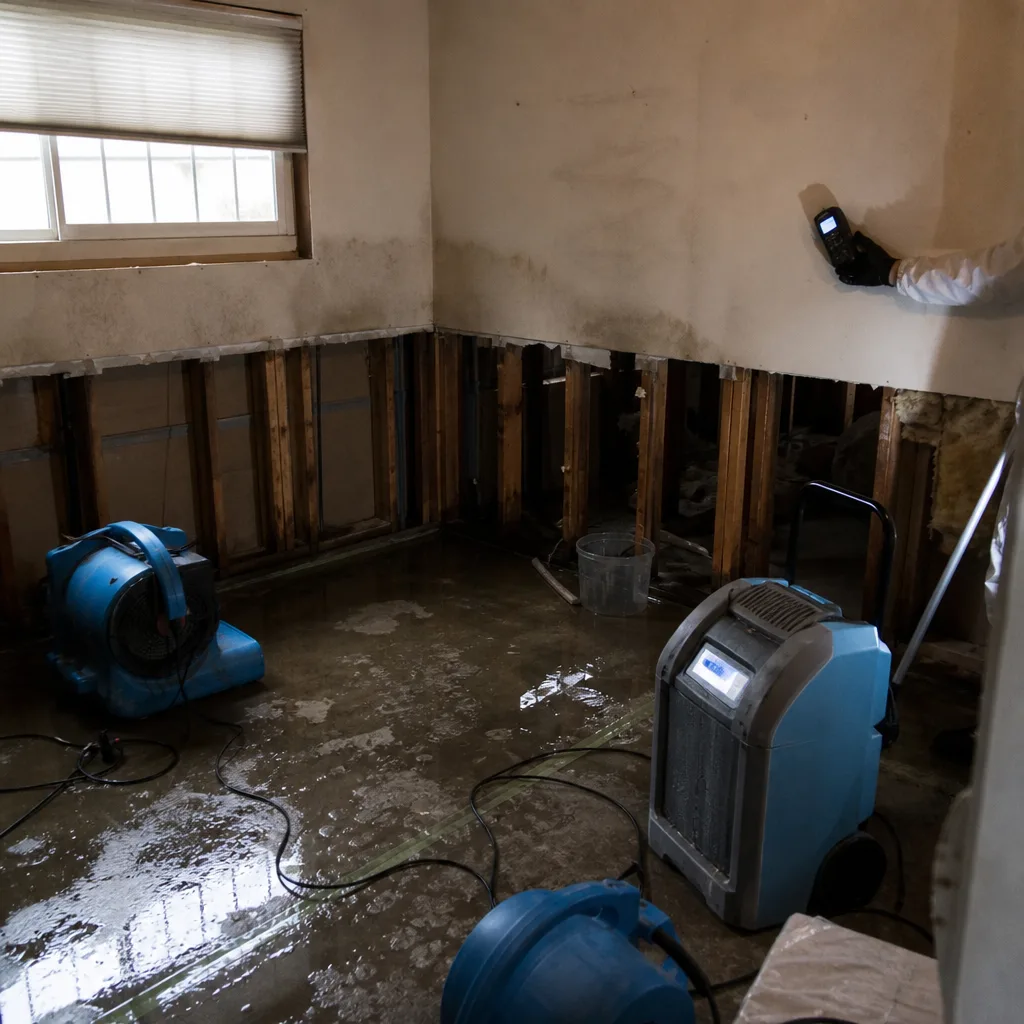
After a January storm, we responded to a flooded basement call in a 92823 hillside home off Carbon Canyon Road. The sump pump had failed overnight and water was wicking up drywall. We set up containment, ran Phoenix dehumidifiers and XPOWER air movers, and used Injectidry panels to dry the structural cavity. Moisture mapping showed the category 2 water had spread behind the stucco. The final drying logs documented a return to pre-loss condition within four days, and we applied antimicrobial treatment to the affected framing.
Older Foundations, Older Drains
Brea’s mid-century basements often have cast-iron drains that have corroded over 50 to 70 years. When those fail, raw sewage can back up into the basement, which changes the job classification to category 3. That requires full removal of affected porous materials, not just drying. We handle both scenarios: category 2 sump failures and category 3 drain backups, with the appropriate antimicrobial treatment for each.
Trusted Brands We Service in Brea
Brea homes run the full equipment spectrum: hot water heaters and washing machines in older ranch homes, water softeners and PEX plumbing in 92823 master-planned builds, and everything in between. We stock common replacement parts and fittings for the major brands Brea homeowners actually have, which shortens turnaround when a water heater ruptures and you need a same-day repair. Whether it’s a Rheem tank failure behind the garage wall or a failed braided supply line under a kitchen sink, we carry what we need to stop the water and start drying without waiting for parts to ship.
See the difference
 Before
 After
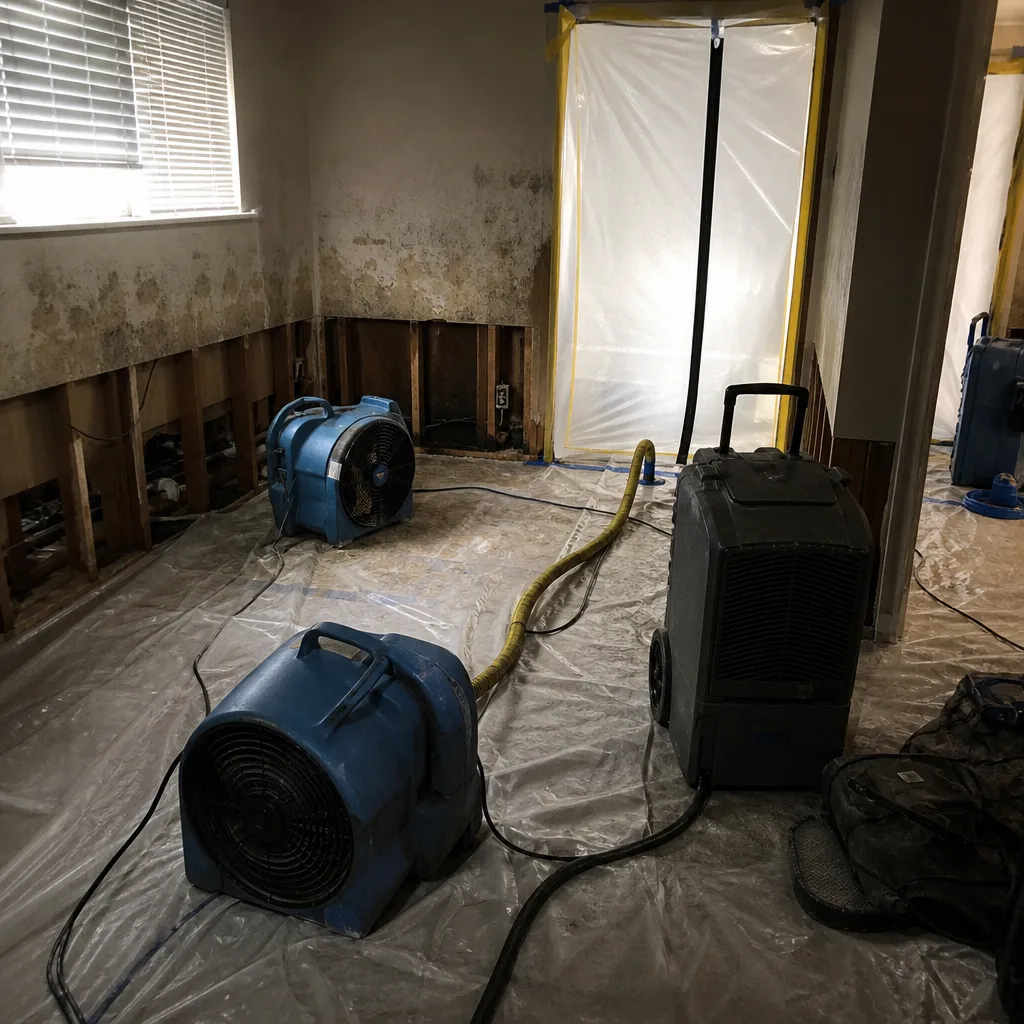 Before
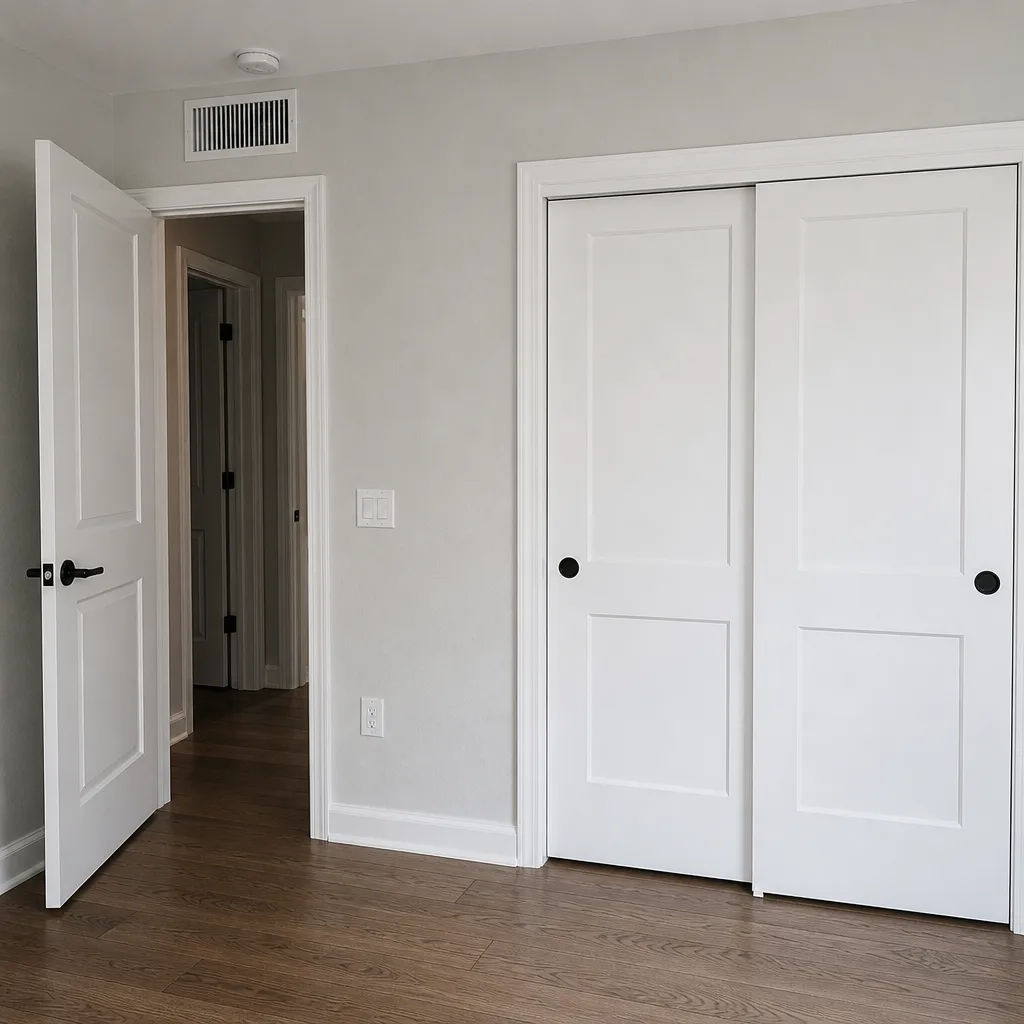 After
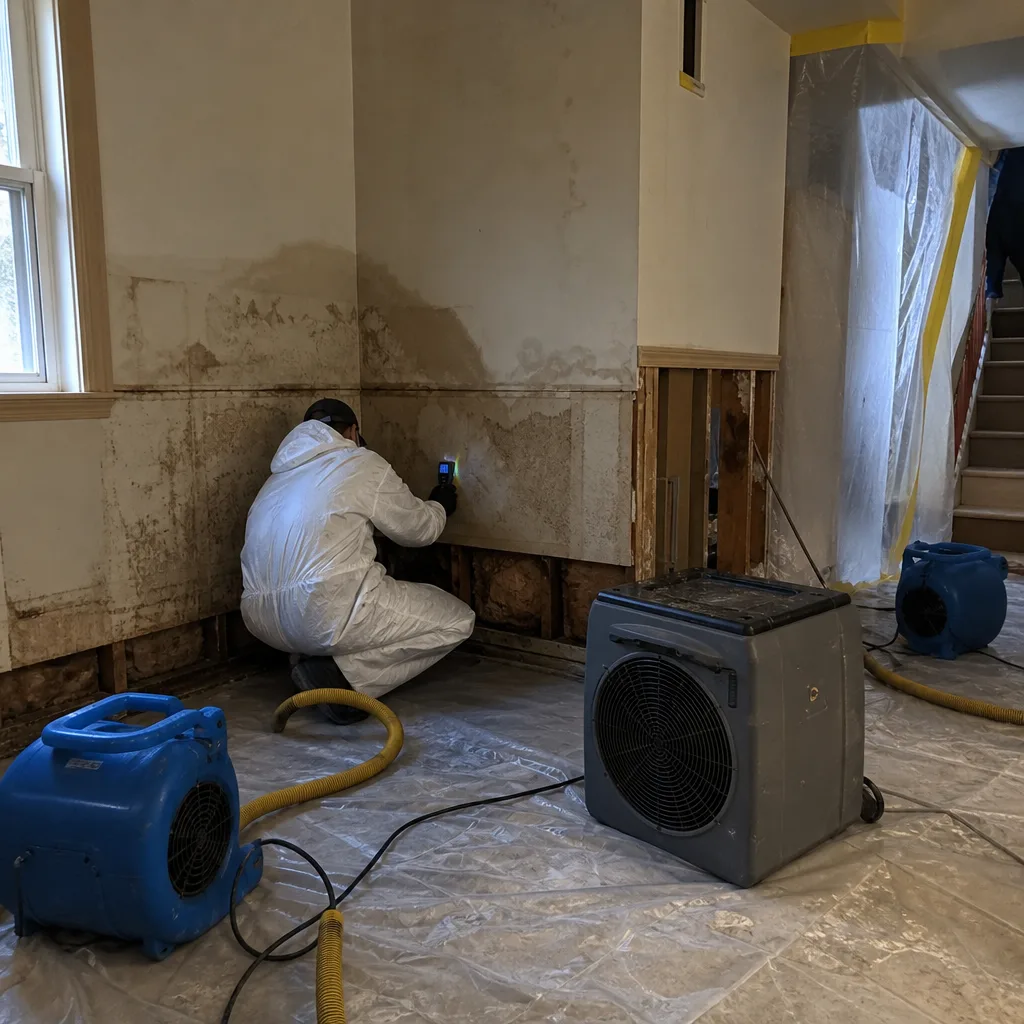 Before
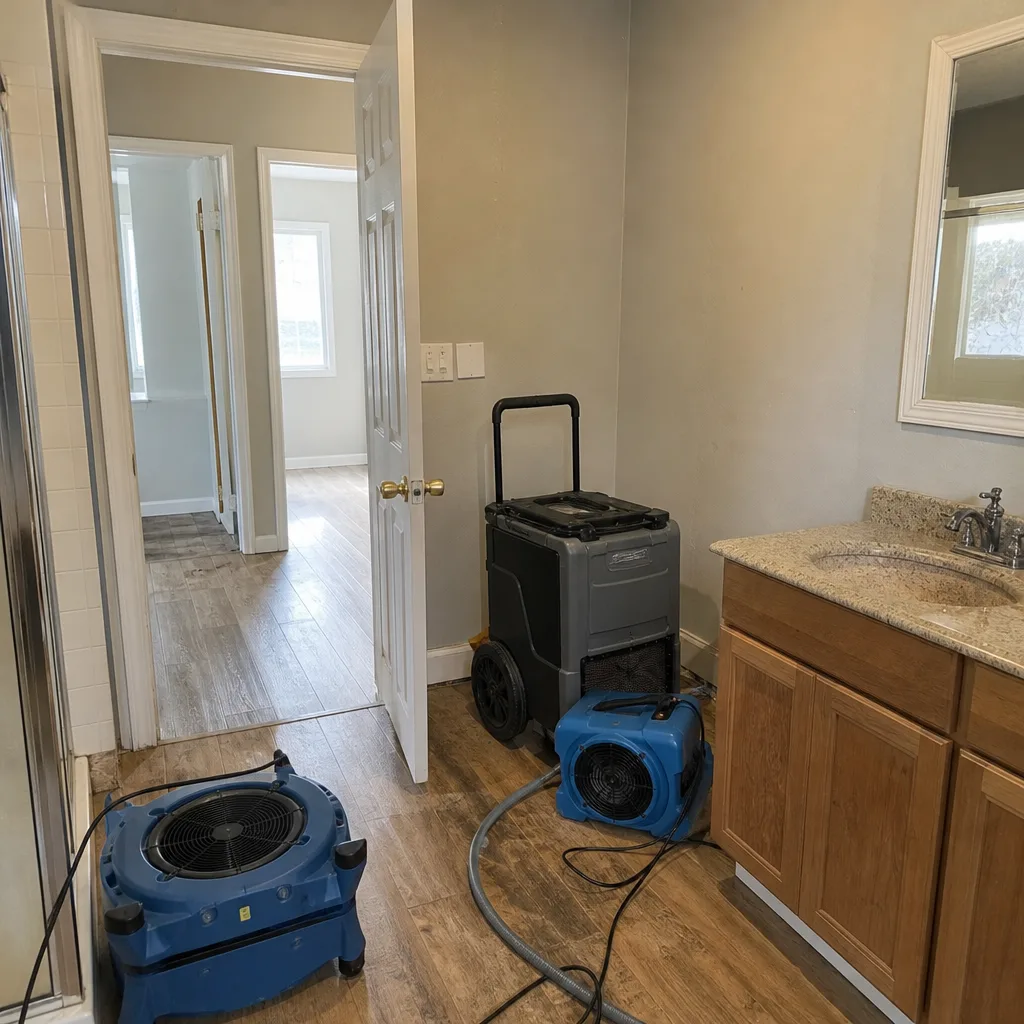 After
Common Water Damage Restoration Problems We See in Brea Homes
- Ash intrusion in Carbon Canyon attics: Santa Ana winds force fine ash through ridge caps and attic vents during fire season, and that ash becomes a moisture trap when winter rains follow. We check attics and HVAC returns first on Brea hillside homes, not just the visible rooms.
- Hidden moisture behind stucco-and-wood-frame walls: Technicians who rely only on pin meters routinely miss category 2 water trapped in wall cavities. Left alone, that moisture feeds mold within 24 to 48 hours in Brea’s warm climate, and the homeowner doesn’t see it until odor or staining appears.
- Builder-grade dehumidification that can’t keep up: Master-planned homes in 92823 often have PEX plumbing failures that release large volumes of water quickly. A small residential dehumidifier can’t handle that load, and secondary damage spreads while the equipment struggles.
- Old cast-iron drain failures in 1950s and 1960s builds: Downtown Brea and the neighborhoods off Brea Boulevard have original cast-iron drains that crack and separate after decades. The resulting backups are category 3, and the proper restoration protocol is different from a clean-water supply line break.
Pricing for Water Damage Restoration in Brea, CA
Here’s what Brea homeowners can expect on a typical water damage restoration invoice:
- Emergency water extraction: $500 to $1,500 depending on affected square footage and water volume.
- Structural drying and dehumidification: $1,200 to $3,500 for a standard room or basement, including equipment placement and daily monitoring.
- Flooded basement cleanup (category 2): $2,500 to $6,000 including extraction, containment, drying, and antimicrobial treatment.
- Ceiling and roof leak water damage: $800 to $2,800 for drying and repair prep, assuming the roof repair itself is handled separately.
The biggest variables are water category, how far moisture traveled from the source, and whether wall or floor cavities need Injectidry targeted drying versus a simple extraction. A burst pipe in a single bathroom typically runs toward the low end. A mudslide-intrusion event in Carbon Canyon that soaks multiple rooms and saturates stucco runs toward the high end. Call (855) 356-4970 for a free estimate. We’ll give you a written scope before any work begins, not a vague verbal range.
We Also Serve Cities Near Brea
If you’re calling from just outside Brea, we cover the surrounding Orange County communities with the same Water Damage Restoration in Brea level of response. That includes Placentia, Fullerton, Yorba Linda, and La Habra. Response times vary by location, but we stage equipment centrally so most of these cities are within an hour of dispatch.
Serving Brea, CA — Our Local Coverage Area
We’re based in the Brea area and know this community well. Use the map below to see our service coverage — if you’re nearby, we can almost certainly help.
FAQs About Water Damage Restoration in Brea
Homes in the Carbon Canyon area collect fine ash in attic spaces during Santa Ana wind events, and that ash traps moisture when winter rains arrive. If a roof leak or pipe condensation introduces water into that ash layer, the result is a wet, corrosive paste that damages insulation and framing. We inspect and dry the attic assembly, not just the room below the leak. Call (855) 356-4970 to schedule an attic inspection.
Mold can establish in 24 to 48 hours after water damage, even in Brea’s dry air, because the moisture inside wall cavities and under flooring creates its own microclimate. The visible surface may dry fast while the cavity stays wet. Our protocol includes moisture mapping and cavity drying to prevent that hidden growth window from opening.
Category 1 is clean water from a supply line or faucet. Category 2 contains significant contamination, like sump pit water or washing machine discharge. Category 3 is grossly contaminated, including sewage backups and flood water that has picked up soil and bacteria. The category determines whether we dry materials in place or remove them, and it changes the antimicrobial treatment required.
Yes. We work on mid-century Brea homes with original cast-iron drains regularly, including category 3 backups. The extraction process is the same, but the containment and material removal protocols are stricter when cast-iron drain failure introduces sewage. We set up full containment and remove affected porous materials before drying begins.
Yes. Every dry-out includes daily moisture readings, psychrometric readings, and equipment placement documentation that we provide to your adjuster. The drying logs show the affected area returned to pre-loss moisture conditions, which is what your insurer needs to close the claim accurately. We also coordinate directly with adjusters so you don’t have to translate technical data.
Written by Noel Carrasco, Owner at Mahogany Water Damage, serving Brea since day one.