

Last updated October 30, 2026
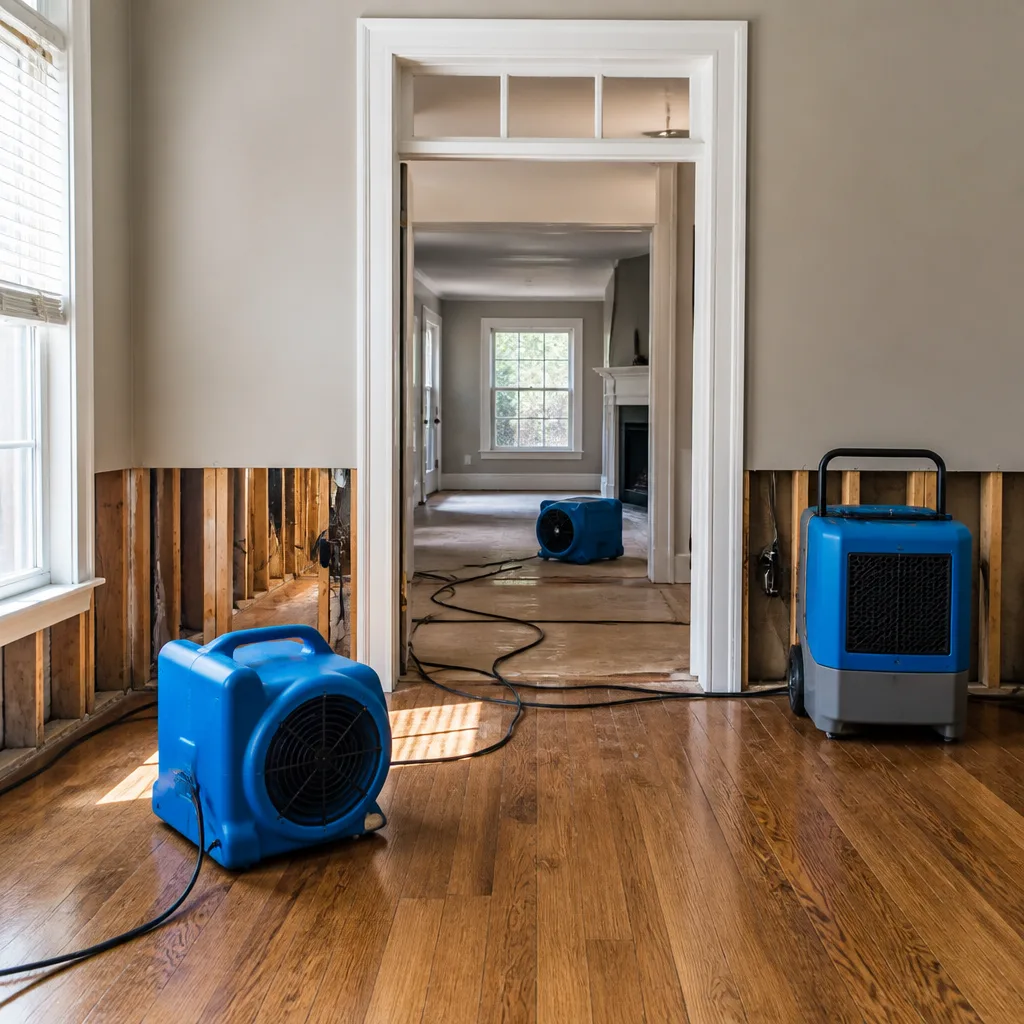 Water damage drying
 Fire & smoke cleanup
 Mold remediation
 Storm response
 Sewage cleanup
 Reconstruction
Free visual inspection and a written scope of work before any mitigation begins - photos, moisture readings, and drying logs go in your claim file
The scope we write is the scope we bill. Anything new gets shown to you, in writing, before we touch it.
Get your free estimateDamage Restoration Permits, Codes & Inspections in CA: What You Need to Know
Here’s a number most Fullerton homeowners never hear until it’s too late: unpermitted structural repairs after water damage can void your homeowner’s insurance policy on future claims and flag your property at resale disclosure. Not the water damage itself. The repair work done without a permit. California’s permit requirements for damage restoration are frequently misrepresented, either by contractors who pull unnecessary permits that delay your move-back date by weeks, or by crews who skip required permits and hand you a title problem you won’t discover until you try to sell. This guide walks through exactly which restoration scopes trigger a California building permit, which are legally exempt as repair-in-kind, how Fullerton’s inspection process actually works, and what paperwork you should have in your hand before you pay the final invoice. For Damage Restoration Warning Signs: A Fullerton Homeowner’s Reference Guide, see our companion resource.
Quick Answer
In California, damage restoration work requires a building permit when it involves structural changes: replacing load-bearing framing, altering rooflines, moving electrical circuits, or converting unfinished space. Repair-in-kind, which means replacing damaged materials with equivalents without altering structure or systems, is generally exempt under California Building Code Section 105.2. In Fullerton, permits for restoration work are pulled through the city’s Community Development Department, and any contractor who tells you “permits aren’t needed for restoration” without specifying the exact scope is giving you a blanket answer to a case-by-case question.
Restoration work we handle
Table of Contents
- Which Restoration Scopes Actually Trigger a California Permit
- Repair-in-Kind: The Legal Exemption Most Contractors Misstate
- How Fullerton’s Permit and Inspection Process Works Step by Step
- California Health & Safety Code: Mold Remediation Disclosure Rules
- What Unpermitted Restoration Work Does to Your Title and Insurance
- Project Close Documentation: What a Compliant Contractor Hands You
- Common Mistakes to Avoid
- When to Call a Professional
Which Restoration Scopes Actually Trigger a California Permit
California Building Code (CBC) Section 105 lists the work that requires a permit, and it’s more specific than most homeowners expect. The question is not “does water damage require a permit?” but “what exactly is being repaired, and how much of the structure is being altered?” Here are the restoration scopes that trigger a building permit in California:
- Structural framing changes: Replacing, sistering, or altering any load-bearing wall, beam, floor joist, rafter, or foundation element. If a water-damaged wall is load-bearing and the framing itself is compromised, you need a permit.
- Electrical system work: Moving, adding, or replacing wiring, panels, or circuits. A flood that reached outlets is not automatically permit-triggering if you’re swapping like-for-like devices, but relocating a panel or adding circuits is.
- Plumbing alterations: Re-piping, moving fixtures, or altering drain lines. Swapping a damaged water heater for a same-capacity unit requires a permit; changing its location or fuel type definitely does.
- HVAC replacement or relocation: A water-damaged furnace or AC condenser replacement of the same type and location usually falls under repair, but moving ductwork or changing system capacity triggers a mechanical permit.
- Roofline changes: Any modification to roof pitch, sheathing beyond a partial repair, or structural roof member replacement. A full re-roof in California requires a permit; patching 100 square feet of damaged sheathing generally does not.
- Converting unfinished space: If fire or water damage leads you to convert a garage, basement, or attic into living space as part of the restoration, that’s new construction, not restoration, and it requires full permits.
What does not require a permit: drywall replacement, insulation replacement, flooring installation, painting, cabinet replacement, and trim work, provided the underlying structure is intact. This distinction matters because in Fullerton, we’ve seen contractors pull permits for a 40-square-foot drywall patch in a bathroom, which is unnecessary, and we’ve seen contractors replace a load-bearing header without one, which is the opposite error and far more expensive.
If you’re mid-emergency and need to act fast, our Water Damage Restoration in Fullerton team can tell you within the first site visit whether your specific damage falls into permit or repair-in-kind territory, and we’ll put that assessment in writing before any work starts.
Repair-in-Kind: The Legal Exemption Most Contractors Misstate
The repair-in-kind concept comes from CBC Section 105.2, and it’s the most misunderstood phrase in restoration permitting. Repair-in-kind means replacing a damaged component with materials that are equivalent in size, type, and function, without altering the structure, system, or use of the building. The key phrase is “equivalent.” A contractor who replaces a 2×4 wall stud with a 2×6 to “make it stronger” has just done work that no longer qualifies as repair-in-kind, because the member size changed. The exemption is gone. A permit was required, and nobody pulled one.
Here’s what repair-in-kind actually covers in a damage restoration context:
- Drywall replaced with same-thickness drywall in the same locations
- Insulation replaced with same R-value insulation between the same framing bays
- Flooring replaced with same-type flooring (tile for tile, hardwood for hardwood, not carpet for tile)
- Trim, baseboards, and casing replaced with similar profiles
- Like-for-like fixture swaps (same voltage, same location, same type)
- Partial roof sheathing repair where the roof structure is unchanged
The moment you change material type, increase capacity, move a location, or alter a dimension, the repair-in-kind shield disappears. This is not a gray area in the code. It’s black and white, and in our experience, it’s the area where Fullerton homeowners most often get unknowingly exposed. A restoration company that tears out a water-damaged bathroom and rebuilds it in a different layout without a permit has created an unpermitted alteration, not a repair. The homeowner discovers this years later when a buyer’s inspector asks for the permit history and none exists.
When we scope water damage in Fullerton, we draw the line explicitly: what’s being restored in-kind versus what’s being changed, and we recommend the permit path for anything on the change side of that line, even if it costs a few days of schedule. The alternative is worse. Our IICRC-certified process includes a written scope document that states, per affected area, whether the work is repair-in-kind or permit-required. That document protects you whether or not a permit is actually pulled, because it records the decision and the reasoning.
How Fullerton’s Permit and Inspection Process Works Step by Step
Fullerton operates under Orange County’s building code framework, but permits are issued and inspected by the city itself, not the county. The Fullerton Community Development Department processes building permits at City Hall on West Commonwealth Avenue. Here’s how the process works when restoration work requires a permit:
- Scope determination: A contractor or owner submits a description of the planned work. For restoration, this typically includes photos of the damage, a written scope, and a material list. Fullerton staff will confirm whether the work is permit-required or qualifies as repair-in-kind.
- Permit application and plan review: For structural work, the city requires plans or at minimum detailed scope drawings. Simple electrical or mechanical permits may not need full plan review. Plan review typically takes 5 to 14 business days depending on current volume. Fullerton offers an expedited review path for certain emergency repairs when a hazard to life or safety is documented.
- Permit issuance and fee payment: Once approved, the permit is issued and the fee is calculated based on the valuation of the work. Fullerton’s fees run on a published schedule, and for restoration work, the valuation is the repair cost, not the pre-damage value of the home.
- Scheduled inspections: The contractor calls for inspection at specific milestone points: framing inspection after structural members are installed but before drywall covers them, electrical rough-in, plumbing rough-in, insulation, and a final inspection after all work is complete. Fullerton requires inspections to be called in by the contractor listed on the permit, and the inspector typically arrives within 24 to 48 hours of the request.
- Sign-off: The final inspection produces a signed inspection card and a recorded final approval. This is the document you want at project close. Without it, the permit is technically open, and an open permit shows up on title reports.
A failed inspection in Fullerton is not a catastrophe, but it does cost you time. The inspector writes a correction notice specifying what failed and what code section applies. The contractor fixes the issue and schedules a re-inspection. Re-inspections in Fullerton are usually available within a day or two, but each one adds a cycle to your timeline. We’ve seen a single missed hold-down strap add five days to a restoration schedule because the inspector was booked out. A contractor who does restoration work under Fullerton permits regularly knows what inspectors look for and gets the rough-in right the first time, which is one of the quiet advantages of hiring a local team that works with the city routinely rather than an out-of-area crew that shows up for emergency mitigation and does not know Fullerton’s inspection preferences. See How to Hire a Damage Restoration Contractor in Fullerton: A Step-by-Step Guide for what to ask before signing.
For fire damage work in Fullerton, the permit path is different in one important way: fire restoration often requires a separate evaluation from the Orange County Fire Authority or the Fullerton Fire Department if the structural integrity of the building is in question, before a city building permit is even issued. Our Fire Damage Restoration in Fullerton team coordinates that sequence so the structural evaluation doesn’t stall the permit process.
California Health & Safety Code: Mold Remediation Disclosure Rules
California regulates mold remediation through the Health and Safety Code, primarily Sections 26100 through 26156, which set standards for mold assessment and remediation. These laws apply to all rental housing in California and to any property owner or contractor who performs mold remediation for compensation. The rules matter to Fullerton homeowners because they define what a compliant mold remediation looks like, and they establish specific disclosure obligations that a contractor cannot contract around.
The key provisions:
- Assessment standards: A mold assessment performed for a rental property must follow the TSD (Toxic Substances Control Department) guidelines. An assessment must identify the mold, its source, and the moisture condition that caused it. A remediation plan must be in writing and must address the moisture source first.
- Contractor obligations: A mold remediation contractor must provide the property owner with a written work plan before starting, including containment methods, cleaning methods, and clearance criteria. The contractor must also disclose any known conflict of interest, which means a company cannot both assess the mold and remediate it if the assessment was performed for litigation purposes.
- Clearance testing: After remediation, clearance testing must be performed by an independent third party if the property is rental housing. For owner-occupied homes, clearance testing is not mandatory under California law, but it’s the standard our industry follows because it provides documented proof that the mold problem was solved, not just hidden.
- Disclosure to future residents and owners: A landlord must disclose any known mold to prospective tenants in writing. A seller must disclose known mold in the transfer disclosure statement. If you remediate and have a clearance report, you disclose that the mold was remediated and you have documentation. If you do not remediate and just paint over it, you’re disclosing a known unresolved defect.
The practical takeaway for a Fullerton homeowner: if you hire a mold remediation contractor, demand the written work plan before work starts and the clearance report after work ends. If a contractor says clearance testing is unnecessary, that’s a red flag. The state code may not mandate clearance testing for an owner-occupied home, but no credible mold remediation contractor skips it. Our Mold Remediation in Fullerton service includes third-party clearance testing on every job because the documentation is what protects you at resale and in an insurance coverage conversation.
We use IICRC-certified mold remediation processes, which align with the state code and add a layer of independent verification. The IICRC S520 standard is the industry’s consensus document for mold remediation, and California’s Health and Safety Code sections on mold largely track its framework.
What Unpermitted Restoration Work Does to Your Title and Insurance
Unpermitted restoration work does not show up as a red flag on a title report while you’re living in the home. It shows up when someone else’s money is on the line, which is why it’s the hidden liability in so many California home sales. Here’s what happens:
A title search at resale will typically include the county recorder’s records of permits pulled for the property. If a buyer’s title company or inspector identifies recent work that appears to be structural or system-level but has no corresponding permit, the buyer has leverage. They can demand a price reduction, require you to retroactively permit the work, or walk entirely. Retroactive permitting in California is possible but painful: the city may require you to open up finished walls to expose the work for inspection, which means tearing into the very restoration you paid to complete.
The insurance consequence is more serious and less discussed. California homeowners insurance policies contain conditions that require you to maintain the home in compliance with law and to disclose known hazards. If you file a future claim, say a kitchen fire, and the adjuster’s investigation finds prior unpermitted structural or electrical work, the carrier can argue that the policy condition was breached. In the worst case, the claim is denied and the policy is non-renewed. In a moderate case, the claim is paid but the carrier excludes the unpermitted work from coverage and requires you to correct it before renewal. Either way, the unpermitted work becomes the lead story in your claims file.
There’s also the liability angle. If someone is injured in or around the unpermitted work, perhaps an electrical fault from a non-code wiring splice, your homeowner’s liability coverage can be contested on the grounds that you knew or should have known about the unpermitted condition. This is not a theoretical risk. In our restoration work across Fullerton, we have walked into homes where previous water damage was repaired without permits, and the homeowner’s first question is always the same: “Why did the other company not tell me about this?” The answer, frankly, is that pulling a permit costs time and some contractors would rather finish fast. We do not operate that way.
The Mahogany Water Damage home page has more detail on how we scope and document restoration work, including the permit decision matrix we use for every project.
Project Close Documentation: What a Compliant Contractor Hands You
At project close, you should receive a documentation packet that would survive an insurance audit or a buyer’s inspection. If your contractor hands you a final invoice and nothing else, you do not have a compliant restoration, regardless of how good the work looks. Here’s what the packet should contain:
- Permit card or permit number: If a permit was pulled, the physical permit card should be signed by the inspector at final. If the city uses electronic records, the permit number and final approval reference should be provided.
- Inspection sign-off: The final inspection report or a screenshot from the city’s citizen access portal showing the permit status as “Finaled” or “Approved.” An open permit is worse than no permit for resale disclosure purposes.
- Written scope of work: The original scope document that lists every affected area, the work performed in each area, and the repair-in-kind versus permit-required determination for each line item. This document is your evidence that the work was restoration, not alteration.
- Clearance testing report: For mold remediation, the third-party clearance report. For water damage, documentation that the affected areas reached the drying standard, typically a moisture map showing readings below 15% wood moisture equivalent in the affected zones.
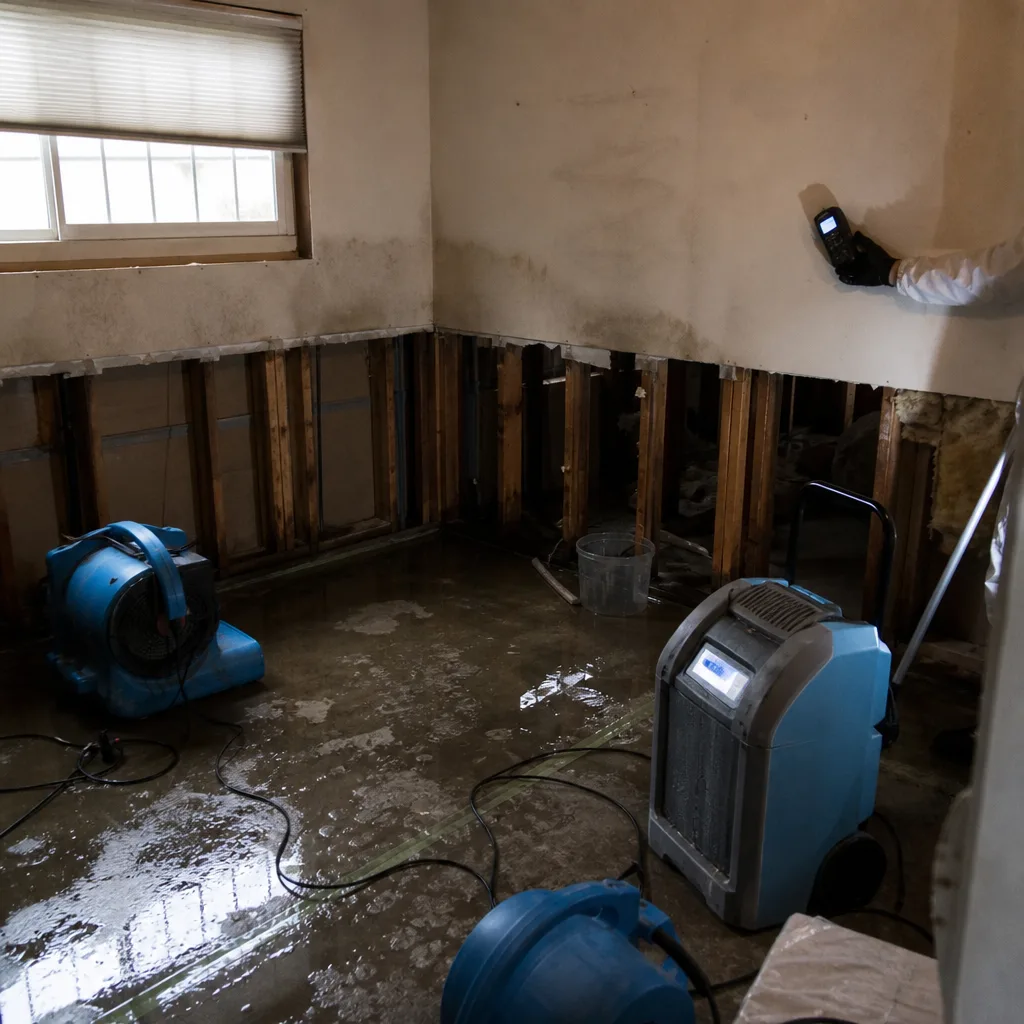
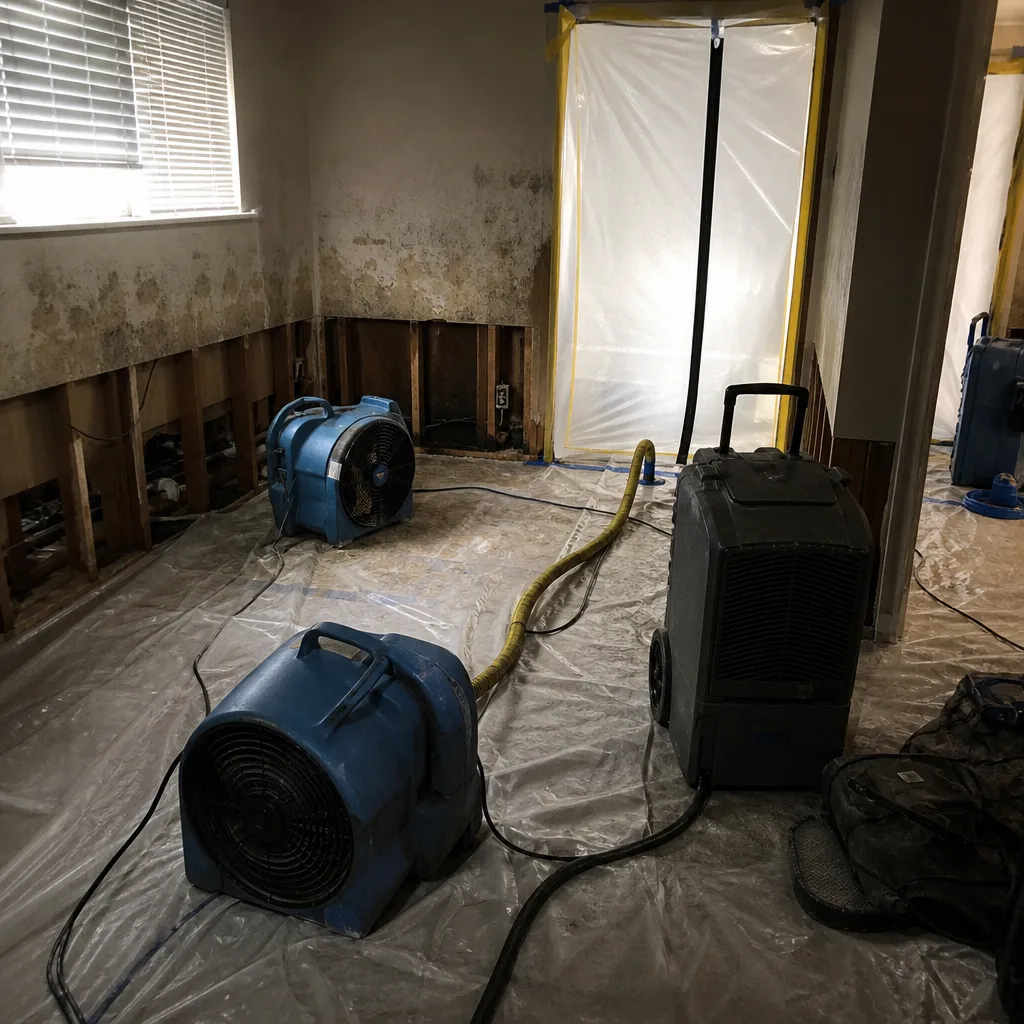
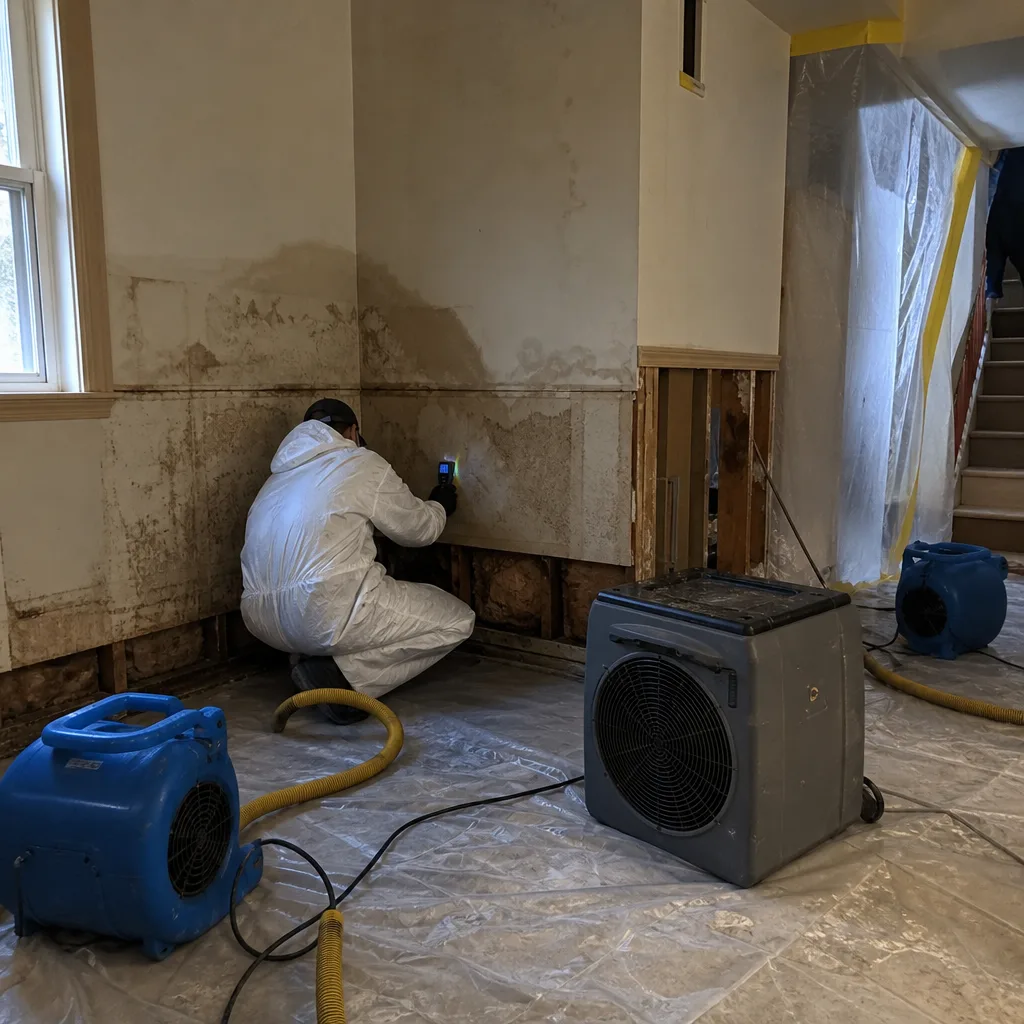
- Drying logs: If the job involved structural drying, the daily moisture content readings from the equipment placement through the final day. This is standard for IICRC-certified restoration and proves the drying was performed to standard, not stopped when the surface looked dry.
- Material certifications: For any replacement materials, particularly in fire restoration where smoke-damaged materials may be cleaned rather than replaced, documentation of what was replaced versus cleaned and why.
- Insurance documentation: Photos, scope, and invoice in insurance-friendly format, with line items that map to standard insurance claim categories.
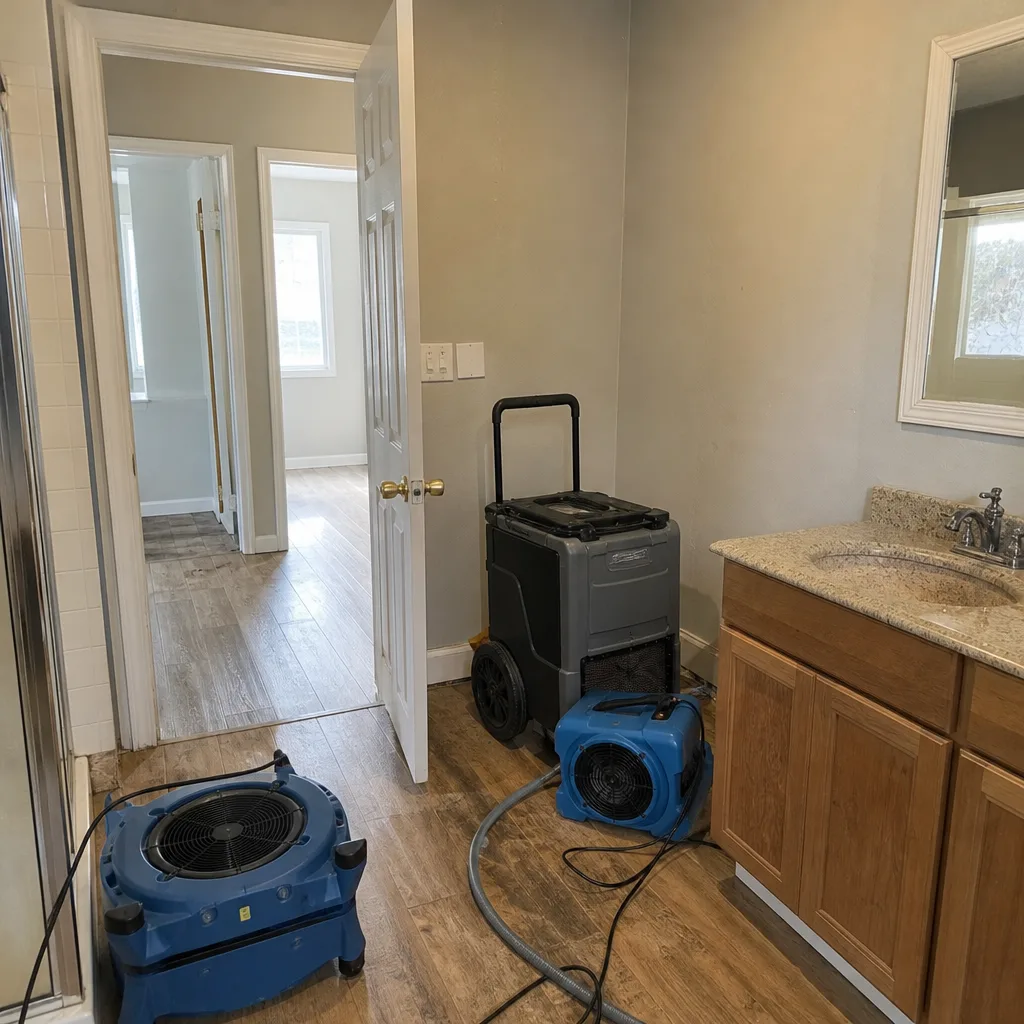
This documentation is not optional paperwork. It’s the difference between a restoration that you can prove and one you can only describe. When we complete a restoration in Fullerton, we hand the homeowner a closeout binder with every one of these items because our process is built around the endpoint: a home restored to a documented standard, not just a home that looks right. The equipment matters, and so does the paper. We run commercial-grade Dri-Eaz and Phoenix drying systems on every water job, and we document the readings from those systems daily. The equipment gives you the dry wall; the documentation gives you the proof.
Common Mistakes to Avoid
- Accepting a blanket “no permit needed” statement. Any contractor who tells you no permit is needed without asking what room, what material, what structure, and what system is giving you a guess, not an assessment. Ask them to put the determination in writing with the code section cited.
- Letting the contractor pull a permit in your name. In Fullerton, the permit should be pulled by the licensed contractor performing the work, not by the homeowner, unless the homeowner is acting as the general contractor. A permit in your name makes you the responsible party for code compliance and inspection scheduling.
- Skipping the final inspection. A permit that is issued but never finaled is an open permit. It shows up on title and creates the same resale friction as an unpermitted job. The final inspection is the contractor’s job to schedule and your job to confirm.
- Paying in full before the final sign-off. Your final payment should be contingent on two things: the work passing inspection and the documentation packet being delivered. If a contractor asks for full payment before the city stamps “finaled,” they are asking you to bear the risk of an incomplete job.
- Confusing mitigation with reconstruction. Emergency water mitigation, meaning extraction and drying, is not permit-required. Reconstruction, meaning rebuilding what was removed, may be. A contractor who blurs the line may be trying to avoid the permit conversation entirely.
- Not keeping the closeout documentation with the house records. The permit card and clearance report belong in the same file as your deed and your title policy. If you sell in five years, those documents are worth more than any receipt.
- Hiring a mold remediation company that also does the clearance testing. The Health and Safety Code is explicit about conflicts of interest for rental properties, and even for owner-occupied homes, the independent clearance test is the only document a future buyer’s inspector will trust. The remediation company should not grade its own test.
When to Call a Professional
You should call a restoration professional before you call a building department if you have any of these situations: water damage that has reached a wall cavity or subfloor, because the structural assessment drives the permit question; any fire damage beyond surface cleaning, because structural char, even shallow, can trigger a building permit and a fire department evaluation; any mold colony larger than a few square feet, because containment and clearance testing are code-governed; any damage involving electrical panels, wiring, or gas lines, because those systems are not DIY territory ever, and the safety stakes are high; or any situation where an insurance adjuster is involved, because the adjuster’s scope and the contractor’s scope need to match in writing before work starts. Not sure whether to tackle it yourself? Read DIY vs Professional Damage Restoration: The Fullerton Homeowner’s Decision Guide first. Mahogany Water Damage offers free estimates in Fullerton, call (855) 356-4970 and we’ll tell you honestly whether your scope is permit-required, repair-in-kind, or somewhere in between, and we’ll document that assessment in writing before any work begins.
See the difference
 Before
 After
 Before
 After
 Before
 After
Frequently Asked Questions
Most water damage restoration work in California does not require a permit if the work is repair-in-kind: replacing drywall, insulation, flooring, or trim with equivalent materials without structural or system changes. Structural framing repairs, electrical or plumbing alterations, and any change to the building’s footprint or use do require a permit. If you’re unsure about your specific Fullerton project, call (855) 356-4970 and we’ll give you a written determination.
Fullerton can assess penalties for unpermitted work, but the larger exposure is resale: unpermitted work shows up as a title flag, can void future insurance claims, and can force retroactive permitting that requires opening finished walls. The penalty is not a fine; it’s the cost of undoing the work to get it inspected years later.
The licensed contractor performing the work should pull the permit in the contractor’s name. In Fullerton, a contractor who asks the homeowner to pull the permit is typically trying to shift liability or avoid the city seeing the contractor’s history. A homeowner-pulled permit makes you responsible for code compliance, which is not where you want to be.
California Health and Safety Code requires third-party clearance testing for rental properties. For owner-occupied homes, clearance testing is not legally required, but it is the industry standard and the only document that proves the mold was remediated to a measurable standard. We never complete a mold remediation in Fullerton without third-party clearance testing.
Simple permits can issue in 3 to 5 business days in Fullerton. Structural permits with plan review typically take 5 to 14 business days. Emergency repair permits, where a documented life-safety hazard exists, can be expedited. The inspection cycles after permit issuance add time depending on inspector availability, currently 24 to 48 hours per request.
Yes, when the permitted work is part of a covered claim, the permit fees and required inspections are typically reimbursable as part of the claim’s cost of repairs. The key is that the permit scope matches the insurance scope. If a contractor adds unpermitted scope beyond what the adjuster approved, the permit issue becomes an insurance dispute. We document every scope decision against the insurance adjuster’s list from day one.
The Bottom Line
California’s permit rules for damage restoration are specific and case-driven, not blanket. Repair-in-kind is a real exemption with hard limits. The moment structural or system changes enter the picture, a permit is not optional. In Fullerton, the permit process is navigable and quick when the contractor knows the city, but unpermitted work quietly becomes a title and insurance liability that follows the property for years after the cosmetic repairs are forgotten. The documentation package at project close, including the finaled permit, inspection sign-off, and clearance testing report, is the real finish line of a restoration project. If your contractor cannot produce that packet, the job is not finished, no matter how good it looks.
Written by the team at Mahogany Water Damage, serving Fullerton since 2011. We are IICRC-certified restoration professionals, members of the RIA, and we restore water, mold, and fire damage with commercial-grade equipment and documented process. Call (855) 356-4970 for a free estimate.