 Water damage drying
 Fire & smoke cleanup
 Mold remediation
 Storm response
 Sewage cleanup
 Reconstruction
Free visual inspection and a written scope of work before any mitigation begins - photos, moisture readings, and drying logs go in your claim file
The scope we write is the scope we bill. Anything new gets shown to you, in writing, before we touch it.
Get your free estimateFast, Reliable Water Damage Restoration Across Riverside
Water damage restoration in Riverside typically costs $1,800 to $7,500 depending on the category of water, square footage affected, and whether structural drying or selective demolition is needed. Most jobs we handle in the 92501 through 92517 zip codes are fully scoped and started within 24 hours of the first call. If you’ve got water spreading through a citrus-era bungalow off Magnolia Avenue or a foothill tract home in 92508 right now, call (855) 356-4970 and we’ll have a crew dispatched from Fullerton within the hour.
Riverside is home to some of the Inland Empire’s oldest housing stock, and that changes how water damage behaves. We know the difference between a slab-on-grade leak in a 2005 tile-roofed subdivision and a crawlspace soak in a 1924 pier-and-beam frame house, because we’ve dried both. Hundreds of them. The equipment matters, the drying plan matters, and the written documentation you’ll hand your adjuster matters most.
Why Mahogany Water Damage Is Riverside’s Preferred Water Damage Restoration Company
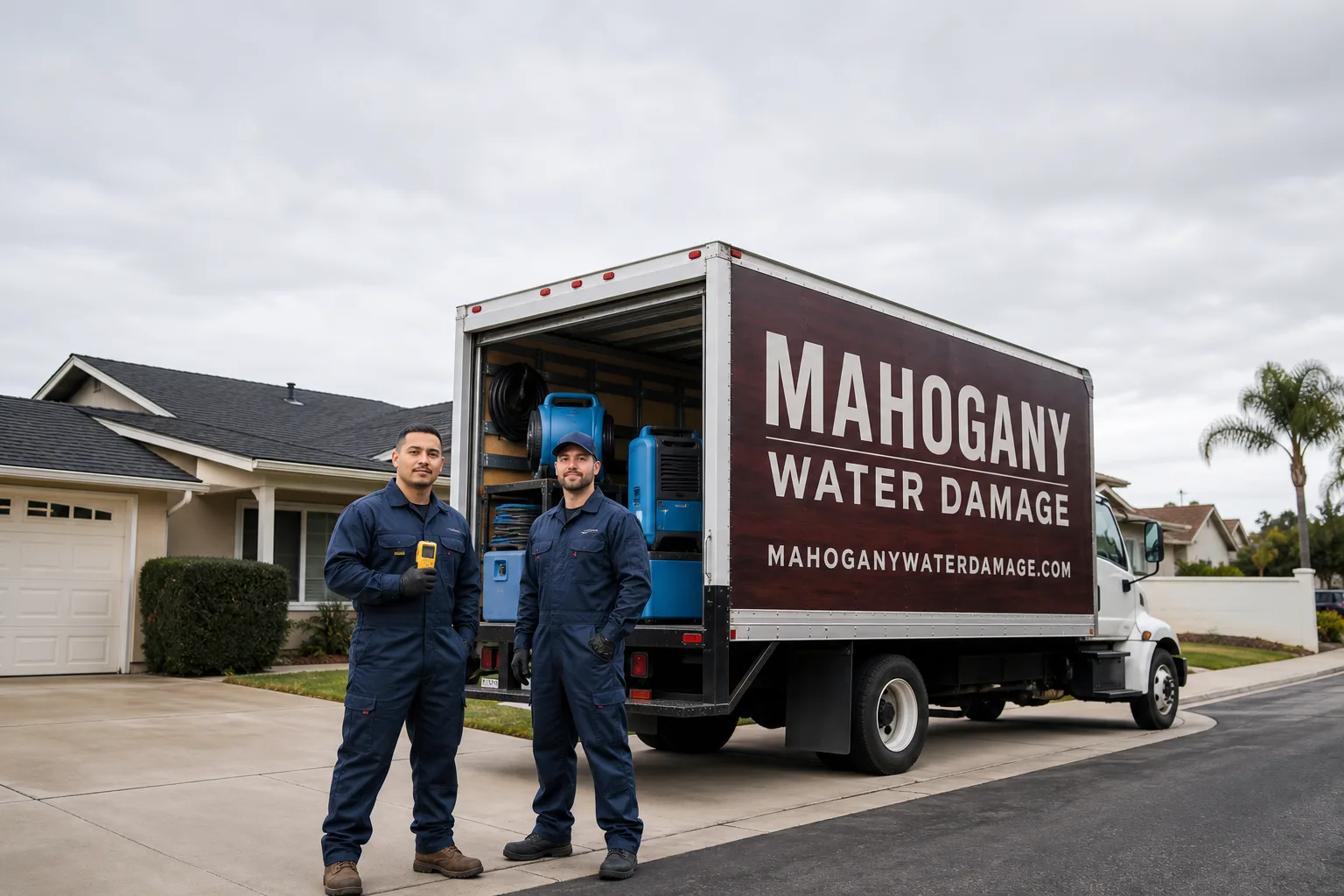
Riverside homeowners call us because the restoration work is IICRC-certified and we run professional-grade drying systems from Dri-Eaz and Phoenix on every single job. These are the same machines large commercial restoration firms use, not rental units from the hardware store. Noel Carrasco built Mahogany Water Damage around a simple rule: dry smarter, demolish less. When a wall or floor cavity can be saved with Injectidry targeted-injection drying, we save it. Tear-out is the last option, not the first move.
That equipment-forward approach matters in Riverside, where the older housing stock hides moisture behind stucco and under raised foundations. A generalist crew without moisture mapping will tell you a room is dry when the surface feels dry. We log daily moisture readings against pre-loss conditions so you can see the structure actually return to standard. Our Water Damage Restoration team handles everything from emergency extraction to final clearance, and we’ve been doing it across Riverside long enough to know which neighborhoods flood, which plumbing systems fail, and how those two things compound each other.
Fast Response to Every Riverside Neighborhood
We dispatch to Riverside from our Fullerton headquarters, and typical response time to 92501, 92503, and 92506 is under 90 minutes. The foothill tracts in 92507 and 92508 run closer to two hours depending on traffic on the 91 and 60. Either way, you’re not waiting overnight while water wicks up drywall and soaks floor joists. We answer the phone live, 24 hours a day.
Certified Work, Documented End to End
Our technicians hold IICRC certification in water damage restoration, and we maintain membership with the RIA and IFA. That means our drying plans follow independently verified standards, not an internal checklist. For insurance claims, we photograph every step, log moisture readings daily, and provide a written scope before work starts. Adjusters in Riverside know our documentation, and that speeds claims along.
Restoration work we handle
Emergency Water Removal in Riverside
Emergency water removal in Riverside starts with extracting standing water fast, because 100°F-plus summer days accelerate mold growth and microbial activity inside wet materials. When we arrive, we map the moisture across floors, walls, and any crawlspace, then set up commercial-grade extraction and drying equipment matched to the size of the job. A typical emergency extraction for a burst supply line in a Riverside home runs $800 to $1,800, with full structural drying adding another $2,000 to $4,500 depending on how far moisture has migrated.
Standing Water Extraction
We pull water with truck-mounted and portable extraction units, then set negative air pressure and high-volume air movers. The first hour matters: subfloor and drywall wick water fast, and once it’s in the wall cavity, drying time doubles. Riverside’s hard Colorado River-sourced water carries high mineral content that accelerates corrosion on exposed fasteners and framing, so we treat affected surfaces early rather than just drying them.
Hidden Moisture Behind Stucco and Under Floors
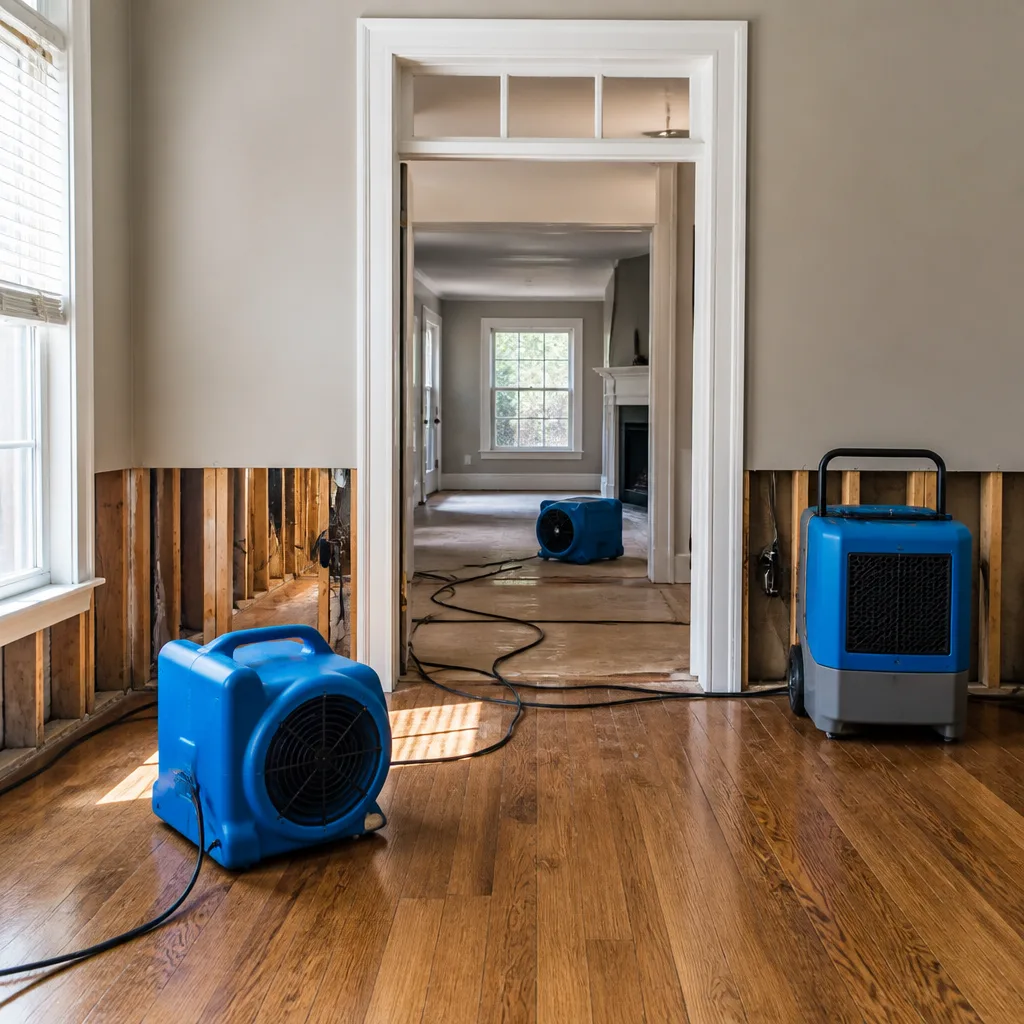
In Riverside’s older core, the real problem is rarely the puddle you can see. Water follows gravity into crawlspaces, wall cavities, and under the base plate. We use thermal imaging and penetrating moisture meters to find what the eye misses. Injectidry targeted drying gets air into wall and floor cavities without opening them up, which on a 1940s stucco house can save thousands in demolition and reconstruction.
Flood Damage Restoration in Riverside
Flood damage restoration in Riverside is a different job than treating a clean-water plumbing leak, because floodwater from the Santa Ana River, arroyo overflows, or monsoon runoff carries sediment, biological contaminants, and whatever came off the street. Any flood event that brings outside water into your home is a Category 3 situation by IICRC definition, and that changes everything: extraction, disposal, decontamination, and drying all follow a different protocol. A Category 3 flood cleanup in a Riverside home typically runs $3,000 to $7,500 depending on the footprint affected.
Monsoon and Arroyo Overflow Response
When a summer monsoon dumps rain faster than Riverside’s aging drainage can carry it, water pushes into homes along the arroyos and older floodpaths. We see this in the neighborhoods along Gage Canal and near the Santa Ana River bottom. The wet-dry cycle matters here: after months of drought and heat stress, stucco cracks and roof flashing gaps are already open, so water gets inside fast. Full flood restoration for these events often includes removing saturated carpet and pad, cutting flood cuts in drywall, and running high-capacity dehumidifiers.
Contaminated Water and Selective Demolition
Floodwater that’s been on the ground is not sanitary. We follow IICRC S500 standards for Category 3 water, which means removing porous materials that can’t be decontaminated, treating structural surfaces with antimicrobial agents, and managing the debris properly. Documented, itemized demolition is part of what makes insurance claims go smoothly. When the adjuster asks what was removed and why, our photos and moisture logs answer every question.
Trusted Brands We Service in Riverside
Riverside homeowners run equipment from every major brand, and we stock replacement parts and service support for the systems we install and maintain. Dri-Eaz dehumidifiers and air movers are our primary drying platform, with Phoenix units deployed on larger structural drying jobs where high heat and low humidity conditions prevail. XPOWER and B-Air round out the fleet for air circulation and containment. Because we own this equipment outright and calibrate it between jobs, we know what each unit can do in Riverside’s dry summer heat versus a humid winter storm. You’re not getting whatever the rental counter had left.
See the difference
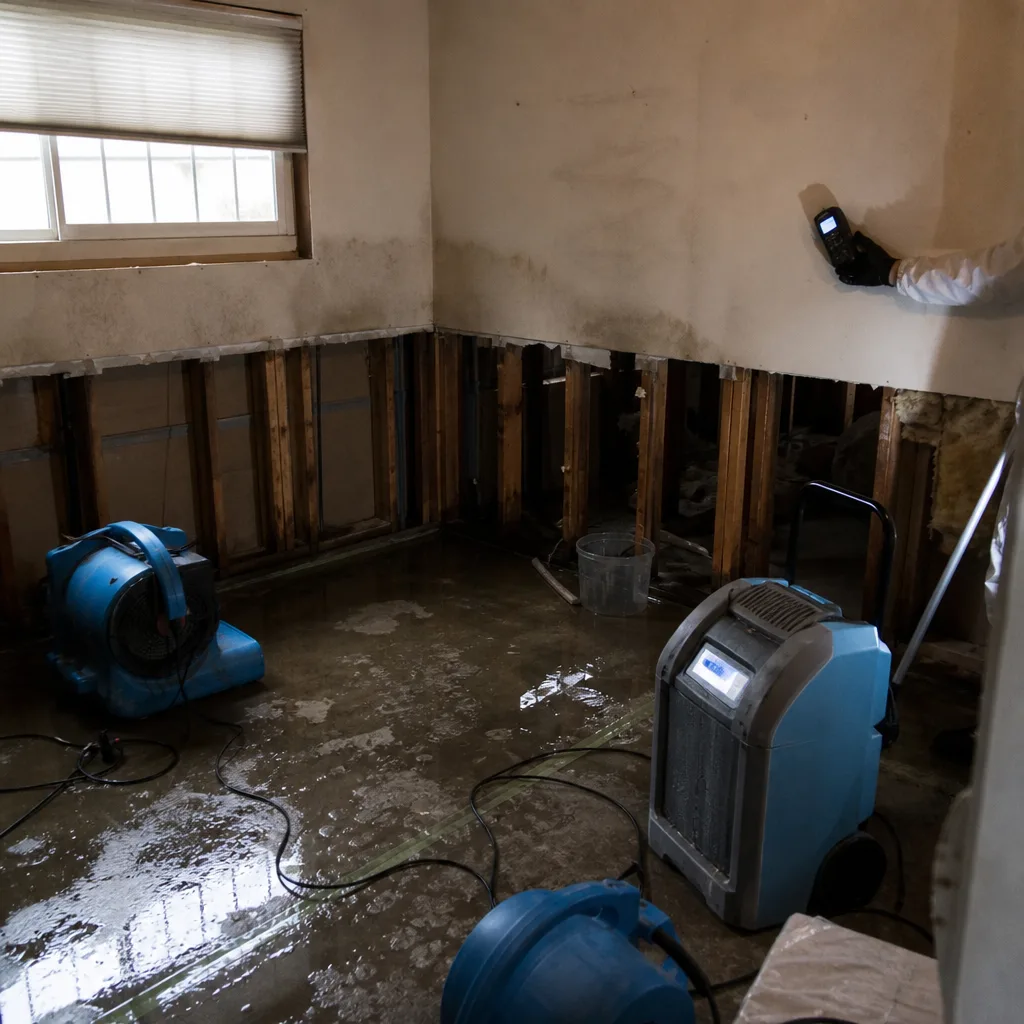 Before
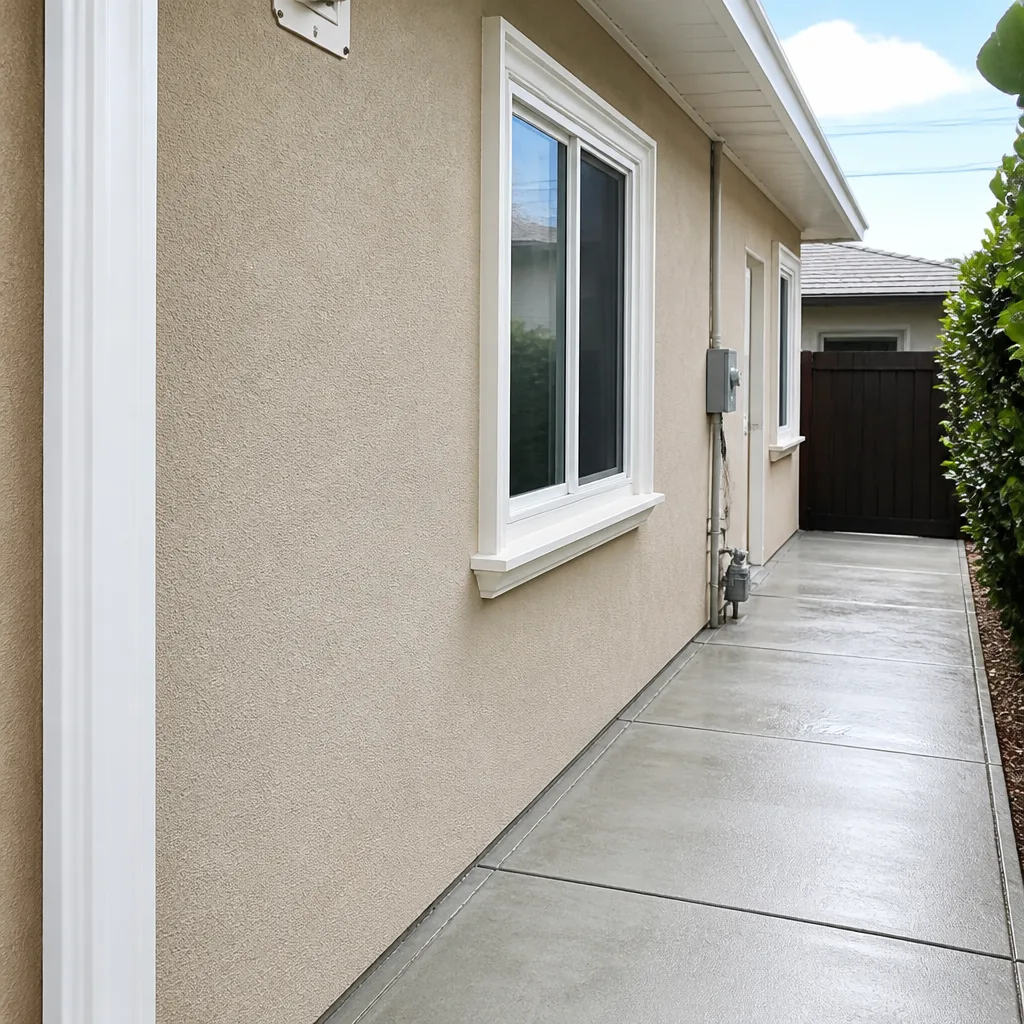 After
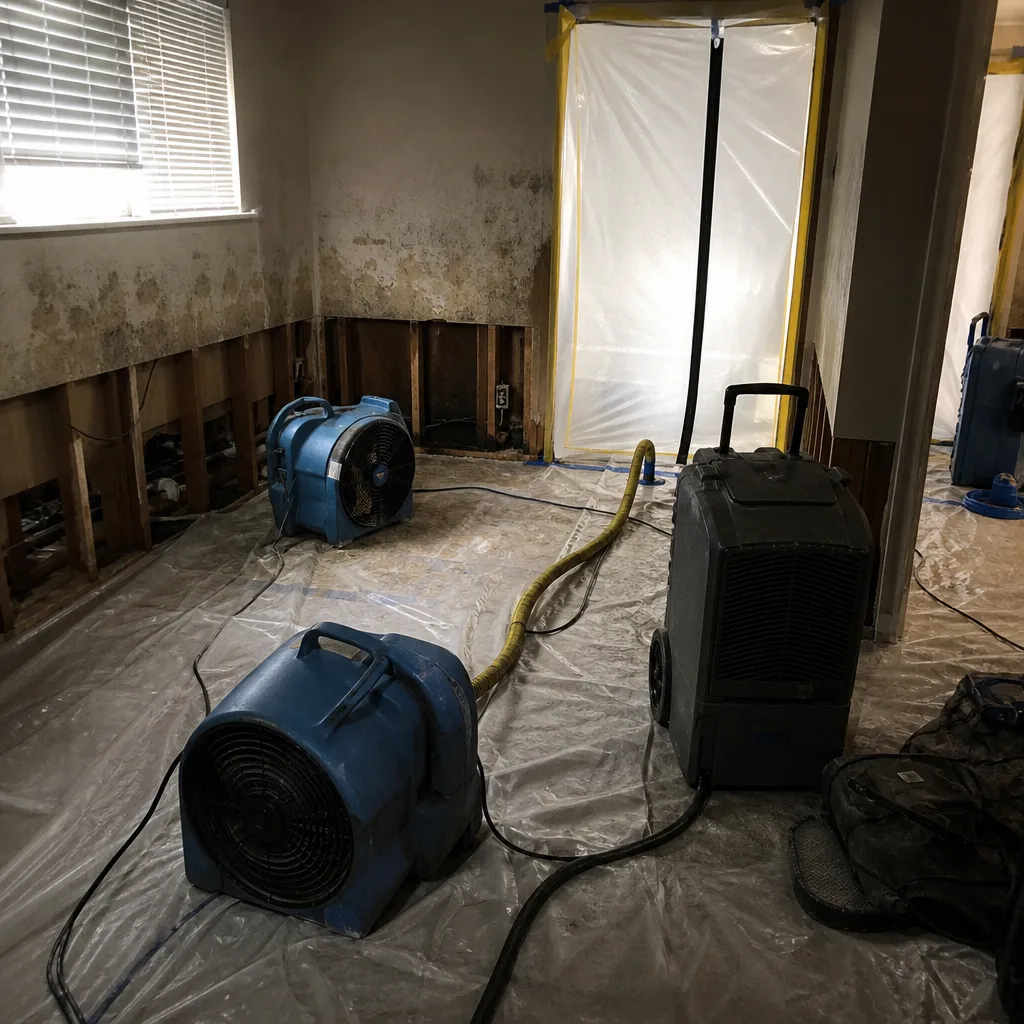 Before
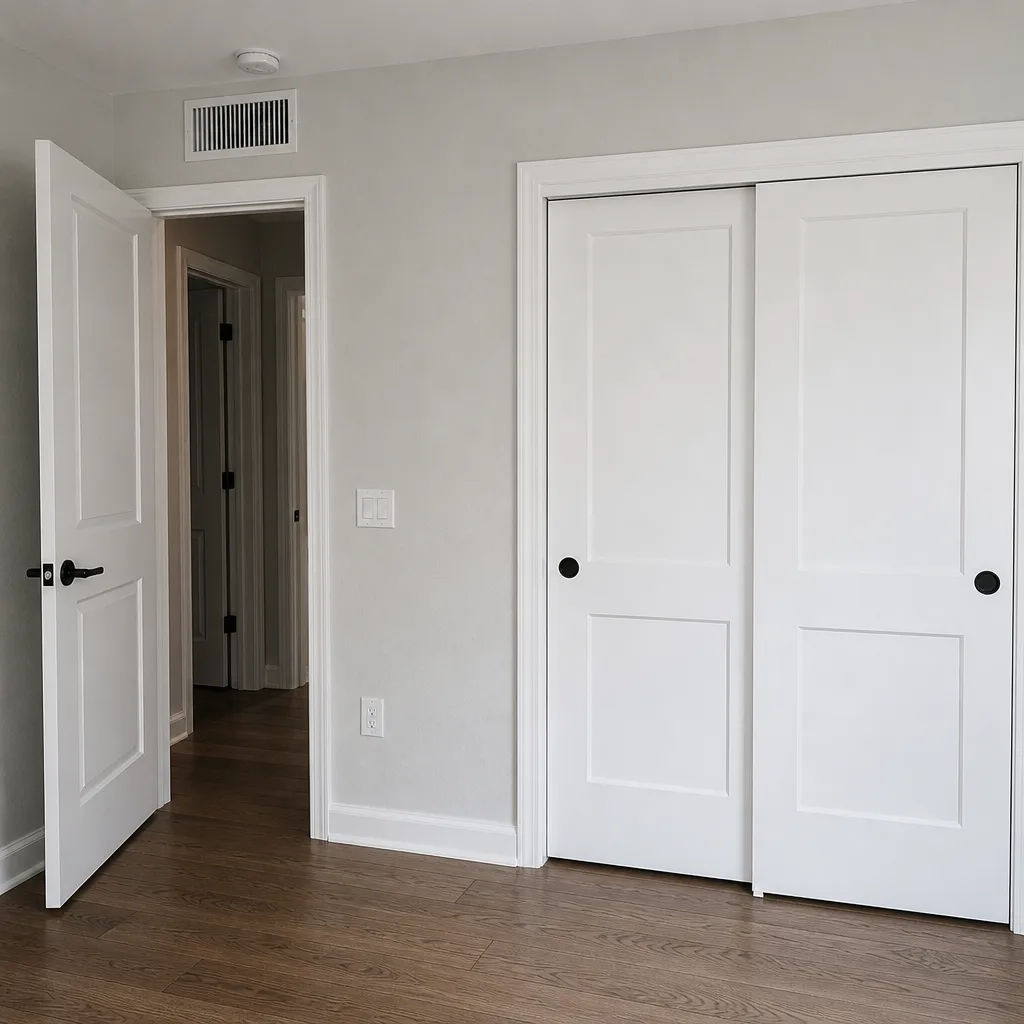 After
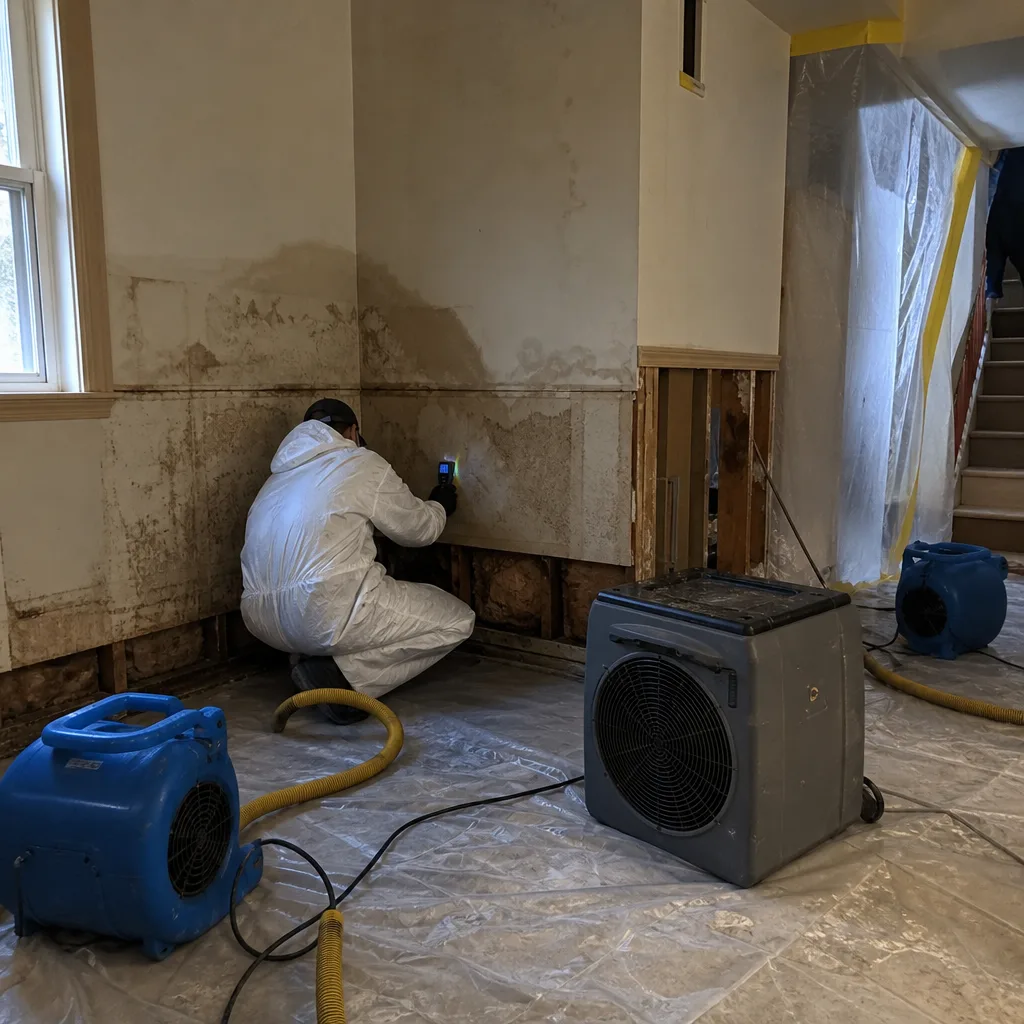 Before
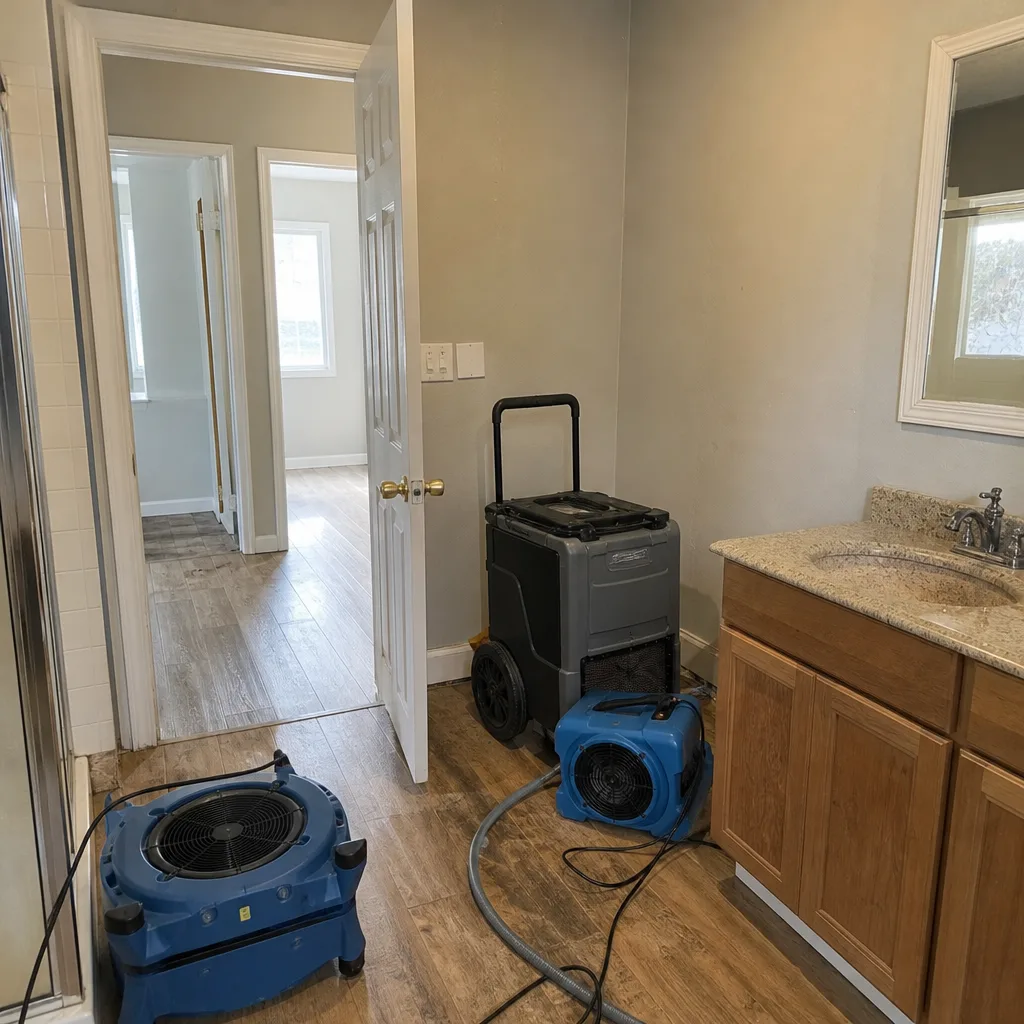 After
Common Water Damage Restoration Problems We See in Riverside Homes
- Legacy plumbing failures in pier-and-beam homes. The 1920s through 1960s bungalows in 92501 and 92506 were plumbed with galvanized steel and early copper that corrodes from Riverside’s hard water. A pinhole leak behind a wall or under the house drips for years before the floor sags and anyone notices.
- Roof flashing and stucco cracks in foothill tracts. The 92507 and 92508 subdivisions sit on slab foundations with tile roofs, and the extreme heat-to-rain swing opens hairline cracks around flashing and vents. One monsoon downpour later, water is inside the wall and you won’t know until the paint bubbles.
- Converted garages and add-ons with bad drainage. Older Riverside homes frequently have enclosed porches, garage conversions, or add-ons built below grade of the main structure. These low points collect runoff and make one small leak look like a full flood.
- Evaporative cooler overspray and drain line clogs. Riverside still has thousands of swamp coolers on older roofs. When the float sticks or the drain line clogs, water runs down the roof and into the wall plate. We catch these during roof-leak investigations more often than most people would guess.
Pricing for Water Damage Restoration in Riverside, CA
Here’s what Riverside homeowners can expect based on the jobs we scope most often:
- Emergency water extraction only: $800 to $1,800
- Full structural drying (extraction + drying + monitoring): $2,500 to $5,500
- Category 3 flood cleanup (arroyo or monsoon flood): $3,000 to $7,500
- Burst pipe restoration with selective demolition: $2,000 to $6,000
- Crawlspace drying and antimicrobial treatment (pier-and-beam homes): $1,500 to $4,000
The two biggest cost drivers in Riverside are the age of the plumbing and whether moisture has reached structural framing. If we can dry it in place with Injectidry, you save demolition costs. If a crawlspace has been soaking for years, you’re looking at joist treatment or replacement. Estimates are free, and we give you a written scope before any work starts. Call (855) 356-4970.
We Also Serve Cities Near Riverside
Our Water Damage Restoration in Riverside coverage extends to the surrounding communities of Rubidoux, Glen Avon, Pedley, and Sunnyslope. If you’re in one of these nearby areas or anywhere in the greater Riverside metro, the same dispatch line applies: (855) 356-4970.
Serving Riverside, CA — Our Local Coverage Area
We’re based in the Riverside area and know this community well. Use the map below to see our service coverage — if you’re nearby, we can almost certainly help.
FAQs About Water Damage Restoration in Riverside
Because Riverside’s older core was built on hand-dug pier-and-beam foundations that sit inches from the historic irrigation channels and arroyo floodpaths, a small supply-line leak can soak the crawlspace for years before the floor above sags. The galvanized or early copper supply lines in these homes corrode from the hard Colorado River-sourced water, and since the drip is hidden under the house, moisture accumulates slowly and spreads through joists and sills. By the time the wood-framed stucco floor shows a dip, the damage is usually structural. We run moisture mapping across every pier-and-beam crawlspace, not just a spot check. Call (855) 356-4970 if your floor feels soft or smells musty.
Within 24 to 48 hours, because mold can begin on wet drywall and organic materials that quickly in Riverside’s summer heat. Our crews are dispatched from Fullerton and typically arrive in Riverside within 90 minutes for the older core and under two hours for the foothill tracts. The faster water is extracted and air movement starts, the less selective demolition you’ll need.
Floodwater from the Santa Ana River or any arroyo overflow is Category 3 water under IICRC standards, meaning it is grossly contaminated and requires decontamination, not just drying. Porous materials like carpet, pad, and lower drywall cuts have to go; structural surfaces get antimicrobial treatment. A Category 3 job costs more than a clean-water plumbing leak because the scope is larger and the safety protocols are stricter.
Yes, and significantly. A pier-and-beam bungalow in 92501 or 92506 means crawlspace access, joist inspection, and targeted drying under the floor. A slab-on-grade tract home in 92507 or 92508 means the water travels horizontally through wall cavities and under tile, so the drying plan runs on wall injection and containment. Treating a foothill roof-flashing leak like an old-core crawlspace soak misses the actual entry point and leaves moisture hidden behind stucco or under tile.
Yes, every job includes photos, daily moisture readings logged against pre-loss conditions, and an itemized written scope. On a 1920s citrus bungalow off Magnolia Avenue in 92506, our tech traced a customer’s sudden floor sag to a corroded galvanized supply line that had been weeping into the pier-and-beam crawlspace for years. The drying logs we handed over, showing the crawlspace go from saturated to stable, made the difference at claim time. Your adjuster gets the same documentation. Call (855) 356-4970 for a free estimate and we’ll walk you through exactly what’s wet and what it takes to dry it.
Written by Noel Carrasco, Owner at Mahogany Water Damage, serving Riverside since 2010.