 Water damage drying
 Fire & smoke cleanup
 Mold remediation
 Storm response
 Sewage cleanup
 Reconstruction
Free visual inspection and a written scope of work before any mitigation begins - photos, moisture readings, and drying logs go in your claim file
The scope we write is the scope we bill. Anything new gets shown to you, in writing, before we touch it.
Get your free estimateFast, Reliable Water Damage Restoration Across Mead Valley
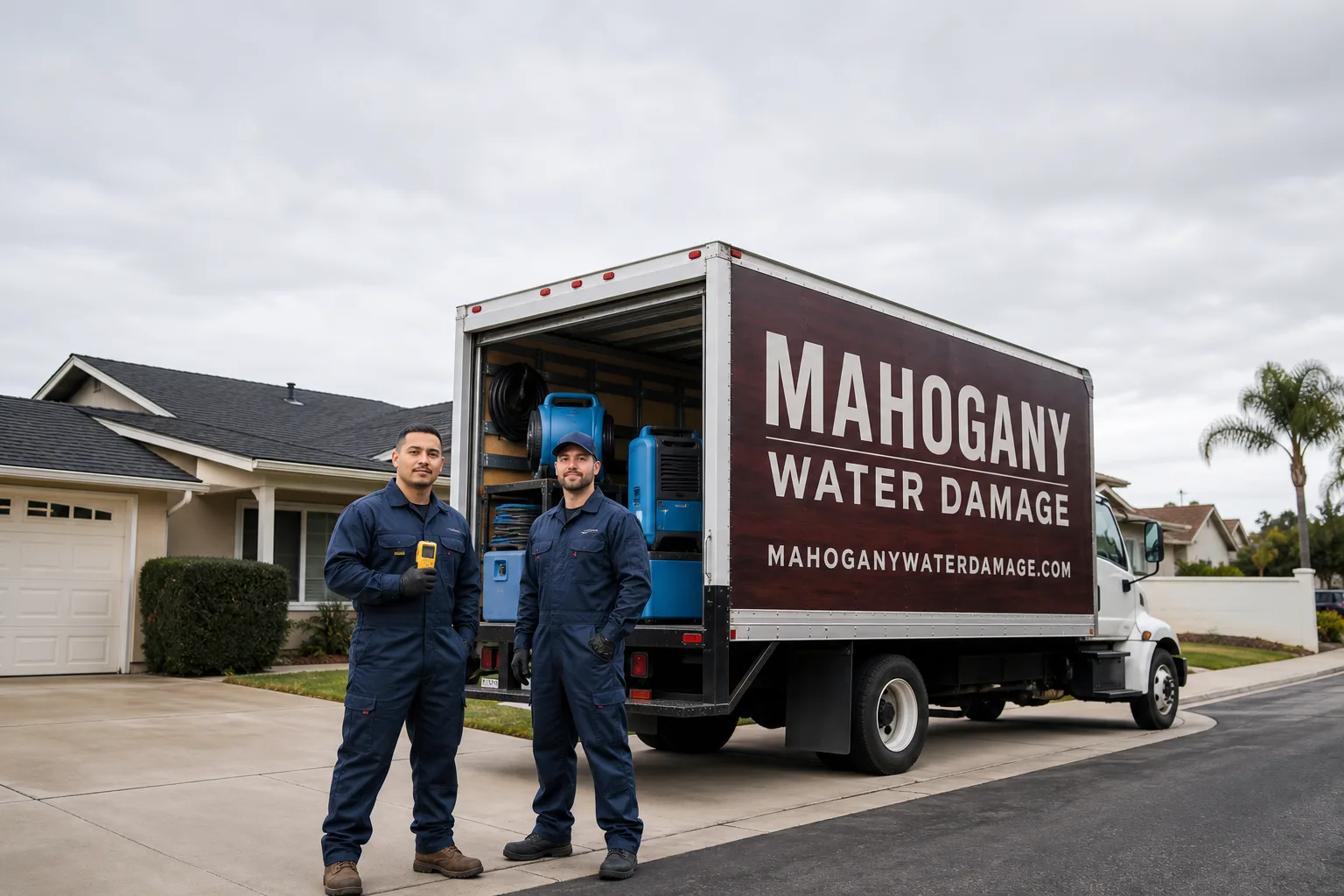
Water damage restoration in Mead Valley usually starts with a call placed at the worst possible moment: standing water in a hallway, a ceiling sagging over the kitchen, or runoff pushing under an exterior door during a winter storm. We get it. Since a February storm sent runoff across an unpaved lane off Brown Street, our team has responded to the specific ways water enters homes in this unincorporated corner of Riverside County. We’re the Water Damage Restoration team that shows up with commercial drying equipment on the truck, not a checklist and a wet vac. Call (855) 356-4970 and you’ll speak with someone who knows Mead Valley’s older ranch homes, mobile homes, and well-water realities, not a call center guessing at your zip code.
Why Mahogany Water Damage Is Mead Valley’s Preferred Water Damage Restoration Company
Mead Valley homeowners call us because the water here doesn’t behave like water in tract-home suburbs. When wind-driven rain breaches a failing exterior door on a ranch-style property off Brown Street, the damage usually sits inside the wall cavity and under the threshold, not on the tile where you can see it. We run moisture mapping on every Mead Valley job before we set a single air mover, because drying the floor while the framing stays saturated is how mold gets a three-week head start. That’s the difference between a company that dries what you point at and a crew that finds what the water actually touched.
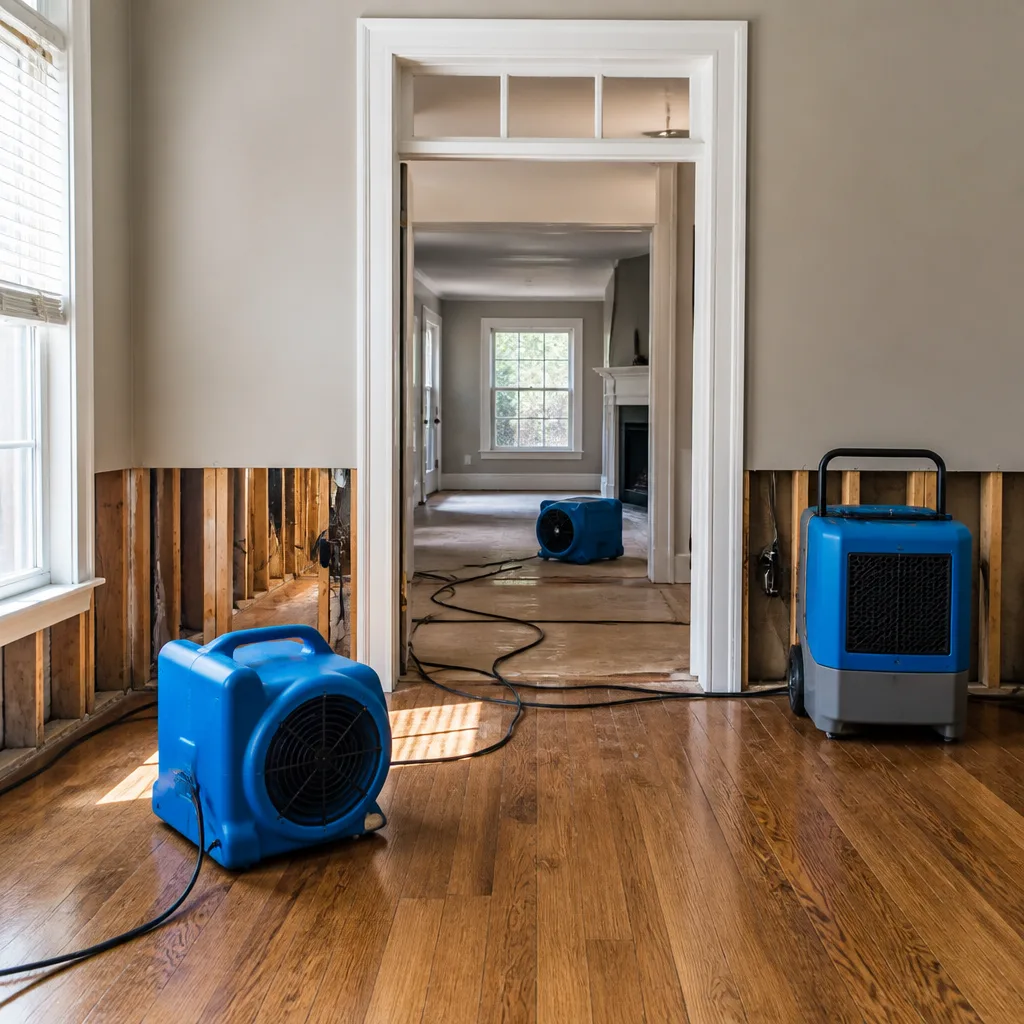
Noel Carrasco leads our restoration work with an IICRC-certified process, and the equipment on our trucks reflects what he demands on every job: Dri-Eaz and Phoenix drying systems, XPOWER air movers, and Injectidry panels for the wall and floor cavities that lesser crews would tear out and replace. We’re not renting gear from a big-box store and hoping it works. We own it, we calibrate it, and we match it to the specific failure in your home, whether that’s a burst pipe behind a mobile home skirting or runoff that pooled against a slab foundation after heavy winter rain.
Restoration work we handle
Water Extraction in Mead Valley
Water extraction in Mead Valley means pulling standing water out fast, but it also means understanding where that water came from and what it touched on the way in. In a semi-rural area where lots are large and structures sit low to the ground, extraction is rarely a simple mop-and-pump. Runoff from the surrounding hills can arrive carrying silt, and a private well failure can leave a home both wet and without any water pressure to do basic cleanup. Our extraction crews arrive with truck-mounted and portable extraction units, and we start by mapping the water’s path, not just vacuuming the puddle you found.
Standing Water Removal for Slab and Raised Foundations
Older Mead Valley homes sit on both slab and raised foundations, and each one drains differently. A slab home with water against the exterior wall needs extraction plus a careful check of the sill plate and bottom plates. A raised foundation lets water run under the house, where drying is a different job entirely. We check both before we call the extraction complete.
Storm Runoff and Category 2 Water
When hillside runoff enters a home, it’s classified as category 2 water: contaminated, not clean. The extraction process for that is different, and so is the drying and sanitation work that follows. If your unpaved road flooded and water pushed through your doors, we treat the affected areas with antimicrobial application after extraction, not just fans and time.
Emergency Water Removal in Mead Valley
Emergency water removal in Mead Valley often starts with a power outage that took out a well pump while rain was already pushing under a door. That’s two failures at once, and we see it every winter. Our emergency response here includes getting water out of the structure and checking whether the well system is still moving water. You can’t run a household cleanup on a dead well, and a crew that only extracts and never checks the pump has only done half the job.
Burst Pipe and Supply Line Failures
Older plumbing in Mead Valley homes fails predictably: galvanized supply lines corrode from the inside, and the first hard freeze or pressure spike finishes the job. We shut off the source, extract the standing water, and get drying started the same day. The longer water sits in a mobile home or ranch house, the more of the subfloor and insulation it reaches.
Wind-Driven Rain Intrusion
When wind forces rain past an exterior door seal, the visible puddle is only the start. Moisture mapping usually shows saturation extending six to twelve inches into the adjacent drywall and around the door framing. We open only what’s necessary, dry the cavity with Injectidry targeted injection, and document the rest with moisture readings for your insurance file.
Trusted Brands We Service in Mead Valley
We work on water damage from whatever plumbing, roofing, or door failure caused it, and we service the brands you already have in your Mead Valley home. When we dry out a mobile home after a supply line break, we’re working around the existing plumbing and HVAC layout, not tearing into it blind. When a ranch house off Brown Street takes wind-driven rain through the door, we’re restoring the threshold and framing, not just the drywall. Our team stocks common local parts and replacement materials for the older homes that dominate Mead Valley, and we coordinate directly with your insurance adjuster so the documentation matches what the carrier needs. One team, start to finish: the same Mahogany crew handles the extraction, the drying, and the rebuild coordination.
See the difference
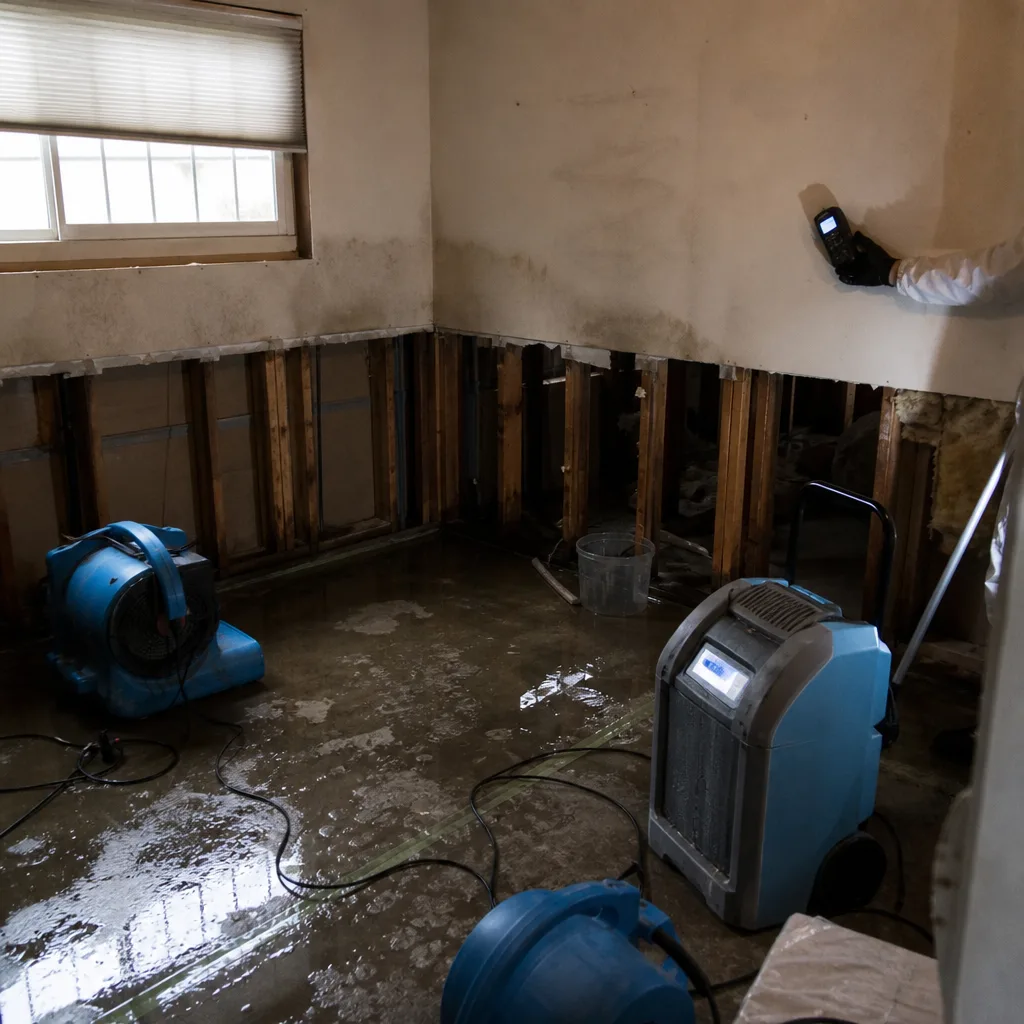 Before
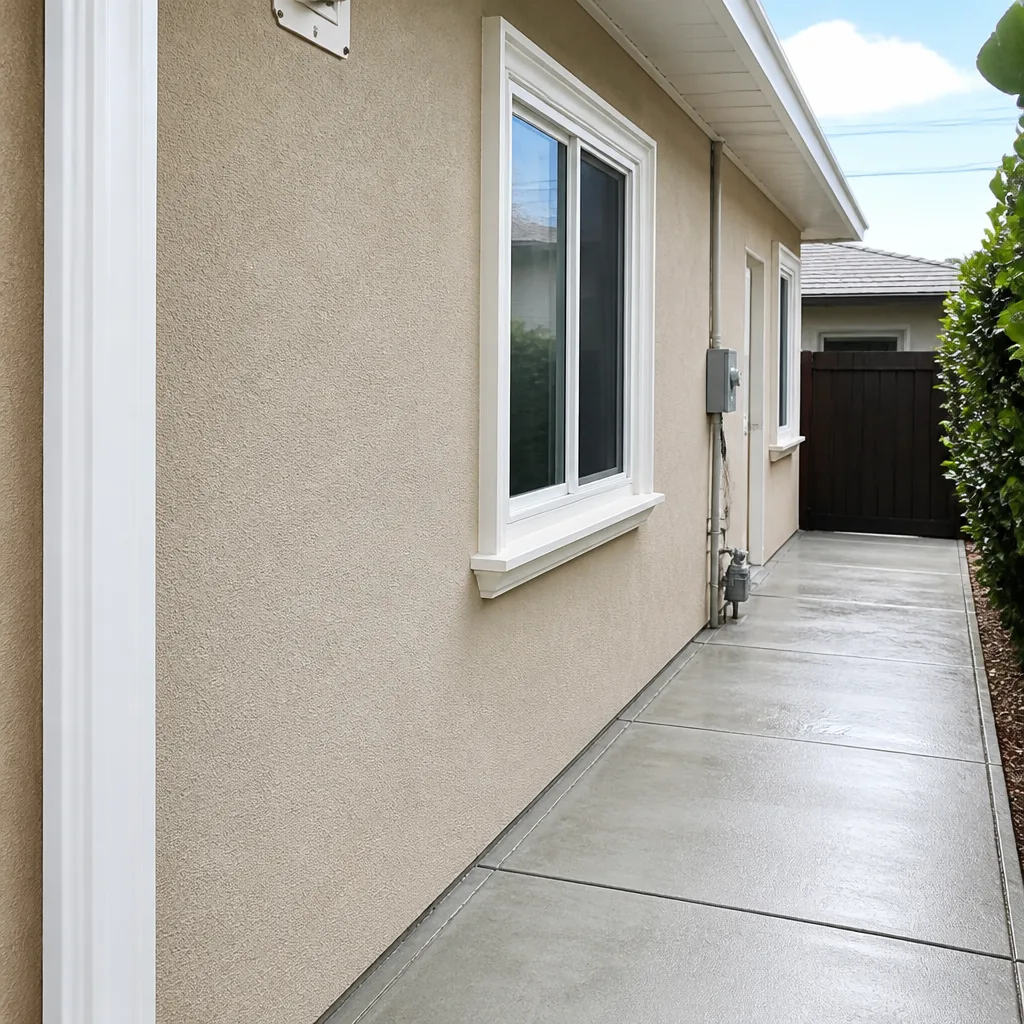 After
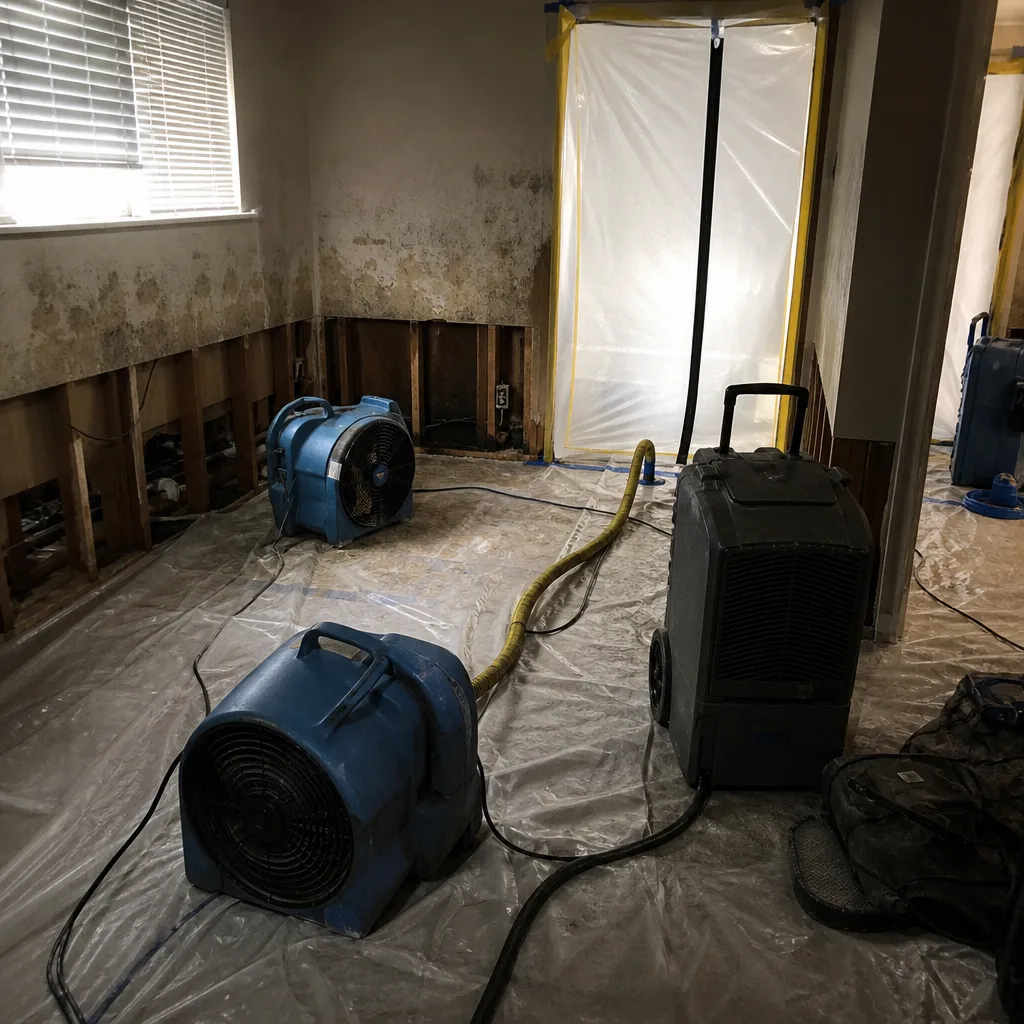 Before
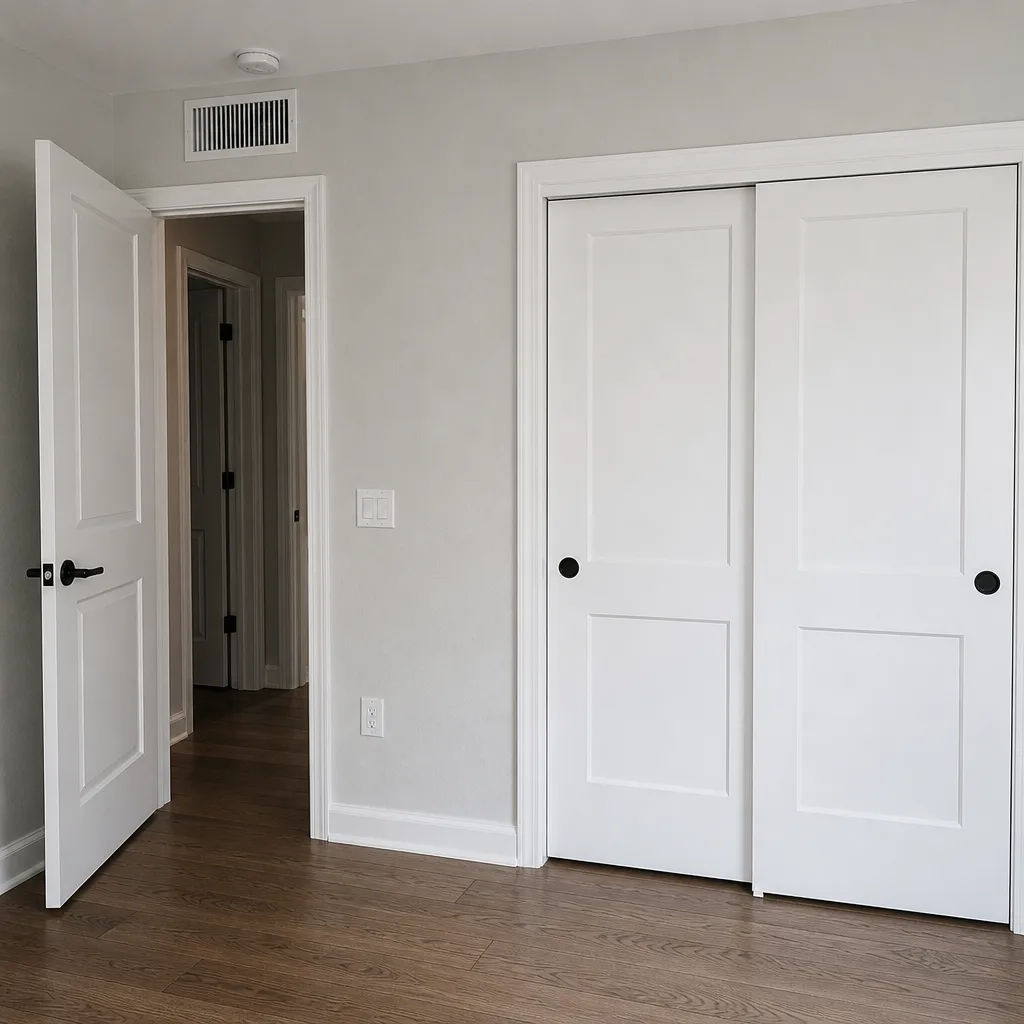 After
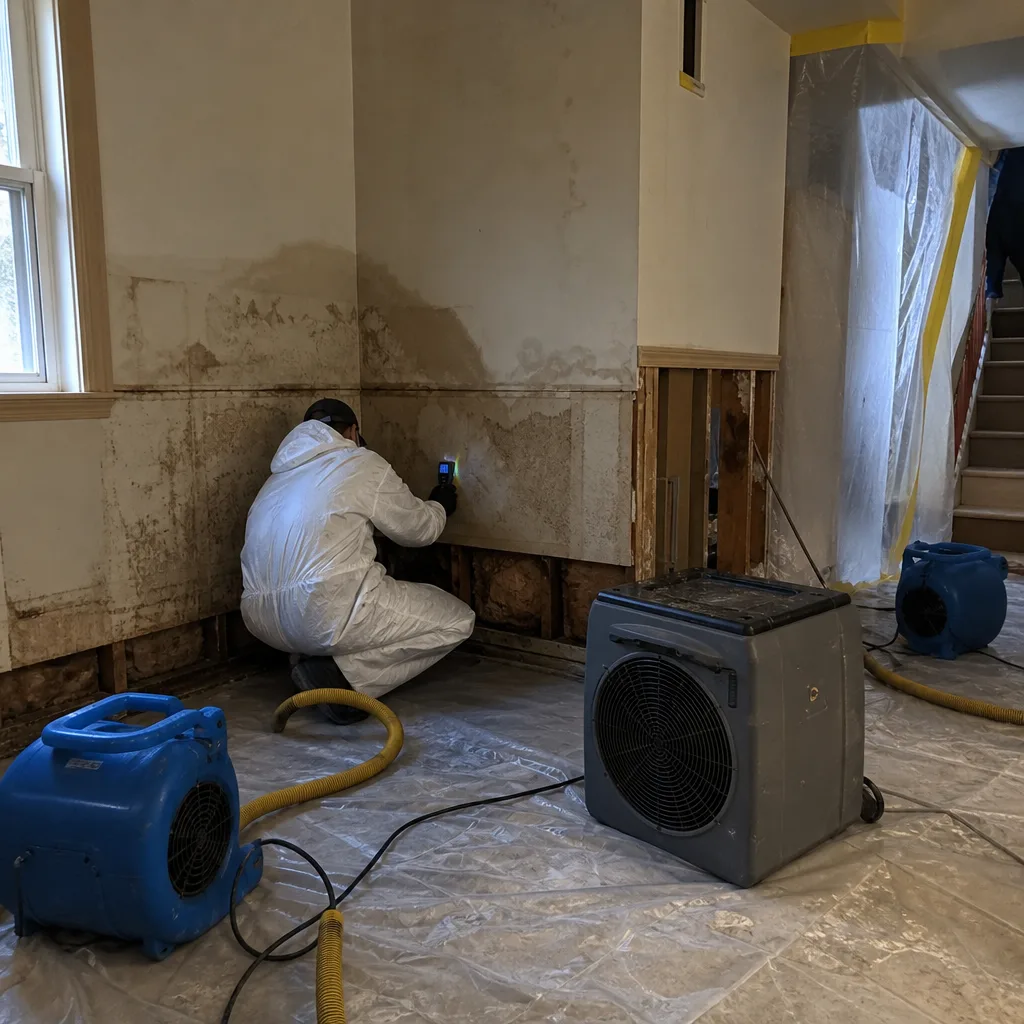 Before
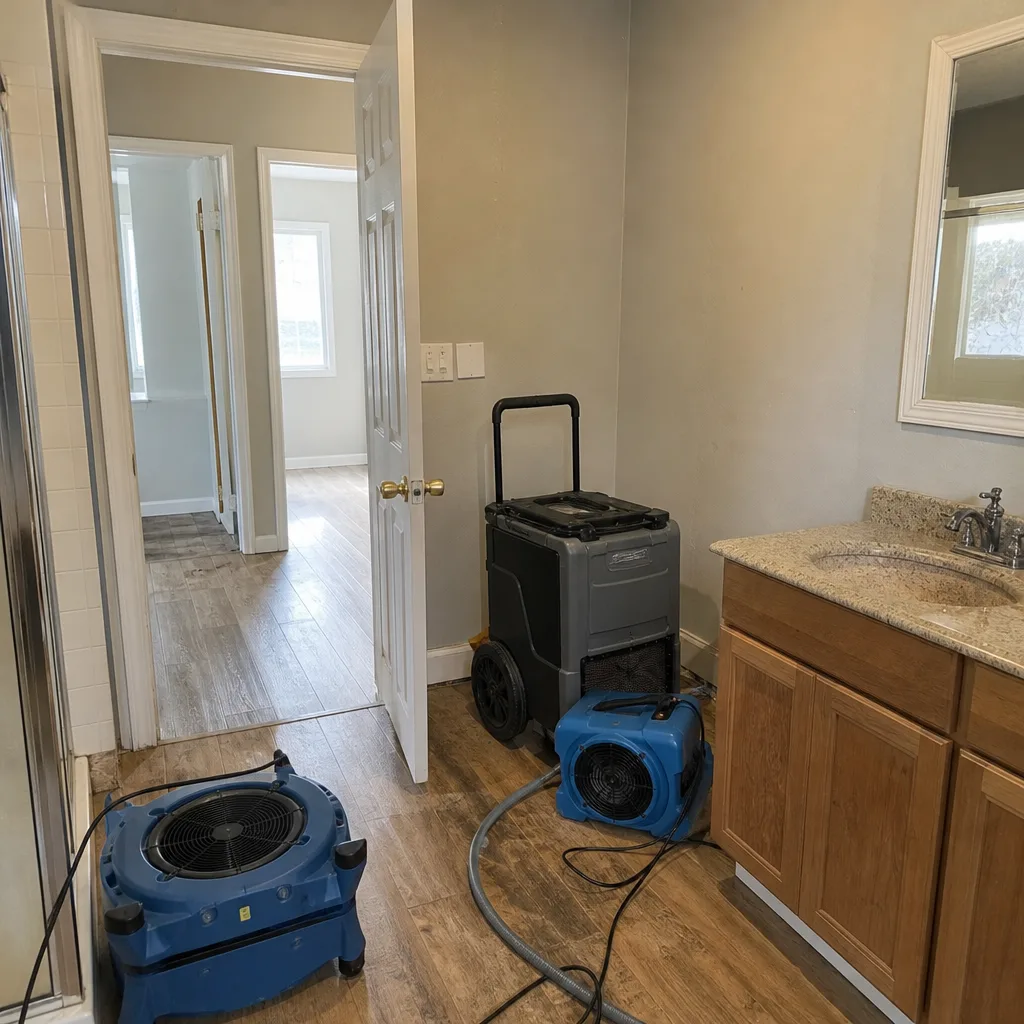 After
Common Water Damage Restoration Problems We See in Mead Valley Homes
- Well pump failures during storms. When the power goes out in Mead Valley, your well pump goes down with it. A home can be flooded and have no running water at all, which means restoration has to include a well-system check before we close the scope.
- Wind-driven rain breaching aging exterior doors. Exterior doors and thresholds on older ranch homes take the brunt of winter wind. The failure often starts weeks before the storm, with a seal that’s quietly degraded. By the time water shows up inside, the framing is already soaked.
- Heat-stressed roofs meeting the first heavy rain. Mead Valley’s summer heat bakes roofing materials for months. When the first winter storm arrives, those stressed shingles and seams leak, and the intrusion often travels inside wall cavities before it’s visible on a ceiling.
- Mobile home skirting and underfloor saturation. Mobile homes on large lots sit close to the ground, and runoff ponds under them. Water that looks like it’s only on the surface can be saturating insulation and subfloor twelve feet from where you’re standing.
Pricing for Water Damage Restoration in Mead Valley, CA
A typical water extraction and drying job in Mead Valley runs $2,800 – $5,400, depending on the size of the affected area and whether wall or floor cavities need targeted drying. Emergency water removal on a single room or hallway usually lands around $1,200 – $2,600. If storm runoff brought category 2 water into the home, expect antimicrobial application and possibly more involved drying to add to that range. Injectidry cavity drying typically adds $500 – $1,200 when walls or under-floor spaces are involved. Every job gets a written scope before work starts, and we document everything for your insurer. Call (855) 356-4970 for a free estimate, and we’ll give you real numbers for your specific home, not a one-size-fits-all menu.
We Also Serve Cities Near Mead Valley
We regularly work in Mead Valley and the surrounding communities: Perris, Good Hope, Canyon Lake, and Meadowbrook. If you’re on the edge of Mead Valley or just over the line, call us and we’ll confirm coverage for your street. Response time to these areas is typically under two hours for emergency calls.
Serving Mead Valley, CA — Our Local Coverage Area
We’re based in the Mead Valley area and know this community well. Use the map below to see our service coverage — if you’re nearby, we can almost certainly help.
FAQs About Water Damage Restoration in Mead Valley
Because Mead Valley’s unincorporated lots rely on private wells, and a storm that floods your home often kills the power that runs your well pump at the same time. If we extract the water but the well is down, you still can’t flush toilets, run a cleanup, or do basic sanitation. Our crew checks the well system on every storm-related water call here and coordinates well and septic recovery before we close the scope. Call (855) 356-4970 and ask specifically about the well check if you’re on a private well.
Yes, and it’s one of the most common hidden problems in older Mead Valley homes. A degraded door seal or worn threshold lets moisture in during light rain and heavy dew, not just big storms. By the time you see a puddle, the framing and adjacent drywall have often been slowly absorbing water for weeks. We run moisture mapping on these doors to find saturated framing before it becomes a mold problem. If your exterior door feels drafty or you see daylight around the threshold, call (855) 356-4970 for an assessment before the next rain.
Within 24 to 48 hours is the window where extraction and aggressive drying can prevent most secondary damage. After 48 hours, the water that soaked into drywall, subfloor, and insulation has likely started supporting microbial growth, and the job gets bigger and more expensive. In Mead Valley’s winter, cool nights can slow evaporation, but the damage is still happening inside wall cavities where you can’t see it. Call (855) 356-4970 the same day you discover water, and we’ll get a crew to Mead Valley fast.
Mobile homes and older ranch houses in Mead Valley sit close to the ground and often have large, flat lots where runoff ponds against the structure. The underfloor space in a mobile home traps moisture the way a basement would in other parts of the country, and it needs targeted drying, not just air movement in the living space. Ranch homes on slabs have door thresholds and sill plates that wick water in ways newer construction doesn’t. We’ve done this enough in Mead Valley to know where the water hides in these specific structures, and the drying plan accounts for it.
Yes. When water damage in Mead Valley involves a private well or septic system, we coordinate the well-system check and septic assessment as part of the restoration scope. A flooded septic field or a backed-up line is not a separate problem you should have to chase down after we leave. One team handles the extraction, the drying, and the well and septic coordination, so you’re not juggling multiple contractors while the water sits. Call (855) 356-4970 and tell us whether you’re on a well and septic up front, and we’ll make sure that’s part of our initial assessment.
Written by Noel Carrasco, Owner at Mahogany Water Damage, serving Mead Valley and surrounding communities.