
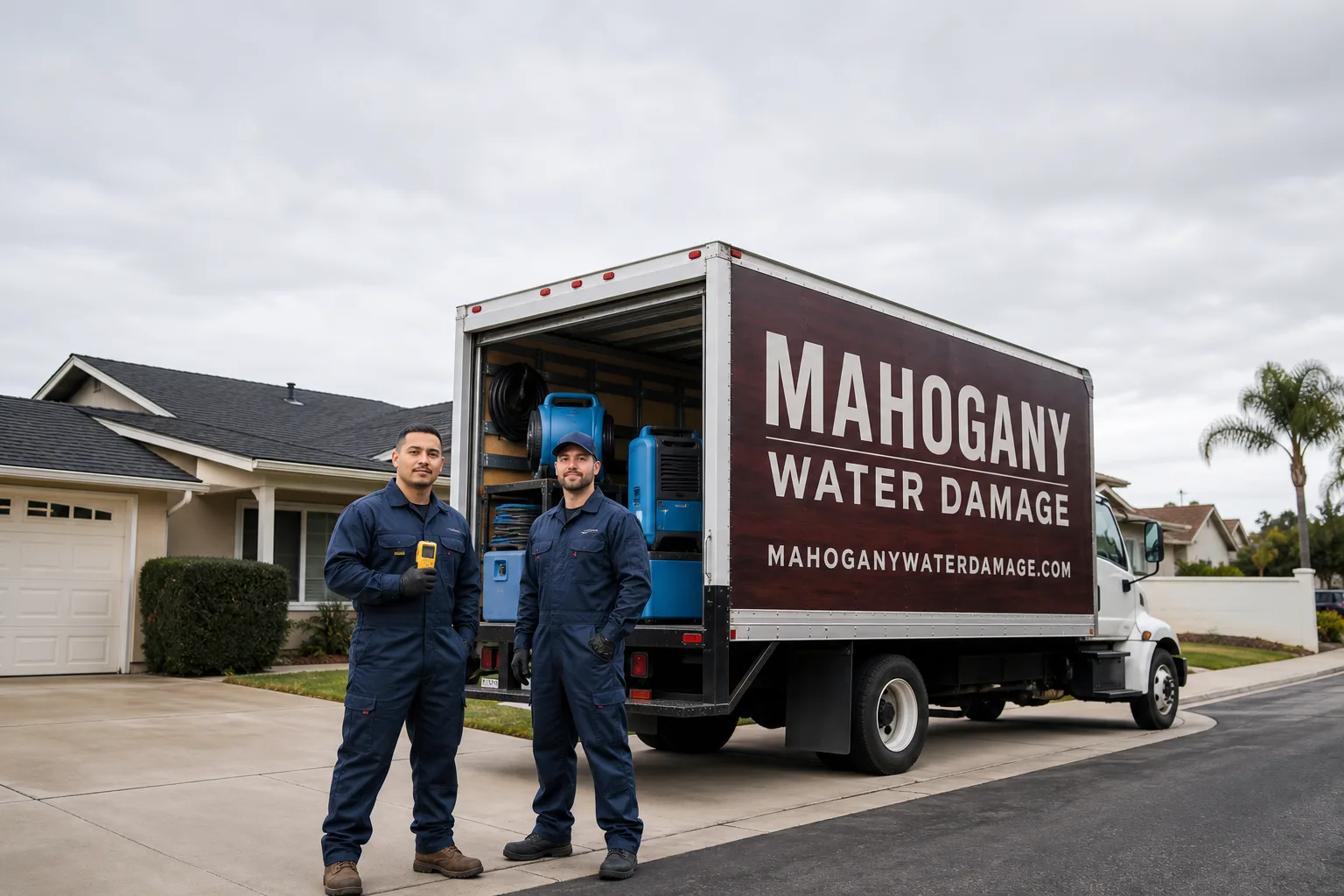
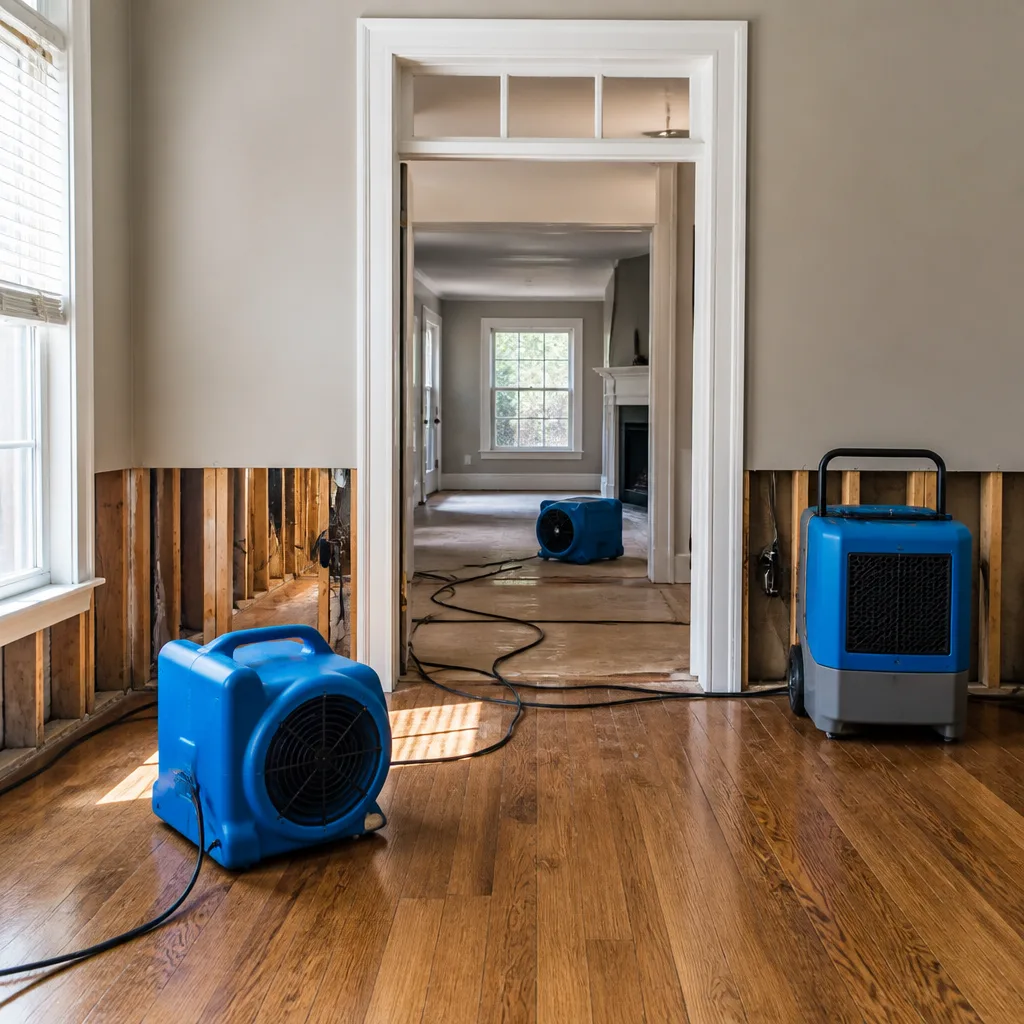
 Water damage drying
 Fire & smoke cleanup
 Mold remediation
 Storm response
 Sewage cleanup
 Reconstruction
Free visual inspection and a written scope of work before any mitigation begins - photos, moisture readings, and drying logs go in your claim file
The scope we write is the scope we bill. Anything new gets shown to you, in writing, before we touch it.
Get your free estimateFast, Reliable Water Damage Restoration Across Grand Terrace
Water damage in Grand Terrace moves differently than it does in the flatlands. Most calls we get from the 92313 zip code start the same way: the first heavy storm of the season sends runoff down from Blue Mountain, and within hours a garage, daylight basement, or patio-adjacent wall is taking on water. We respond to Grand Terrace homes within 60 to 90 minutes, because we know that mud and debris coming downslope don’t wait for a contractor to finish another job in Colton. Noel Carrasco built Mahogany Water Damage around a simple premise: show up with commercial-grade equipment, diagnose the actual source, and dry the structure to measurable standard rather than tearing out everything in sight. Call (855) 356-4970 and you’ll speak to someone who knows Grand Terrace’s hillside drainage patterns, not a dispatcher reading from a script.
Why Mahogany Water Damage Is Grand Terrace’s Preferred Water Damage Restoration Company
Grand Terrace homeowners don’t need a generalist who Googles “hillside water intrusion” on the way over. They need a crew that already knows the streets off Pico, understands how runoff moves through terraced lots, and brings equipment sized for slab-on-grade and daylight basement conditions. That’s what we do. Our IICRC-certified restoration process means every job follows independently verified standards, and our membership in the RIA keeps us accountable to ongoing industry best practices, not a static playbook from ten years ago.
We’ve worked enough homes along Barton Road and the surrounding hillside streets to know what works and what doesn’t. When we arrive in Grand Terrace, we carry Dri-Eaz and Phoenix drying systems calibrated for dense structural materials and poorly ventilated lower levels. We don’t rent equipment from a big-box store and hope it fits the job. We own it, we maintain it, and we match it to the specific failure mode. That’s why property managers and homeowners in Grand Terrace keep our number on file. That’s why our Water Damage Restoration team gets repeat referrals from this city.
Restoration work we handle
Water Mitigation in Grand Terrace
Water mitigation in Grand Terrace starts with understanding slope, not just saturation. When runoff from Blue Mountain sheets across a terraced yard and pools at a slab edge, the fix isn’t just extracting standing water, it’s catching the intrusion path before the next storm repeats it. Mitigation here means water extraction, containment, structural drying, and then a hard look at where the water came from in the first place. Ignore that second part and you’ll be calling us again in January.
Most Grand Terrace water mitigation jobs run $2,800 to $5,600 depending on the affected square footage and how far moisture has wicked into drywall and framing. A slab-edge intrusion that’s caught early might sit at the lower end. A daylight basement that took runoff for three hours before anyone noticed runs higher, because we’re dealing with saturated wall cavities and possibly contaminated water, not just damp concrete.
Runoff Path Assessment
Before we place a single air mover, we map where the water traveled. On Grand Terrace hillside lots, that usually means checking the upslope side of the house, patio drains, and retaining wall weep holes. If debris has clogged the drainage that should have carried runoff away, we document it and tell you exactly what happened, because your insurance adjuster will want that information.
Structural Drying Without Unnecessary Demolition
We use Injectidry targeted-injection drying to pull moisture from wall cavities and under slab edges without tearing out every affected surface. In Grand Terrace’s 1960s and 70s ranch homes, original wood framing and lath-and-plaster walls are worth saving when possible. Injectidry lets us dry behind walls and under flooring through small access points, which means less disruption, lower rebuild cost, and a faster return to normal.
Flooded Basement in Grand Terrace
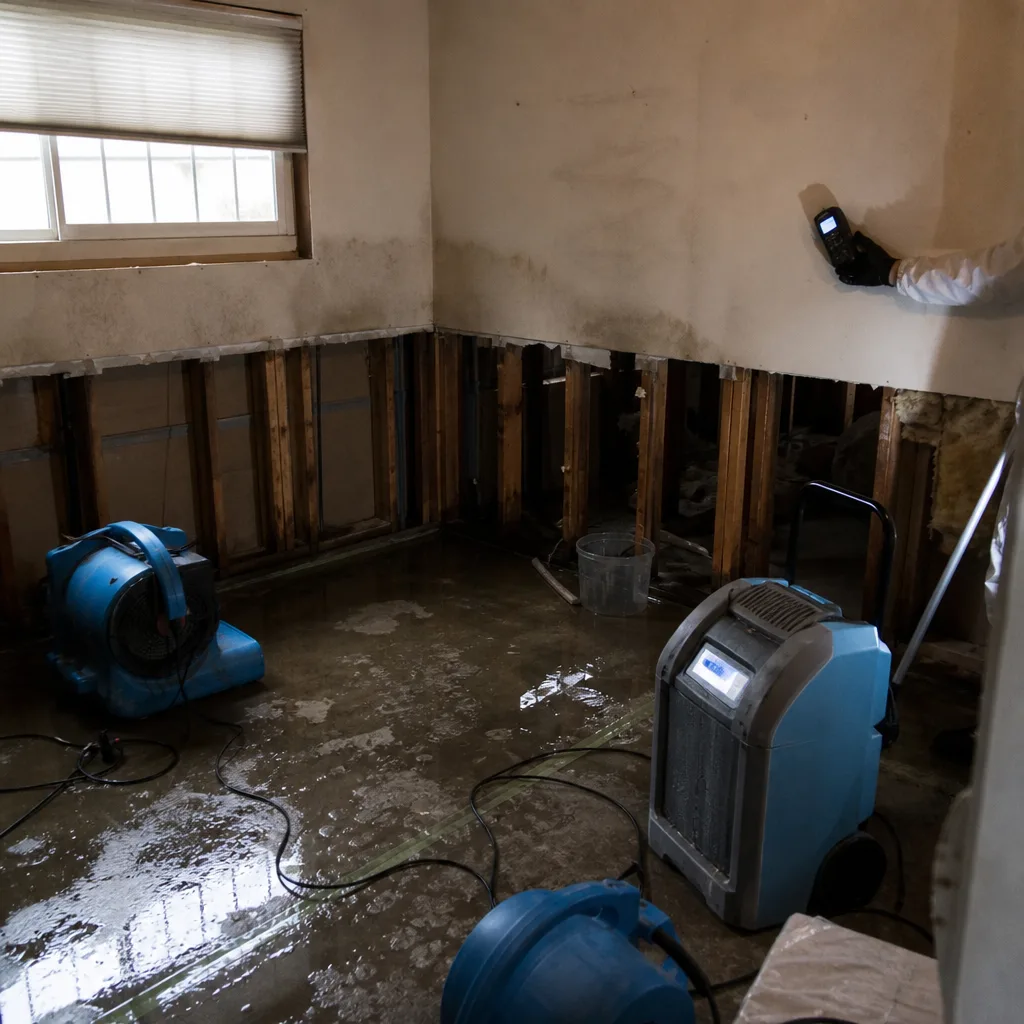
A flooded basement in Grand Terrace usually isn’t a basement in the Midwest sense. It’s a daylight basement, built into the hillside with one wall open to the lower yard, and it’s exactly where the first storm’s runoff goes when the slope gets saturated. We’ve walked into daylight basements on streets off Barton Road where mud and water sheeting downslope pushed through the lower wall line and across the slab, carrying everything from silt to leaves into the space. That’s the pattern here.
Flooded basement mitigation in Grand Terrace typically runs $3,200 to $7,800. The range depends on water category, how long the space sat wet, and whether drywall, insulation, or built-in storage needs removal. Category 3 water from exterior runoff costs more to mitigate than clean Category 1 water, because it carries contaminants that require antimicrobial treatment and more aggressive drying.
Daylight Basement Water Extraction
Extraction in a daylight basement isn’t just about pulling standing water off the floor. Water pushes into the downhill wall cavity, seeps under the slab edge, and wicks up into framing. We extract first, then use moisture meters to trace the full path before placing drying equipment. Leaving water in a wall cavity behind a finished surface in Grand Terrace’s warm climate means mold starts within 48 hours.
Mud and Debris Removal
Hill runoff brings sediment with it. That mud clogs floor drains, coats baseboards, and works into carpet pads. We remove debris before drying begins, because air movers blowing across a debris-coated slab just spread contaminants. If the drain system backed up during the event, we clear and document it as part of the mitigation scope.
Trusted Brands We Service in Grand Terrace
Grand Terrace homes carry the full spectrum of plumbing and appliance brands, and we routinely service the aftermath of failures from major manufacturers including Rheem water heaters, Moen fixtures, Whirlpool appliances, and Kohler fixtures. Because we’re working in a city with 1950s to 1980s tract housing, we also see a lot of original equipment reaching end of life, which means burst supply lines and water heater ruptures are common first-rain and cold-snap calls. We stock common fittings and replacement parts for Grand Terrace jobs so we’re not waiting on a supply house run while your slab keeps soaking. Our team is also an IFA-affiliated business, which means our internal processes are structured, documented, and consistent from assessment to completion.
Common Water Damage Restoration Problems We See in Grand Terrace Homes
- Hillside runoff breaching slab edges and patios. The first storm of the season saturates the slope above the home and sends sheet flow toward the structure. Once water pools at the slab edge, it finds every crack and gap and works its way inside. We fix the immediate intrusion and identify the drainage correction needed to stop the next one.
- Daylight basement dampness that turns into mold. Poor ventilation in below-grade and hillside-embedded spaces means moisture doesn’t dry on its own in Grand Terrace’s dry air, it just sits there. Within 48 hours, wet drywall and framing can support mold growth. We treat Category 1 and 2 water aggressively in these spaces because the stakes are higher than in a ventilated above-grade room.
- Aging cast-iron and galvanized supply lines on terraced lots. Many Grand Terrace homes built between the 1950s and 1980s still carry original plumbing. When those pipes fail, they often fail behind walls or under slabs on the downhill side of the house. That means water travels before anyone notices, which is why we moisture-map the full structure, not just the visible wet spot.
- Clogged sump pumps and floor drains from debris. Mud and leaves from storm runoff can block the very drains that should be protecting a hillside home’s lower level. Once a drain or sump fails, water pools silently and escalates the contamination level. We clear blockages as part of mitigation and document the condition for your insurer.
See the difference
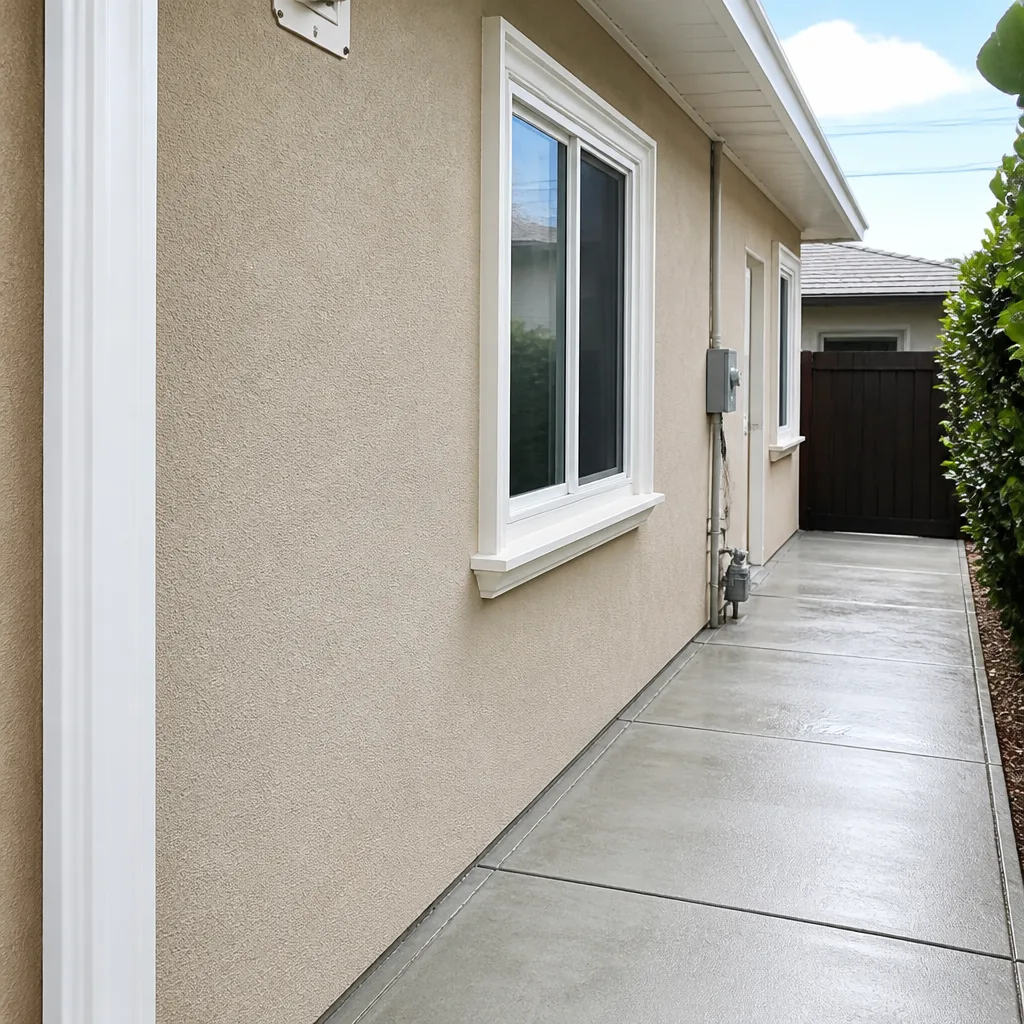
 Before
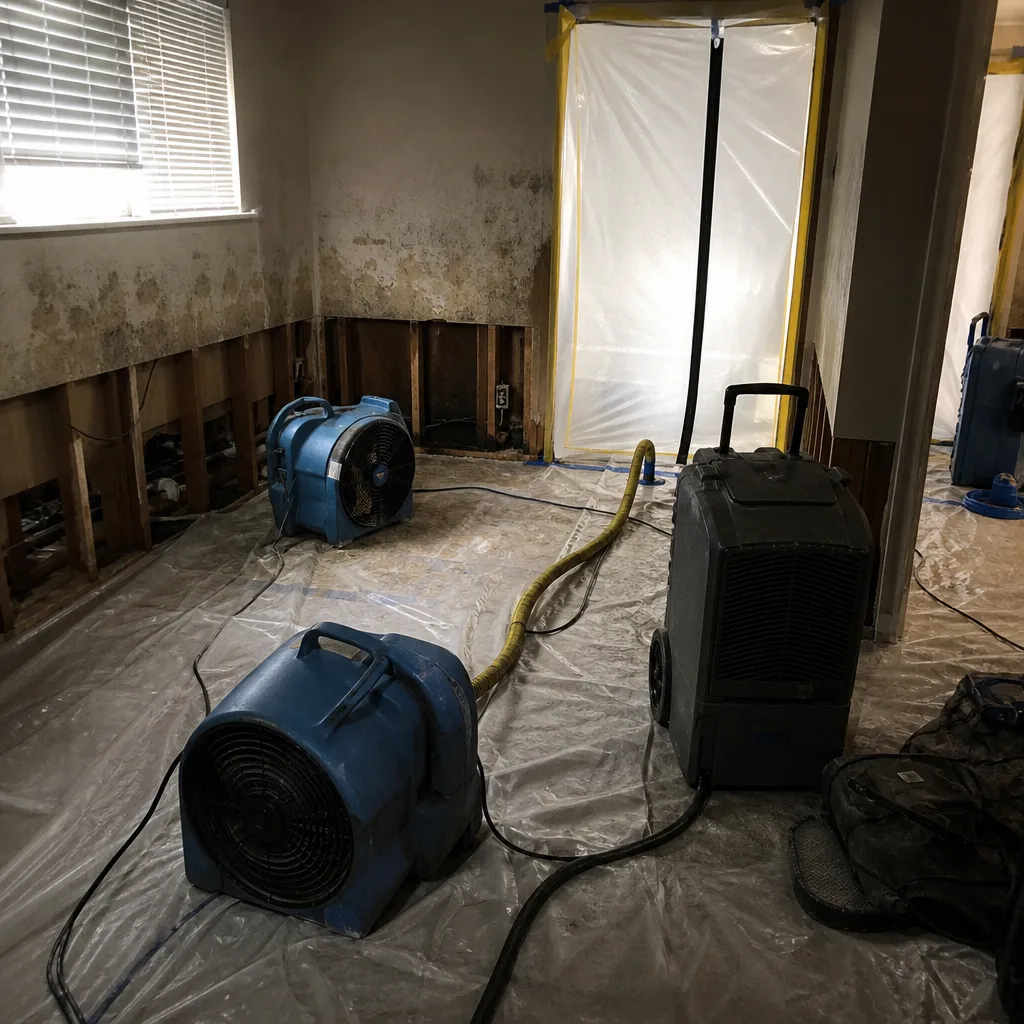
 After
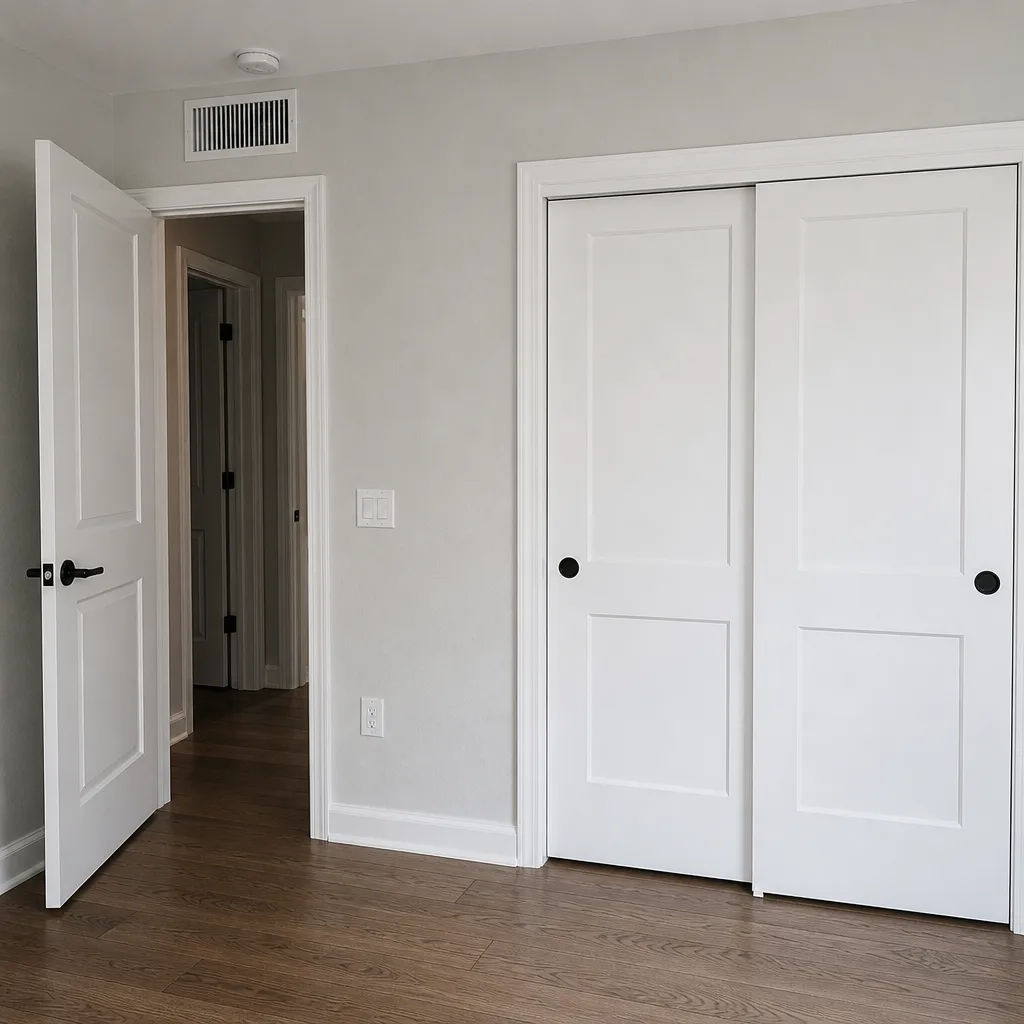
 Before
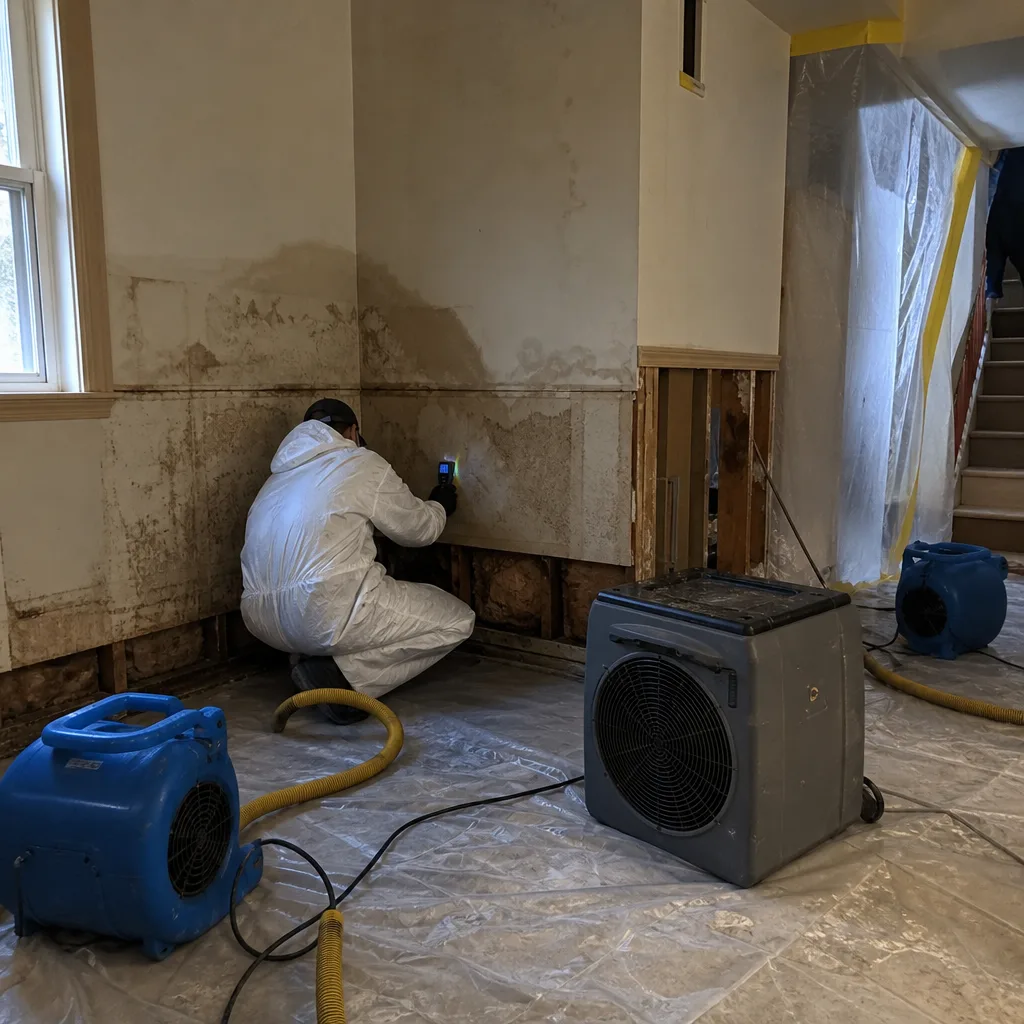
 After
 Before
 After
Pricing for Water Damage Restoration in Grand Terrace, CA
Here’s what Grand Terrace homeowners can expect to pay, based on the calls we’ve handled across 92313:
- Water mitigation (hillside runoff into slab edge or wall): $2,800 – $5,600
- Flooded daylight basement extraction and drying: $3,200 – $7,800
- Ceiling or roof leak water damage (single room): $1,400 – $3,200
- Burst pipe inside wall or ceiling: $2,200 – $5,400 depending on access and extent
What drives cost in Grand Terrace specifically is the slope factor. Hillside homes often mean more affected surface area on the downhill side, harder access for drying equipment, and the need to address drainage corrections alongside structural drying. We provide a written scope before work starts, so you won’t get surprised by a change order halfway through. Estimates are free. Call (855) 356-4970 and we’ll walk your property and give you real numbers.
We Also Serve Cities Near Grand Terrace
Our crews work throughout the Inland Empire, including Highgrove, Colton, Loma Linda, and Rubidoux. If you’re looking for Water Damage Restoration in Grand Terrace or a neighboring community, one call gets a crew that knows both the flat-lot flooding patterns of Colton and the hillside runoff challenges that make Grand Terrace different. We dispatch across the region from our Fullerton headquarters.
Serving Grand Terrace, CA — Our Local Coverage Area
We’re based in the Grand Terrace area and know this community well. Use the map below to see our service coverage — if you’re nearby, we can almost certainly help.
FAQs About Water Damage Restoration in Grand Terrace
Your hillside home floods because the first heavy rain of the season hits a slope that’s been baked dry all summer. The ground can’t absorb water fast enough, so runoff sheets downslope and finds the lowest entry point, which is often a slab edge, patio door threshold, or daylight basement wall line. The fix isn’t just drying the space, it’s addressing the drainage path so the next storm doesn’t repeat the same intrusion. Call (855) 356-4970 for an assessment that covers both the damage and the source.
Mold can begin growing on wet drywall and framing within 24 to 48 hours in Grand Terrace’s warm inland climate, especially in poorly ventilated daylight basements and wall cavities. This is why we prioritize same-day equipment placement on hillside-adjacent structures. The faster we map moisture and set drying, the less likely you’ll need a separate mold remediation scope.
Category 1 is clean water from a supply line or water heater. Category 2 is contaminated water that has been sitting or has picked up soil and debris, like runoff that pooled at a patio edge before entering. Category 3 is unsanitary water carrying significant contaminants, which happens when hill runoff carries mud, animal waste, or drain backup into your home. Each category changes the mitigation scope, the drying protocol, and the cost, so we determine the category before we quote.
Yes. Daylight basements are one of the most common water damage sites in Grand Terrace because the downhill wall faces the slope. We extract standing water, remove debris, map moisture through walls and slab edges, and dry the space with Dri-Eaz air movers and Phoenix dehumidifiers. We also assess the exterior drainage that failed, because drying a daylight basement without fixing the runoff path means doing the job twice.
Yes. We provide daily moisture readings and drying logs every time we place equipment in a Grand Terrace home. These logs document the starting moisture content, the daily drying curve, and the final readings when we hit dry standard. That documentation is exactly what a claims adjuster needs, and we coordinate with your insurer directly so you’re not stuck managing the paperwork while your house is torn apart.
Grand Terrace Water Damage Restoration That Accounts for the Slope
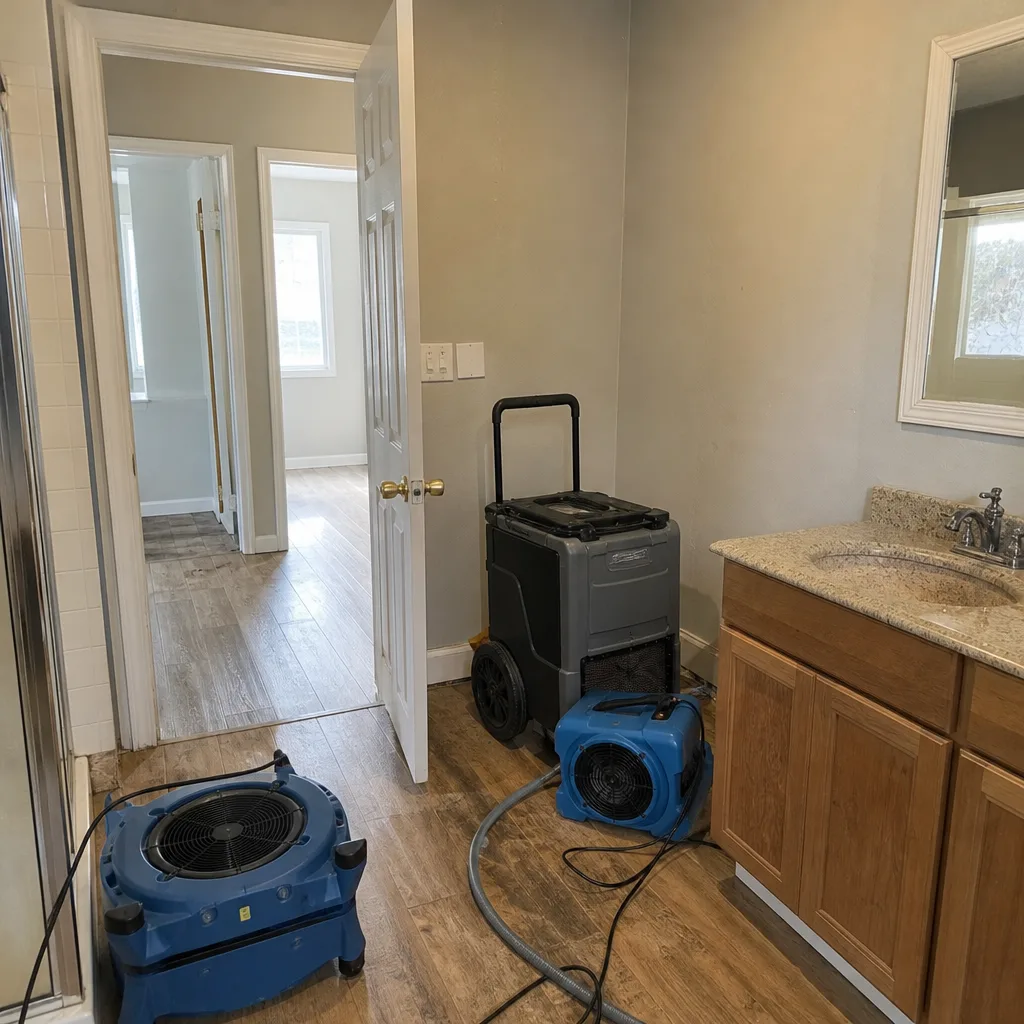
Most restoration companies treat every city the same way. They arrive, extract water, set fans, and leave. That works on a flat lot in Colton or Riverside, where flooding follows predictable pooling patterns. Grand Terrace is different. Blue Mountain runoff shapes the entire water damage picture here. We responded to a call on a steep street off Pico where the first storm of the season sent mud and water sheeting into a daylight basement, soaking the slab and wicking up drywall. Our crew used water extraction and moisture mapping to trace the path, set up containment, and deployed Dri-Eaz air movers and a Phoenix dehumidification unit to dry the structural framing. After an antimicrobial treatment and three days of structural drying, moisture readings returned to pre-loss condition, and we provided drying logs for the homeowner’s insurance claim.
That’s the standard every Grand Terrace home gets, because anything less leaves water in places that will fail later. Call (855) 356-4970 for a free estimate. We serve all of Grand Terrace, 92313, from older ranch homes on terraced lots to multi-level homes on the hillside streets above Barton Road. One team, start to finish.
Written by Noel Carrasco, Owner at Mahogany Water Damage, serving Grand Terrace and the Inland Empire.