

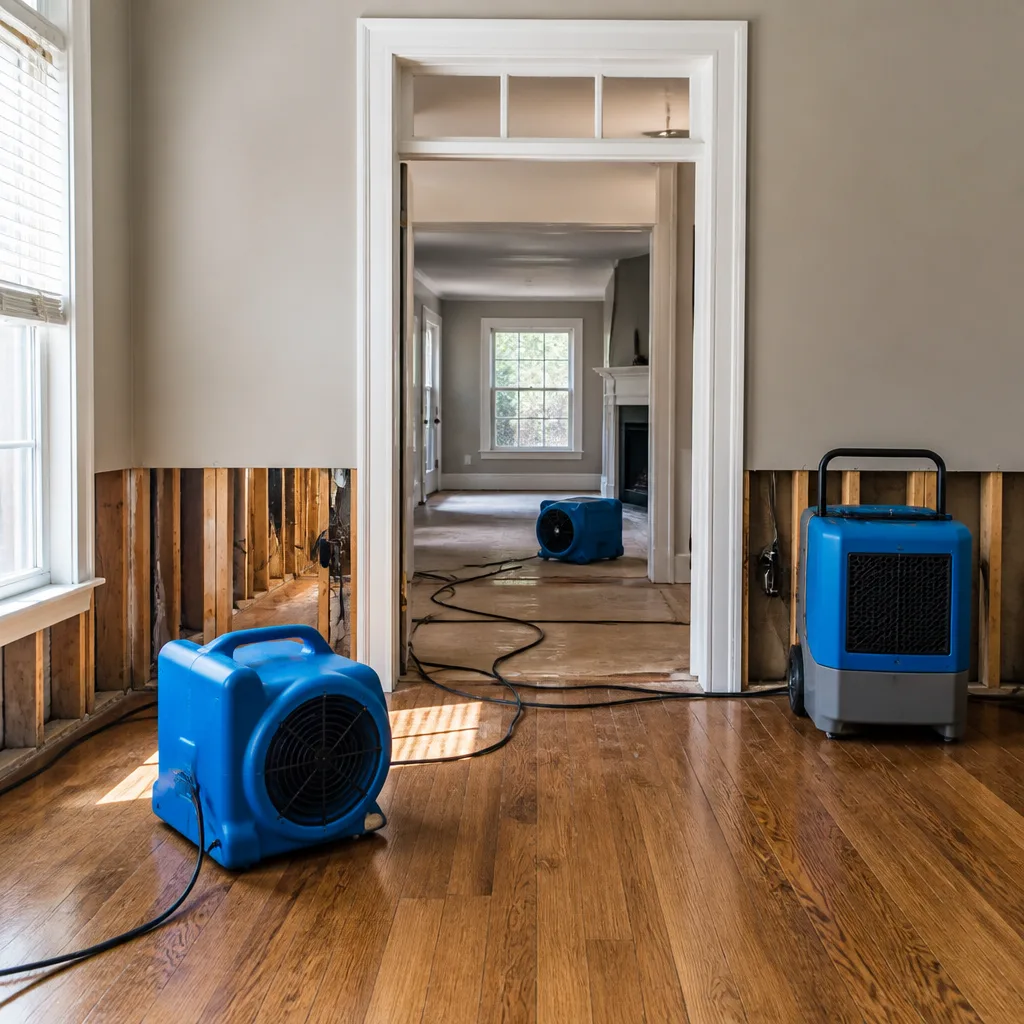
 Water damage drying
 Fire & smoke cleanup
 Mold remediation
 Storm response
 Sewage cleanup
 Reconstruction
Free visual inspection and a written scope of work before any mitigation begins - photos, moisture readings, and drying logs go in your claim file
The scope we write is the scope we bill. Anything new gets shown to you, in writing, before we touch it.
Get your free estimateRestoration work we handle
See the difference
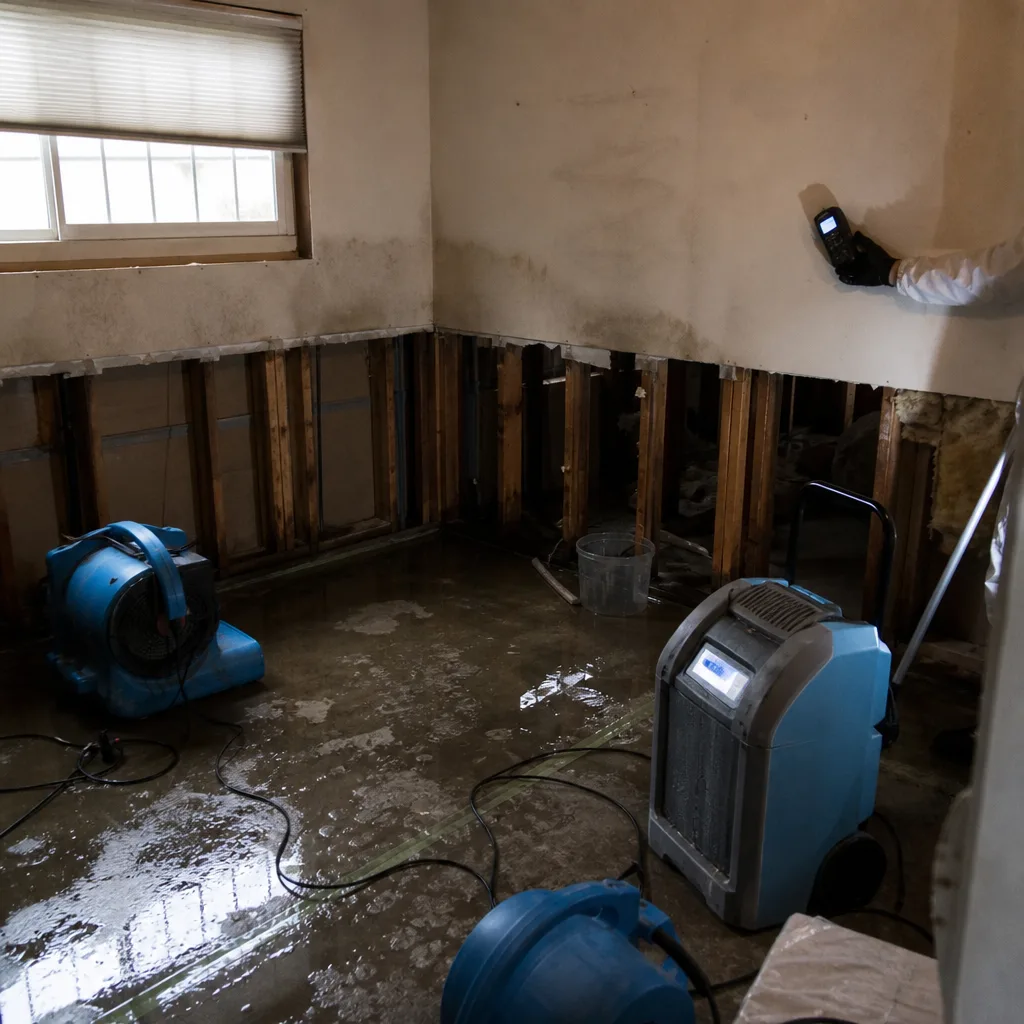 Before
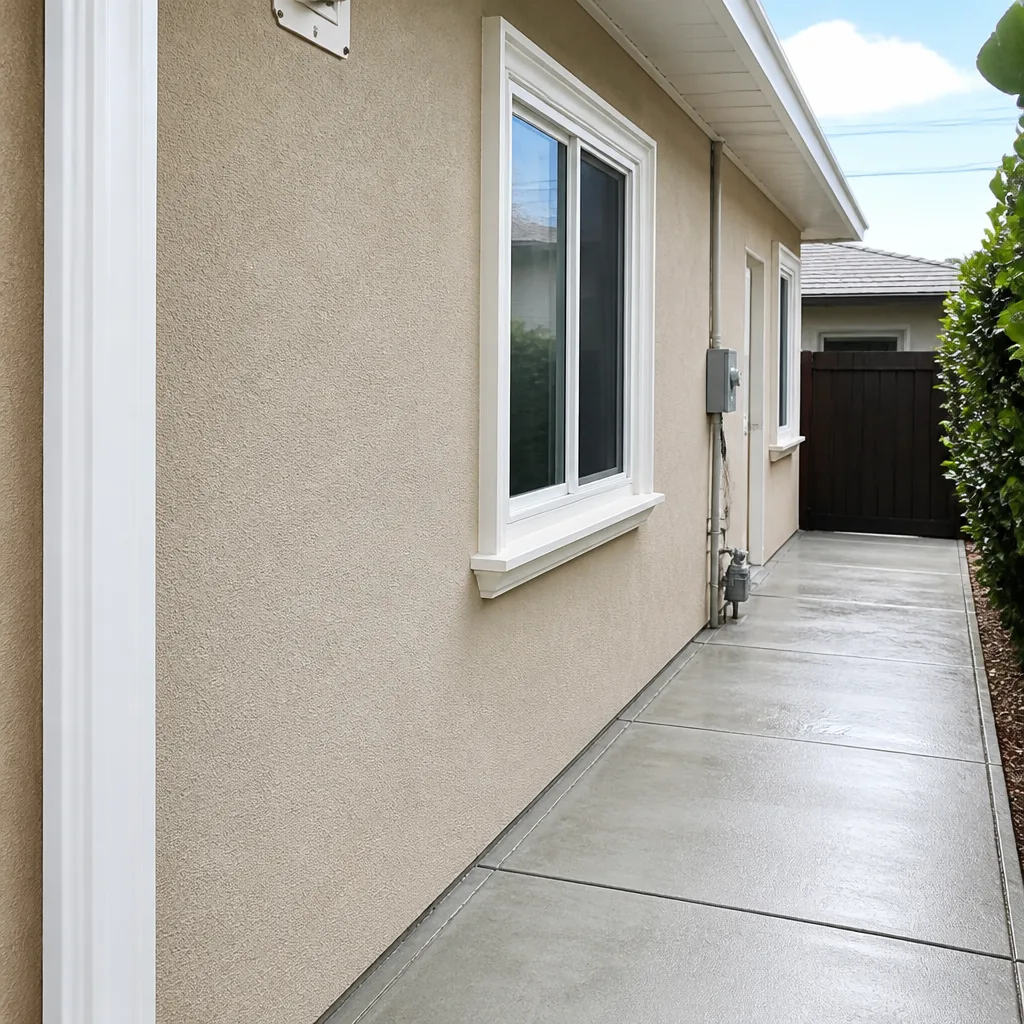 After
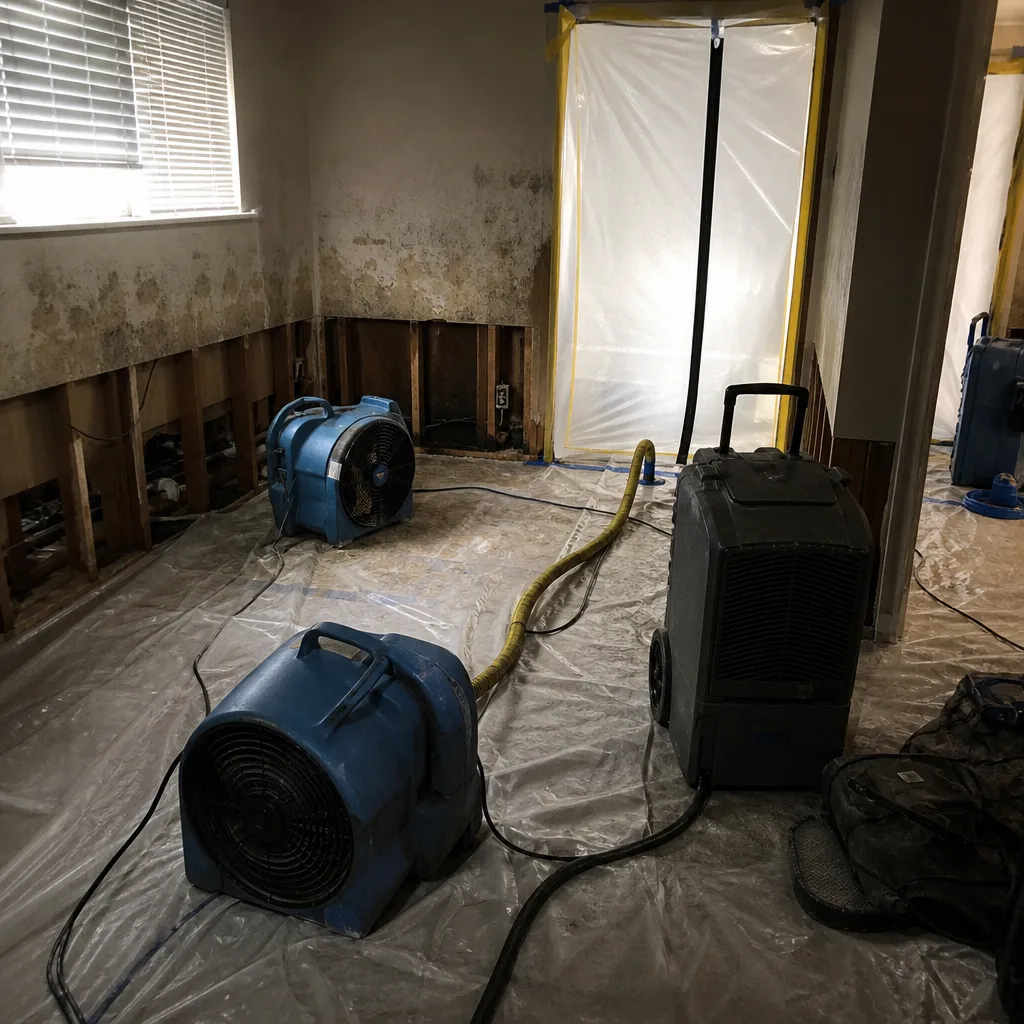 Before
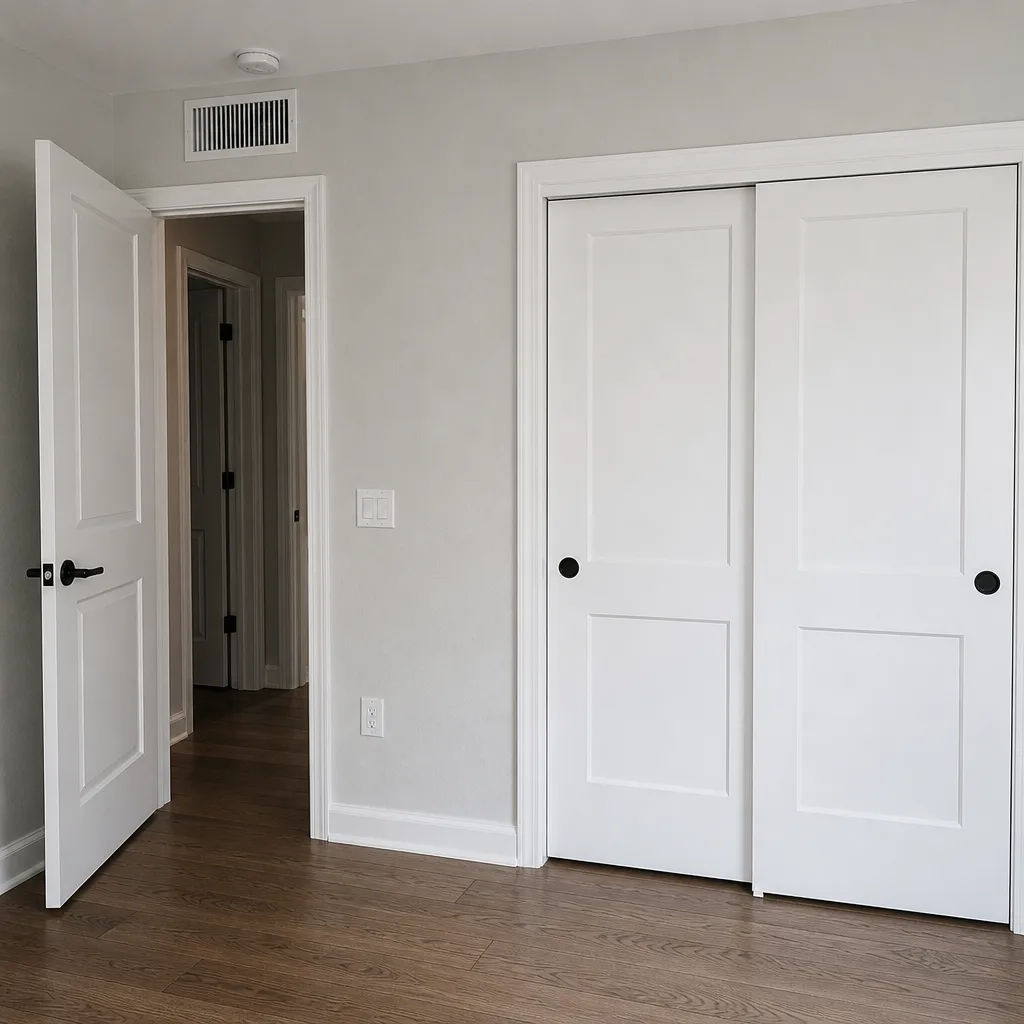 After
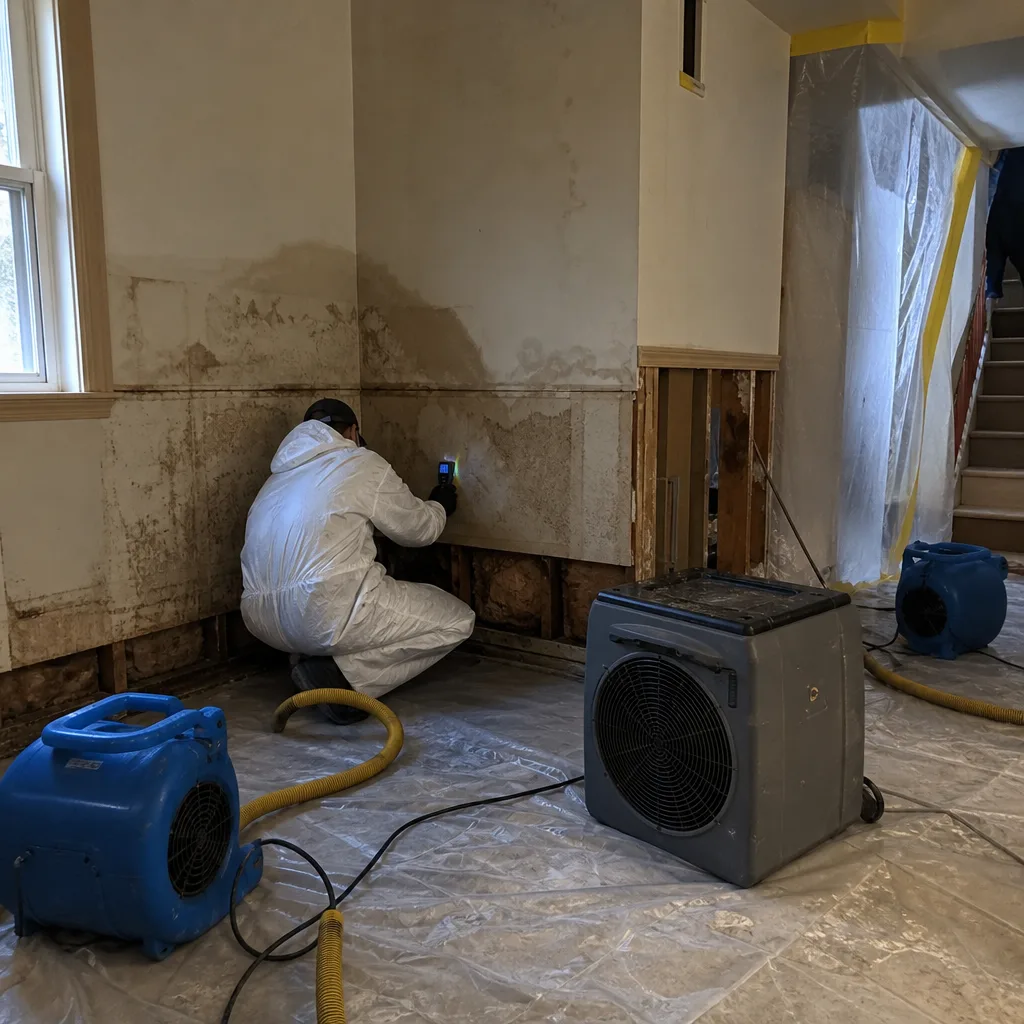 Before
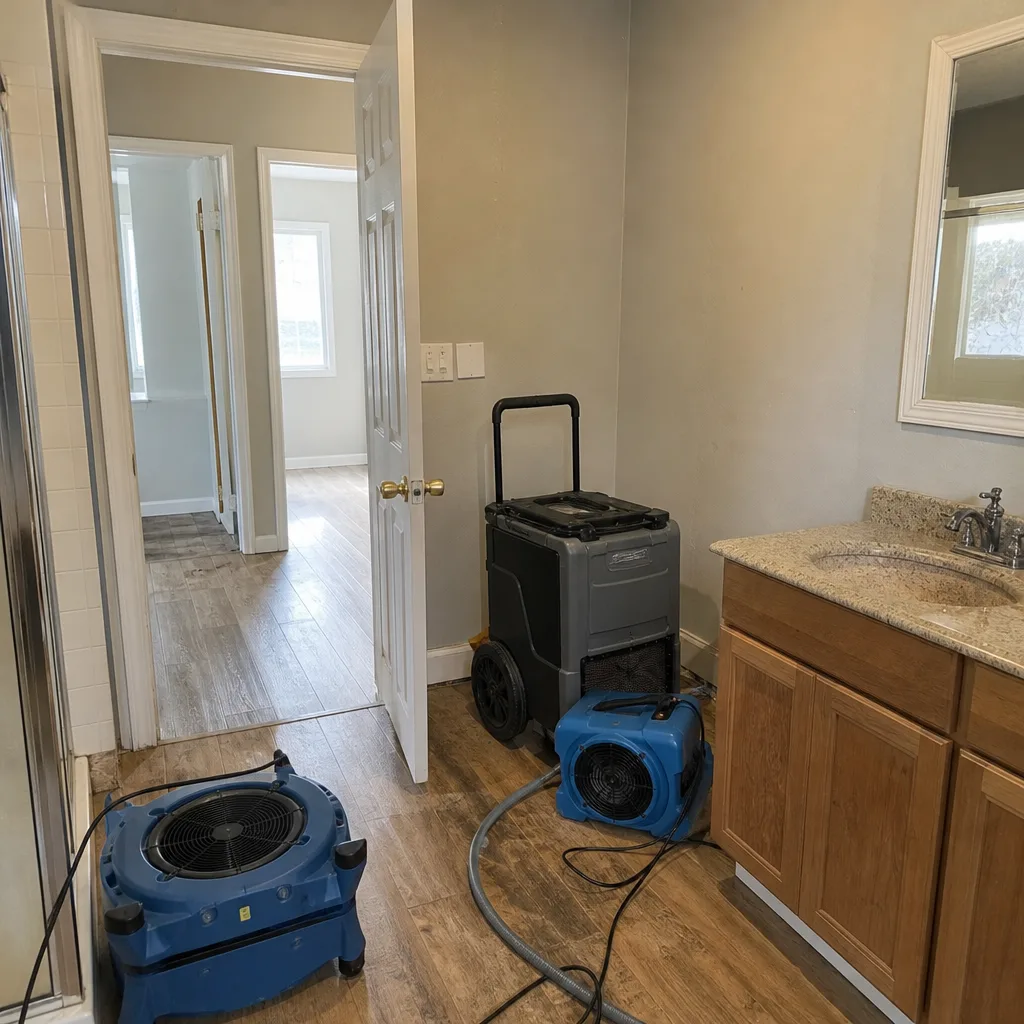 After
How Much Does Sewage Cleanup Cost in Fullerton?
Most residential sewage cleanup jobs in Fullerton run between $1,200 and $4,500, with the typical single-bathroom backup landing around $2,100. A small, contained overflow that gets extracted and sanitized the same day can come in under $900. A Category 3 sewage loss that has soaked into subfloor, drywall, or cabinetry, or one that involves a condo stack serving several units, can climb past $7,000 once material removal, drying, and rebuild are counted.
Those numbers cover the whole job: emergency extraction, disinfection, drying, and putting the space back to a verifiable standard. What you pay depends mostly on how far the contamination spread and how long it sat before anyone called.
Sewage Cleanup Cost Breakdown (2026)
Sewage is classified as Category 3 water, which means it’s grossly contaminated with pathogens and requires disinfection, not just drying. That’s the single biggest reason sewage cleanup costs more than a standard water-damage job. Here’s how the line items stack up in the Fullerton market:
| Line item | Typical 2026 range |
|---|---|
| Emergency call-out & assessment | $0 – $250 (often waived with the job) |
| Sewage extraction & haul-away | $350 – $1,100 |
| Antimicrobial disinfection (per room) | $150 – $450 |
| Contaminated material removal (drywall, flooring, insulation) | $400 – $2,000 |
| Structural drying (Dri-Eaz / Phoenix air movers & dehus) | $500 – $1,800 |
| Cavity drying with Injectidry (saves walls that would otherwise be torn out) | $300 – $900 |
| Subfloor or slab sanitation | $250 – $800 |
| Rebuild: drywall, baseboard, paint, flooring | $600 – $3,000+ |
| Contents cleaning or disposal | $100 – $600 |
Category 1 (clean water) losses cost less because they don’t demand the same disinfection protocol. Category 3 sewage isn’t negotiable there; anything the waste touched has to be treated or removed. The other big swing factor is timing. A backup discovered within an hour usually stays contained to one room. One that sits overnight while a family waits for a plumber and then decides in the morning soaks through vinyl, into the subfloor, and up the drywall’s lower 12 to 24 inches, and that’s where the number jumps.
What Affects Sewage Cleanup Pricing in Fullerton
- Where the backup originated. A toilet overflow from a clogged branch line is a smaller job than a main-line backup that pushed waste up through a floor drain. Main-line events in older Fullerton homes near downtown often flood 100 to 300 square feet in a single push, and that changes the scope fast.
- Slab versus raised foundation. A lot of Fullerton housing stock built between the 1920s and 1960s sits on raised foundations with a crawlspace. When sewage reaches the crawlspace, you’re drying a dark, low-clearance space and treating joists and subfloor, which adds labor. Slab homes trap moisture under flooring instead, which can mean pulling more flooring to reach it.
- How long the contamination sat. Time is the cost multiplier. Sewage that’s been in place 24 to 48 hours has wicked into materials that were dry the day before, and mold can begin colonizing damp organic material within that window.
- Number of units or rooms involved. A single bathroom is straightforward. A multi-unit building with a shared stack means coordinating access, isolating the affected areas, and documenting each unit separately for insurance, all of which adds time and cost.
- Whether walls and cavities can be saved. This is where equipment separates estimates. Precision cavity drying lets us keep wall assemblies that a tear-out crew would demolish. Fewer materials removed means lower rebuild cost and less disruption.
- Insurance status and documentation. Most homeowner policies cover sudden sewage backups only if a sewer-backup rider is on the policy. Clear moisture readings, photos, and a documented scope move a claim through faster, and a well-documented job often gets approved for full remediation rather than a partial payout.
How to Save on Sewage Cleanup
The honest way to save money is to shrink the job before it grows. A few things that genuinely lower the bill:
- Call for cleanup the same day, not the next morning. Contained sewage is a smaller, cheaper job. Every hour it soaks, the material-removal line climbs.
- Turn off water to the fixture or the house if you can safely reach the valve. Stop the source before the crew arrives. Don’t wade into standing sewage to do it if the panel or valve is in the wet area; that’s a call for the pros.
- Don’t run the HVAC or box fans. Air movers push contaminated moisture into the air and into other rooms. Household fans can spread pathogens and turn a one-room job into a multi-room one.
- Photograph everything before anything is moved. Insurance documentation done up front prevents disputes that turn into out-of-pocket costs later.
- Ask about cavity drying versus demolition. If a contractor’s default answer is “we’ll just cut it out,” get a second look. Targeted drying preserves walls and floors and avoids rebuild dollars.
- Get a written, itemized estimate. Free estimates make it easy to compare scope, not just price. Call (855) 356-4970 and we’ll walk the space and give you numbers in writing.
One more cost-saver most people miss: a professional sewer-backup rider on your homeowner policy costs very little per year and covers exactly this kind of loss. If your policy doesn’t have one, adding it after a cleanup costs far less than paying the next one out of pocket.
Why Sewage Cleanup Costs More Than Water Damage
A clean-water pipe leak is Category 1. Sewage is Category 3, and the difference in protocol is what drives the price gap. Category 3 jobs require personal protective equipment, containment, antimicrobial treatment, and the assumption that porous materials contacting the waste are unsalvageable. The work also carries a health risk to the occupants that a clean-water job doesn’t.
Pathogens in sewage include E. coli, Salmonella, hepatitis A, and norovirus, along with parasites. We treat every Category 3 loss with that in mind. It’s one reason we handle the extraction, the disinfection, the drying, and the rebuild under one roof. When the same team that extracted the waste also documents the moisture readings and rebuilds the wall, there’s no gap where a subcontracted crew can leave contamination behind. Our water damage restoration service shares the same equipment and process, applied to a cleaner job class.
If you’re comparing us to another estimate, ask what equipment they’ll bring and whether it’s owned and calibrated or rented for the day. We run a full fleet of commercial Dri-Eaz, Phoenix, XPOWER, and B-Air drying systems on sewage jobs, plus Injectidry for cavity work. That’s a meaningful difference when the goal is drying the structure rather than tearing it out.
What Does Sewage Cleanup Insurance Cover in Fullerton?
Most standard homeowner policies in Fullerton do not cover a sewage backup unless you added a sewer-backup endorsement. With the endorsement, coverage typically pays for remediation, damaged contents, and sometimes the rebuild, up to a stated limit that’s often $5,000 to $25,000. Without it, a main-line event is generally an out-of-pocket loss.
If you have the rider, file promptly. We document the loss room by room with moisture readings, photos, and a written scope that aligns with the insurer’s expectations. That documentation is the difference between a claim that closes in days and one that stalls on questions. If you don’t have the rider, ask us for the documentation anyway; some policies include limited coverage for the cleanup and none for the rebuild, and it pays to know which.
How Long Does Sewage Cleanup Take?
Extraction and disinfection usually take four to eight hours on a typical residential job. Structural drying runs three to five days and depends on materials and humidity, which in Fullerton hover higher during the marine-layer mornings and can slow readings. Rebuild adds another one to five days depending on what came out. Most single-bathroom jobs are back to usable in about a week, start to finish.
We set drying equipment and check it daily, logging readings until the structure meets a dry standard rather than “looks dry.” That’s what restored to standard means: a documented endpoint you and your insurer can both verify.
Can You Explain the Process and What Gets Removed?
Here’s how it works on a typical sewage job, and what stays versus what goes. We don’t hand you step-by-step instructions for handling raw sewage yourself, because the pathogen risk is real and protective equipment matters.
- Stop the source and make it safe. If a plumber is needed to clear the line, that happens first. We can coordinate.
- Contain and assess. We isolate the affected area, measure moisture, and determine how far the contamination reached.
- Extract and remove. Standing waste is extracted and hauled away. Porous materials that contacted sewage, typically drywall below the flood line, saturated carpet, and contaminated insulation, come out. Hard, non-porous surfaces can often be cleaned and disinfected.
- Disinfect and dry. Antimicrobial treatment goes down, then the drying fleet runs until the structure hits the dry standard. Injectidry handles wall and floor cavities where moisture hides.
- Document and rebuild. Everything is logged for your records and insurer, then the same team rebuilds what came out.
What’s usually salvageable: structural framing that’s dried quickly, tile flooring with intact grout, cabinets that didn’t wick moisture, and most hard furniture. What usually isn’t: carpet and padding, saturated drywall, and anything soft that sat in the waste more than a few hours. Keeping one team on the job from assessment through rebuild is why we handle it this way.
FAQs – Sewage Cleanup Cost
How much does sewage cleanup cost in Fullerton?
A typical residential job costs $1,200 to $4,500, with around $2,100 as a common midpoint for a single-bathroom backup. Small contained overflows can cost under $900; losses that reach subfloor or multiple rooms run $5,000 to $7,000+. Call (855) 356-4970 for an exact quote, and estimates are free.
Does homeowner’s insurance cover sewage cleanup in Fullerton?
Usually only if your policy carries a sewer-backup endorsement. Standard policies exclude backup, but the rider commonly covers $5,000 to $25,000 of remediation and contents. Check your declaration page, and call us if you need documentation for a claim; estimates are free.
Is it cheaper to repair a sewage backup or replace the flooring?
Repair almost always costs less, unless the flooring is carpet or soft material saturated with waste, in which case replacement is the only safe option. Hard surfaces like tile and vinyl can often be disinfected and saved, saving $600 to $3,000 against a full replacement. Call (855) 356-4970 and we’ll tell you which side your job is on.
Can you come today?
Yes. Sewage jobs are treated as priority work, and same-day response is standard for active backups in Fullerton. The faster we start, the smaller the job, so call (855) 356-4970 and we’ll schedule a free estimate now.
How much does emergency sewage extraction cost?
Emergency extraction alone runs $350 to $1,100 for a typical residential backup, before disinfection and drying. The assessment call-out is often waived when the full cleanup is booked with us. Call (855) 356-4970 for pricing specific to your address.
What a Real Estimate Includes
An accurate sewage estimate isn’t one number. It’s an itemized scope: extraction, disinfection, removal, drying, rebuild, and contents, each with a line item and a quantity. Before we give you a number, we walk the space, measure moisture, and determine how far the waste traveled. If walls and cavities can be dried instead of demolished, that shows up as a lower removal and rebuild line, and it’s a key reason two estimates for the same room can differ by a thousand dollars or more.
The credentials behind the crew matter for the paperwork as much as the work. Our work meets the IICRC standard, an independent, third-party benchmark rather than an internal checklist, and membership in the Restoration Industry Association and the International Flooring Alliance keeps us accountable to current practices. That’s the standard your insurer is looking for and the one we document against.
Sewage restoration is not a job to hand-dry with a mop and a bottle of bleach. The pathogen risk is genuine, and the drying has to be measured, not guessed. If you’re facing a backup now, the fastest way to keep the cost down is to start the cleanup today.
Contact Us for a Free Sewage Cleanup Estimate in Fullerton
If you’re dealing with a sewage backup, call (855) 356-4970 and we’ll get a certified crew out to assess the damage, give you a written itemized estimate, and start protecting your home today. Same-day response, free estimates, and one team from extraction through rebuild. We handle water damage restoration, mold remediation, and fire damage restoration alongside sewage cleanup so you’re not coordinating three different crews. From the first call to the final reading, it’s one team, start to finish.
Written by the team at Mahogany Water Damage, serving Fullerton and Southern California. IICRC-certified restoration, RIA member, IFA-affiliated.
Pricing reflects the Fullerton market as of 2026. Mahogany Water Damage offers free estimates – call (855) 356-4970.
What Our Customers Say
"Took moisture readings every day and logged them, and only pulled the drying equipment when the numbers said it was actually dry rather than on a fixed schedule."
— Alejandro Torres"They cut the drywall at a clean line and only as far up as was actually wet, rather than gutting the whole room."
— Hector Flores"Supply line let go under the upstairs bathroom at two in the morning. They had a crew here inside ninety minutes, water extracted before dawn, and dehumidifiers running by breakfast. The ceiling below was saved."
— Robert Kowalski