
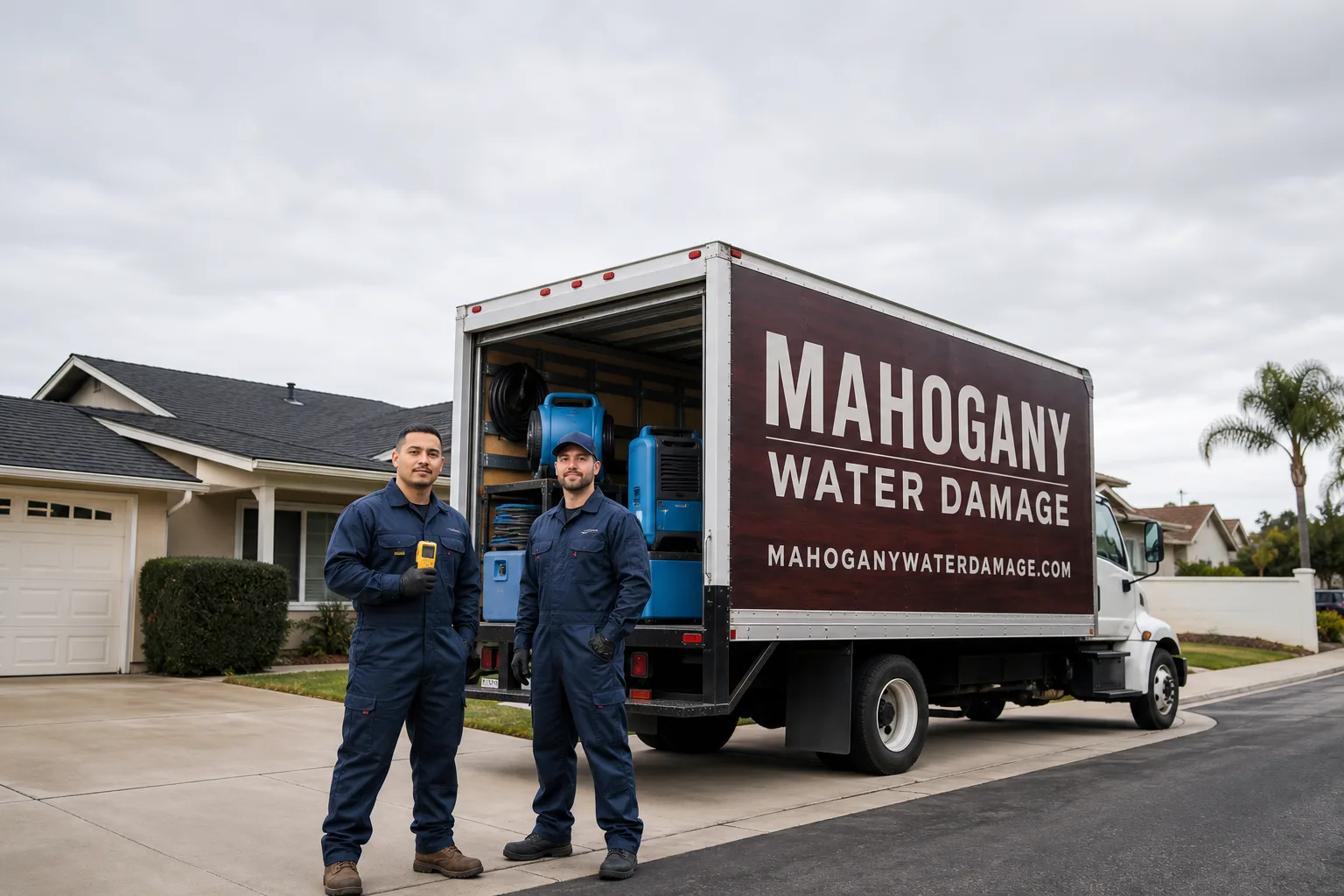
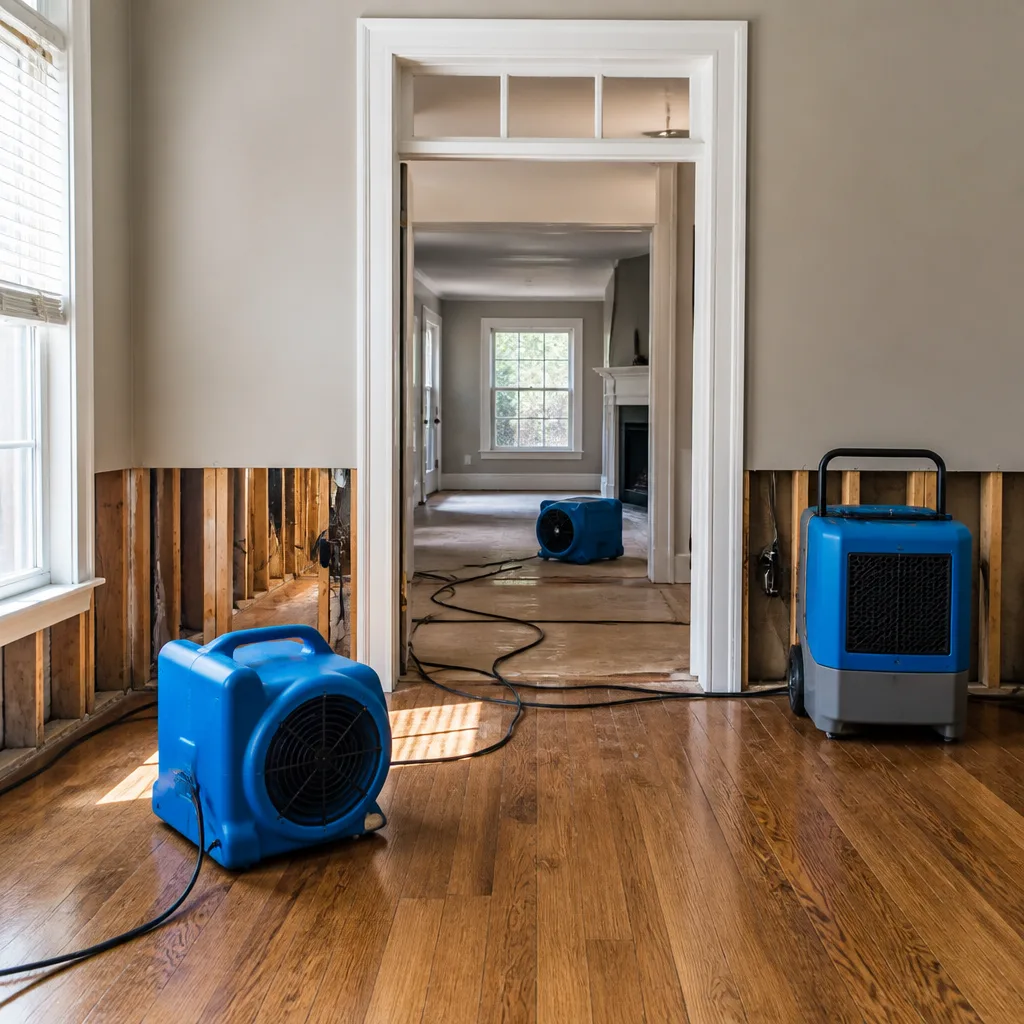
 Water damage drying
 Fire & smoke cleanup
 Mold remediation
 Storm response
 Sewage cleanup
 Reconstruction
Free visual inspection and a written scope of work before any mitigation begins - photos, moisture readings, and drying logs go in your claim file
The scope we write is the scope we bill. Anything new gets shown to you, in writing, before we touch it.
Get your free estimateFast, Reliable Mold Remediation Across San Antonio Heights
Mold remediation in San Antonio Heights typically runs $1,800 to $6,500 depending on how far the colony has spread and whether structural materials need removal. Most jobs here take two to five days from containment to final clearance testing. If you’ve found mold or smelled that telltale musty odor in a bathroom, crawl space, or behind drywall, call us at (855) 356-4970 and we’ll walk you through exactly what happens next. We know the hillside homes, the older ranch builds, and the custom properties along the upper slopes of 91784.
Why Mahogany Water Damage Is San Antonio Heights’s Preferred Mold Remediation Company
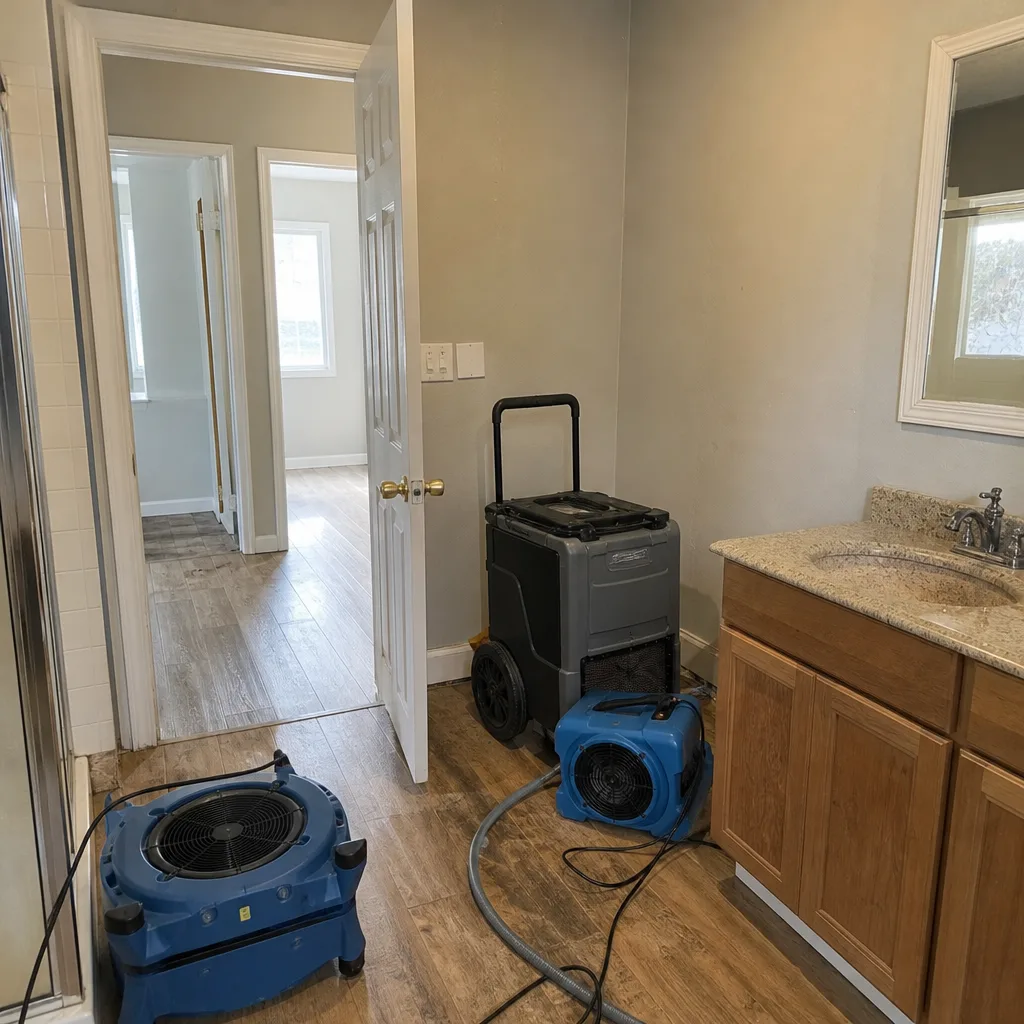
Noel Carrasco leads our restoration team with a process built on IICRC-certified standards, not guesswork. When we pull up to a San Antonio Heights property, we’re carrying commercial-grade Dri-Eaz and Phoenix drying systems plus thermal imaging cameras and moisture meters, the same equipment large commercial restoration firms run. That matters here because hillside homes hold moisture differently than valley tract homes. Sloped lots, expansive soils, and older wood framing mean water migrates into places a rental fan will never reach.
San Antonio Heights homeowners call us because we document every step: moisture readings before and after, containment setup photos, drying logs, and a written scope before any tear-out begins. That documentation matters when you file an insurance claim. We handle the adjuster communication directly, so you’re not translating restoration jargon into insurance-speak on your own.
Reviews from San Antonio Heights customers consistently mention two things: we show up when we say we will, and we don’t oversell remediation beyond what the moisture data supports. On a street where homes sit against the foothills and wildfire smoke has left residue in attics and wall cavities, residents want a crew that treats the actual problem, not the worst-case scenario.
Restoration work we handle
Mold Removal Contractor in San Antonio Heights
A Mold Removal Contractor in San Antonio Heights handles the physical removal of mold-colonized materials and the cleaning and treatment of salvageable surfaces. If you’ve got visible growth on drywall, baseboards, or framing, removal beats surface cleaning every time. Surface stains often mean the colony has already moved into the wall cavity, and killing what’s visible without addressing what’s behind it just buys you a few months.
Full mold removal on a single bathroom in San Antonio Heights generally runs $1,800 to $3,200. A larger area, like a finished basement or a multi-room spread, lands between $3,500 and $6,500. The cost comes down to linear feet of containment, how much drywall and insulation comes out, and whether custom finishes like wood wainscoting or built-in cabinetry need matching.
Containment and Negative Air
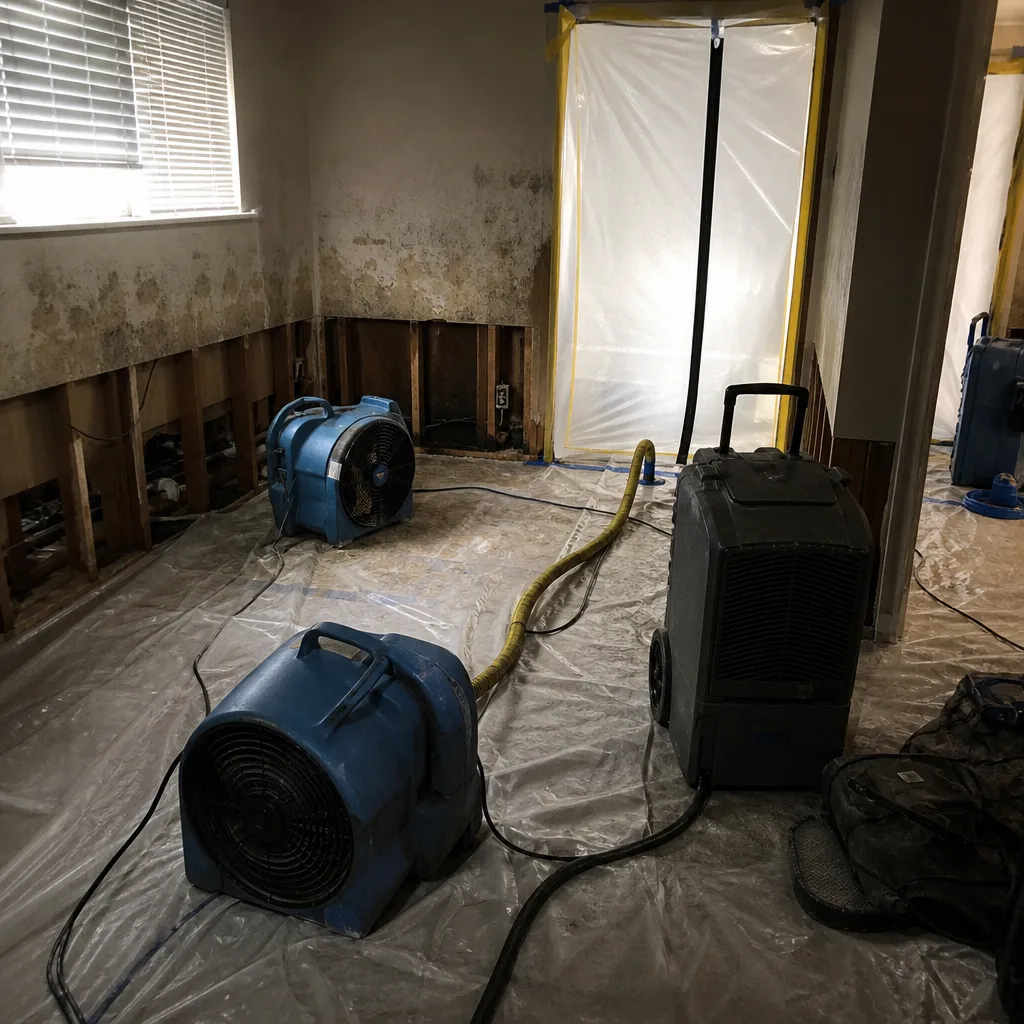
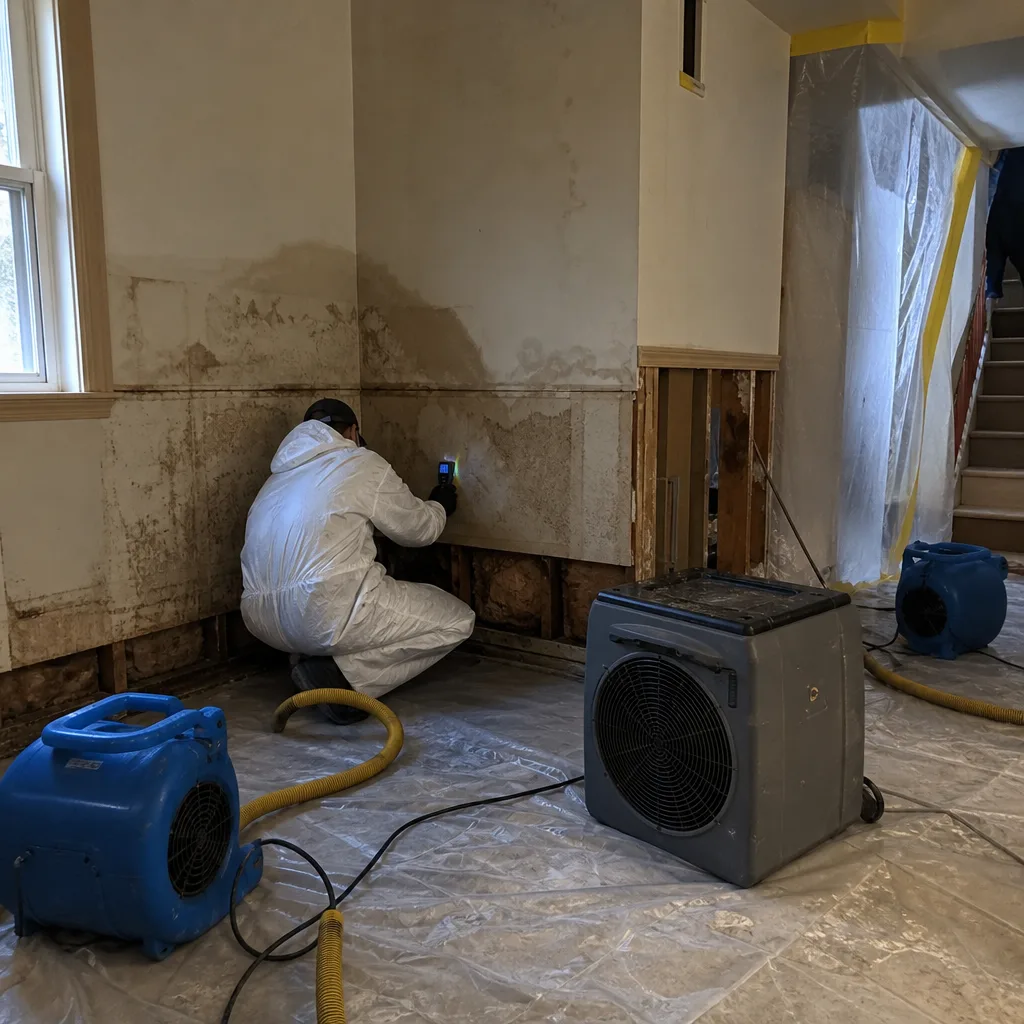
We set up containment barriers before any demolition starts. That keeps spores from moving into clean rooms while we work. Negative air pressure runs through HEPA-filtered scrubbers, and every exit point gets sealed. On a hillside home with vaulted ceilings and an open floor plan, this step takes real planning, not just plastic sheeting and tape.
Source Removal and Structural Drying
We cut out colonized drywall, insulation, and any framing that can’t be saved. What stays gets wire-brushed, HEPA-vacuumed, and treated with an antimicrobial. Then we dry the structure itself. In San Antonio Heights, where expansive soils under slab foundations hold water long after the leak is fixed, structural drying often takes longer than in valley homes.
Bathroom Mold Removal in San Antonio Heights
Bathroom Mold Removal in San Antonio Heights usually starts with a ventilation problem: an undersized exhaust fan, a window that never opens, or a shower pan leak that’s been soaking the subfloor. The bathroom is the most common mold site in any home, but in San Antonio Heights it’s compounded by older ranch homes with original plumbing and single-pane windows that sweat during winter temperature swings.
The first thing we check is the exhaust fan. Is it actually pulling air, or just making noise? Is the duct connected, or is it venting straight into the attic? More than half the bathroom mold jobs we see in 91784 trace back to a fan that was never doing its job. If you’re seeing recurring mold on the ceiling above the shower or along the baseboard behind the toilet, call us at (855) 356-4970 and we’ll diagnose the source, not just scrub the surface.
Hidden Moisture Behind Walls
A bathroom vanity hides surprises. Supply lines leak, wax rings fail, and water wicks up drywall and into the bottom plate of the wall. By the time you see staining, the framing behind the baseboard could already be saturated. We use thermal imaging to trace how far the moisture traveled, then open only what needs opening. You’d be surprised how often a “small bathroom leak” in a hillside home has already reached the adjacent closet or hall flooring.
Custom Vanity and Trim Matching
San Antonio Heights homes skew custom. Built-in vanities, wood-framed mirrors, millwork details you won’t find at a big-box store. When we remove moldy material, we note exactly what’s coming out so we can match species, grain, and profile on the back end. A production crew might leave you with a primed MDF replacement that looks like a rental. We don’t. “Restored to standard” means the replacement matches the room, not just fills the hole.
Trusted Brands We Service in San Antonio Heights
We work on every fixture and material type found in San Antonio Heights homes, from original cast-iron drain lines in mid-century ranches to engineered quartz vanities in newer custom builds. Most of our remediation work involves Kohler, Moen, Delta, and American Standard plumbing fixtures, though what matters more is what’s behind them: the supply lines, the valves, the subfloor, and the framing. We stock common replacement valves, PEX fittings, and trim-matching lumber for San Antonio Heights jobs so we’re not running back and forth to supply houses in Upland while your bathroom sits open. For larger-scale loss, our Phoenix and Dri-Eaz drying systems handle the structural side, and the Injectidry system lets us dry wall cavities in place without tearing out perfectly good tile and millwork.
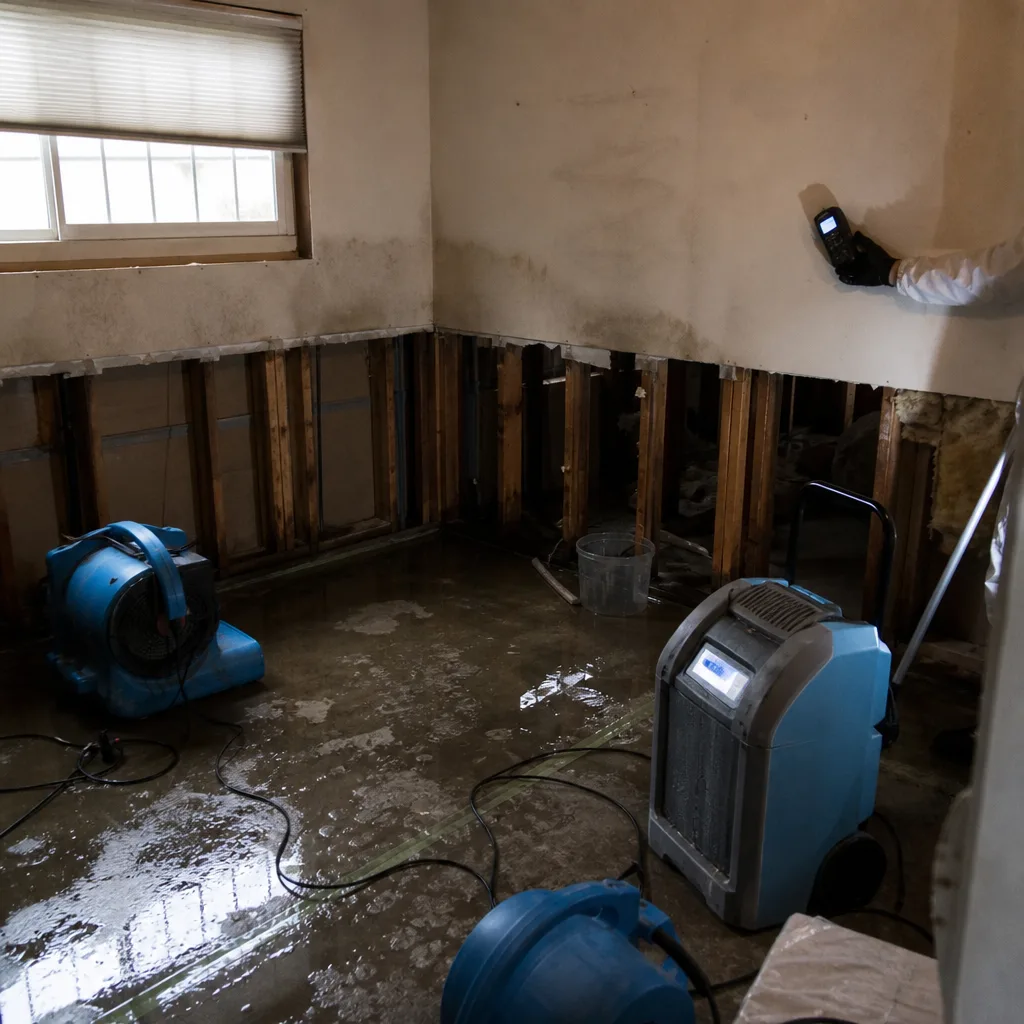
See the difference
 Before
 After
 Before
 After
 Before
 After
Common Mold Remediation Problems We See in San Antonio Heights Homes
- Well and septic overlap: Homes on the upper slopes that run on private wells and septic systems face a dual problem when a pipe breaks. The water damaged the structure, but it also may have contaminated the well or flooded the drainfield. Remediation that ignores this half of the equation leaves a lingering problem, and it’s a failure mode we see far too often in San Antonio Heights specifically.
- Expansive soils and slab moisture: The clay-heavy soils on these hillsides expand and contract with moisture. A leak under the slab doesn’t just soak the flooring; it changes the soil pressure under the foundation. Moisture persists in lower levels long after the visible area dries, which is why our drying protocols here run longer than on comparable valley jobs.
- Wildfire smoke residue in wall cavities: Homes near the Wildland-Urban Interface, especially those that went through the 2003 Grand Prix Fire or any of the more recent burn years, often have smoke residue settled inside wall cavities and attic spaces. That residue is hygroscopic. It pulls moisture from the air and creates micro-environments where mold grows even without a leak. Standard remediation that only addresses visible mold misses this entirely.
- Smart-home blind spots: High-end custom homes in 91784 often have integrated climate and security systems, but rarely integrated moisture sensors. Owners assume the house will “tell them” if something’s wrong. It won’t. We regularly recommend adding smart moisture detectors in bathrooms, under sinks, and near water heaters, especially on larger-lot properties where a leak in a detached structure can go unnoticed for weeks.
Pricing for Mold Remediation in San Antonio Heights, CA
Mold removal from a single bathroom in San Antonio Heights ranges $1,800 to $3,200. A crawl space job runs $2,500 to $5,000 depending on square footage and whether the vapor barrier needs replacement. Whole-home remediation after a major water loss lands between $4,500 and $8,500 when structural drying, pack-out, and custom finish matching are involved. Homes with septic systems or wells may add $500 to $1,500 for water testing and system inspection if contamination is suspected. Every estimate is free, written, and specific to your property. Call (855) 356-4970 and we’ll give you real numbers based on your square footage and what our moisture mapping actually shows, not a phone guess.
We Also Serve Cities Near San Antonio Heights
Our team serves San Antonio Heights and the surrounding foothill and valley communities. If you’re in San Antonio Heights, you’re our home turf. We also regularly work in Upland, Claremont, Rancho Cucamonga, and Montclair, handling everything from small bathroom mold jobs to full structural remediation after major water losses. Our Mold Remediation process is the same everywhere we go: documented, contained, and finished to a measurable standard.
Serving San Antonio Heights, CA — Our Local Coverage Area
We’re based in the San Antonio Heights area and know this community well. Use the map below to see our service coverage — if you’re nearby, we can almost certainly help.
FAQs About Mold Remediation in San Antonio Heights
Mold returns because the moisture source wasn’t fully dried, and in San Antonio Heights that often means moisture deep in the slab or wall cavity that standard drying equipment never reached. Hillside homes with expansive soils hold water under and around foundations longer than valley homes. If the structural drying isn’t verified with moisture meters and documented drying logs, the colony just goes dormant and comes back. We use commercial-grade Dri-Eaz and Phoenix drying systems with the Injectidry system for wall cavities, and we don’t call a job done until the moisture readings say it’s done. Call (855) 356-4970 if you’re seeing mold come back after a prior repair.
Wildfire smoke residue settles inside wall cavities, attics, and ductwork, and that residue is hygroscopic. It pulls ambient moisture and creates conditions where mold grows without any visible water source. Homes that sat in smoke during the 2003 Grand Prix Fire or any recent regional fire carry this risk. The remediation fix is a full cavity inspection with thermal imaging, HEPA vacuuming of settled smoke particles, and a drying protocol that accounts for the home’s WUI exposure. It’s not enough to treat visible mold if the hidden smoke residue keeps feeding the problem.
We check the exhaust fan and the supply lines, in that order. Most bathroom mold in San Antonio Heights is either a ventilation failure, a slow supply-line leak behind the vanity, or both. On custom homes with built-in cabinetry, those supply leaks often go unnoticed because the millwork hides the staining until mold appears on the baseboard or the wall behind the toilet. We’ll run a fan airflow test and a thermal scan before we open anything, because opening walls you don’t need to open only adds cost to your job.
Yes. Homes on the upper slopes of San Antonio Heights frequently run on private wells and septic systems, and a water damage event in those homes can mean both structural mold and a flooded drainfield or contaminated well. We coordinate the structural remediation with septic and well inspection, and we stage our work so remediation runoff doesn’t reach the drainfield. Ignoring that dual threat is how you end up with recurring mold and a failed septic system, and it’s a problem valley tract homes never face.
We run Dri-Eaz dehumidifiers, Phoenix axial air movers, and XPOWER HEPA scrubbers on every San Antonio Heights job. For wall cavities and under-floor spaces in custom hillside homes, we bring in the Injectidry system to dry in place without tearing out tile, flooring, or millwork. On larger-lot properties with detached structures, we can run multiple drying zones simultaneously because the equipment travels with us, it’s not rented by the day. Call (855) 356-4970 and we’ll tell you exactly what we’d bring to your property.
Written by Noel Carrasco, Owner at Mahogany Water Damage, serving San Antonio Heights since the company’s founding.