 Water damage drying
 Fire & smoke cleanup
 Mold remediation
 Storm response
 Sewage cleanup
 Reconstruction
Free visual inspection and a written scope of work before any mitigation begins - photos, moisture readings, and drying logs go in your claim file
The scope we write is the scope we bill. Anything new gets shown to you, in writing, before we touch it.
Get your free estimateFast, Reliable Water Damage Restoration Across Good Hope
Water damage restoration in Good Hope usually starts at the well pressure tank or the septic system, not a burst city pipe. Most homes here sit outside any municipal water or sewer network, so a failed pressure tank can saturate a crawlspace in hours while the septic field backs up beside it. Our crews know that before we even load the truck. We respond to Good Hope properties off Highway 74 and the surrounding acreage with commercial drying equipment sized for rural homes on well and septic. Call (855) 356-4970 and we’ll get a certified technician to your gate fast.
Why Mahogany Water Damage Is Good Hope’s Preferred Water Damage Restoration Company
Good Hope properties don’t have a city shutoff valve to stop the source. That changes everything about how a water loss gets scoped. Our Water Damage Restoration team isolates the private well pump first, then maps moisture through crawlspaces, subfloors, and wall cavities. Noel Carrasco has built the company around IICRC-certified processes, which means the work is documented to a standard insurers recognize, not a guess.
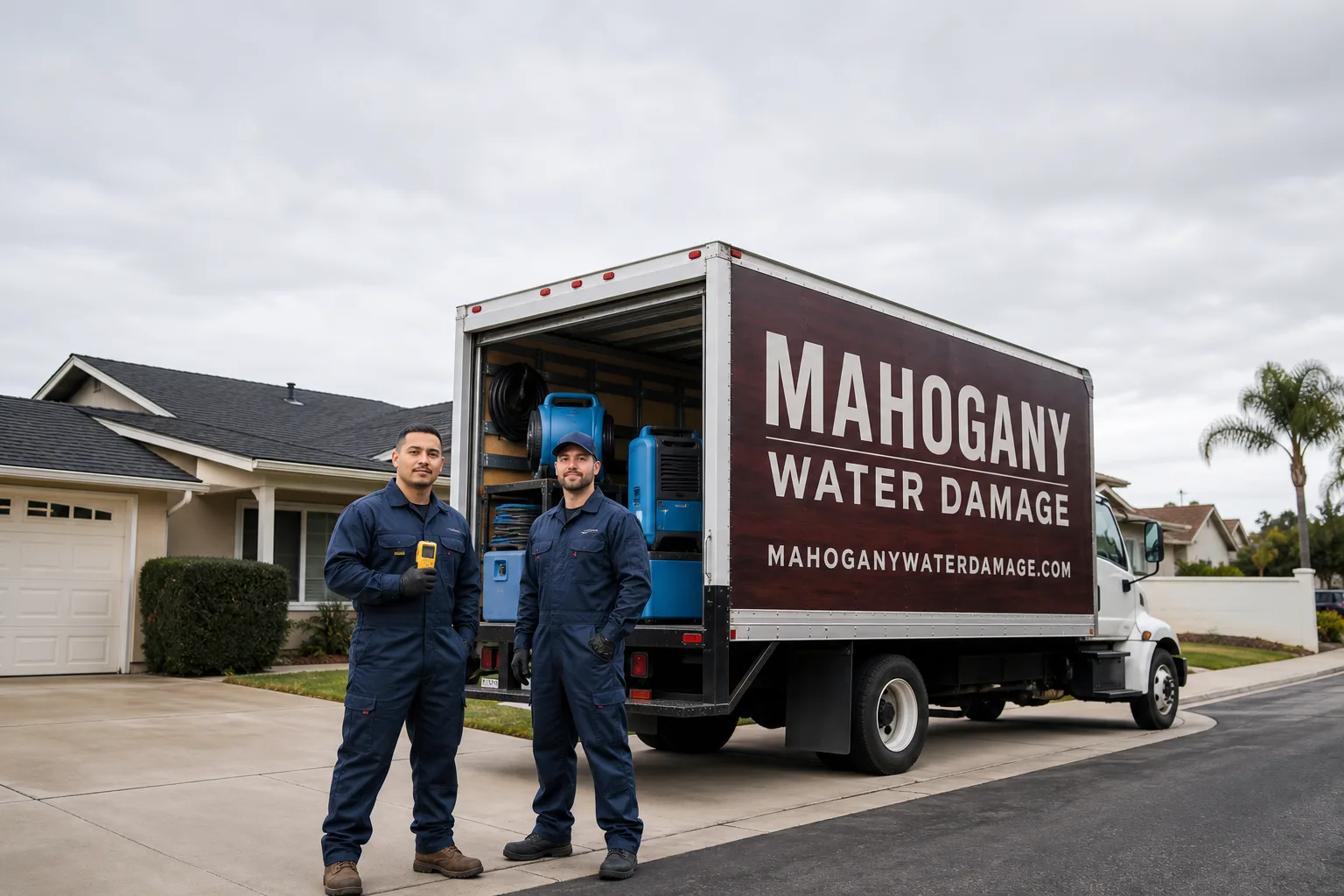
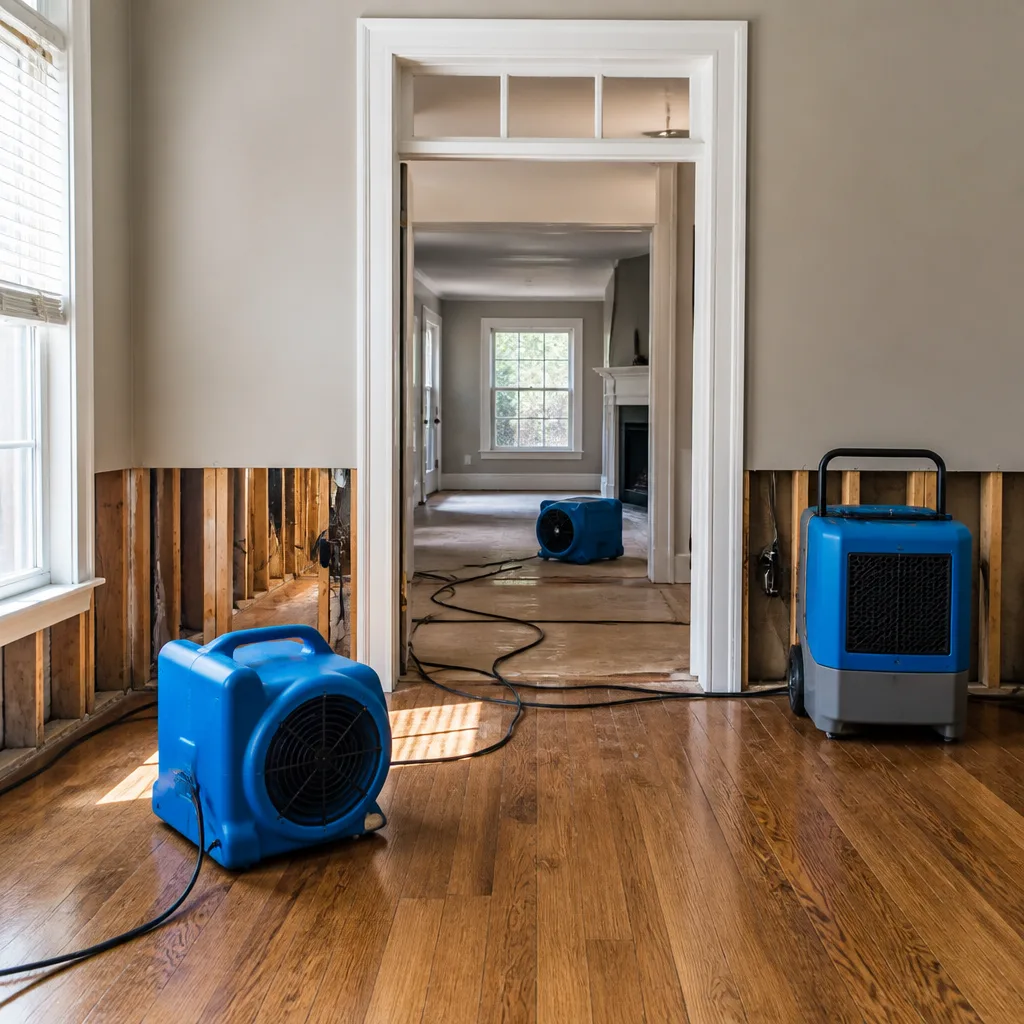
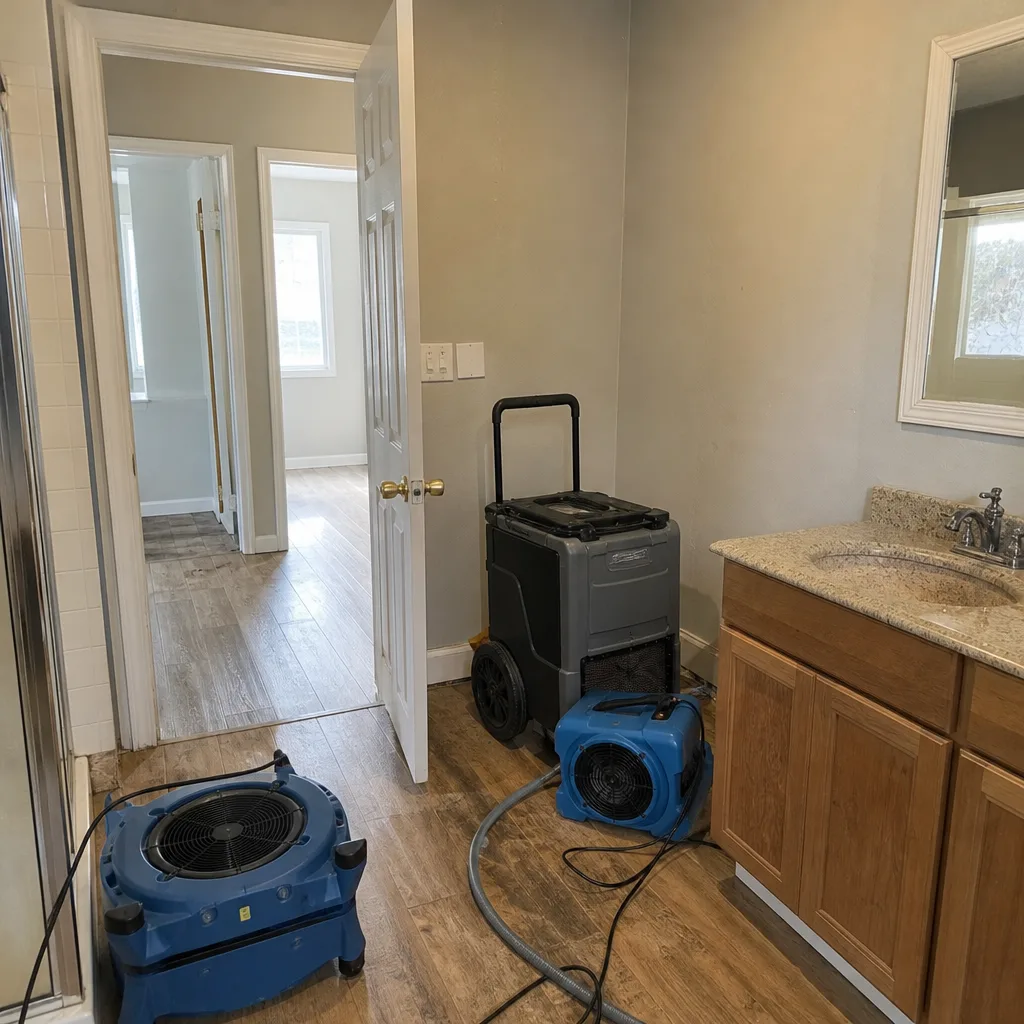
We run Dri-Eaz dehumidifiers and Phoenix air movers on Good Hope jobs, not rental units that showed up from a warehouse two counties away. The equipment is owned, calibrated, and matched to the square footage and framing type of each home. For rural properties with detached workshops, mobile homes on piers, or older wood-framed structures, that equipment matters. A crawlspace under a Good Hope home on a large lot dries differently than a slab foundation in a tract neighborhood.
Homeowners here tend to be self-reliant. They want the job done right in one trip, with a written scope before we start and drying logs when we finish. That’s how we work.
Restoration work we handle
Emergency Water Removal in Good Hope
Emergency water removal in Good Hope typically runs $900 – $2,400 depending on how far the water has traveled and whether Category 2 or Category 3 water is involved. If a failed well pressure tank has been pumping into the crawlspace for hours, the standing water is usually Category 2: contaminated but not sewage. If the septic system backed up into the same space, it’s Category 3 and the scope changes immediately.
Well pressure tank and pump isolation
The first step on nearly every Good Hope water removal call is isolating the private well pump. Without a municipal shutoff, the water keeps flowing until someone kills power to the pump or closes the valve at the pressure tank. A city crew would never think to do this first. We do it before extraction starts.
Extraction and containment on acreage
Once the source is isolated, we pull standing water with truck-mounted extraction and set containment around the affected area. On a Good Hope property with a dirt crawlspace and open framing, we map moisture readings through the subfloor before setting drying equipment. That map tells us whether the sill plates, joists, and subfloor are drying or need removal. Expect extraction plus the first drying setup to be completed in one visit on most jobs.
Flood Damage Restoration in Good Hope
Flood damage restoration in Good Hope isn’t the rain-driven flooding you see in coastal cities. The semi-arid climate keeps stormwater losses rare. Here, “flood” usually means a well pressure tank failure, a septic backup, or a broken supply line that ran unchecked for a weekend while the property sat empty. Flood damage restoration in Good Hope typically runs $1,800 – $5,600 depending on how much finished material the water reached and whether the septic field saturated alongside the structure.
Well and septic scoping before drying
We’ve worked Good Hope jobs where the well pressure tank flooded the crawlspace and the septic field saturated at the same time. That’s not a coincidence. The two systems sit on the same pressure and drainage logic. If we start drying before the septic saturation is addressed, the crawlspace stays wet and the subfloor wicks moisture back for days. We scope the private systems first, every time.
Category 3 water and removal decisions
A dry, semi-arid climate does not make black water fast to dry. Septic backup water is Category 3. The framing and insulation it touches get removed, not dried. We treat the remaining structure with antimicrobial agents after removal, then document the scope in writing before disposal. Good Hope homeowners on septic need to understand this before a generalist crew starts setting fans on contaminated material.
Trusted Brands We Service in Good Hope
Water damage in Good Hope doesn’t discriminate by brand and neither do we. Our Water Damage Restoration in Good Hope work covers homes with Grundfos and Goulds well pumps, Pentair pressure tanks, and older proprietary pressure systems that haven’t been manufactured in years. When a pump or tank fails, the water damage isn’t limited to one brand. We stock common fittings and pressure switches in the truck, which saves a second trip when a Good Hope well system has failed on a Friday afternoon. For larger jobs, we can source Dri-Eaz and Phoenix drying systems matched to the square footage of the structure, not the nearest rental counter’s inventory.
Common Water Damage Restoration Problems We See in Good Hope Homes
- Well pressure tank bladder failure: When the bladder inside the pressure tank ruptures, the pump short-cycles and can over-pressurize the supply line. Water releases into the crawlspace or the mechanical room at full well pressure until someone notices the pump running constantly.
- Septic saturation beside the crawlspace: A failing septic field doesn’t just smell. It can saturate the ground beside and under the home, and Category 3 water migrates into the crawlspace through the same soil that was supposed to drain it.
- Wind-driven dust and ash intrusion after wildfires: The Santa Ana winds that rip through the Temecula – Elsinore corridor push fine ash and dust through old window frames, roof vents, and gable ends. After a nearby brush fire, smoke odor and ash residue settle in homes that never caught fire. That’s a water-adjacent restoration call most Good Hope homeowners don’t plan for.
- Older wood-framed and metal-skinned outbuildings: Good Hope properties often include detached workshops, barns, or storage structures with limited fire-resistive detailing. A water loss in the main house can migrate to these structures through connected plumbing runs or shared crawlspaces, and drying them takes longer because of how they’re framed.
See the difference
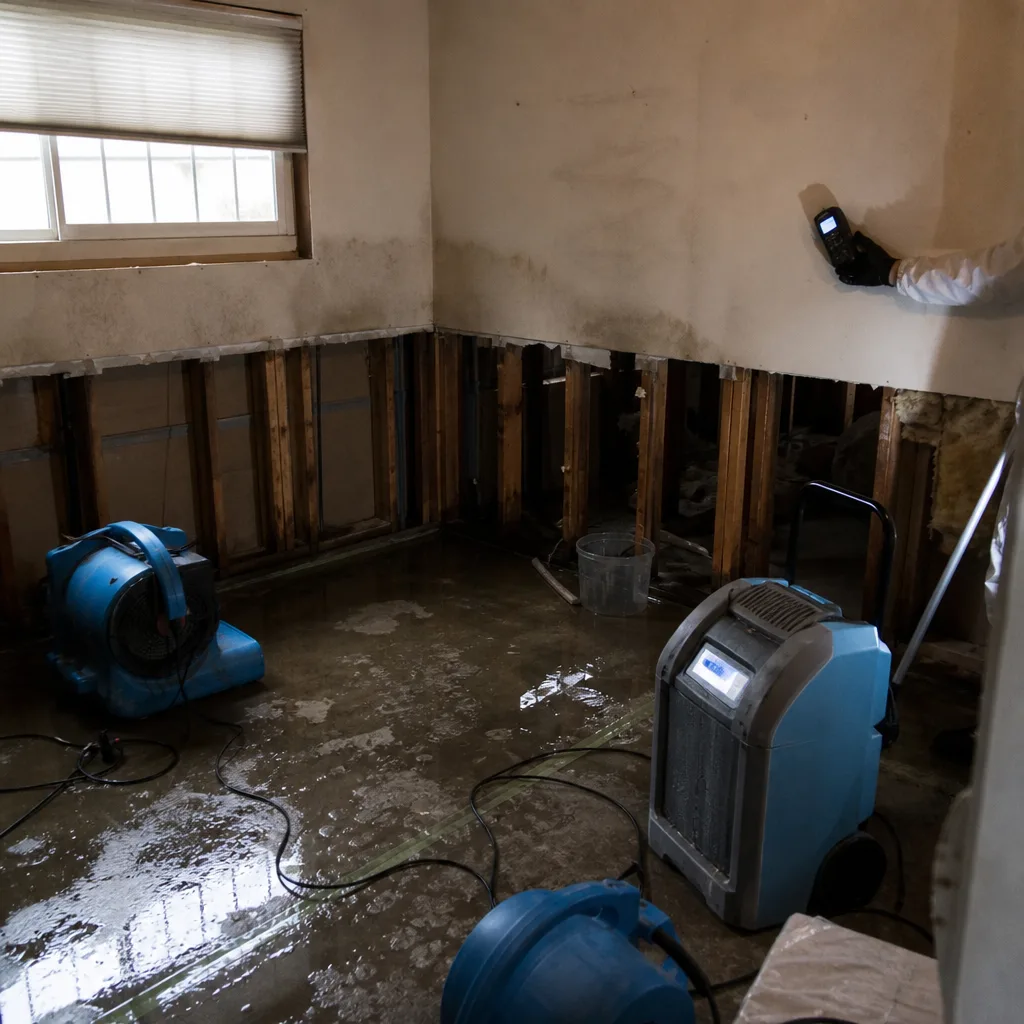 Before
 After
 Before
 After
 Before
 After
Pricing for Water Damage Restoration in Good Hope, CA
Expect to pay $900 – $2,400 for emergency water removal on most Good Hope well and septic losses. Structural drying and dehumidification on a crawlspace or subfloor typically adds $1,200 – $3,800 depending on how many chambers are wet and how long the water sat. Septic backup jobs that require Category 3 removal and antimicrobial treatment usually land between $2,500 and $5,600. The biggest variable on Good Hope acreage is whether the water stayed in the crawlspace or reached finished flooring and drywall. We provide a written scope with line-item pricing before work starts, and the estimate is free. Call (855) 356-4970 to get an exact number for your property.
We Also Serve Cities Near Good Hope
Our crews handle water damage restoration across the Temecula – Elsinore corridor and the surrounding Riverside County communities. You’ll see our trucks in Perris, Sun City, Mead Valley, and Quail Valley, usually on the same day a call comes in from Good Hope or another nearby ZIP. If you’re just outside 92572, call and ask; we likely cover your road.
Serving Good Hope, CA — Our Local Coverage Area
We’re based in the Good Hope area and know this community well. Use the map below to see our service coverage — if you’re nearby, we can almost certainly help.
FAQs About Water Damage Restoration in Good Hope
The source of the water has to be isolated at the well pump or pressure tank, not a city shutoff. If the pressure tank bladder fails, the pump can keep pushing water into the crawlspace or mechanical room until someone kills power to the pump. A city-water restoration crew might never check the well, which means the water keeps flowing while they set up fans. We kill the well first, then extract.
Yes. A pressure tank failure can release enough water to saturate the septic field, especially on Good Hope lots where the drain field sits close to the home or on sloped ground. The crawlspace and the septic field end up wet from the same event, and both have to be scoped before drying starts. If you’re seeing standing water under the house and soft ground near the septic tank, you have two sources to contain. Call (855) 356-4970 and we’ll map both.
Because most Good Hope homes sit on dirt crawlspaces over wood framing, and that framing starts to wick moisture within hours. The longer water sits, the higher the chance the sill plates and floor joists rot instead of drying. On a large rural lot, the distance to any restoration contractor means a delay can add days. Every hour the water sits also increases the chance of mold starting in the subfloor or wall cavities. That’s why we prioritize Good Hope calls and dispatch the same day.
The water category. Clean water from a supply line or pressure tank can usually be dried in place. Category 2 water from a flooded crawlspace or appliance overflow gets dried if the materials are still structurally sound. Category 3 water from a septic backup always means removal of contaminated materials like insulation, carpet pad, and some framing, followed by antimicrobial treatment. On Good Hope properties with septic systems, that Category 3 line is crossed more often than homeowners expect.
Yes. We photograph every stage of the job, from the standing water before extraction to the daily moisture readings during structural drying. That documentation includes the well and septic scoping, which matters because most insurers want proof the source was contained before drying began. We also work directly with adjusters and provide written scopes and drying logs they can review. If your carrier needs photos of the failed pressure tank, the saturated crawlspace, or the septic field, we have them.
Call Mahogany Water Damage for Good Hope Restoration
If your well pressure tank has flooded your crawlspace or your septic system has backed up into the house, call (855) 356-4970 now. We’ll walk you through the first steps on the phone, get a certified technician to your Good Hope property fast, and give you a written scope before any work begins. Noel Carrasco and the Mahogany Water Damage team serve Good Hope and the surrounding Riverside County acreage with IICRC-certified process, commercial drying equipment, and one trip done right.
Written by Noel Carrasco, Owner at Mahogany Water Damage, serving Good Hope and nearby Riverside County rural properties.