
 Water damage drying
 Fire & smoke cleanup
 Mold remediation
 Storm response
 Sewage cleanup
 Reconstruction
Free visual inspection and a written scope of work before any mitigation begins - photos, moisture readings, and drying logs go in your claim file
The scope we write is the scope we bill. Anything new gets shown to you, in writing, before we touch it.
Get your free estimateFast, Reliable Mold Remediation Across Orange
Mold in an Orange home rarely announces itself with a smell. More often it starts as a water stain on a ceiling in an El Camino Park bungalow, or a soft spot on a baseboard in a 92867 tract house after a slab leak. Left alone, that moisture feeds spores inside wall cavities within 48 to 72 hours. We’ve run containment on enough Orange jobs, from Old Towne Victorians to east-side post-war homes, to know exactly what that timeline means for your walls, your framing, and your family’s air quality. If you’ve spotted discoloration, peeling paint, or that musty smell, call (855) 356-4970 today. We’ll send a certified crew to Orange, usually within hours, not days.
Why Mahogany Water Damage Is Orange’s Preferred Mold Remediation Company
We didn’t earn our spot in Orange by being the cheapest bid. Homeowners in neighborhoods like Presidential tract and Fairhaven call us because we write a scope of work that matches what their house actually is: a 1920s Craftsman with original redwood behind the plaster, or a 1966 ranch with aging galvanized supply lines. That’s the split skill set Orange demands, and it’s the reason our Mold Remediation team gets called back when a neighbor finds a leak.
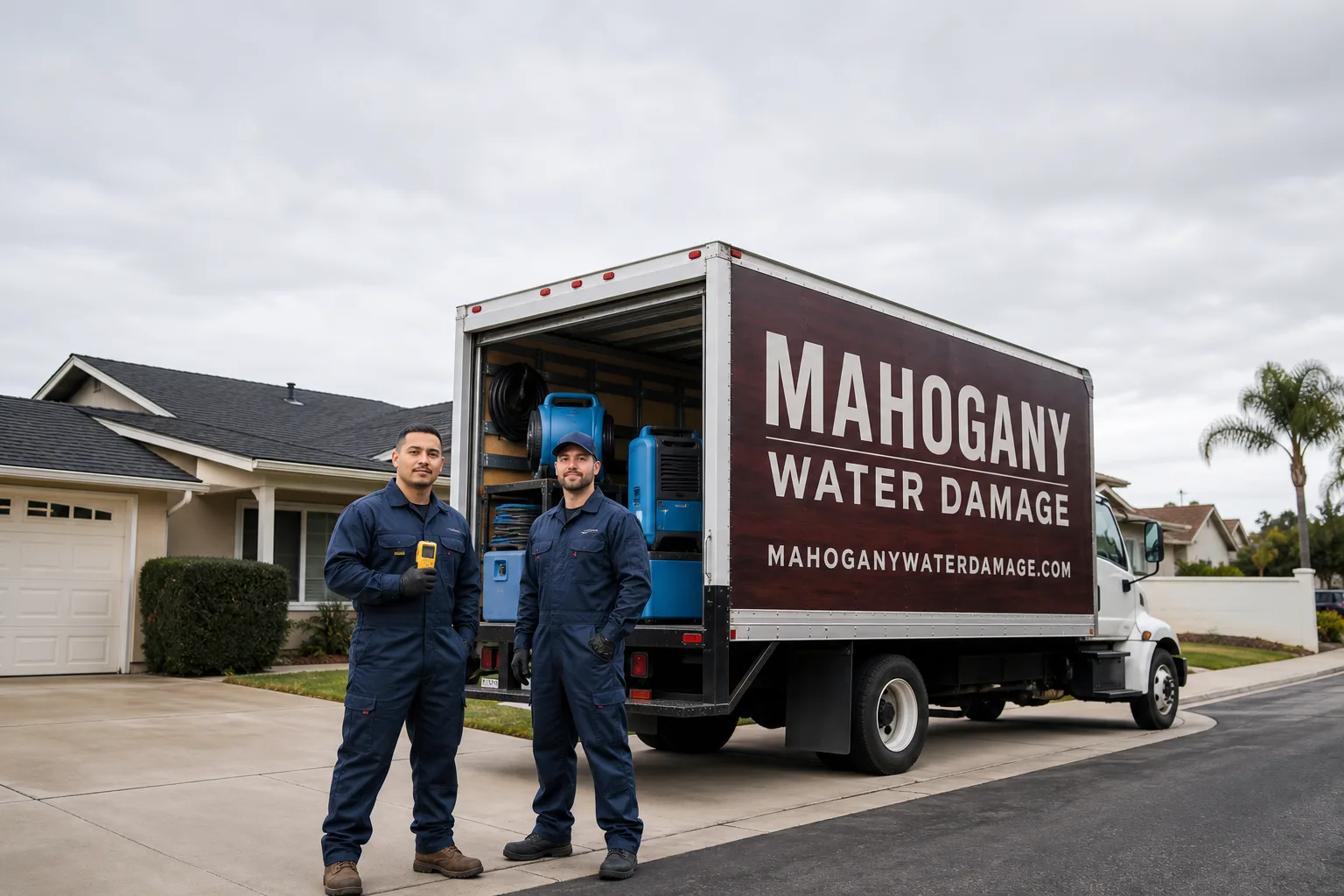
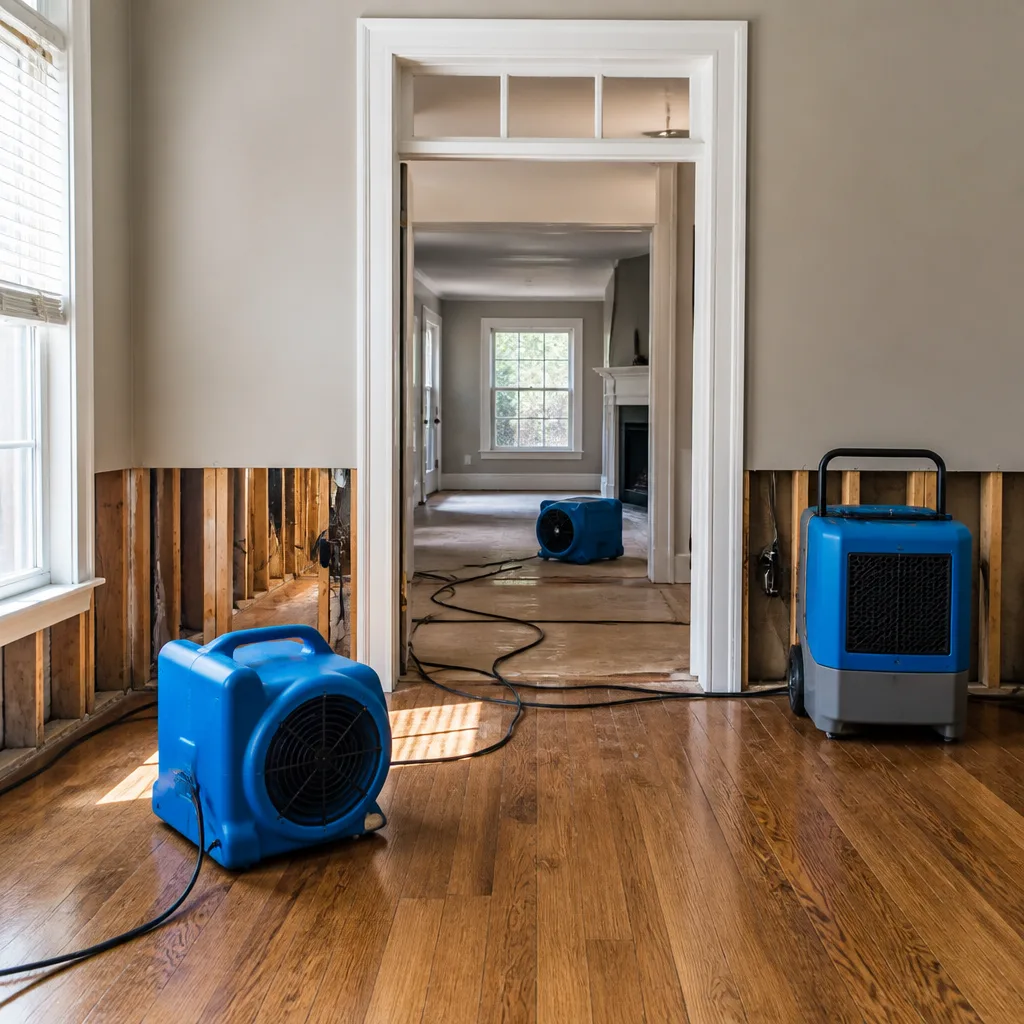
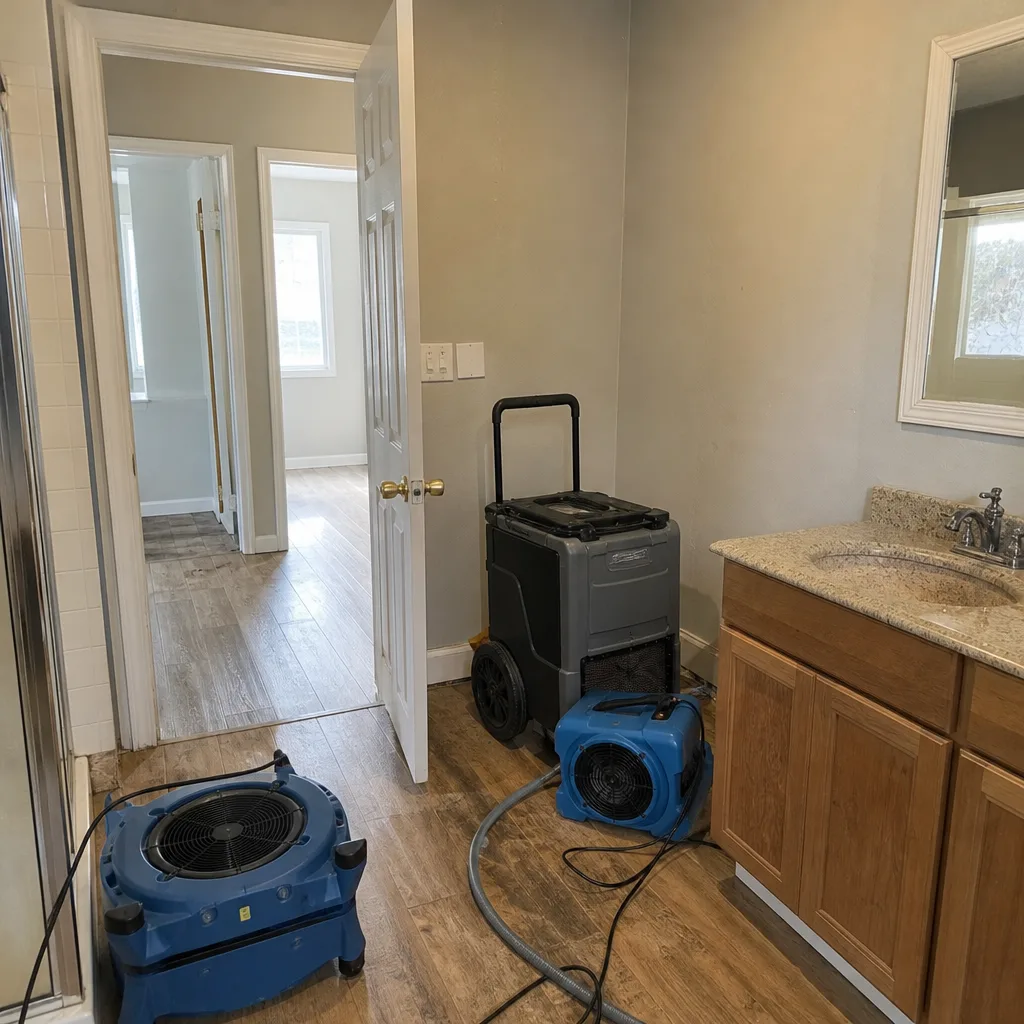
Noel Carrasco built Mahogany Water Damage around one question: what would we want done in our own walls? The answer is an IICRC-certified process with commercial-grade equipment, not rental units. We run Dri-Eaz and Phoenix drying systems and XPOWER air movers on every job. In Orange, where the Old Towne Historic District can turn a simple tear-out into a weeks-long preservation review, that equipment-forward approach means we dry and treat more material in place instead of cutting it out. Less demolition. Fewer permit headaches. One team, start to finish.
Restoration work we handle
Mold Removal Specialist in Orange
A Mold Removal Specialist in Orange handles what a general handyman won’t: the moisture source, the contaminated material, and the spores already moving through your home. This isn’t spraying bleach on drywall. It starts with moisture mapping to find where water is coming from, then physical removal of mold growth, HEPA vacuuming, antimicrobial treatment, and containment so spores don’t spread into clean rooms. A typical Mold Removal Specialist job in Orange runs $1,200 to $3,800, depending on how far the mold has spread and whether it’s behind closed cavities or visible on open surfaces.
Containment and Air Filtration
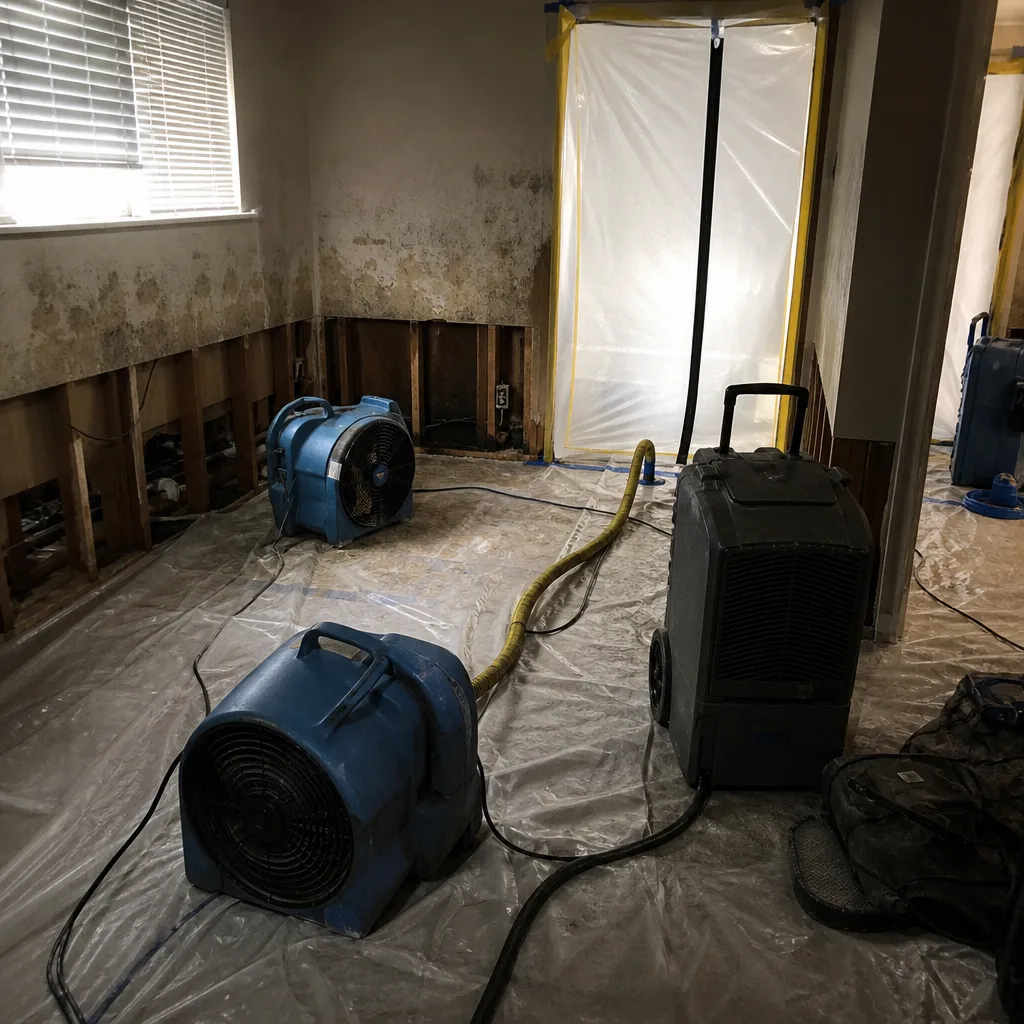
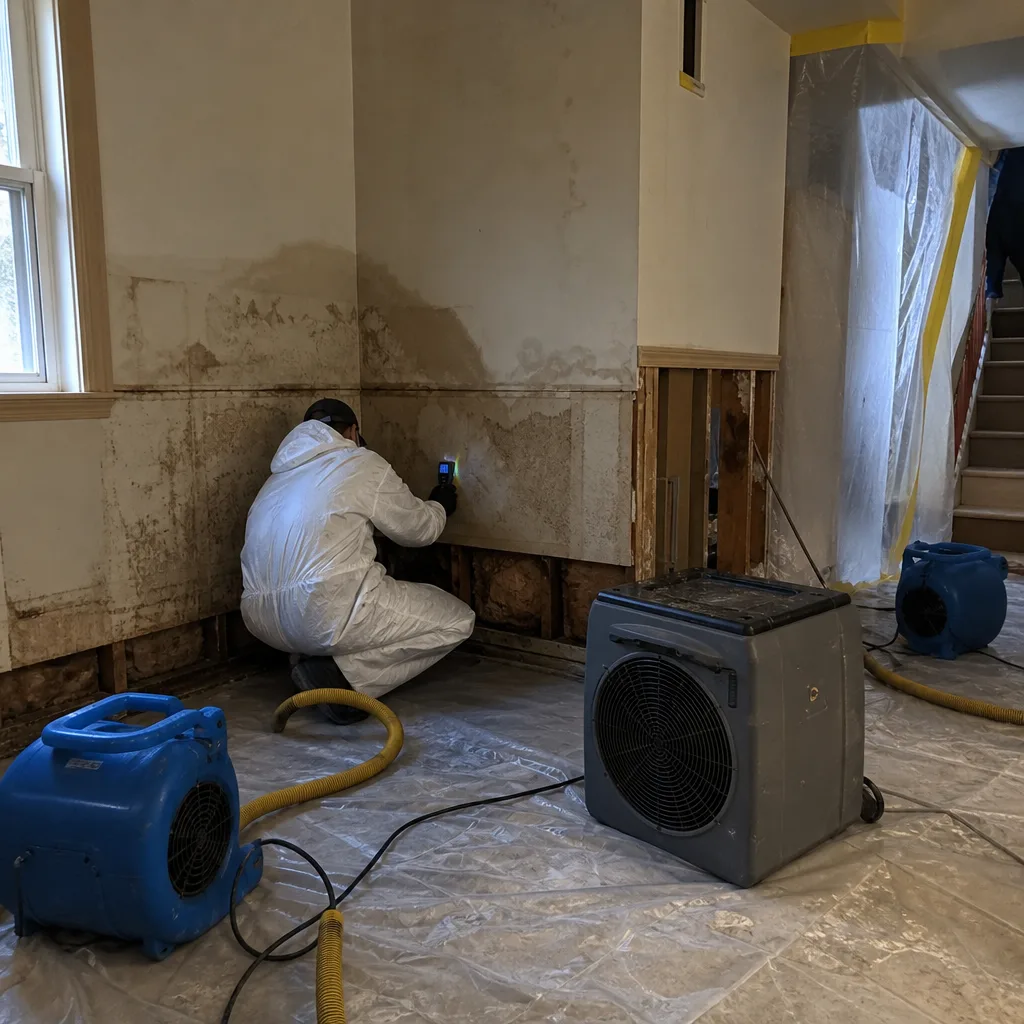
For a single-room mold job in a 1912 Old Towne bungalow, a Mold Removal Specialist sets up 6-mil poly containment, runs a negative-air machine with HEPA filtration, and keeps the affected area under negative pressure so spores don’t drift into the hallway or kitchen. In older Orange homes with single-pane windows and unsealed framing, this step is non-negotiable. The air pathways between rooms in a pre-war house are far more open than in a 1990s build.
Material Removal and Treatment
What gets cut out depends on what it’s made of. Drywall in a 1968 east-side tract home typically comes out, gets bagged, and goes. Original lath-and-plaster in Old Towne gets mapped often. We dry it, treat it, and document it. The Mold Removal Specialist on your Orange job will give you a written scope before any cutting starts, so you’re not standing in a gutted room wondering what happened.
Black Mold Removal in Orange
Black Mold Removal in Orange is the call we get when a homeowner pulls back a corner of old wallpaper and finds dark staining, or a property manager catches a complaint from a tenant about a persistent musty smell near a bathroom vent. Black mold (Stachybotrys chartarum, the species most people mean) needs cellulose and consistent moisture to grow, and older Orange homes supply both: paper-backed drywall, original wood framing, and decades of small leaks that never fully dried. A targeted Black Mold Removal job in Orange runs $1,800 to $5,500, and the range reflects how far the growth has penetrated into framing and whether it’s confined to one stud bay or spread across a ceiling.
When Black Mold Shows Up
In a mid-century ranch near Orange High School, the pattern is predictable: a toilet or shower valve leaks inside a wall, moisture wicks through drywall and into the bottom plates, and by the time you see any staining on the exterior, the colony has been active for weeks. Black Mold Removal in those cases means removing the affected drywall, sanding and treating the framing, and verifying moisture levels before any rebuild.
Verification After Removal
We don’t call the job done when the black staining is gone. The Black Mold Removal process ends with post-remediation verification: moisture readings back to dry standard in a 92867 home, HEPA air samples if requested, and a written closeout that documents what was removed and why. For Orange homeowners dealing with an insurance claim, that paperwork is what gets the repair covered. Photo documentation of every step goes to your adjuster directly.
Trusted Brands We Service in Orange
The best dehumidifier won’t fix a mold problem if the tech reading the moisture map doesn’t understand a 1924 Craftsman’s redwood framing. That’s why we own our equipment and calibrate it for the job, whether we’re running a Phoenix desiccant unit in a closed Old Towne parlor or XPOWER air movers through a water-damaged crawl space under a 92864 slab home. Our techs maintain an inventory of common replacement parts for older Orange homes: period-appropriate baseboard profiles, plaster washers, redwood blocking. When a historic-preservation review requires matched materials on street-visible work in the Old Towne district, we already know what’s coming. We’re Orange locals by trade, and it shows in the details we stock.
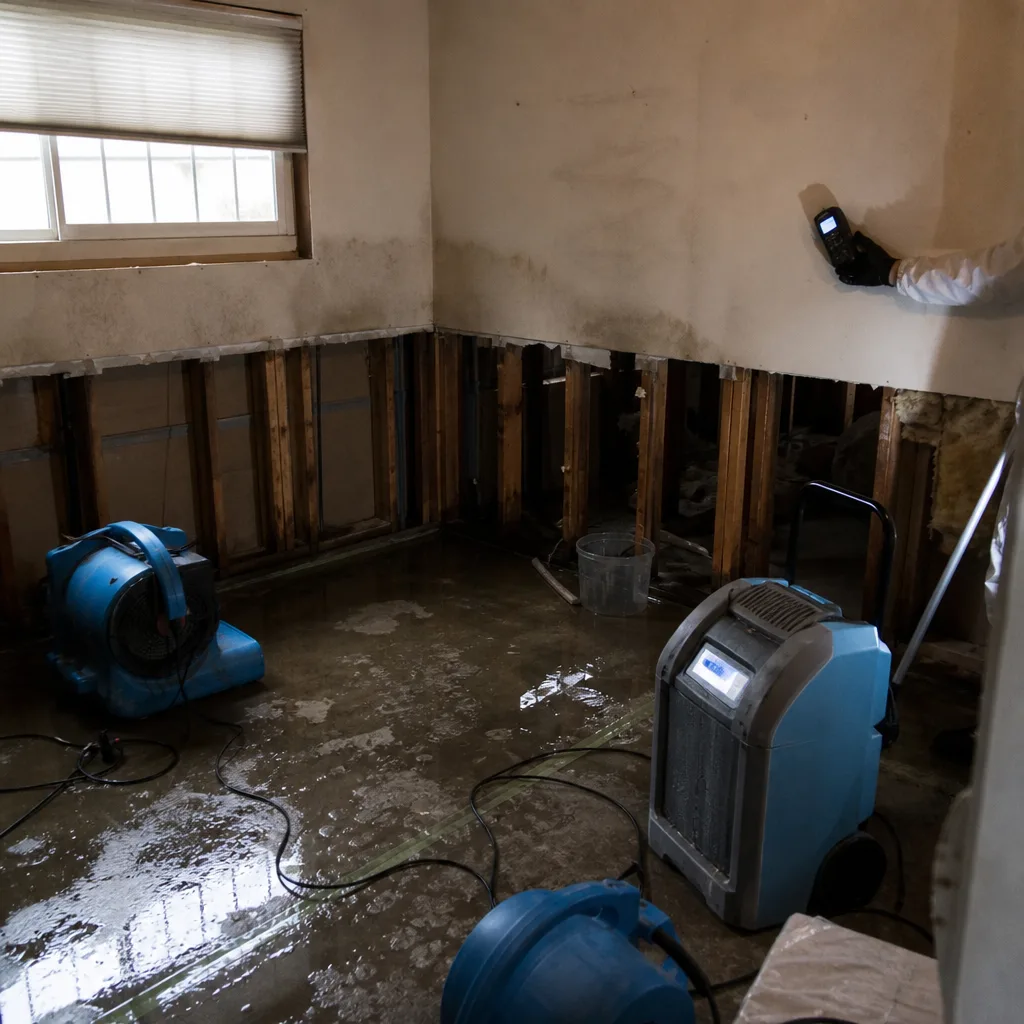
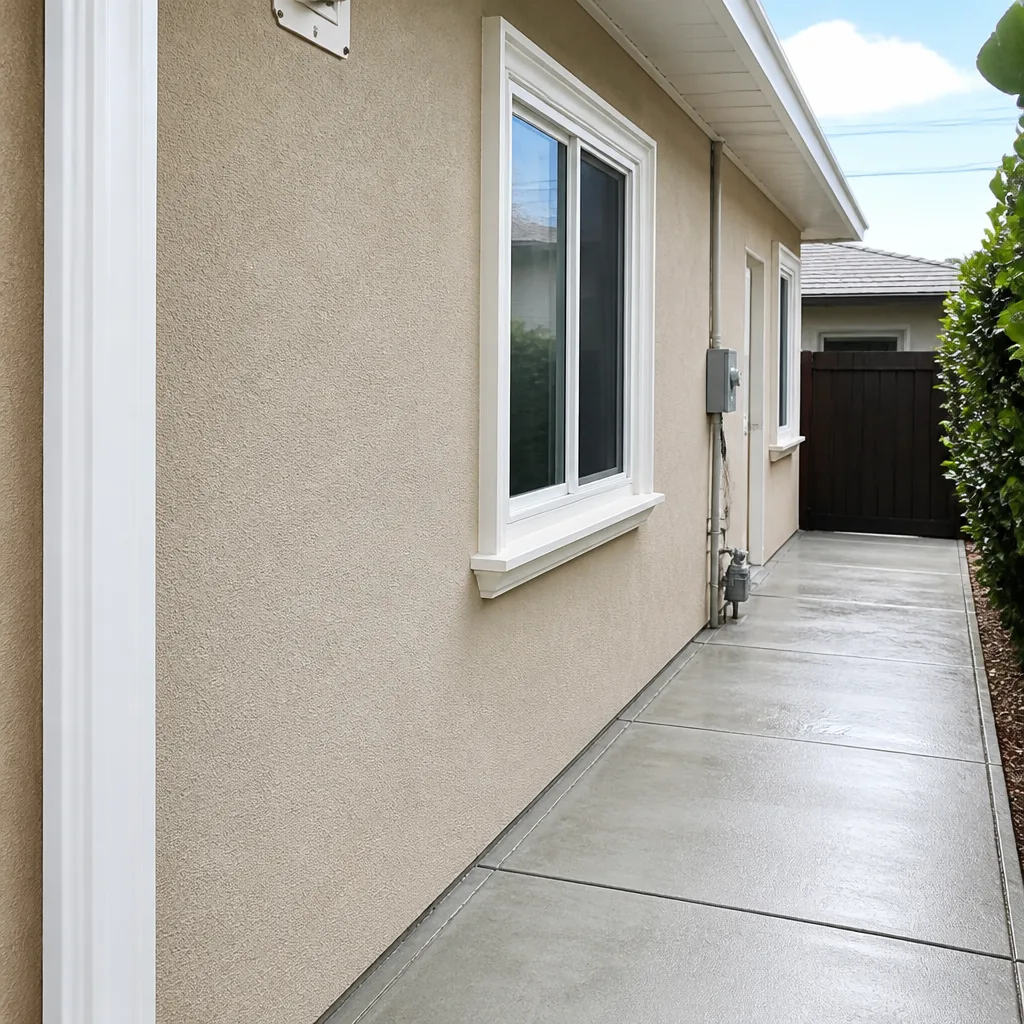
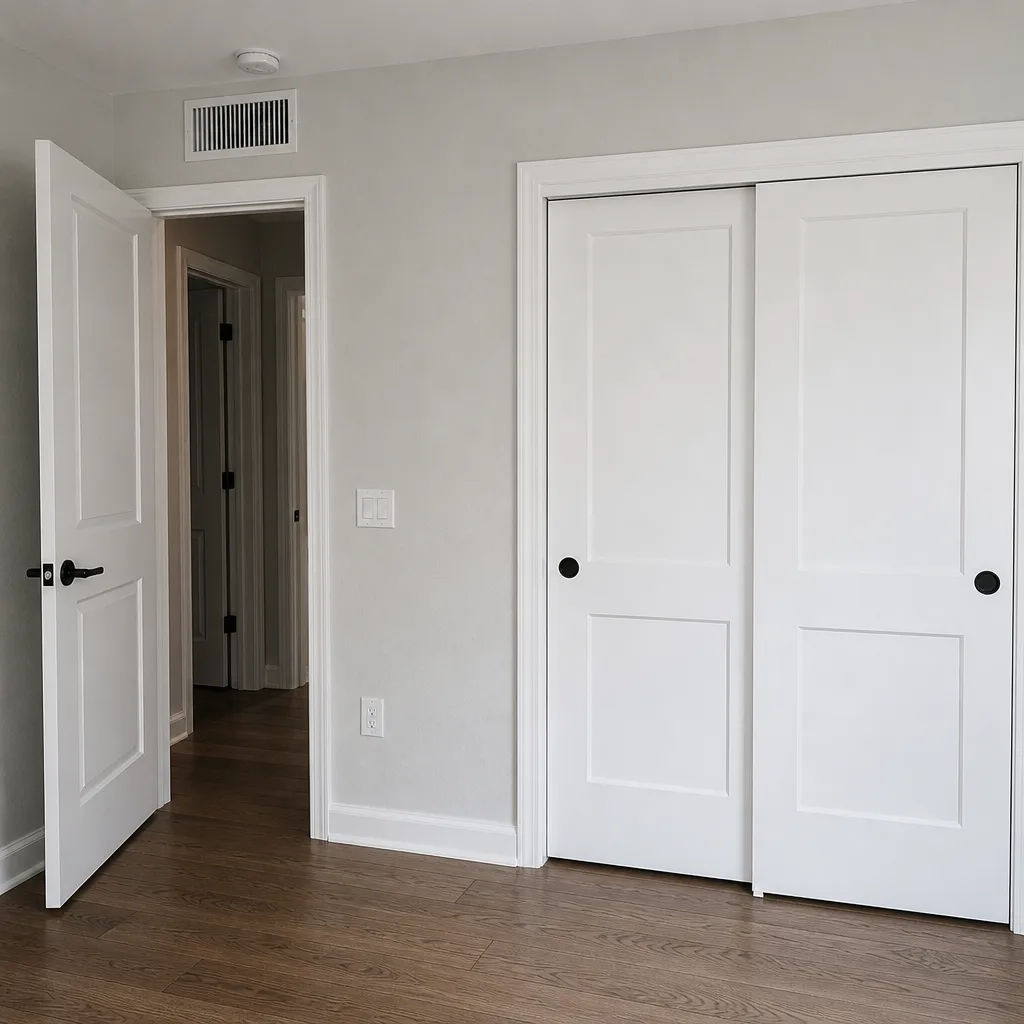
See the difference
 Before
 After
 Before
 After
 Before
 After
Common Mold Remediation Problems We See in Orange Homes
- Lath-and-plaster walls that can’t just be cut out. In Orange’s pre-1920s housing stock, a moldy wall often means original lath-and-plaster over redwood studs. Cutting it out wholesale triggers preservation review and loses material you can’t replace. We dry and treat in place where possible.
- Galvanized supply-line pinhole leaks inside east-side walls. 1950s-70s tract homes in Orange often still have original galvanized piping. These pipes fail from the inside out, leaking for weeks before you see anything. The mold behind the drywall is almost always worse than the stain on the outside.
- Crawl spaces that never dry out. Many older Orange homes sit over dirt crawl spaces with no vapor barrier. Winter rain seeps in, summer humidity rises through floorboards, and the underside of the house becomes a mold factory no one sees.
- Street-visible repairs that stall at permit review. In Old Towne, any exterior or visible structural work must pass historic-preservation review. If a general contractor starts cutting without that step, the job can stop for weeks. We write material-matching into the scope from day one.
Pricing for Mold Remediation in Orange, CA
We Also Serve Cities Near Orange
Our crews work throughout the Orange area, including Villa Park, North Tustin, Tustin, and Anaheim. If you’re a few minutes outside the city line in one of those communities and you’ve found mold, the same IICRC-certified process, commercial-grade equipment, and written scope apply. Call (855) 356-4970 and we’ll route the nearest available crew.
Serving Orange, CA — Our Local Coverage Area
We’re based in the Orange area and know this community well. Use the map below to see our service coverage — if you’re nearby, we can almost certainly help.
FAQs About Mold Remediation in Orange
Why does mold remediation in Old Towne Orange take longer than in other parts of the city?
Because any visible or structural work in the Old Towne Historic District goes through the city’s historic-preservation review, which requires material-matching for plaster, trim, and exterior finishes. We write that lead time into the schedule from the start, and our drying and treatment approach is built to preserve original lath-and-plaster rather than demo it, so the review itself doesn’t add more than a few days. Call (855) 356-4970 if you’re in Old Towne and need a scope that accounts for the review.
How fast can mold start after a winter roof leak in an older Orange home?
Under the right conditions, mold starts colonizing within 48 to 72 hours of water saturation. In Orange’s older homes with single-pane windows, lath-and-plaster, and unsealed framing, moisture often lingers longer because the building envelope traps humidity. By the time a stain shows on a ceiling, the growth behind it is usually established. The faster we get on it, the less material gets removed.
Does a galvanized plumbing leak in a mid-century east-side home need more than drying?
Yes. Galvanized pipes in 1950s-70s Orange tract homes fail with pinhole leaks that run for weeks before detection, meaning the water has already soaked drywall, bottom plates, and insulation. Drying alone leaves dead mold spores and contaminated material in the wall. We remove the affected drywall, treat the framing with antimicrobial, and verify moisture readings before closeout.
Can you remediate mold without removing the original plaster in an Old Towne bungalow?
Yes, in many cases. We run Injectidry panel drying on lath-and-plaster walls to pull moisture from the cavity without opening the wall, then treat the surface and the cavity with antimicrobial. If the plaster is structurally sound, that approach saves the original material and avoids the historic-preservation review that would come with demolition. It works best when the water source is caught early.
What does black mold removal look like in Orange’s 1950s-70s tract homes?
Black mold in a mid-century Orange tract home usually sits behind drywall and spreads along bottom plates and stud cavities. We cut out the affected drywall, bag it in 6-mil poly for disposal, HEPA vacuum the framing, treat it with antimicrobial, and run air scrubbers during the removal. The typical job there runs $1,800 to $4,200 depending on spread. For an exact quote on your home, call (855) 356-4970.
Written by Noel Carrasco, Owner at Mahogany Water Damage, serving Orange since day one with IICRC-certified restoration work.