
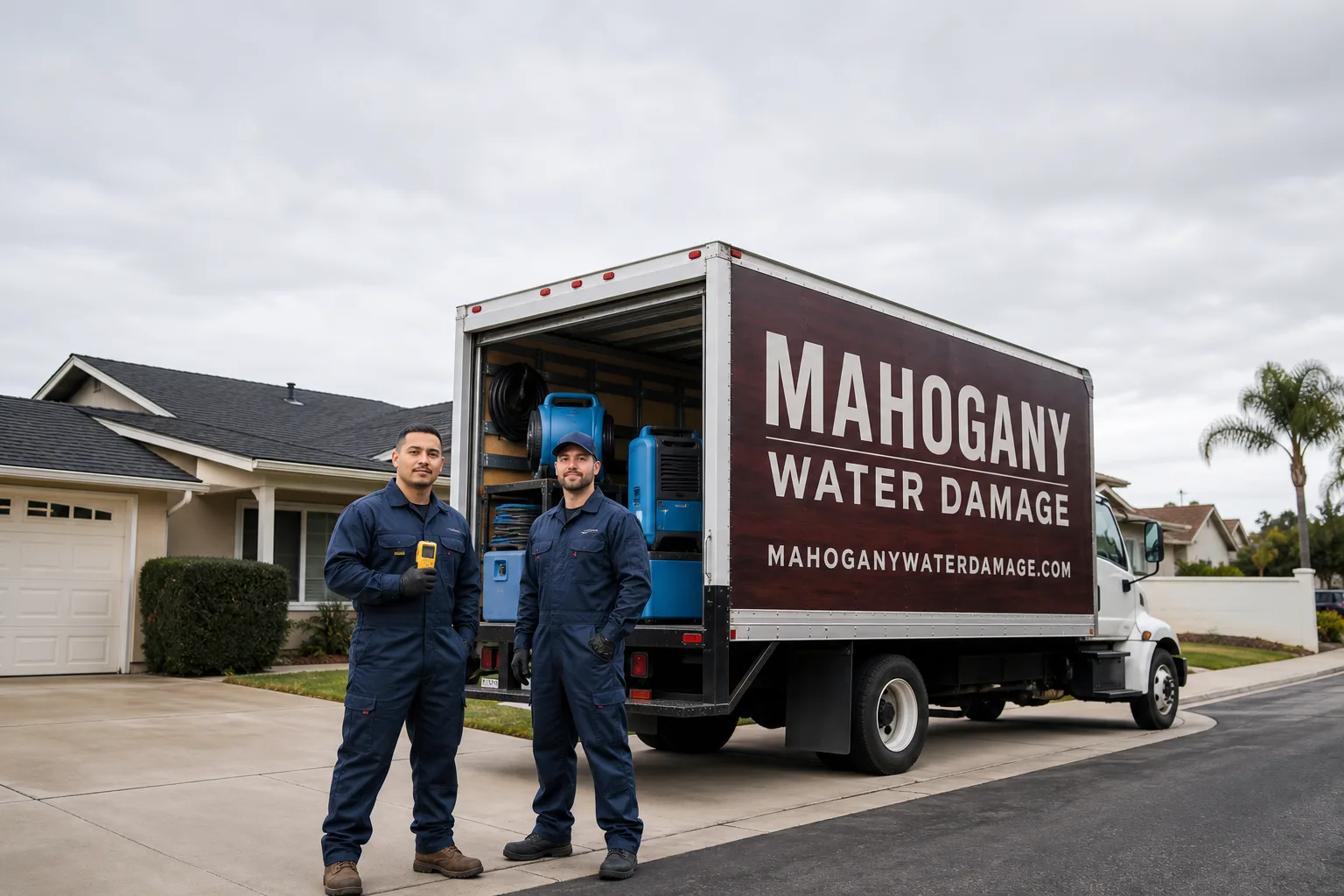
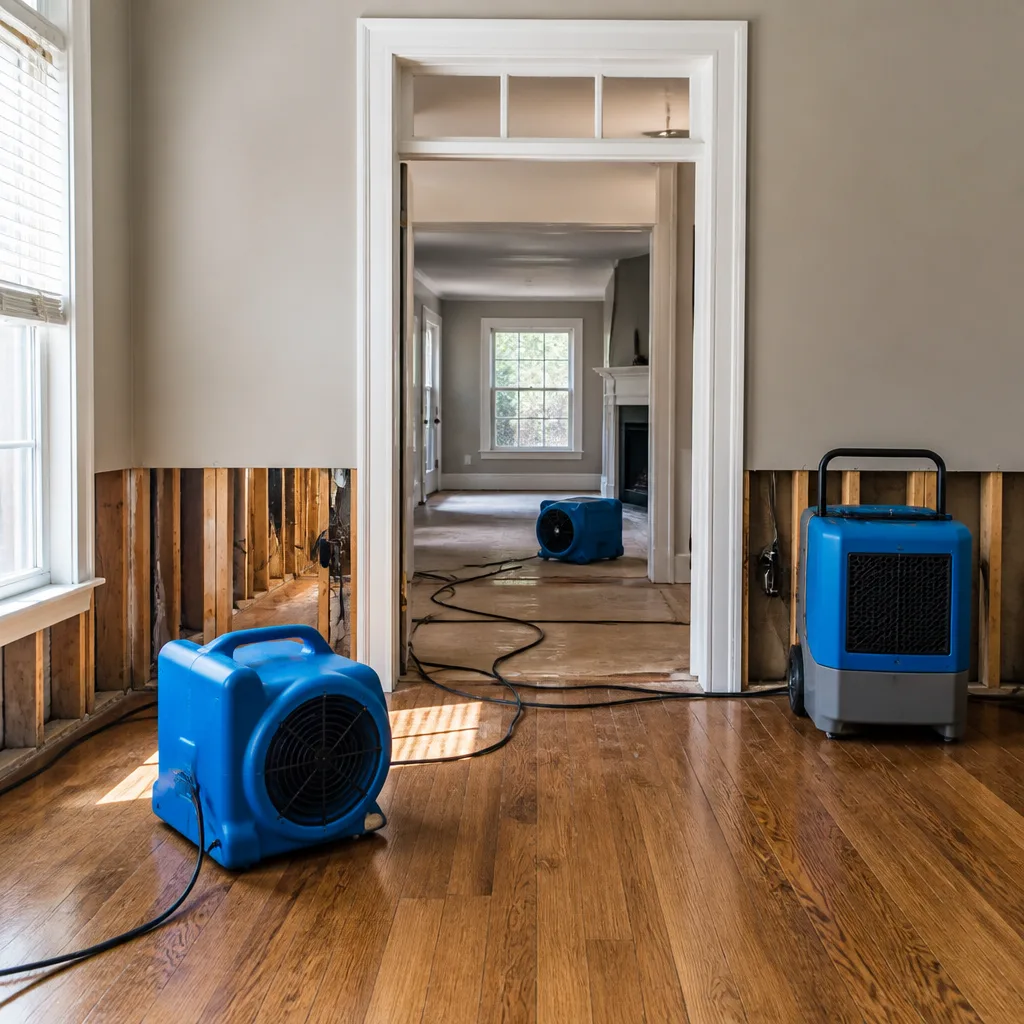
 Water damage drying
 Fire & smoke cleanup
 Mold remediation
 Storm response
 Sewage cleanup
 Reconstruction
Free visual inspection and a written scope of work before any mitigation begins - photos, moisture readings, and drying logs go in your claim file
The scope we write is the scope we bill. Anything new gets shown to you, in writing, before we touch it.
Get your free estimateFast, Reliable Mold Remediation Across March Air Force Base
Mold remediation in March Air Force Base typically runs $1,800 – $6,500 depending on how far the growth has spread and whether hidden plumbing failures are feeding it. Most jobs we handle here take 2 – 5 days from containment to clearance. If you’re dealing with visible mold, a musty smell that won’t quit, or water damage that was never properly dried, call us at (855) 356-4970 for a free assessment. We know the housing stock on and around the base, and we know how fast mold takes hold in these older homes when a leak goes unnoticed.
March Air Force Base has a specific problem most restoration companies don’t talk about: the rotation cycle. Families PCS in and out on military orders, and vacant units sit through Inland Southern California heat for months at a time. A slow slab leak or a failing water heater in an empty house doesn’t announce itself. By the time new occupants arrive, mold has often been growing for weeks or months behind walls and under flooring. That means the pre-loss condition is unknown, and remediation has to treat every job as potentially older and more extensive than it looks on the surface.
Key Takeaways:
- Mold remediation in March Air Force Base ranges from $1,800 – $6,500 depending on scope and hidden moisture sources.
- Homes built in the 1950s – 1970s here often have original galvanized plumbing that fails slowly and feeds mold behind stucco.
- Vacant military housing complicates mold timelines: growth often predates the current occupants.
- We use IICRC-certified processes and commercial-grade Dri-Eaz and XPOWER equipment on every job.
- Call (855) 356-4970 for a free estimate, including a written scope before any work starts.
Why Mahogany Water Damage Is March Air Force Base’s Preferred Mold Remediation Company
Homeowners and property managers in March Air Force Base call us because we understand what they’re up against. The 1950s enlisted housing near the old airfield, the mid-century tract homes off Van Buren Boulevard, and the base-adjacent rental units in the 92551 ZIP all share a common thread: aging plumbing that fails quietly. When we arrive at a mold job here, we’re not surprised to find a galvanized supply line that’s been weeping inside a wall cavity for months. That’s the job, not an add-on discovery.
Strong local reputation matters in a community this tight-knit. March Air Force Base homeowners and landlords talk, and the word on us is that we show up with the right equipment and a written scope before we touch anything. Our reviews from this area consistently mention two things: we don’t oversell the damage, and we document everything for insurance. That second part matters a lot when a claim involves a property that sat vacant between tenants.
Response time to March Air Force Base is usually same-day or next-day for active mold growth. Vacant units with confirmed mold can be scheduled within the week. We carry the equipment needed to set up containment and start drying on the first visit, not after a second trip to the shop. Dri-Eaz dehumidifiers, Phoenix axial air movers, and moisture mapping tools roll onto the job with us every time.
Led by Noel Carrasco, our team holds IICRC certification and maintains memberships with the RIA and IFA. That’s not decoration. It means our processes are independently verified, our drying logs are defensible, and our scopes of work hold up to adjuster review. For a mold job in March Air Force Base, where the source of moisture is often hidden behind original stucco, that rigor is the difference between a job that’s done and a job that comes back.
Restoration work we handle
Mold Remediation Services in March Air Force Base
Mold Remediation Services in March Air Force Base start with a clear question: where is the moisture coming from, and how long has it been there? In this housing stock, the answer is frequently a galvanized supply line that’s been failing for months behind a stucco wall or a water heater that gave out while the property sat vacant. Our Mold Remediation process always begins with moisture mapping and a documented inspection, because removing visible mold without fixing the source is just rescheduling the problem.
Containment and Source Removal
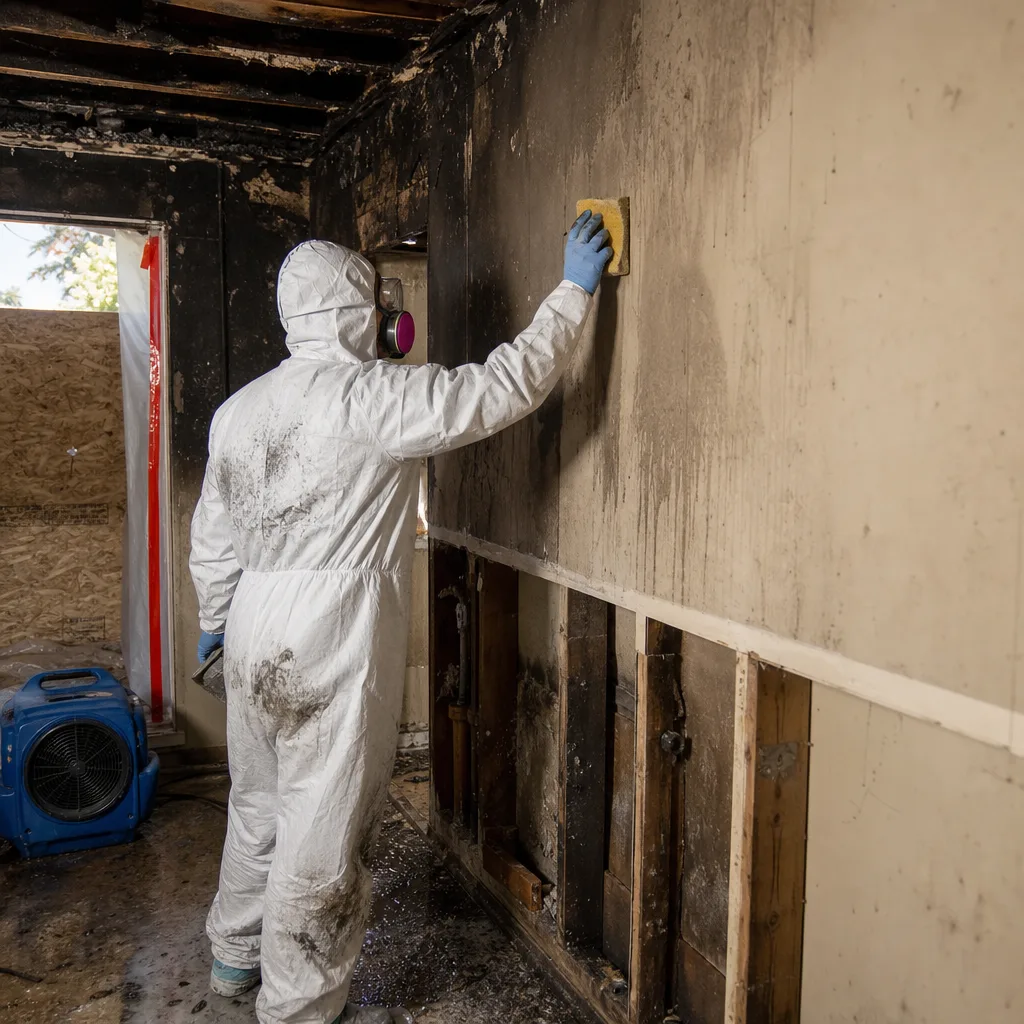
We set up negative-air containment with HEPA filtration before any material is disturbed. That keeps spores from spreading into living areas during removal. The actual scope typically includes cutting out affected drywall, treating framing with antimicrobial solutions, and removing any insulation that’s been compromised.
Drying and Clearance Verification
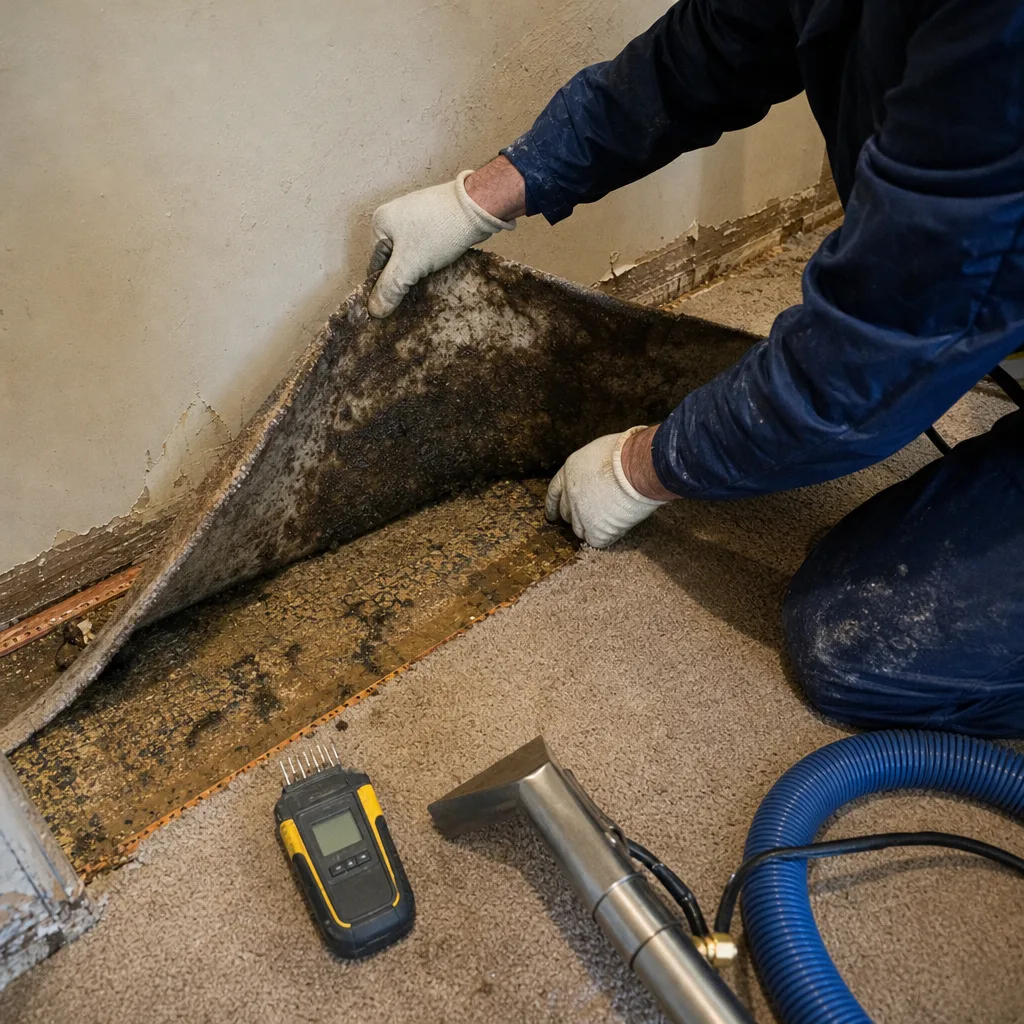
After removal, we run commercial-grade drying equipment until moisture readings return to normal levels, then document those readings. That documentation is what your adjuster needs to close a claim, and what a future tenant needs to know the unit was actually restored to standard.
Expect to budget $2,200 – $5,500 for a typical contained remediation in March Air Force Base. Small bathroom jobs can run as low as $1,800. Whole-house or crawl space work can exceed $6,500.
What happens when you call
- 1
A real person answersNo phone trees — you reach a local pro.
- 2
You get an upfront price rangeHonest numbers before anyone is dispatched.
- 3
A background-checked tech heads outLicensed & insured, dispatched right away.
- 4
You approve before work beginsNothing starts until you say go.
Professional Mold Removal in March Air Force Base
Professional Mold Removal in March Air Force Base is not a surface wipe-down. It’s removal of the material that’s actually holding the mold, which in these 1950s – 1970s homes usually means drywall, baseboards, and sometimes flooring. We see a lot of cases where someone painted over mold or sprayed bleach on it, and six weeks later the problem is back because the moisture source inside the wall was never addressed.
Hidden Mold Behind Stucco Walls
Stucco exteriors trap moisture differently than siding. When a galvanized line fails inside a wall, the stucco doesn’t show it the way wood siding might. Moisture mapping with thermal imaging is the only reliable way to find these leaks before demolition starts. We do that on every single removal job here.
Garage and Water Heater Closet Mold
Water heaters in older March Air Force Base homes are often in garages or narrow closets with no drain pan. When one fails, water sits against drywall and framing for weeks or months. We remove the affected material, treat the framing, and recommend whether the heater’s location needs remediation beyond the mold work.
Professional mold removal in this market generally runs $1,800 – $4,800 depending on the affected area. If plumbing repair is involved, that’s a separate line item we coordinate so you’re not juggling two contractors.
Trusted Brands We Service in March Air Force Base
March Air Force Base homes have a mix of original 1950s – 70s plumbing fixtures and decades of ad-hoc replacements. We service and replace all common brands including Rheem, Bradford White, AO Smith, and the older galvanized supply lines that feed them. We stock common replacement parts locally for the 92551 area, which means most repair-source work happens on the first visit rather than after a parts run. When you’re dealing with a mold problem that started at a water heater or pipe fitting, fast source correction is what keeps the job from dragging out. We match the original material where it matters and upgrade where the old design is the problem.
See the difference
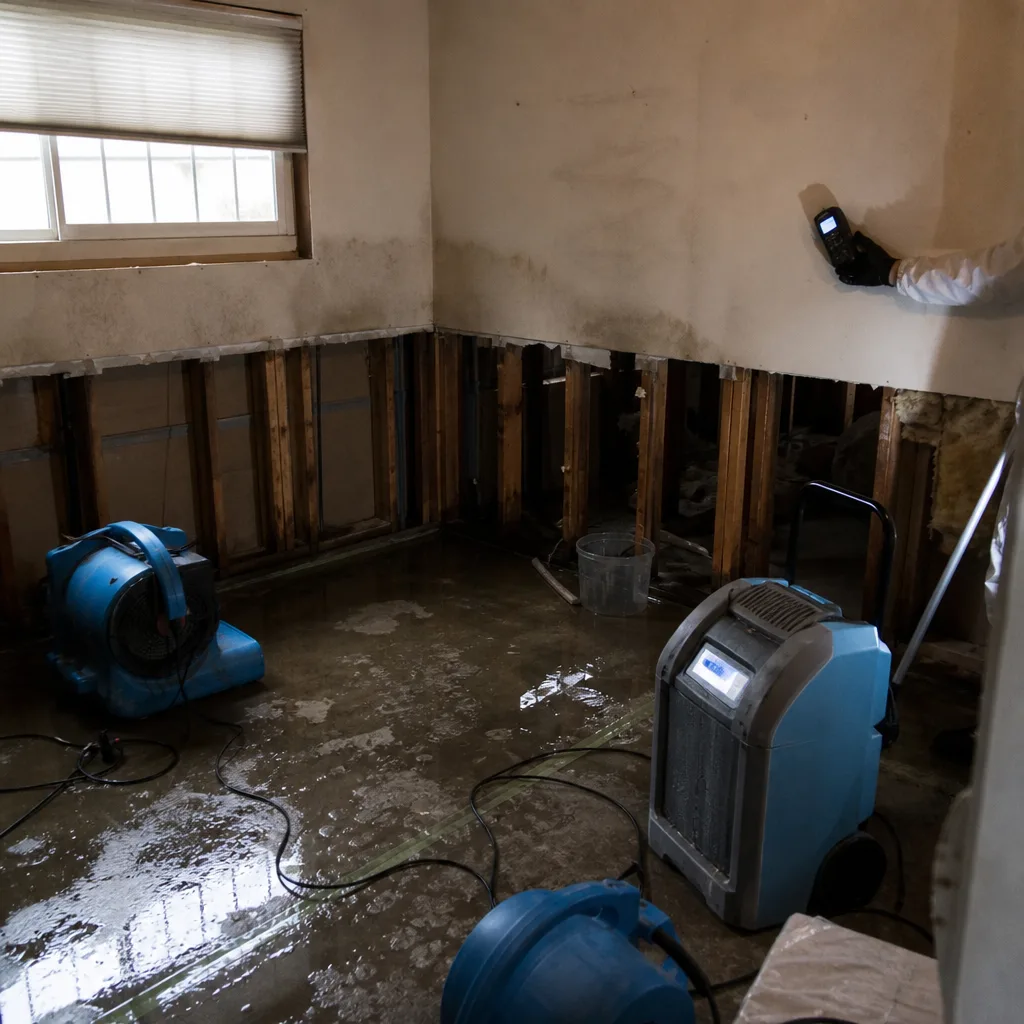 Before
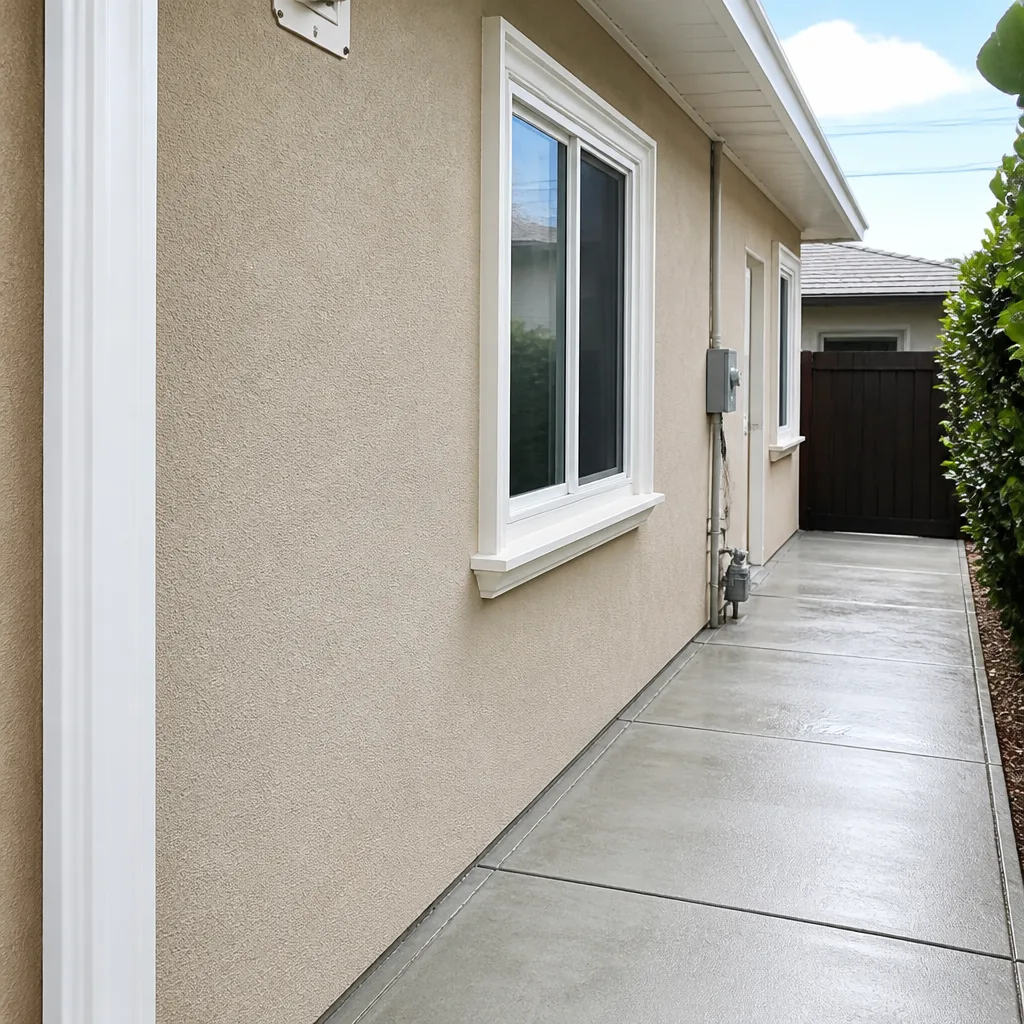 After
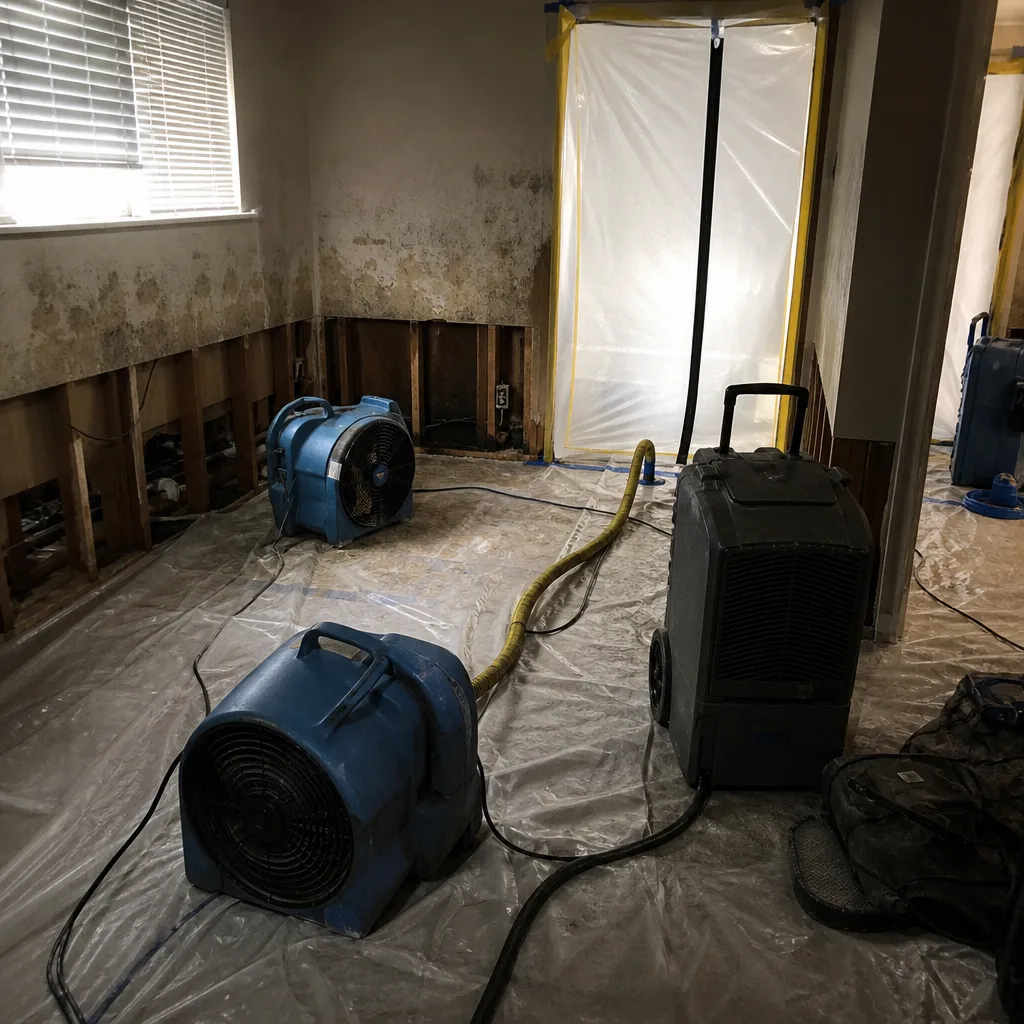 Before
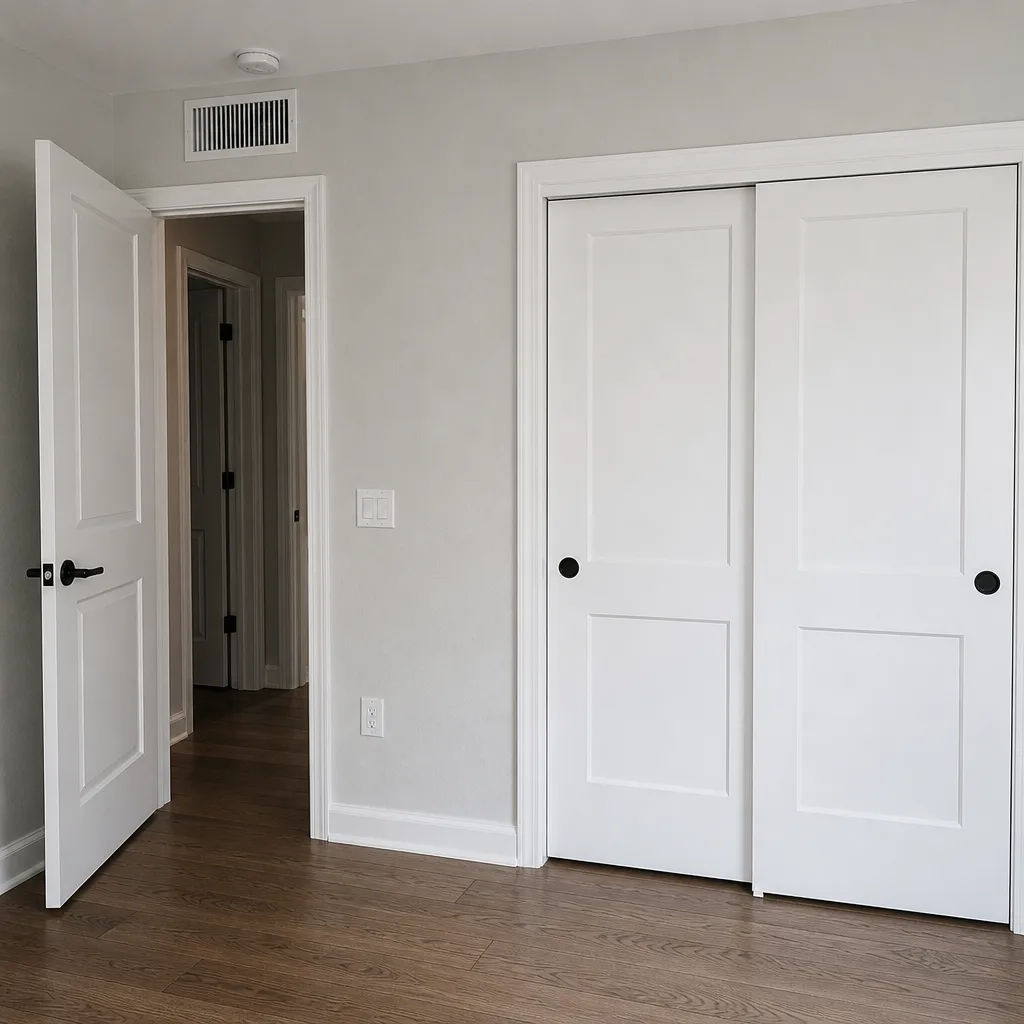 After
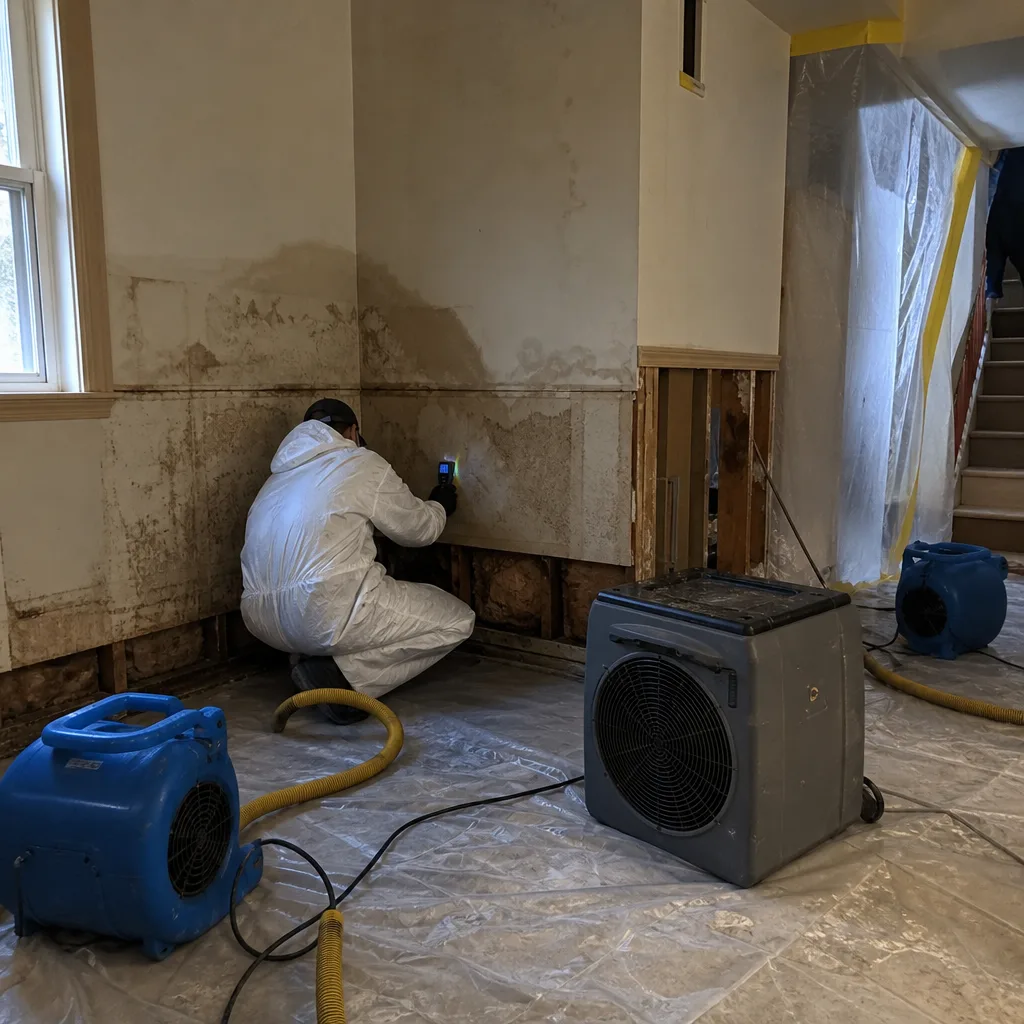 Before
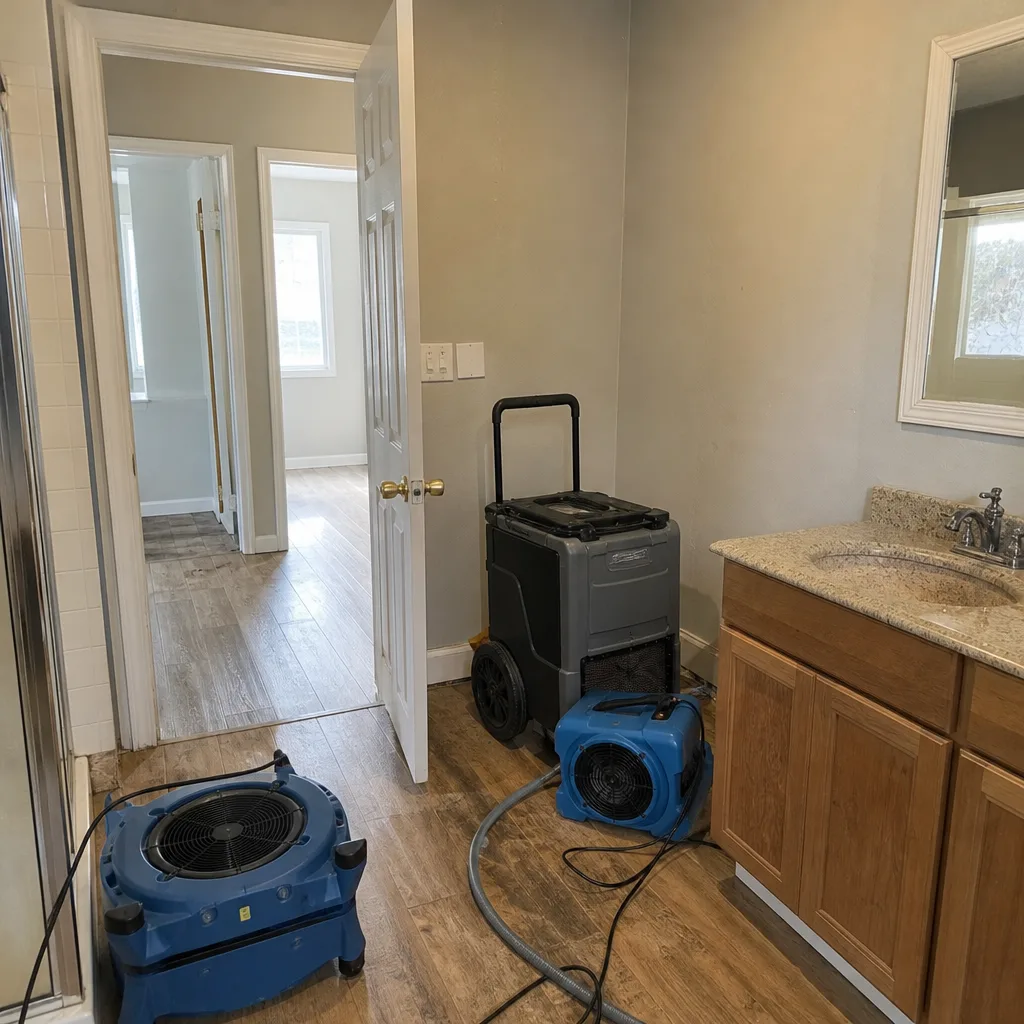 After
Common Mold Remediation Problems We See in March Air Force Base Homes
- Mold that predates occupancy. Vacant units sit through hot, dry months while a slow slab leak feeds mold behind walls. New families arrive to find growth that started long before they signed the lease.
- Hidden galvanized line failures. Original supply lines from the 1950s – 70s corrode from the inside out. Visible mold on a wall often traces back to a pinhole leak behind stucco that’s been dripping for months.
- Skipped moisture mapping. Some crews see visible mold, cut it out, dry the surface, and leave. We regularly find elevated moisture readings extending 3 – 4 feet beyond the visible growth in these homes.
- Unpermitted additions with odd cavity sizes. Older March Air Force Base homes often have additions built without permits. Stud spacing and fire blocking don’t always match code, which means containment and drywall replacement has to be planned carefully or mold comes back.
Pricing for Mold Remediation in March Air Force Base, CA
Here’s what you can expect to pay in the 92551 area right now. Small isolated jobs, like a bathroom wall or closet, run $1,800 – $3,200. Medium jobs covering a bedroom or hallway run $3,200 – $5,500. Whole-home or crawl space remediation runs $5,500 – $6,500 and up. What moves the number: how far moisture has traveled, whether framing needs treatment or replacement, and whether containment has to stay up for multiple days of drying. We give a written scope before work starts, so you’re not getting surprise line items mid-job. Estimates are free. Call (855) 356-4970 to schedule one.
We Also Serve Cities Near March Air Force Base
Our crews regularly work throughout March Air Force Base and the surrounding communities. We handle mold remediation in Moreno Valley, Woodcrest, Perris, and Good Hope as well. If you’re managing a property anywhere in this part of Riverside County, give us a call at (855) 356-4970.
Serving March Air Force Base, CA — Our Local Coverage Area
We’re based in the March Air Force Base area and know this community well. Use the map below to see our service coverage — if you’re nearby, we can almost certainly help.
FAQs About Mold Remediation in March Air Force Base
That depends on the cause. If the mold traces to a maintenance issue, like a failed water heater or a leaking galvanized pipe, the landlord or property manager is generally responsible for remediation under California habitability law. If the mold resulted from tenant behavior, like failing to report a visible leak, liability can shift. Documentation is what protects you either way. We provide photo documentation and moisture logs that clearly show the source and timeline of the growth. Call (855) 356-4970 if you’re in the middle of this situation and need an assessment.
Mold starts growing within 24 – 48 hours of a water event, but in March Air Force Base homes with original galvanized pipes, the “event” is often a slow pinhole leak that’s been active for months. That means the 24 – 48 hour window has long passed by the time anyone notices. We treat these cases as Category 3 water loss with established mold, which requires removal of affected material rather than drying alone. The earlier you catch a stain or a musty smell, the smaller the scope. If you’re unsure, err on the side of calling us at (855) 356-4970.
Yes. Unpermitted additions are common in this housing stock, and they create real problems: odd stud spacing, missing fire blocking, and cavities that don’t match standard drywall dimensions. We map the actual framing before cutting anything, which keeps containment tight and prevents new mold growth behind the repair. A written scope still applies, and we’ll flag any structural issues we find so you’re making an informed decision. If the addition has hidden plumbing, that’s often where the moisture source is hiding.
We run Dri-Eaz dehumidifiers and Phoenix air movers on every mold job in March Air Force Base, plus XPOWER units for tight spaces. These are commercial-grade systems, not rental units, and they’re calibrated before they go on your job. After removal, we run the equipment until moisture readings return to documented dry standards, then we share those logs with you and your adjuster. That drying documentation is often what closes an insurance claim without back-and-forth.
Yes. When a PCS move happens and the new home has active mold, or when a remediation requires contents to leave the affected area, we coordinate pack-out of personal property to a clean staging area. We inventory and document everything, and we can store items while remediation is underway. This matters for military families who don’t have months to wait. We understand that overlapping timelines with PCS orders and housing inspections are common here. Call (855) 356-4970 and we’ll walk you through the sequence.
We responded to a mold call in the 1950s enlisted housing near the old airfield where a family had just PCS’d in. The previous occupants had left a failing water heater in the garage, and moisture mapping showed elevated moisture readings across two interior walls. Our techs set up containment with Dri-Eaz dehumidifiers and XPOWER air movers, removed Category 3 drywall, applied antimicrobial treatment, and documented drying logs to show the scope of work was complete before the family unpacked.
Written by Noel Carrasco, Owner at Mahogany Water Damage, serving March Air Force Base and the Inland Empire with IICRC-certified mold remediation, water damage restoration, and fire damage restoration.