
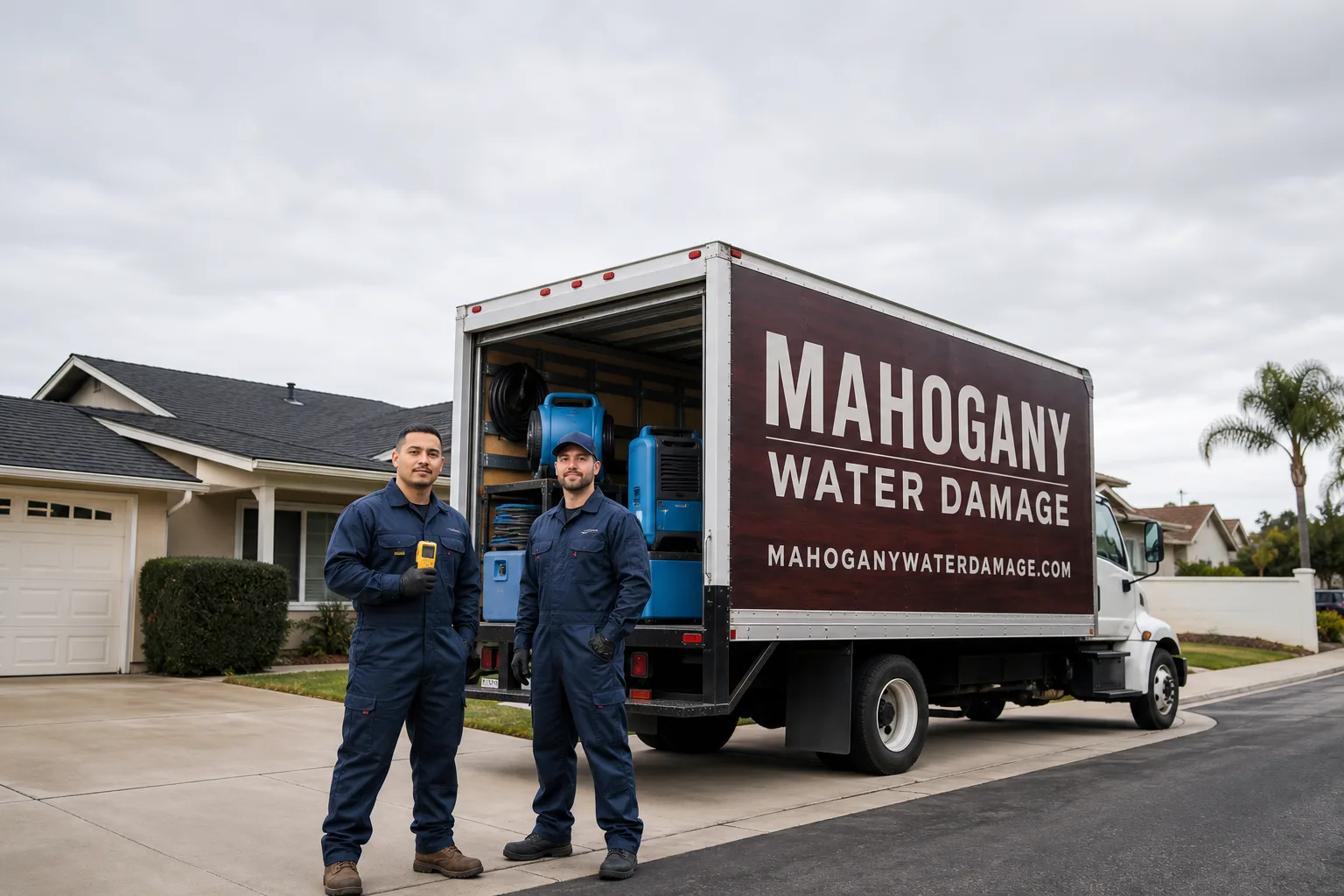
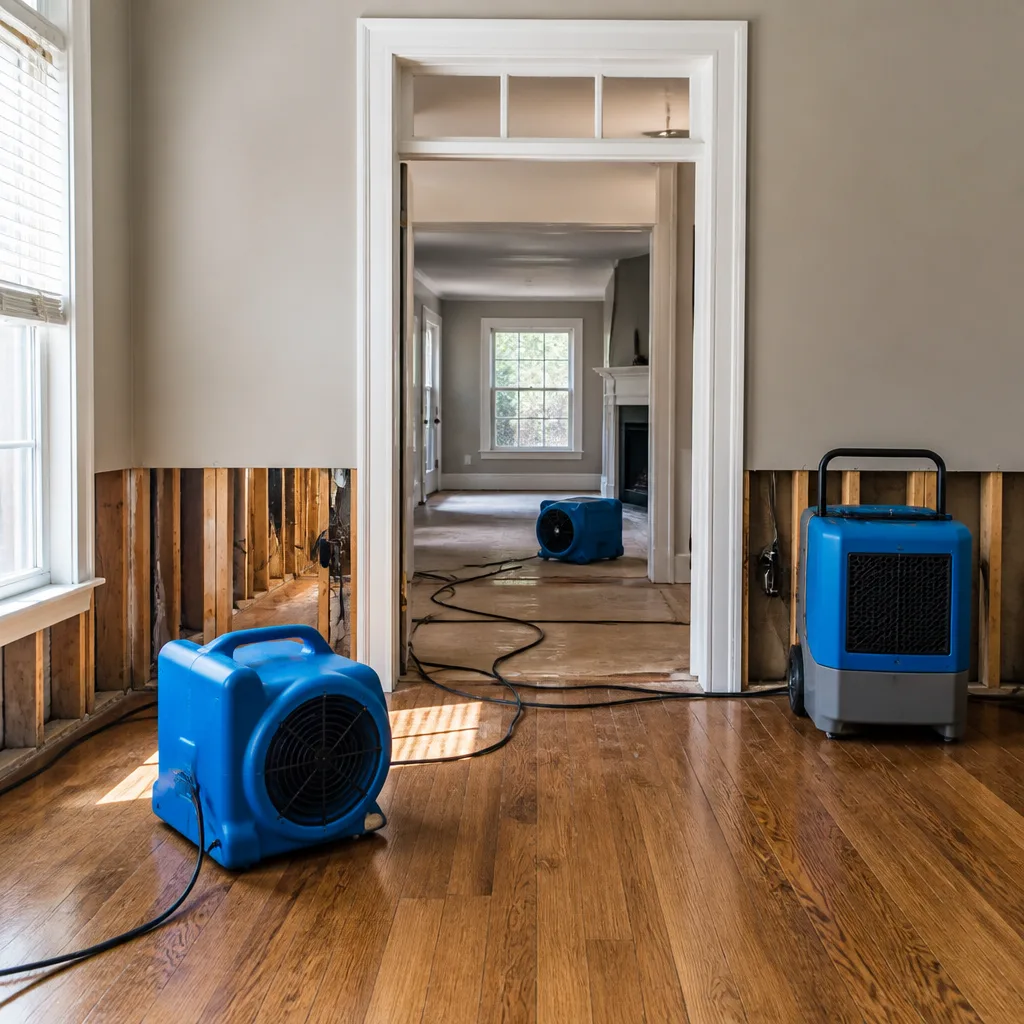
 Water damage drying
 Fire & smoke cleanup
 Mold remediation
 Storm response
 Sewage cleanup
 Reconstruction
Free visual inspection and a written scope of work before any mitigation begins - photos, moisture readings, and drying logs go in your claim file
The scope we write is the scope we bill. Anything new gets shown to you, in writing, before we touch it.
Get your free estimateFast, Reliable Mold Remediation Across Corona
Mold remediation in Corona typically costs between $1,800 and $6,500 depending on how far the growth has spread and whether it’s reached the attic, HVAC system, or wall cavities. Most jobs we handle in Corona are completed within three to five days, with containment set up the same day we assess the damage. If you’re seeing dark spots on drywall, smelling musty air near the air handler, or dealing with moisture after a Santa Ana wind event or winter storm, call us at (855) 356-4970. We know Corona’s housing stock, its canyon neighborhoods, and the specific ways mold takes hold here.
Noel Carrasco, owner at Mahogany Water Damage, has built the team around one principle: dry smarter, demolish less. That means we map moisture with thermal imaging before we cut anything open, and we treat framing with antimicrobial applications instead of tearing out materials that can be saved. Corona homeowners deserve a Mold Remediation process that’s documented, measured, and finished to a verifiable standard, not a guess followed by a demolition bill.
Why Mahogany Water Damage Is Corona’s Preferred Mold Remediation Company
Corona sits in a strange spot for mold. Most people think of it as dry, and it is, most of the year. But the Santa Ana winds that blow down from the Santa Ana Mountains push smoke and fine particulate matter into attic vents, HVAC returns, and garage walls. Then winter storms hit the burn scars and canyon neighborhoods with debris flows and flash flooding. Homes in Corona get hit from both directions, often within the same calendar year.
Our IICRC-certified process means the work follows the restoration industry’s most recognized independent standard. We’re RIA members and IFA-affiliated, so we’re accountable to professional organizations, not just our own internal checklist. When we set up containment in a Corona home, we use commercial-grade equipment from Dri-Eaz and Phoenix, the same systems large commercial restoration firms run. We own the equipment. It’s calibrated, maintained, and matched to the square footage and moisture load of each job.
Response time to Corona matters because mold spreads fast once moisture is present. We dispatch to Corona the same day you call, and we bring enough equipment on the first truck to start drying, not just assess. That’s the difference between a $1,800 containment job and a $9,000 tear-out.
Restoration work we handle
Professional Mold Removal in Corona
Professional Mold Removal in Corona starts with understanding where the moisture came from, because removing mold without fixing the moisture source just resets the clock. In Corona, that source is often an HVAC system that pulled smoke and condensation during a Santa Ana event, a wind-rated door that failed at the seal, or a pier-and-beam crawlspace under an older home near Grand Boulevard that channeled winter rain. We find the source first, then contain, treat, and remove the growth under negative air pressure so spores don’t cross-contaminate the rest of the house.
A typical mold removal job in Corona runs $1,800 to $4,500 when growth is confined to a single room or wall cavity. When it reaches the attic insulation or the air handler, expect $4,000 to $6,500 or more depending on how many feet of ductwork need cleaning and whether the insulation needs to be removed and replaced.
Containment and Source Removal
We set up full containment with 6-mil poly barriers and negative air machines before disturbing any visible mold. This keeps spores from spreading into living areas and the HVAC system. Our techs wear full PPE, remove affected drywall or insulation, bag it on site, and seal the area until clearance testing confirms the spore count is back to normal background levels for Corona.
Antimicrobial Treatment and Drying
On the framing and any salvageable materials, we apply antimicrobial treatment rated for the type of growth we’re dealing with in that specific Corona home. Then we run Phoenix or Dri-Eaz air movers and dehumidifiers until moisture meters read dry, not until the surface feels dry. We document every reading. When the scope of work is closed, you get the drying logs.
Mold Inspection in Corona
Mold Inspection in Corona should look beyond visible stains and damp drywall. After a Santa Ana wind event, smoke residue gets pushed into the HVAC system and attic insulation of homes in Dos Lagos and Sierra Del Oro even when flames never came within miles. That residue carries carbon and fine particulates which, when combined with condensation or moisture, create the food source mold needs. A proper inspection in Corona means checking the air handler, the return plenum, the attic insulation, and the supply registers, not just the wall behind the couch.
We offer mold inspection and testing in Corona starting around $300 for a targeted visual inspection with moisture mapping and thermal imaging. A full inspection with air sampling and surface swabs typically runs $500 to $900 depending on the size of the home and how many samples are collected. If you’re buying or selling a home in Corona, or you’ve noticed a musty smell that comes and goes, the inspection is the cheapest part of the process compared to guessing wrong.
HVAC and Attic Focus
We spend extra time on attic and HVAC inspection in Corona because of the wind-driven smoke pattern. The return plenum and flex ducts are common collection points. Insulation that smells smoky or feels damp is a red flag, even if the ceiling below looks fine. We use thermal imaging to find temperature differences that indicate hidden moisture.
Air Sampling and Lab Results
When we collect air samples, we send them to an independent lab and compare indoor spore counts to an outdoor baseline for Corona that same day. That comparison matters because some mold species are always present outdoors. A high indoor count of Cladosporium or Aspergillus, or the presence of Stachybotrys, tells us more than a visual inspection ever can. Results come back in 48 to 72 hours, and we walk you through what they mean.
Trusted Brands We Service in Corona
We service and use Dri-Eaz and Phoenix drying equipment on every Corona job, along with XPOWER air movers for smaller confined spaces. Because we own the equipment, we’re not waiting on a rental yard to send a unit that may or may not work. For Corona customers, that means faster setup and fewer delays. We stock replacement filters, antimicrobials, and containment supplies in our Fullerton warehouse, so a morning dispatch to Corona doesn’t turn into an afternoon waiting on parts.
Common Mold Remediation Problems We See in Corona Homes
- Hidden mold in attic insulation and HVAC components after Santa Ana winds. Smoke gets pushed into vents and attics in Dos Lagos and Sierra Del Oro even when flames never came close. The residue combines with normal attic condensation, and mold grows inside the insulation where nobody sees it until the smell gets strong.
- Pier-and-beam crawlspace moisture in older homes near Grand Boulevard. Winter rains channel water under these 1950s and 1960s homes, and the crawlspace holds humidity for weeks. Mold on floor joists and subflooring in these Corona homes often goes unnoticed until the floors start to soften.
- Cross-contamination from insufficient containment. When a wind-damaged door or window lets Category 2 or Category 3 water into the wall cavity, opening up that wall without proper negative air pressure sends spores throughout the house. We’ve seen this happen in Corona more times than we can count, and it turns a $2,500 fix into a $10,000 problem.
- Rebound growth from skipping antimicrobial treatment. Some crews remove the visible mold, dry the area, and close the wall. If the framing wasn’t treated with an antimicrobial, the mold comes back in a few months. Corona’s dry heat can mask this by drying the surface, but the spores stay viable. Then winter comes and the cycle starts again.
See the difference
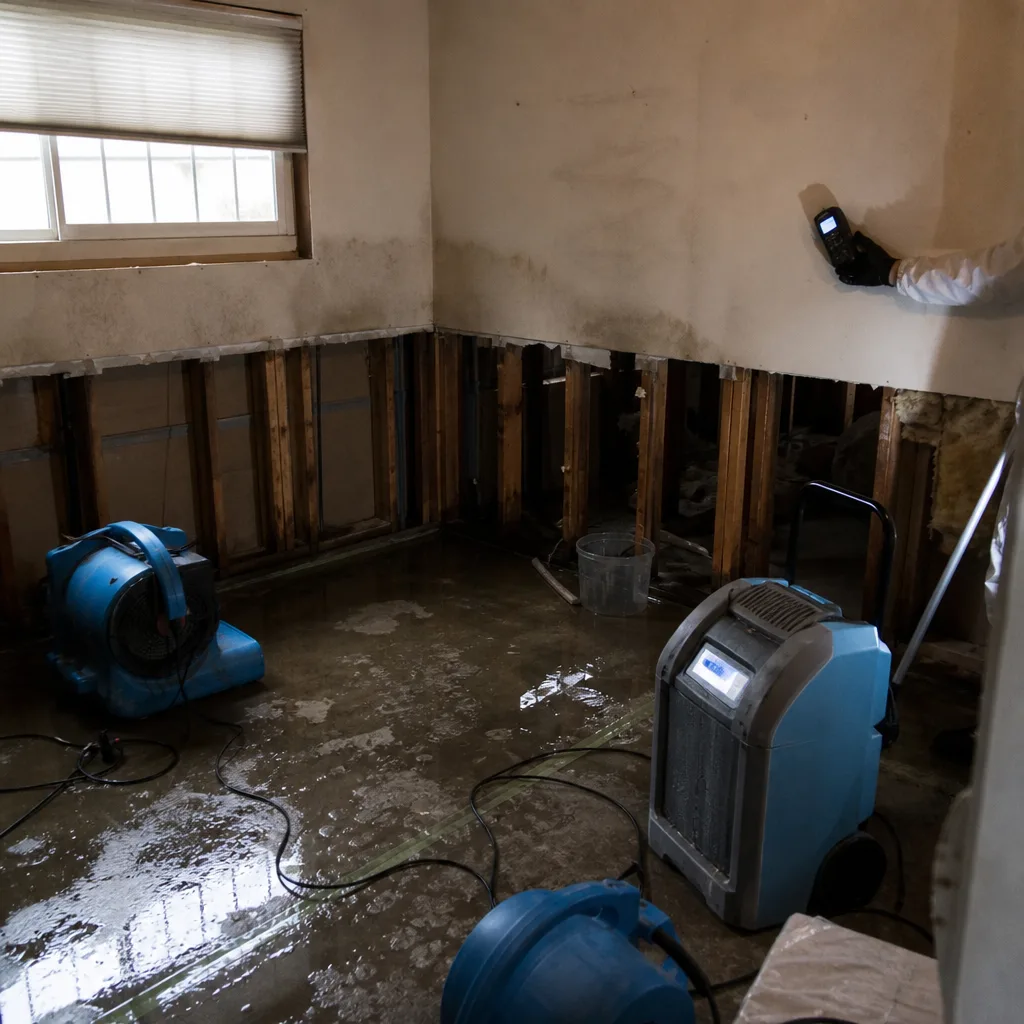 Before
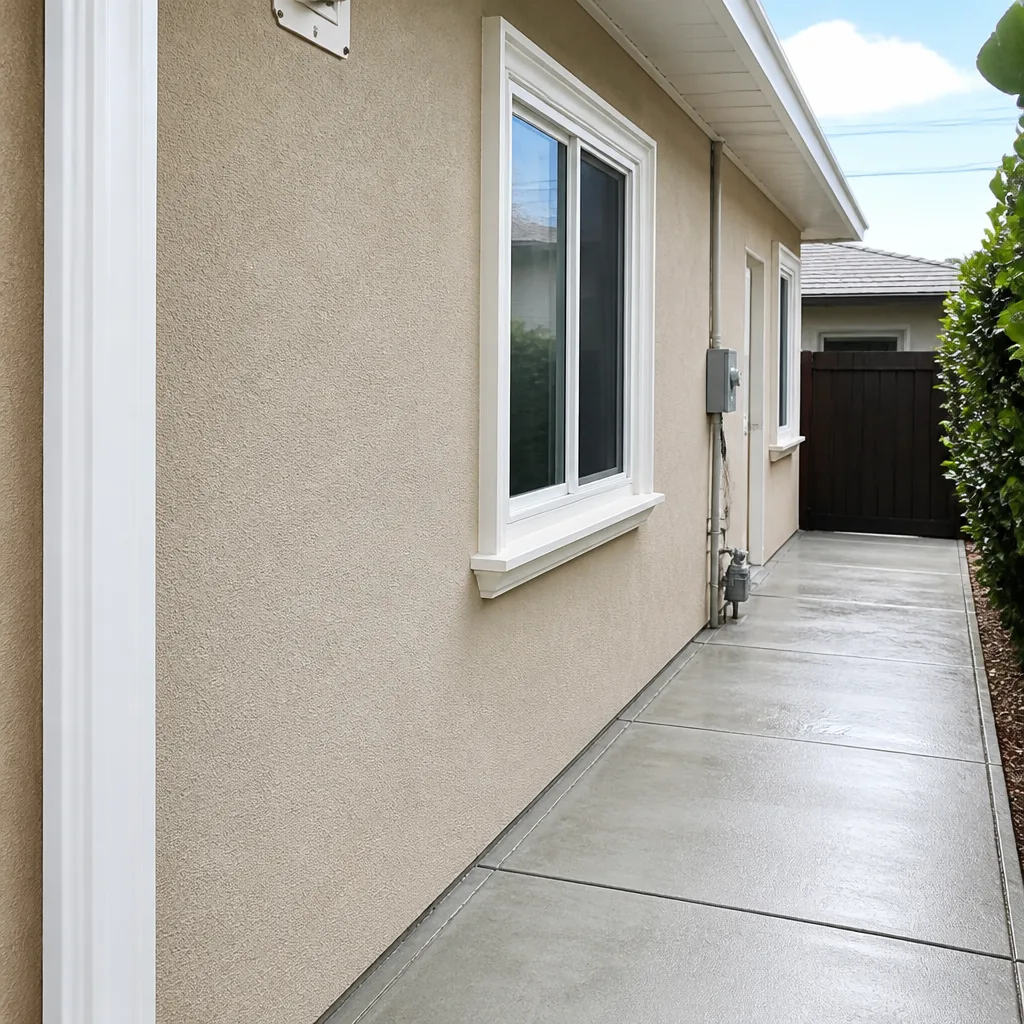 After
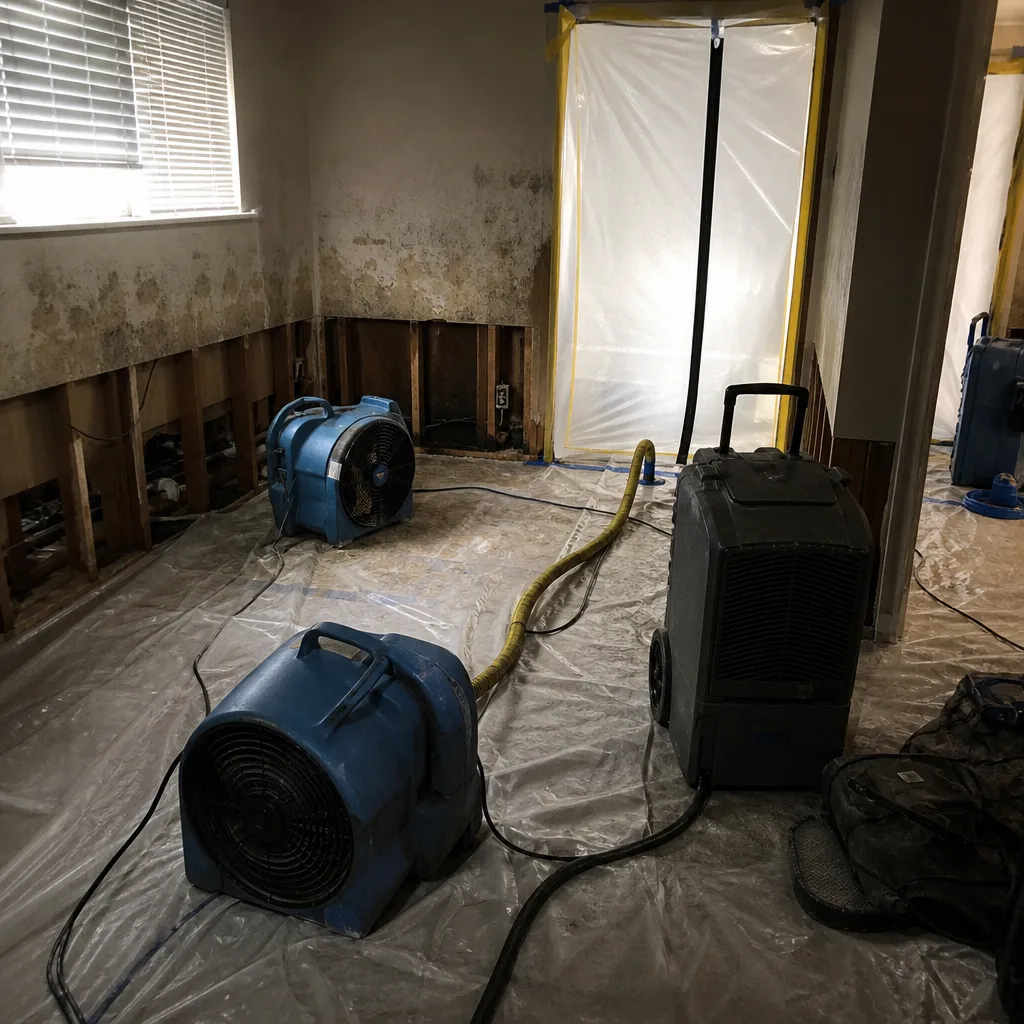 Before
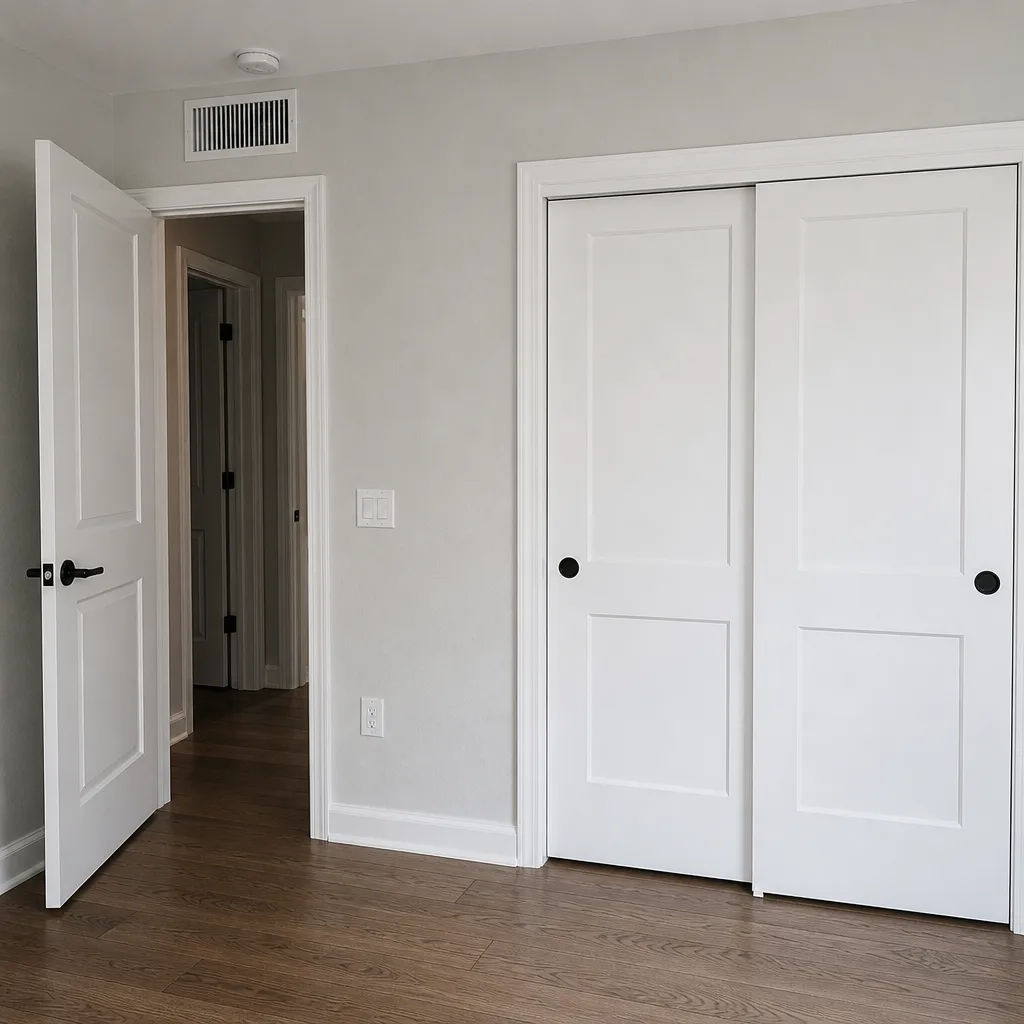 After
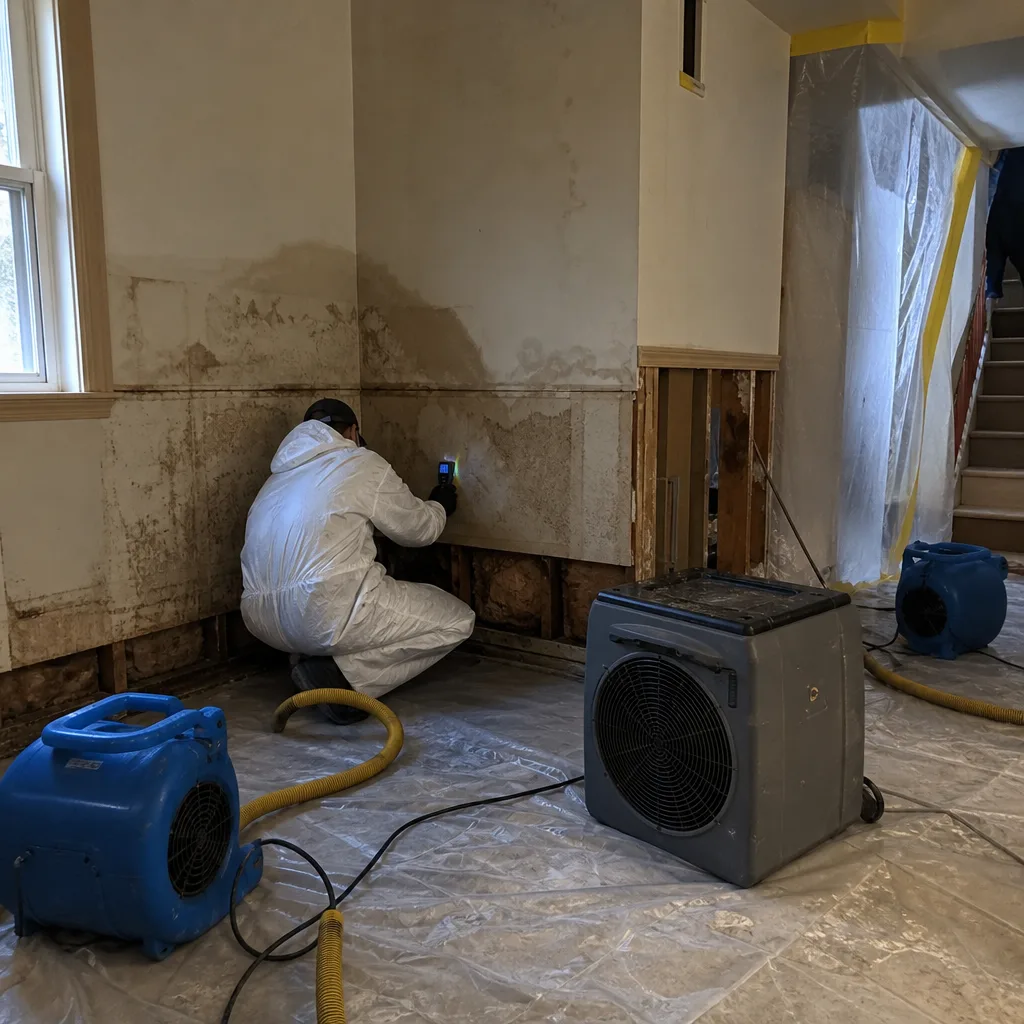 Before
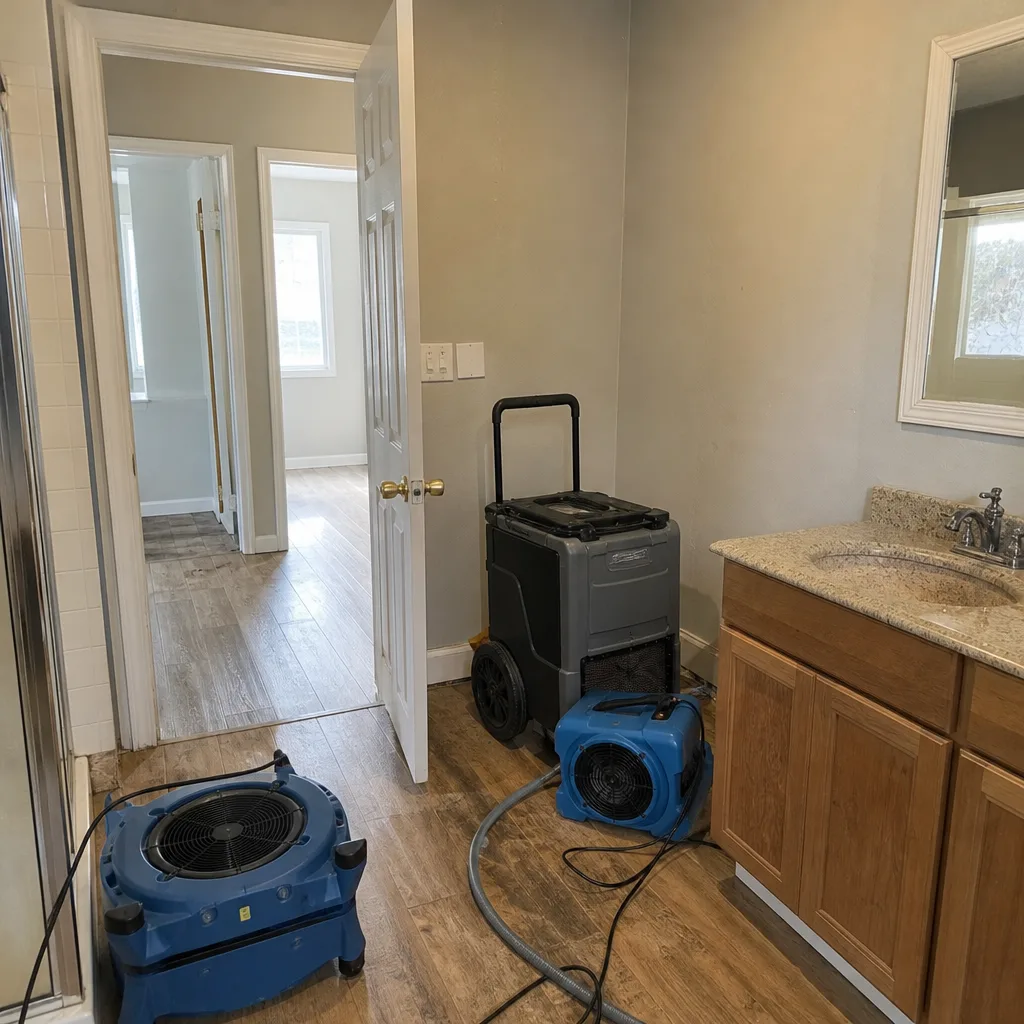 After
Pricing for Mold Remediation in Corona, CA
Mold remediation in Corona runs $1,800 to $6,500 for most residential jobs. Targeted mold removal in a single bathroom or closet is typically $1,800 to $3,000. If the mold is in a crawlspace or attic, expect $3,500 to $6,500 because of the access work and insulation replacement. Full HVAC cleaning and duct treatment adds $800 to $2,000 depending on how many supply and return runs are involved. Every quote we give in Corona is a written scope of work, not a phone number guess. Estimates are free. Call (855) 356-4970 and we’ll put a number in writing before any work starts.
We were called to a home off Temescal Canyon Road after a winter storm dumped intense rain on a nearby burn scar. Water entered through a failed wind-rated door seal and wicked into the wall cavity. Using moisture mapping and thermal imaging, we found elevated moisture readings behind the stucco, set up containment with air movers and dehumidification, and treated the affected framing with antimicrobial treatment. The drying logs confirmed the structure returned to pre-loss condition before we closed the scope of work. That’s the standard we bring to every Corona job.
We Also Serve Cities Near Corona
Our Mold Remediation in Corona coverage extends to Home Gardens, El Cerrito Corona, Eastvale, and Norco. If you’re anywhere in the 92877, 92878, 92879, or 92880 zip codes, or a few miles outside them, we can reach you the same day. Call us and we’ll confirm our next dispatch window.
Serving Corona, CA — Our Local Coverage Area
We’re based in the Corona area and know this community well. Use the map below to see our service coverage — if you’re nearby, we can almost certainly help.
FAQs About Mold Remediation in Corona
Schedule a mold inspection in Corona within two to four weeks after a strong Santa Ana wind event, because that’s the window where smoke residue has settled into attic insulation and HVAC components but hasn’t yet combined with condensation long enough to produce visible growth. Homes in Dos Lagos, Sierra Del Oro, and the foothill canyons off Temescal Canyon Road are most exposed, but even homes in central Corona near the 91 can pull smoke through attic vents. The inspection is cheaper than waiting until you smell it. Call (855) 356-4970 to schedule.
Yes, it can. Smoke residue is carbon-based particulate matter, and when it settles into attic insulation or the HVAC return plenum, it holds moisture and creates a food source for mold. In Dos Lagos and Sierra Del Oro especially, we’ve found mold in attic insulation where the only clue was a smoke smell that wouldn’t go away. The fix involves cleaning or replacing the affected insulation and treating the attic framing. If you’re in that situation, get an inspection before the next rain.
Yes. A wind-rated door that’s lost its seal or compression at the threshold lets air and moisture in during normal weather, and the hidden wall cavity stays damp longer than you’d expect. We’ve opened walls in Corona homes where the only moisture source was a door seal that failed six months earlier. The mold had grown behind the baseboard and into the drywall paper. If your door is hard to close, or you see daylight at the corner, the wall behind it needs a moisture check.
Category 2 water contains significant contamination, like flood water from a failed door during a Corona winter storm or condensation that’s sat in a crawlspace and picked up soil and debris. Category 3 water is grossly contaminated, like sewage backup or canyon run-off that entered the home. Both can feed mold growth within 24 to 48 hours, but Category 3 requires more aggressive containment, removal of porous materials, and antimicrobial treatment. In Corona, wind-driven rain intrusion is often Category 2, but if it sat long enough, we treat it as Category 3. The difference is the level of PPE, containment, and material disposal.
Yes. Homes near Grand Boulevard in the older Corona neighborhoods often sit on pier-and-beam foundations with open crawlspaces that channel winter rain and hold humidity for weeks. The mold grows on floor joists and subflooring from below, and you won’t see it until the floor starts to soften or the smell comes through the vents. Remediation in these homes means crawling every section, treating the framing with antimicrobial, and often adding a vapor barrier and crawlspace dehumidifier to stop the cycle. It’s more involved than a standard wall remediation, and the quote reflects that extra access work.
Contact Mahogany Water Damage in Corona
If you’ve got mold, a moisture smell, or smoke residue in your Corona home, don’t guess. We’ll send a certified team with commercial-grade equipment, do a full inspection, and give you a written scope of work before anything gets cut open. Same-day dispatch to Corona, free estimates, and a process that’s documented from first moisture reading to final clearance. Call (855) 356-4970 now. One team, start to finish.
Written by Noel Carrasco, Owner at Mahogany Water Damage, serving Corona and the surrounding cities.